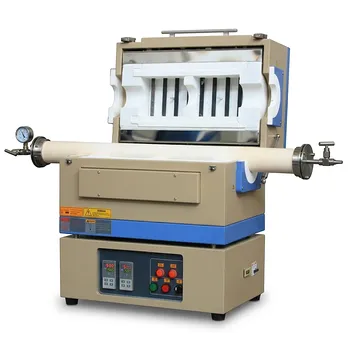
What is the operational mechanism of a controlled atmosphere furnace in vanadium oxidation? Optimizing V2O5 Synthesis.
Updated 3 months ago
The thermal oxidation of vanadium into Vanadium Pentoxide ($V_2O_5$) is driven by a high-precision furnace that simultaneously regulates oxygen mass transport and thermal activation energy. By maintaining a constant oxygen flow (typically 100 sccm) and a precise temperature range between 400 °C and 500 °C, the furnace enables oxygen atoms to penetrate the vanadium precursor and undergo a chemical phase transformation into a stable orthorhombic crystal structure.
Core Takeaway: A high-precision controlled atmosphere furnace transforms metal vanadium into $V_2O_5$ by balancing precise thermal energy for atomic diffusion with a regulated chemical environment. This synchronization ensures the material reaches a high-crystallinity orthorhombic state while allowing for the specific morphological control of nanofibers or hybrid structures.
The Mechanics of Atmosphere and Thermal Control
Precision Gas Delivery and Mass Transport
The furnace maintains a steady environment by regulating the flow of oxygen at specific rates, such as 100 sccm. This constant supply ensures that there is a sufficient partial pressure of oxygen to drive the oxidation reaction forward without fluctuations that could lead to non-stoichiometric defects.
Thermal Activation and Atomic Penetration
Thermal energy acts as the catalyst that allows oxygen atoms to infiltrate the vanadium film. At temperatures between 400 °C and 500 °C, the vanadium lattice expands and becomes reactive enough for oxygen to bond, eventually forming the dense $V_2O_5$ crystal lattice.
The Role of Controlled Heating Rates
A critical aspect of the mechanism is the heating rate, often set at approximately 6 °C/min. Controlled ramping prevents thermal shock to the material and ensures that the transition from an amorphous state to a high-crystallinity orthorhombic system occurs uniformly.
Phase Transformation and Structural Integrity
Achieving the Orthorhombic Crystal System
The primary goal of the thermal process is to reach the stable orthorhombic phase. This specific crystalline arrangement is essential for high-performance applications, as it provides the structural stability and redox reaction activity required for high-specific capacitance electrodes.
Morphological Tuning via Duration
By adjusting the oxidation duration and furnace temperature, operators can influence the final morphology of the material. This allows for the synthesis of either spongy hybrid structures—where carbon nanotube templates are retained—or pure vanadium oxide nanofibers where the templates are completely removed.
Simulation of Thermodynamic Boundaries
Advanced atmosphere furnaces can also simulate specific hydrogen-to-water vapor partial pressure ratios ($P_{H2}/P_{H2O}$). This capability allows researchers to observe the boundaries between different vanadium oxides, ensuring the process remains within the $V_2O_5$ phase and does not regress into $VO_2$ or $V_2O_3$.
Understanding the Trade-offs and Pitfalls
The Risk of Over-Oxidation and Template Loss
While higher temperatures and longer durations increase crystallinity, they also risk the unintended removal of structural templates like carbon nanotubes. Finding the "sweet spot" is necessary to maintain the desired hybrid architecture without sacrificing the purity of the $V_2O_5$.
Kinetic vs. Thermodynamic Control
Rapid heating may reach the target temperature faster but can result in an amorphous or poorly ordered structure. Conversely, excessively slow heating or low oxygen flow can lead to intermediate vanadium oxides ($VO_x$), which lack the specific electrochemical properties of pure Vanadium Pentoxide.
Applying This Process to Your Material Goals
How to Select Parameters for Your Project
- If your primary focus is high-crystallinity for electrodes: Maintain a steady temperature of 450 °C for 2 hours with a controlled ramp rate to ensure a complete transition to the orthorhombic system.
- If your primary focus is maintaining hybrid nanostructures: Use lower temperatures within the 400 °C range and shorter oxidation durations to prevent the total combustion of carbon nanotube templates.
- If your primary focus is industrial purity boundaries: Utilize atmosphere-controlled experiments to monitor $P_{H2}/P_{H2O}$ ratios, ensuring the vanadium does not stall at intermediate phases like $V_2O_3$.
By precisely synchronizing oxygen delivery with thermal energy, the high-precision furnace serves as the definitive tool for engineering the crystalline and morphological properties of Vanadium Pentoxide.
Summary Table:
| Parameter | Optimal Range / Value | Role in Process |
|---|---|---|
| Temperature | 400 °C - 500 °C | Catalyzes oxygen infiltration and crystal growth |
| Oxygen Flow Rate | 100 sccm | Maintains partial pressure for stoichiometry |
| Heating Rate | ~6 °C/min | Prevents thermal shock; ensures uniform crystallinity |
| Crystal Structure | Orthorhombic | Ensures electrochemical stability for electrodes |
| Oxidation Duration | Variable | Controls morphology (nanofibers vs. spongy hybrids) |
Elevate Your Material Synthesis with THERMUNITS Precision Furnaces
Are you looking to master the phase transformation of advanced materials like Vanadium Pentoxide? THERMUNITS is a leading manufacturer of high-temperature laboratory equipment for material science and industrial R&D.
We offer a comprehensive range of thermal processing solutions—including Atmosphere, Vacuum, Tube, and CVD/PECVD systems—designed to provide the exact oxygen delivery and temperature stability required for high-crystallinity results. Whether your research involves Muffle furnaces, Rotary kilns, Hot Press furnaces, or Vacuum Induction Melting (VIM) systems, our equipment empowers you to achieve superior morphological control and structural integrity.
Contact THERMUNITS Today to Discuss Your Project
References
- Matías Picuntureo, Samuel A. Hevia. The Synthesis of Sponge-like V2O5/CNT Hybrid Nanostructures Using Vertically Aligned CNTs as Templates. DOI: 10.3390/nano14020211
Mentioned Products
- Compact Vertical Split Quartz Tube Furnace with Stainless Steel Vacuum Flanges for Rapid Thermal Quenching and Controlled Atmosphere Material Processing
- High Temperature Oxygen and Inert Atmosphere Controlled Furnace 8 Liter 1700C Sintering System for Advanced Materials RD
- 1650C High Temperature Atmosphere Controlled Box Furnace with 65L Chamber for Advanced Material Sintering and Industrial Heat Treatment
- High Temperature Vertical Atmosphere Controlled Furnace 1700C Automatic Bottom Loading 13 Liter Vacuum Thermal System
- 1200C High Temperature Atmosphere Controlled Vertical Quenching Tube Furnace with 4 Inch Quartz Tube
People Also Ask
- Why integrate a vertical split tube furnace with hydraulic loading for HSECC? Essential for In-Situ Fire Simulation.
- What is the role of a split vertical tube furnace during flash sintering of 8YSZ and 20SDC? Master Ultra-Fast R&D
- What is the primary engineering purpose for using a customized ventilation hood when operating a split tube furnace? RCF Safety
- Why is a quartz tube furnace necessary for phosphorus-doped MoS2/GO preparation? Ensure Purity & Precise Synthesis
- What is the primary function of a Quartz Tube Furnace in ZnO VLS growth? Master High-Precision Nanowire Synthesis

Tech Team · ThermUnits
Last updated on Jun 03, 2026
Related Products

Compact Vertical Split Quartz Tube Furnace with Stainless Steel Vacuum Flanges for Rapid Thermal Quenching and Controlled Atmosphere Material Processing
High Temperature Oxygen and Inert Atmosphere Controlled Furnace 8 Liter 1700C Sintering System for Advanced Materials RD
1650C High Temperature Atmosphere Controlled Box Furnace with 65L Chamber for Advanced Material Sintering and Industrial Heat Treatment
High Temperature Vertical Atmosphere Controlled Furnace 1700C Automatic Bottom Loading 13 Liter Vacuum Thermal System
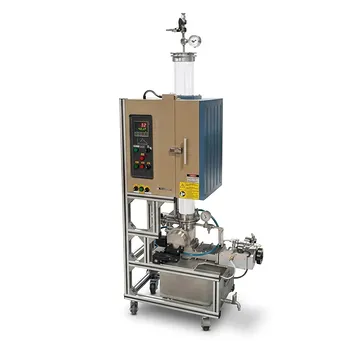
1200C High Temperature Atmosphere Controlled Vertical Quenching Tube Furnace with 4 Inch Quartz Tube
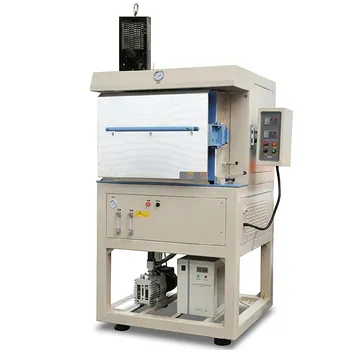
1200C Hydrogen Atmosphere Box Furnace with 5 Heated Sides and 64L Chamber
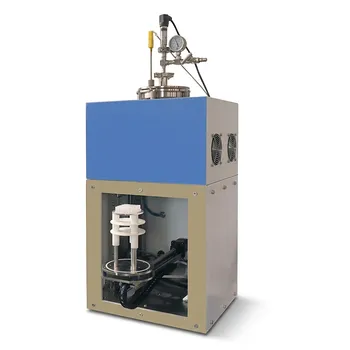
Rapid Thermal Processing RTP Atmosphere Controlled Bottom Loading Furnace 1100C High Throughput 50C per Second Heating Rate
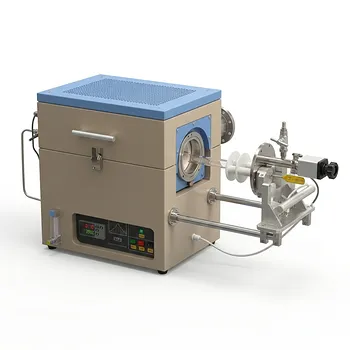
Compact Atmosphere Controlled Rapid Thermal Processing RTP Furnace with 4 Inch ID Quartz Tube 1100C
Atmosphere Controlled Muffle Furnace 1700C Maximum Temperature 80L High Capacity Vacuum Inert Gas Box Furnace
High Temperature Hydrogen Atmosphere Box Furnace 1650C Max Reducing Environment Material Synthesis System 8x8x8 Chamber

Vertical 1700C Vacuum and Atmosphere Tube Furnace with 80mm Alumina Tube
High Temperature Vertical Tube Furnace for Small Solid Oxide Fuel Cell Testing with Four Channel Gas Control
Dual Zone Tube Furnace 1100C with 11 Inch Quartz Tube and Vacuum Flanges for 8 Inch Wafer Processing
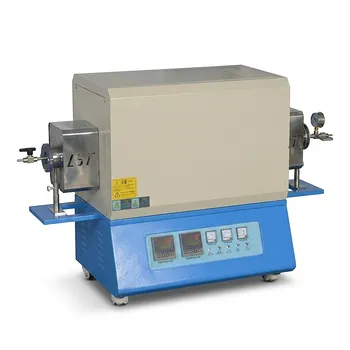
High Temperature Dual Zone Vacuum Tube Furnace for Material Research and CVD Processing
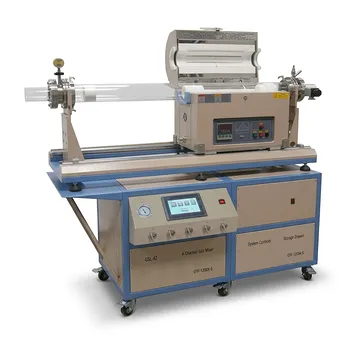
Dual Tube 100mm 80mm CVD Sliding Furnace with 4 Channel Gas Mixing and Vacuum System
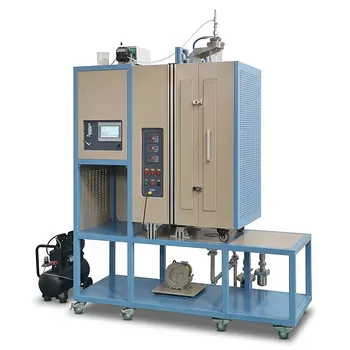
1500C Three Zone Vertical Pyrolysis Furnace for Nanoparticle Synthesis and Advanced Oxide Coating
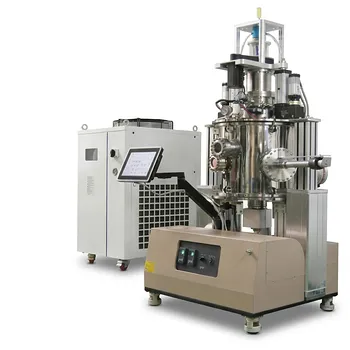
950C Rapid Thermal Processing Furnace for 12 Inch Wafer CSS Coating with Rotating Substrate Holder
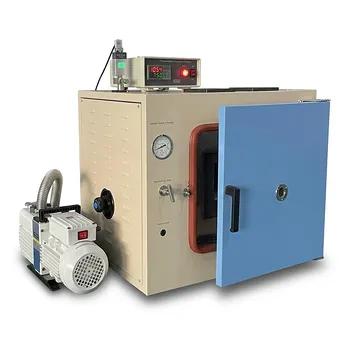
Compact High Vacuum Box Furnace 1050C Max 6.2L Ceramic Chamber Stainless Steel Shell Programmable Temperature Controller for Material Science Research
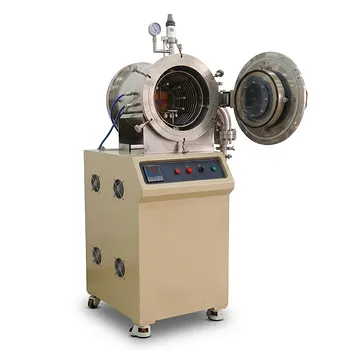
High Temperature Cold Wall High Vacuum Chamber Furnace 1400C for Advanced Material Processing