What is the primary function of a high-temperature tube furnace in the preparation of PtSe2 thin films? Expert Guide
Updated 3 months ago
The high-temperature tube furnace serves as the fundamental reaction chamber for the synthesis of platinum diselenide ($PtSe_2$) thin films. Its primary function is to provide a highly stable thermal environment that facilitates the selenization of a pre-deposited platinum film on a substrate. By precisely regulating the temperature distribution and the transport rate of selenium vapor, the furnace ensures the consistent chemical transformation of metal into a high-quality, two-dimensional (2D) semiconductor.
Core Takeaway: In $PtSe_2$ preparation, the tube furnace acts as a precision reactor that manages the kinetics of the selenization process. It enables the growth of large-area, crystalline films by balancing thermal energy with the controlled delivery of selenium precursors.
Facilitating the Selenization Reaction
Driving Chemical Transformation
The furnace provides the critical activation energy required to trigger the chemical reaction between solid platinum and selenium vapor. This solid-gas phase reaction converts the amorphous or metallic pre-deposited layer into a structured $PtSe_2$ crystalline lattice.
Controlling Selenium Vapor Transport
A key role of the tube furnace is managing the movement of selenium atoms from the source to the substrate. By utilizing carrier gases (like Argon) and maintaining specific temperature gradients, the furnace ensures that selenium vapor reaches the platinum film at a rate optimized for uniform growth.
Regulating Layer Thickness
The ability to precisely program heating cycles allows for the growth of $PtSe_2$ with atomic-layer precision. Because the reaction is temperature-dependent, the furnace enables researchers to stop the process at specific intervals to achieve desired film thicknesses, ranging from monolayers to bulk-like structures.
Optimizing Material Quality and Morphology
Promoting Crystalline Order
High temperatures provided by the furnace facilitate atomic rearrangement, reducing defects within the film. This process is similar to annealing, where the thermal energy allows atoms to migrate to their lowest-energy lattice positions, resulting in superior electronic properties.
Ensuring Large-Area Uniformity
The "hot zone" of a tube furnace is designed to maintain a homogeneous temperature profile. This uniformity is essential for preparing large-area $PtSe_2$ films that exhibit consistent characteristics across the entire substrate, which is vital for scalable device fabrication.
Environmental Shielding
The sealed nature of the quartz tube allows for the creation of a controlled atmosphere, often under vacuum or inert gas. This prevents the oxidation of the platinum or selenium during the high-temperature phase, ensuring the purity of the final $PtSe_2$ product.
Understanding the Trade-offs
Thermal Gradients vs. Film Consistency
While tube furnaces are designed for stability, longitudinal temperature gradients can occur. If the substrate is not placed in the "sweet spot" of the furnace, the selenization may be incomplete or uneven across the sample.
Vapor Pressure Management
Controlling the evaporation of selenium is a delicate balance. If the temperature is too high, the selenium may bypass the substrate too quickly; if it is too low, the reaction kinetics will be insufficient to form a continuous $PtSe_2$ film.
Substrate Compatibility
The high temperatures required for quality $PtSe_2$ growth (often exceeding 400°C) limit the types of substrates that can be used. Users must ensure that the substrate material does not outgas or react with the selenium vapor at these elevated levels.
Making the Right Choice for Your Goal
How to Apply This to Your Project
To achieve the best results when using a high-temperature tube furnace for $PtSe_2$ synthesis, consider the following strategic adjustments:
- If your primary focus is Maximum Crystallinity: Increase the soaking time at the peak selenization temperature to allow for better atomic grain growth and fewer lattice defects.
- If your primary focus is Precise Layer Control: Utilize a multi-zone furnace to independently control the selenium source temperature and the substrate temperature, allowing for finer tuning of the reaction rate.
- If your primary focus is Large-Area Uniformity: Implement a slow ramp-up and ramp-down cooling phase to prevent thermal stress and cracking in the $PtSe_2$ film across the substrate surface.
By mastering the thermal and atmospheric variables of the tube furnace, researchers can reliably produce $PtSe_2$ films tailored for next-generation electronic and optoelectronic applications.
Summary Table:
| Key Function | Impact on PtSe2 Preparation |
|---|---|
| Thermal Activation | Provides energy for the solid-gas phase selenization reaction. |
| Vapor Transport | Regulates selenium delivery to the substrate for uniform growth. |
| Layer Precision | Controls heating cycles to achieve atomic-layer thickness accuracy. |
| Crystalline Order | Facilitates atomic rearrangement for superior electronic properties. |
| Environmental Control | Prevents oxidation via vacuum or inert gas atmosphere (Ar). |
Elevate Your Material Research with THERMUNITS
As a leading manufacturer of high-temperature laboratory equipment, THERMUNITS specializes in providing the precision thermal solutions required for advanced material science and industrial R&D. Our high-performance Tube Furnaces and CVD/PECVD systems are engineered to deliver the stable thermal environments and controlled atmospheres essential for the synthesis of high-quality $PtSe_2$ and other 2D materials.
Whether you need Muffle, Vacuum, Atmosphere, Rotary, or Hot Press furnaces, our comprehensive range of heat treatment equipment ensures reliability and accuracy for every experiment.
Ready to optimize your lab’s thermal processing? Contact our experts today to find your solution
References
- Jiang Wang, Lin‐Bao Luo. PtSe<sub>2</sub>/InP Mixed‐Dimensional Schottky Junction for High‐Performance Self‐Powered Near‐Infrared Photodetection. DOI: 10.1002/adom.202401035
Mentioned Products
- High Temperature 1700C Vertical Tube Furnace for Powder Spherification and Material Sintering
- High Temperature Tube Furnace 1500C with Sliding Flanges and 50mm OD for Rapid Thermal Processing Fast Heating and Cooling
- Compact High Temperature 1600C Tube Furnace with 50mm Alumina Tube and Vacuum Flanges for Material Sintering
- High Temperature 1700C Vertical Split Tube Furnace for Material Quenching and Single Crystal Growth
- 1800C High Temperature Compact Vacuum Tube Furnace with 60mm OD Alumina Tube and Kanthal MoSi2 Heating Elements
People Also Ask
- What role does a high-temperature vertical tube furnace play in simulating high-carbon ferromanganese slag formation?
- What functions does a vertical high-temperature tube furnace perform? Master Industrial Sintering & R&D Simulation
- What is the primary function of a high-temperature tube furnace in Cu1-N-C synthesis? Precision Thermal Control.
- High-Temp Tube Furnace Role in Converting Microbial Proteins to Iron Single-Atom Sites: Expert Synthesis Guide
- What impact does the heating rate of a tube furnace have on biochar microstructure? Optimize Your Material R&D.

Tech Team · ThermUnits
Last updated on Jun 03, 2026
Related Products

High Temperature 1700C Vertical Tube Furnace for Powder Spherification and Material Sintering

High Temperature Tube Furnace 1500C with Sliding Flanges and 50mm OD for Rapid Thermal Processing Fast Heating and Cooling

Compact High Temperature 1600C Tube Furnace with 50mm Alumina Tube and Vacuum Flanges for Material Sintering
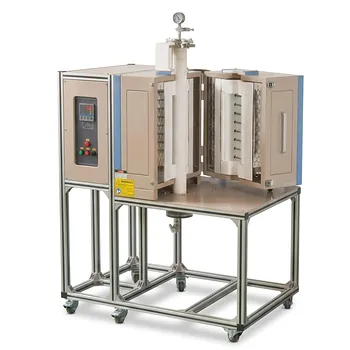
High Temperature 1700C Vertical Split Tube Furnace for Material Quenching and Single Crystal Growth

1800C High Temperature Compact Vacuum Tube Furnace with 60mm OD Alumina Tube and Kanthal MoSi2 Heating Elements
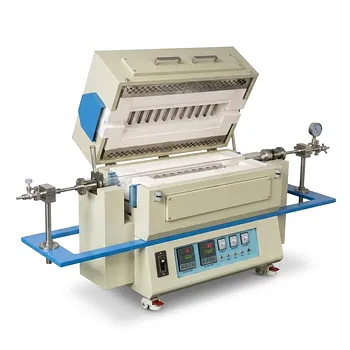
High Temperature Dual Zone Rotating Tube Furnace 1500C Silicon Carbide Heating for Advanced Material Synthesis

High Temperature 1700C Tube Furnace with High Vacuum Turbomolecular Pump System and Multi Channel Mass Flow Controller Gas Mixer
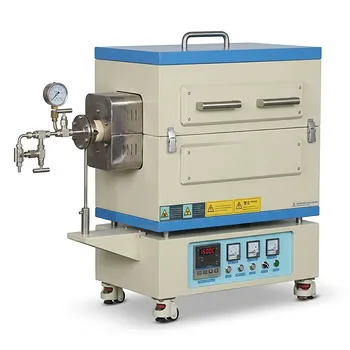
High Temperature Split Tube Furnace 1500C for Material Research Vacuum and Atmosphere Thermal Processing

1750°C High Temperature Benchtop Vacuum Atmosphere Tube Furnace with Kanthal Super 1800 Heating Elements and 60mm Alumina Processing Tube
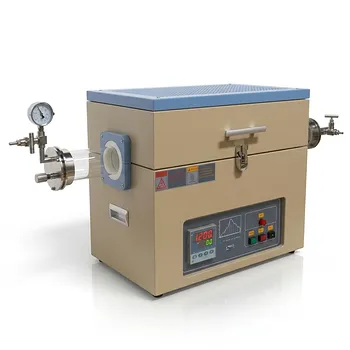
High Temperature 1200C Split Tube Furnace with Optional Quartz Tube Sizes and Vacuum Sealing Flanges for Material Science Research

High Temperature Automated 5 Inch Tube Furnace for Autonomous Material Research and Advanced Laboratory R&D

High Temperature 1700C Benchtop Tube Furnace with 5 Inch Heating Zone High Purity Alumina Tube and Vacuum Sealing Flanges
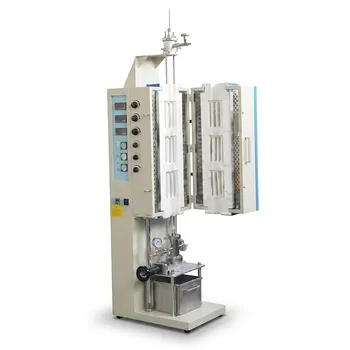
High Temperature Dual Zone Tube Furnace for Material Science Research and Professional Thermal Processing
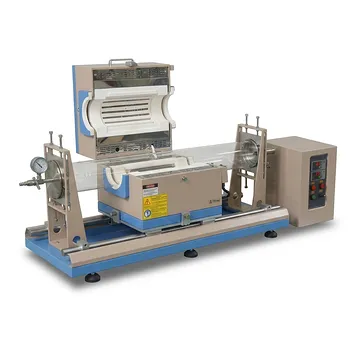
1200C High Temperature 5 Inch Sliding Tube Furnace for Rapid Thermal Processing RTP and Wafer Annealing
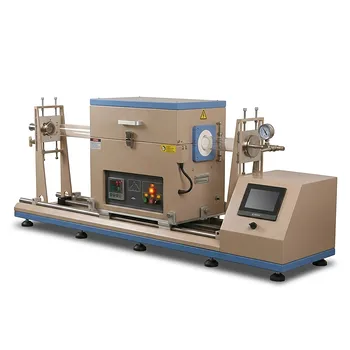
1200C Sliding Tube Furnace for Rapid Thermal Processing and CVD Graphene Growth with 100mm OD Capacity
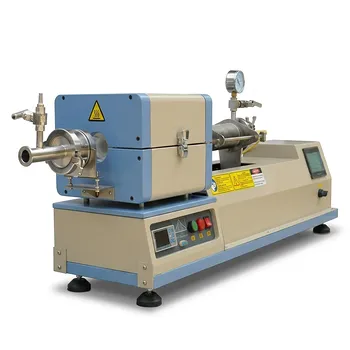
High Temperature 1200C Split Tube Furnace with Internal Travel Mechanism for HPCVD and Crystal Growth Research
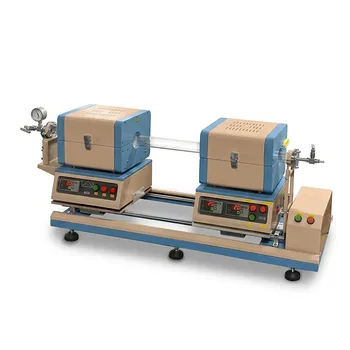
High Temperature 1200C Automatic Sliding Dual Zone Tube Furnace for 2D Transition Metal Dichalcogenides Growth and Material Sublimation Research
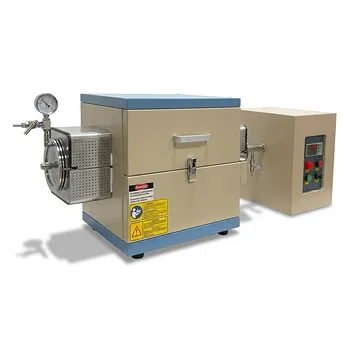
1200C High Temperature 5 Inch Split Vacuum Tube Furnace with 12 Inch Heating Zone and Separated PID Controller
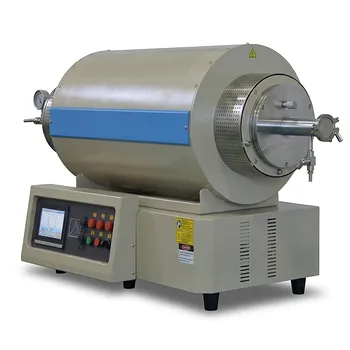
1200C Max Three Zone Tube Furnace 6 Inch OD Max with Tube and Flange
