What is the primary function of a tube furnace in the heat treatment of (NH4)2MoS4? Achieve Uniform MoS2 Synthesis
Updated 3 months ago
The primary function of a tube furnace in the heat treatment of $(NH_4)_2MoS_4$ is to provide large-area thermal conversion through a uniform, controlled environment. Unlike localized laser synthesis, which targets specific points, the tube furnace ensures the complete decomposition of precursors across entire substrates by maintaining a consistent thermal field for extended durations.
A tube furnace serves as the foundational benchmark for synthesizing $MoS_2$, offering the global temperature stability required for uniform material transformation. It prioritizes total precursor decomposition and structural consistency over the high-speed, localized precision of laser-based methods.
Achieving Large-Area Uniformity
Global Thermal Field Consistency
The tube furnace creates a uniform thermal field that can reach up to 500°C, ensuring that every part of the $(NH_4)_2MoS_4$ crystal or thin film experiences the same energy levels. This uniformity is critical for producing large-scale samples with consistent electrical and structural properties.
Scalability for Thin Films
While laser synthesis is inherently localized, the tube furnace allows for the simultaneous processing of large-area substrates. This makes it the preferred tool for applications requiring high-consistency $MoS_2$ films rather than micro-patterned structures.
Complete Decomposition and Phase Control
Extended Heat Treatment Cycles
The tube furnace utilizes extended heating cycles, often lasting 30 minutes or more, to guarantee the total decomposition of the $(NH_4)_2MoS_4$ precursor. This duration allows for a thorough chemical transition that localized, rapid laser pulses may not fully achieve.
Establishing Transformation Pathways
By providing precise temperature increments, the furnace acts as a benchmark process for studying material transformation. Researchers use it to map how different temperatures affect the decomposition of precursors and the subsequent crystallinity of the $MoS_2$.
Regulation of Defect Density
Beyond simple decomposition, a tube furnace can be used at higher temperatures (400°C to 900°C) to generate sulfur vacancies. This precise control over the thermal environment allows for the fine-tuning of defect density, which can shift the material from a diamagnetic to a ferromagnetic state.
Understanding the Trade-offs
Throughput vs. Spatial Precision
The most significant trade-off is between throughput and localization. The tube furnace excels at bulk processing but cannot create the intricate, site-specific patterns possible with localized laser synthesis.
Time and Energy Efficiency
Tube furnace annealing is a slow process involving significant ramp-up and cool-down times. In contrast, laser synthesis offers nearly instantaneous heating, though it risks creating non-uniformities across the broader surface of the material.
Atmospheric Control Limitations
While the furnace provides a controlled atmosphere (such as Argon or high vacuum), any contamination within the quartz tube affects the entire batch. Localized laser methods may be less sensitive to total chamber purity if the reaction is sufficiently fast and shielded.
How to Apply This to Your Project
Choosing the Right Synthesis Method
Determining whether to use a tube furnace or laser synthesis depends entirely on your target application and the required scale of the final material.
- If your primary focus is material benchmarking: Use the tube furnace to establish a high-quality, standard $MoS_2$ sample for comparing against experimental synthesis methods.
- If your primary focus is large-scale device fabrication: Utilize the tube furnace’s uniform thermal field to ensure consistent film quality across the entire substrate.
- If your primary focus is defect engineering: Leverage the programmable heating curves of a high-precision furnace to accurately regulate sulfur vacancies and magnetic properties.
- If your primary focus is rapid prototyping of micro-structures: Opt for localized laser synthesis to achieve spatial precision that the global heating of a furnace cannot provide.
The tube furnace remains the definitive standard for achieving the comprehensive thermal stability necessary for high-purity, large-scale molybdenum disulfide synthesis.
Summary Table:
| Feature | Tube Furnace Treatment | Localized Laser Synthesis |
|---|---|---|
| Heating Scope | Global / Large-Area Uniformity | Localized / Site-Specific |
| Processing Time | Extended Cycles (30+ mins) | Rapid / Instantaneous |
| Material Quality | Consistent Crystal Structure | Potential for Non-uniformity |
| Primary Goal | Bulk Synthesis & Benchmarking | Micro-patterning & Prototyping |
| Defect Control | High Precision (Sulfur Vacancies) | Limited to Laser Spot Area |
Unlock High-Precision Thermal Processing with THERMUNITS
As a global leader in high-temperature laboratory equipment, THERMUNITS provides the advanced thermal technology required for cutting-edge material science. Whether you are synthesizing 2D materials like $MoS_2$ or conducting complex industrial R&D, our comprehensive range of high-performance furnaces—including Tube, CVD/PECVD, Vacuum, Atmosphere, Rotary, and Hot Press furnaces—ensures unmatched temperature uniformity and process stability.
Boost your research efficiency and achieve superior material consistency today. Contact our experts at THERMUNITS for a customized solution to elevate your heat treatment capabilities.
References
- Noah Hurley, Yuankun Lin. Selective CW Laser Synthesis of MoS2 and Mixture of MoS2 and MoO2 from (NH4)2MoS4 Film. DOI: 10.3390/mi15020258
Mentioned Products
- 1800C High Temperature Compact Vacuum Tube Furnace with 60mm OD Alumina Tube and Kanthal MoSi2 Heating Elements
- High Temperature Bench Top Muffle Furnace 1700C with Integrated Evaporating Particle Collection and 8x8x8 Alumina Fiber Chamber
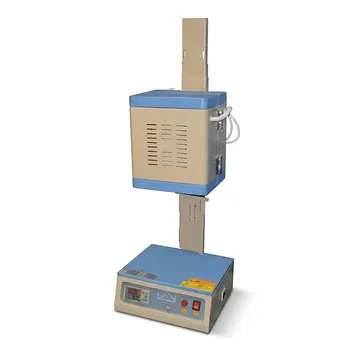
- Compact Vertical Split Quartz Tube Furnace with Stainless Steel Vacuum Flanges for Rapid Thermal Quenching and Controlled Atmosphere Material Processing
- High Temperature 1700C Six Zone Split Tube Furnace with Alumina Tube and Water Cooled Flanges
- 1200C Four Zone Split Tube Furnace with Touch Screen Control and High Purity Quartz Tube and Vacuum Sealing Flanges
People Also Ask
- What core functions does a high-temperature vacuum tube furnace provide? Optimize np-CuSn Sintering & Joint Integrity
- What is the primary function of a high-temperature tube furnace in Cu1-N-C synthesis? Precision Thermal Control.
- What impact does the heating rate of a tube furnace have on biochar microstructure? Optimize Your Material R&D.
- Role of Tube Furnace in KNNLST Ceramic Synthesis: Achieve High Phase Purity and Thermal Uniformity
- What is the role of a high-temperature tube furnace in the preparation of S-C3N4? Master Precision Material Synthesis

Tech Team · ThermUnits
Last updated on Jun 03, 2026
Related Products

1800C High Temperature Compact Vacuum Tube Furnace with 60mm OD Alumina Tube and Kanthal MoSi2 Heating Elements
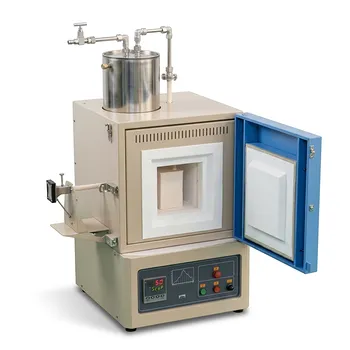
High Temperature Bench Top Muffle Furnace 1700C with Integrated Evaporating Particle Collection and 8x8x8 Alumina Fiber Chamber

Compact Vertical Split Quartz Tube Furnace with Stainless Steel Vacuum Flanges for Rapid Thermal Quenching and Controlled Atmosphere Material Processing

High Temperature 1700C Six Zone Split Tube Furnace with Alumina Tube and Water Cooled Flanges
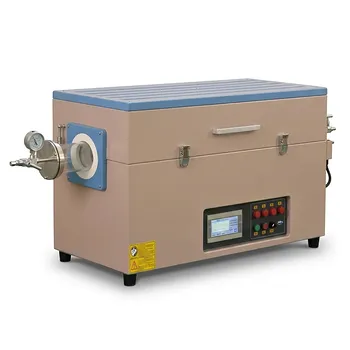
1200C Four Zone Split Tube Furnace with Touch Screen Control and High Purity Quartz Tube and Vacuum Sealing Flanges

High Temperature 1700C Vertical Tube Furnace for Powder Spherification and Material Sintering
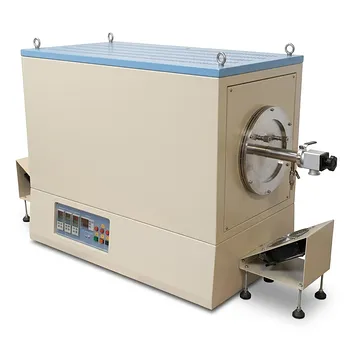
Four Zone Tube Furnace 1100C with 600mm Large Diameter Quartz Tube and Vacuum Flanges
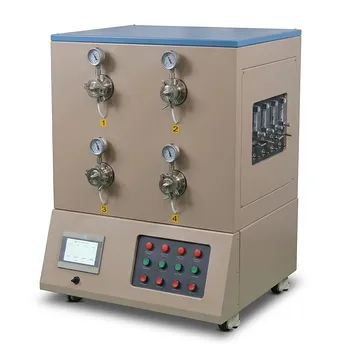
High Throughput 1200C Four Channel Tube Furnace with 3 Inch Quartz Tubes for Multi Zone Annealing and Material Research

Compact High Temperature 1600C Tube Furnace with 50mm Alumina Tube and Vacuum Flanges for Material Sintering

Vertical 1700C Vacuum and Atmosphere Tube Furnace with 80mm Alumina Tube
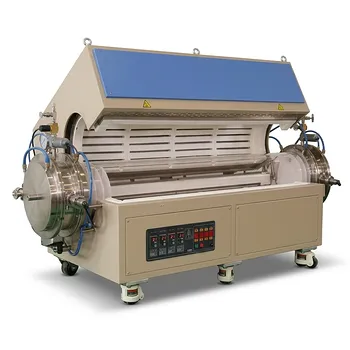
1200C Max Four Zone Split Tube Furnace with Optional Large Diameter Quartz Tubes
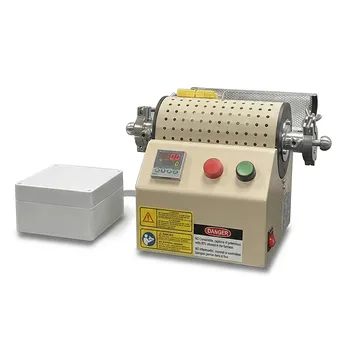
1000C Mini Tube Furnace with 20mm Quartz Tube and Vacuum Flanges for Material Science Research and Controlled Atmosphere Small Sample Processing
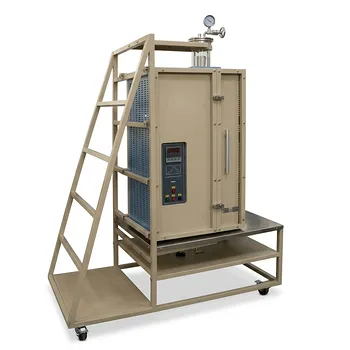
Split Vertical Tube Furnace with 1200C Quartz Tube and Stainless Steel Vacuum Flanges for Rapid Thermal Processing
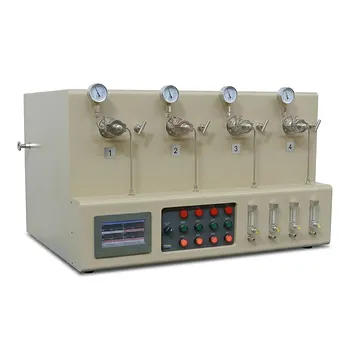
High Temperature 1700C 4 Channel Tube Furnace 1 Inch Alumina Tube for Hi-Throughput Annealing
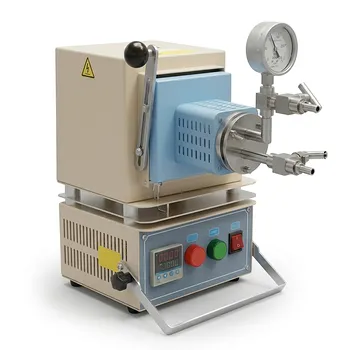
Compact Hybrid Muffle and Tube Furnace for 1000C Controlled Atmosphere Laboratory Material Sintering

1200°C 5 Inch Vertical Quartz Tube Furnace with Stainless Steel Vacuum Flanges
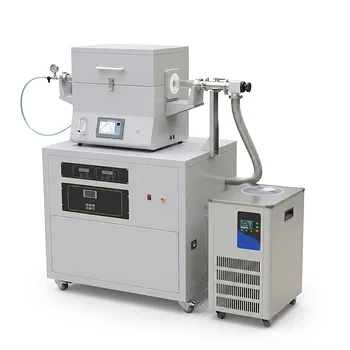
Split Chamber CVD Tube Furnace with Vacuum Station Chemical Vapor Deposition System Machine
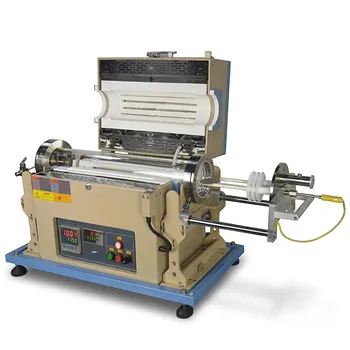
1200°C High Temperature 4 Inch Tube Furnace with Sliding Flange for CVD Systems
High Temperature 1700C Tube Furnace with 4 Inch OD Alumina Tube and Vacuum Sealing Flanges