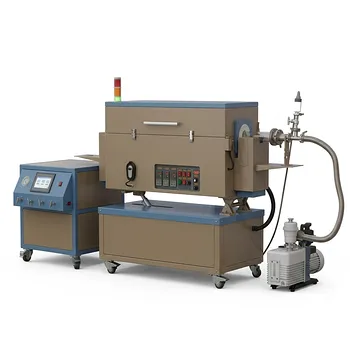
What is the primary function of oxygen environment pretreatment for silicon wafers? Enhance carrier lifetime & purity.
Updated 3 months ago
Oxygen environment pretreatment is a critical purification and repair step. In the initial stages of silicon wafer preparation, using a high-temperature tube furnace (typically at 1050°C) in an oxygen-rich atmosphere serves to enhance the electronic quality of the bulk material. This is achieved by repairing structural growth defects and passivating internal impurities, which significantly extends the minority carrier lifetime of the substrate.
The primary objective of high-temperature oxygen pretreatment is to neutralize internal defects that hinder electrical performance. By reducing Shockley-Read-Hall (SRH) recombination centers, this process creates a high-lifetime foundation necessary for high-efficiency solar cells and advanced semiconductor devices.
Enhancing Electronic Quality through Defect Engineering
Repairing Structural Growth Defects
At temperatures around 1050°C, the silicon lattice gains sufficient thermal energy to undergo a "repair" phase. This thermal energy allows for the reorganization of atoms, effectively healing vacancies and dislocations that occurred during the initial crystal growth process.
Passivating Bulk Impurities
The oxygen environment interacts with the silicon to neutralize internal impurities that cannot be easily removed physically. This impurity passivation locks these contaminants into inactive states, preventing them from interfering with the flow of electrical charge.
Reducing Oxygen Precipitation Defects
While oxygen is used as a treatment gas, its controlled application helps manage existing oxygen precipitation-related defects within the bulk. By stabilizing these regions, the furnace treatment prevents them from acting as traps for electrons and holes.
Optimizing Carrier Dynamics for Device Performance
Minimizing Shockley-Read-Hall (SRH) Recombination
The most significant technical benefit of this pretreatment is the drastic reduction of SRH recombination centers. These centers are essentially "energy traps" caused by defects where charge carriers are lost, which directly degrades the efficiency of the final electronic device.
Establishing High-Lifetime Substrates
By clearing these traps, the process ensures a high-lifetime substrate, meaning charge carriers can travel further and exist longer before recombining. This characteristic is a prerequisite for subsequent passivation contact processes, which are used in state-of-the-art silicon cell architectures.
Surface Preparation and Cleaning
While the primary focus is the bulk material, the high-temperature environment also aids in removing adsorbed contaminants and organic residues. Similar to its use in sapphire or silicon carbide processing, the thermal energy ensures a clean, well-defined starting surface for further layer growth.
Understanding the Trade-offs and Risks
Thermal Budget Management
Subjecting silicon to 1050°C adds significantly to the thermal budget of the manufacturing process. If not carefully managed, excessive heat can cause unwanted diffusion of dopants or lead to wafer warping, which complicates later lithography or bonding steps.
Oxygen Induced Stacking Faults (OISF)
While oxygen passivates defects, an over-saturation of oxygen or improper cooling rates can lead to the formation of stacking faults. These are structural irregularities that can actually create new recombination centers, defeating the purpose of the pretreatment.
Furnace Contamination Risks
High-temperature tube furnaces must be kept meticulously clean to prevent metallic impurities from diffusing into the wafer. At 1050°C, contaminants like iron or copper move rapidly through silicon, potentially ruining the wafer's electronic properties.
How to Apply This to Your Project
Implementation Strategies Based on Goals
- If your primary focus is maximizing minority carrier lifetime: Strictly maintain the 1050°C threshold in a high-purity oxygen flow to ensure the full repair of growth vacancies and SRH center reduction.
- If your primary focus is subsequent thin-film growth (epitaxy): Prioritize the furnace’s ability to remove organic residues and provide a clean atomic surface, even if a slightly lower temperature is used to preserve the thermal budget.
- If your primary focus is cost-efficiency in high-volume manufacturing: Optimize the duration of the 1050°C soak to the minimum time required for passivation to reduce energy consumption and furnace wear.
By masterfully controlling the high-temperature oxygen environment, you transform raw silicon into a high-performance electronic medium ready for the most demanding applications.
Summary Table:
| Process Component | Key Action | Technical Benefit |
|---|---|---|
| Thermal Energy (1050°C) | Lattice reorganization | Heals vacancies and structural growth defects |
| Oxygen Atmosphere | Impurity passivation | Neutralizes internal contaminants and energy traps |
| Carrier Dynamics | SRH reduction | Minimizes charge recombination, extending lifetime |
| Surface Conditioning | Contaminant removal | Ensures a clean, atomic surface for epitaxial growth |
| Thermal Management | Budget control | Balances defect repair with wafer warping risks |
Elevate Your Semiconductor R&D with THERMUNITS
Precision thermal processing is the foundation of high-performance material science. THERMUNITS is a leading manufacturer of high-temperature laboratory equipment, providing the advanced furnace technology required for critical steps like silicon wafer oxygen pretreatment and impurity passivation.
Our comprehensive range of solutions includes Muffle, Vacuum, Atmosphere, Tube, Rotary, and Hot Press furnaces, as well as specialized CVD/PECVD systems and Vacuum Induction Melting (VIM) furnaces. Whether you are optimizing minority carrier lifetimes or developing next-generation solar cells, our equipment delivers the temperature uniformity and atmospheric control necessary for superior results.
Ready to optimize your heat treatment workflow? Contact our technical experts today to discuss your specific requirements and find the ideal high-temperature solution for your laboratory or industrial R&D needs.
References
- Rabin Basnet, Daniel Macdonald. Understanding the Strong Apparent Injection Dependence of Carrier Lifetimes in Doped Polycrystalline Silicon Passivated Wafers. DOI: 10.1002/solr.202400087
Mentioned Products
- Dual Zone Tube Furnace 1100C with 11 Inch Quartz Tube and Vacuum Flanges for 8 Inch Wafer Processing
- 1100°C Three Zone Tube Furnace with 8.5 to 11 Inch OD Quartz Tube and Vacuum Flanges for Large Wafer Processing
- 1200C High Temperature 5 Inch Sliding Tube Furnace for Rapid Thermal Processing RTP and Wafer Annealing
- High Temperature Vertical Hybrid Furnace with Alumina Tube and SiC Heating for SOFC Coin Cell Testing and Atmosphere Processing
- 950C Rapid Thermal Processing Furnace for 12 Inch Wafer CSS Coating with Rotating Substrate Holder
People Also Ask
- What is the function of a dual-zone tube furnace in CVD for 2D perovskites? Optimize Precision & Film Uniformity
- How is a dual-temperature zone tube furnace configured for MXene-based metal phosphides? Expert Synthesis Guide
- What are the technical advantages of a dual-zone tube furnace for phosphidation? Optimize Cobalt Nanowall Synthesis.
- What are the technical advantages of using a dual-zone tube furnace system? Optimize Nanomaterial Growth & Stoichiometry
- Why is a dual-zone tube furnace necessary for ReO3-doped Cu2Te CVD? Essential for precise precursor synchronization.

Tech Team · ThermUnits
Last updated on Jun 02, 2026
Related Products
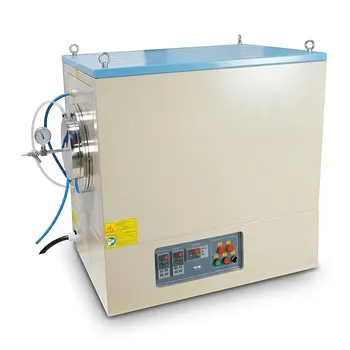
Dual Zone Tube Furnace 1100C with 11 Inch Quartz Tube and Vacuum Flanges for 8 Inch Wafer Processing
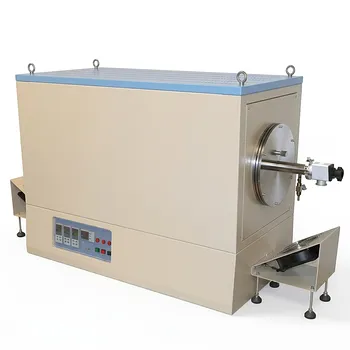
1100°C Three Zone Tube Furnace with 8.5 to 11 Inch OD Quartz Tube and Vacuum Flanges for Large Wafer Processing
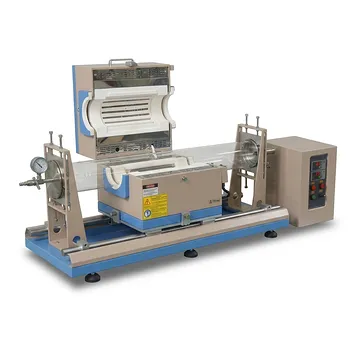
1200C High Temperature 5 Inch Sliding Tube Furnace for Rapid Thermal Processing RTP and Wafer Annealing
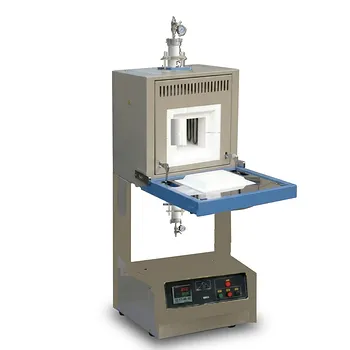
High Temperature Vertical Hybrid Furnace with Alumina Tube and SiC Heating for SOFC Coin Cell Testing and Atmosphere Processing
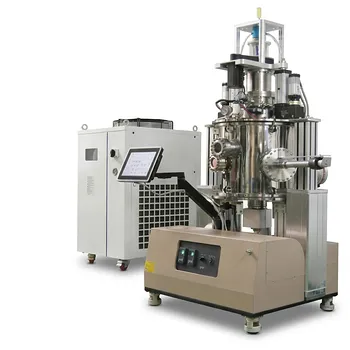
950C Rapid Thermal Processing Furnace for 12 Inch Wafer CSS Coating with Rotating Substrate Holder
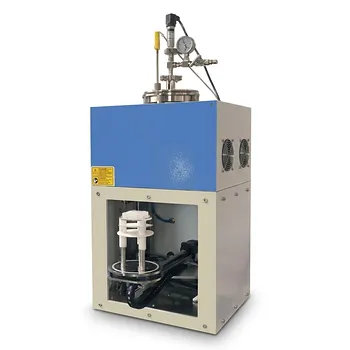
Rapid Thermal Processing Atmosphere Controlled Bottom Loading Furnace 1100C with 50C Per Second Heating Rate for Wafer Annealing

Three Zone Tube Furnace with 11 Inch or 15 Inch Quartz Tube and Hinged Flanges for Vacuum Atmosphere Heat Treatment
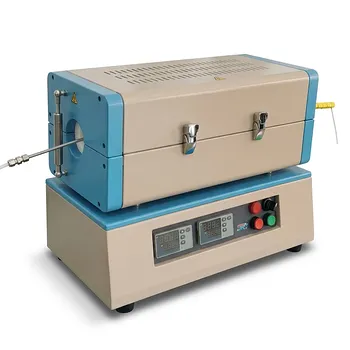
Gas Pre-Heating Tube Furnace for High Temperature Pyrolysis Reactors and Material Science Research

High Temperature 1700C Vertical Tube Furnace for Powder Spherification and Material Sintering

Compact Vertical Split Quartz Tube Furnace with Stainless Steel Vacuum Flanges for Rapid Thermal Quenching and Controlled Atmosphere Material Processing
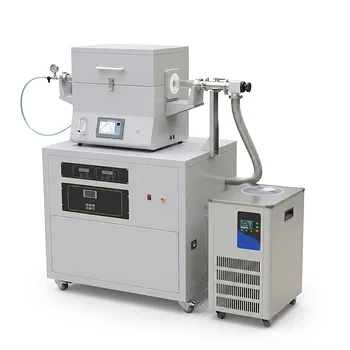
Split Chamber CVD Tube Furnace with Vacuum Station Chemical Vapor Deposition System Machine
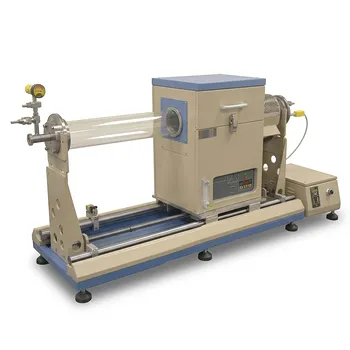
Rapid Thermal Processing Sliding Tube Furnace with 4 Inch OD Quartz Tube and 900C IR Heating

Compact High Temperature 1600C Tube Furnace with 50mm Alumina Tube and Vacuum Flanges for Material Sintering
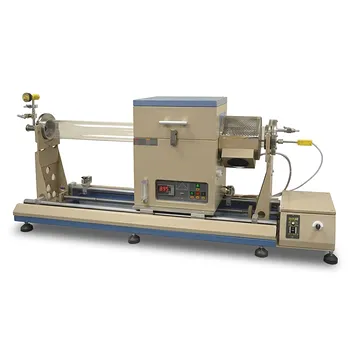
900 ºC Max Sliding RTP Tube Furnace with Rapid IR Heating and 4 Inch OD Quartz Tube
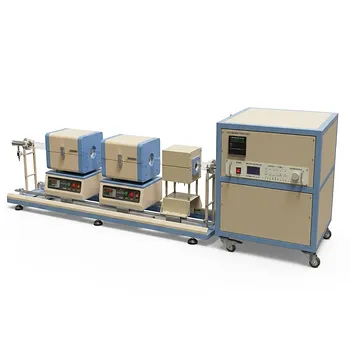
1200C Dual Sliding Tube Furnace with Dual Tubes and Flanges for PECVD Processes

1800C High Temperature Compact Vacuum Tube Furnace with 60mm OD Alumina Tube and Kanthal MoSi2 Heating Elements

High Temperature Automated 5 Inch Tube Furnace for Autonomous Material Research and Advanced Laboratory R&D
1200C High Throughput Multi Channel Tube Furnace with 50mm Quartz Tubes for Annealing and Material Phase Diagram Research
Vertical Vacuum Furnace 1100C High Temperature 8 Inch Quartz Chamber Water Cold Flange System