What is the purpose of a tube furnace in GaOOH to Ga2O3 conversion? Achieve Precise Phase & Morphology Control
Updated 3 months ago
The laboratory tube furnace is used to provide a highly stable thermal environment that facilitates the thermal decomposition and dehydroxylation of GaOOH. This process, conducted at a precise 500°C in an air atmosphere, ensures the complete phase transformation of the precursor into Gallium Oxide (Ga₂O₃) while maintaining the integrity of its physical structure.
The tube furnace acts as a precision reactor that drives the chemical transition from a hydroxide to an oxide. By balancing temperature stability with atmosphere control, it ensures the material achieves its necessary chemical state without losing its unique microrod morphology.
The Role of Controlled Thermal Treatment
Driving Thermal Decomposition and Dehydroxylation
At 500°C, the tube furnace provides the energy required to break the chemical bonds within the GaOOH precursor. This process, known as dehydroxylation, removes hydroxyl groups to convert the material into its oxide form.
Facilitating Complete Phase Transformation
The stability of the thermal field is critical for a complete phase transformation. Without uniform heat distribution provided by the tube furnace, remnants of the precursor could persist, leading to impurities in the final Gallium Oxide.
Managing the Air Atmosphere
Unlike inert or reducing atmospheres used in other sintering processes, an air atmosphere provides the necessary oxidative environment for Ga₂O₃ formation. The furnace allows for a steady environment where oxygen is present to support the structural stability of the metal oxide.
Structural and Morphological Integrity
Preservation of Microrod Morphology
A primary technical requirement of this process is preserving the microrod morphology of the original GaOOH. The precise temperature control of the tube furnace prevents overheating, which could cause the particles to melt or sinter together, destroying their shape.
Establishing the Foundation for Downstream Processes
The conversion is rarely the final step; it establishes a structural foundation for subsequent chemical treatments. For example, maintaining the correct morphology is vital if the material is to undergo a subsequent ammoniation process.
Inducing Critical Material Defects
Similar to other metal oxide treatments, controlled annealing in a tube furnace can influence the formation of oxygen vacancies. These vacancies can be essential for specialized applications, such as establishing conductive paths in electronic components.
Understanding the Trade-offs
Temperature Precision vs. Material Degradation
If the temperature fluctuates significantly above the 500°C target, the microrod structure may collapse into a dense, amorphous mass. Conversely, insufficient heat results in an incomplete conversion, leaving residual hydroxyl groups that degrade the material's performance.
Atmosphere Sensitivity
While air is used for Ga₂O₃, other materials require hydrogen or argon to prevent unwanted oxidation or to facilitate reduction. Choosing the wrong atmosphere in a tube furnace can lead to unintended chemical reactions, such as the rapid oxidation seen in reactive metals like magnesium.
Sintering Density vs. Porosity
High-temperature sintering naturally increases the density and radial crushing strength of particles. However, over-sintering can reduce the surface area and porosity, which may be detrimental if the Gallium Oxide is intended for use in catalysis or gas sensing.
How to Apply This to Your Project
Recommendations for Material Conversion
To achieve high-quality Gallium Oxide from a GaOOH precursor, your thermal strategy must prioritize both chemical purity and physical structure.
- If your primary focus is phase purity: Ensure the tube furnace is calibrated to maintain exactly 500°C for the duration of the soak time to guarantee complete dehydroxylation.
- If your primary focus is morphology retention: Monitor the ramp-up rate of the furnace carefully to prevent thermal shock from deforming the microrod structures.
- If your primary focus is downstream reactivity: Use a steady air flow within the tube to ensure nitrogen and other byproducts are effectively removed during the transformation.
By mastering the balance of temperature and atmosphere, you ensure the precursor evolves into a functional oxide ready for advanced applications.
Summary Table:
| Parameter | Requirement | Purpose / Outcome |
|---|---|---|
| Temperature | 500°C (Stable) | Facilitates dehydroxylation and phase transformation |
| Atmosphere | Air (Oxidative) | Supports Ga2O3 formation and structural stability |
| Morphology | Microrod Preservation | Precise heating prevents melting or sintering of structures |
| Final Goal | Chemical Purity | Complete conversion with minimal residual hydroxyl groups |
Elevate Your Material Research with THERMUNITS
Precision is the difference between successful phase transformation and material failure. As a leading manufacturer of high-temperature laboratory equipment, THERMUNITS provides the advanced thermal solutions necessary for converting precursors like GaOOH with absolute accuracy.
Whether you require Tube Furnaces, CVD/PECVD systems, or Atmosphere Furnaces, our equipment is engineered for the rigors of material science and industrial R&D.
- Achieve Complete Phase Purity with ultra-stable temperature controls up to 500°C and beyond.
- Preserve Microstructure Integrity through superior uniform heating and atmosphere management.
- Optimize Specialized Workflows with solutions for Dental, Vacuum, and Hot Press applications.
Ready to optimize your heat treatment process and secure the integrity of your gallium oxide synthesis? Contact THERMUNITS today to consult with our technical experts!
References
- Mingxiang Zhang, Fei Wang. Indium Doped Gan Porous Micro‐Rods Enhanced CO<sub>2</sub> Reduction Driving By Solar Light. DOI: 10.1002/admi.202301035
Mentioned Products
- Multi Position Tube Furnace 1100C for Laboratory Material Research and Advanced Industrial Thermal Processing
- Ten Zone Multi Orientation Laboratory Tube Furnace for 1200C High Temperature Gradient Thermal Processing
- High Temperature 1200C Split Tube Furnace with Hinged Vacuum Flanges and 4 Inch Quartz Tube for Laboratory Research
- 1100°C Vertical Laboratory Furnace for DIY Tubular Reactors with PID Temperature Controller
- High Temperature Automated 5 Inch Tube Furnace for Autonomous Material Research and Advanced Laboratory R&D
People Also Ask
- Why use a tube furnace for oxygen annealing LaCrO3/LaMnO3? Optimize Phase Transition & Magnetic Performance.
- What key role does a laboratory high-temperature tube furnace play in the production of carbon nanofibers? Guide
- How is a laboratory high-temperature tube furnace utilized to research the products of aluminothermic reduction? Advanced Metallurgical Solutions
- What is the role of a laboratory tube furnace in the carbonization process of porous carbon foam (PCF)? Master 3D Synthesis
- What role does a laboratory tube furnace play in the pyrolysis and carbonization of biomass? Optimize Thermal Research.

Tech Team · ThermUnits
Last updated on Jun 03, 2026
Related Products
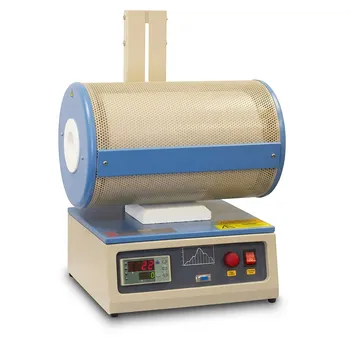
Multi Position Tube Furnace 1100C for Laboratory Material Research and Advanced Industrial Thermal Processing
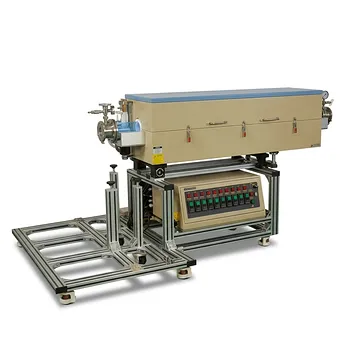
Ten Zone Multi Orientation Laboratory Tube Furnace for 1200C High Temperature Gradient Thermal Processing
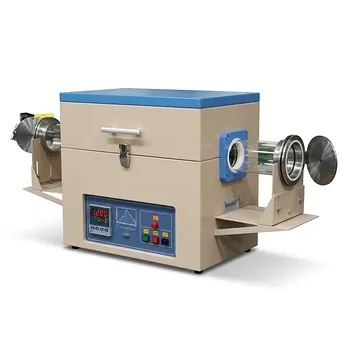
High Temperature 1200C Split Tube Furnace with Hinged Vacuum Flanges and 4 Inch Quartz Tube for Laboratory Research
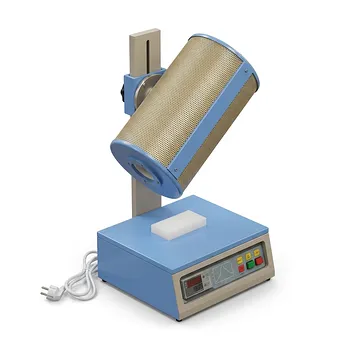
1100°C Vertical Laboratory Furnace for DIY Tubular Reactors with PID Temperature Controller

High Temperature Automated 5 Inch Tube Furnace for Autonomous Material Research and Advanced Laboratory R&D
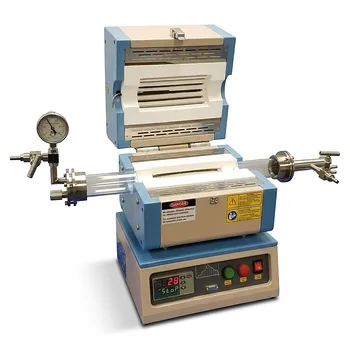
Compact Split Tube Furnace with Integrated Vacuum System and Precision Temperature Calibrator

1800C High Temperature Compact Vacuum Tube Furnace with 60mm OD Alumina Tube and Kanthal MoSi2 Heating Elements
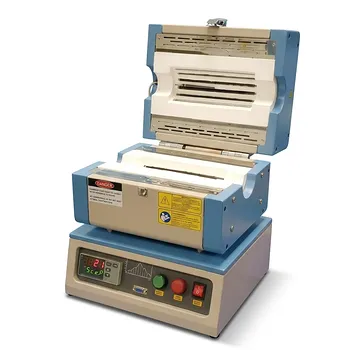
1250C Compact Split Tube Furnace with 8 Inch Heating Zone and Programmable Controller
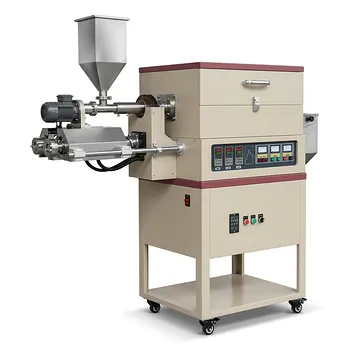
Laboratory Tilting Rotary Tubular Furnaces for Material Science and Industrial Heat Treatment
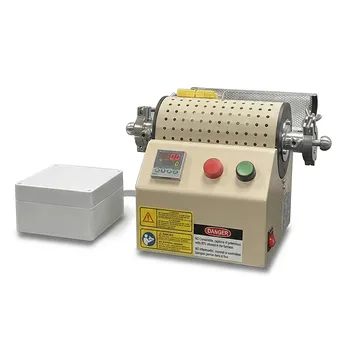
1000C Mini Tube Furnace with 20mm Quartz Tube and Vacuum Flanges for Material Science Research and Controlled Atmosphere Small Sample Processing

1700C High Temperature Alumina Tube Furnace with 18 Inch Heated Zone and Vacuum Sealing Flanges
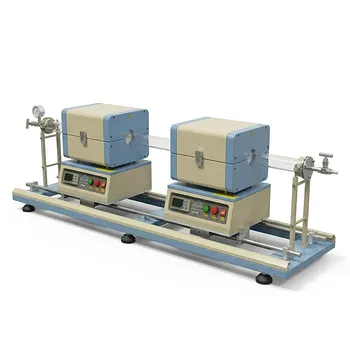
1200C Max Dual Sliding Tube Furnace with 50 mm Tube Flanges for CVD

High Temperature 1700C Tube Furnace with 4 Inch OD Alumina Tube and Vacuum Sealing Flanges
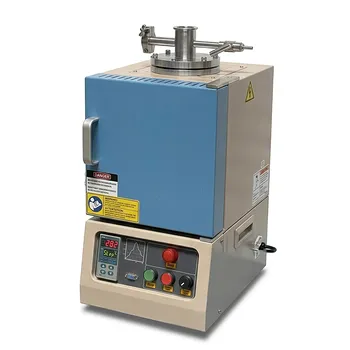
High Temperature Hybrid Muffle and Tube Furnace with Vacuum Capability and PID Control
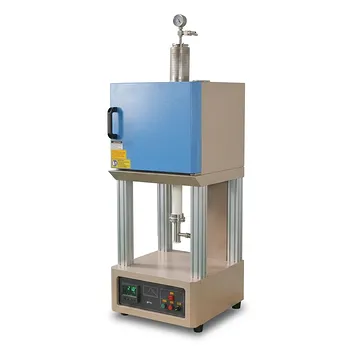
Hybrid High Temperature Tube and Box Furnace 1700C with 2 Inch Alumina Tube for Material Research
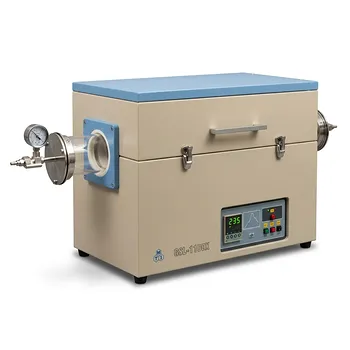
Single Zone Tube Furnace 5 Inch Quartz Tube 36 Inch Heating Zone Vacuum Flanges

High Temperature 1700C Vertical Tube Furnace for Powder Spherification and Material Sintering

1100C Tube Furnace with Vacuum Flange and Programmable Temperature Controller for Material Science and Industrial Heat Treatment

High Temperature 1700C Tube Furnace with High Vacuum Turbomolecular Pump System and Multi Channel Mass Flow Controller Gas Mixer
