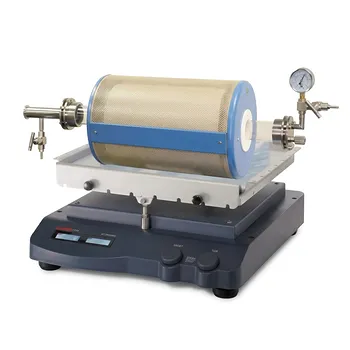
What is the role of a high-purity quartz glass reactor in high-temperature desulfurization? Ensure Precision & Purity
Updated 3 months ago
In high-temperature desulfurization experiments, the high-purity quartz glass reactor serves as the primary reaction vessel, providing a chemically inert and thermally stable environment. It is specifically utilized to house the desulfurization bed, ensuring that gas-solid reactions occur without catalytic interference from the vessel walls while allowing researchers to visually monitor color transitions in the desulfurizer.
The core role of a quartz reactor is to isolate the chemical reaction from external contaminants and wall-effects, ensuring that the experimental data—such as sulfur removal efficiency and reaction kinetics—is purely a result of the interaction between the gas and the desulfurizer.
Ensuring Chemical Purity and Eliminating Side Reactions
Prevention of Metal Wall Catalysis
Unlike metal reactors, high-purity quartz does not participate in the reaction or act as a catalyst. In desulfurization, metal walls can often trigger unwanted side reactions or prematurely catalyze gas phases, which would lead to inaccurate measurements of the desulfurizer’s performance.
Inertness Across Diverse Gas Species
Quartz remains non-reactive with common experimental gases such as nitrogen, oxygen, and carbon monoxide, even at elevated temperatures. This stability ensures that the chemical composition of the exhaust gas is a true reflection of the desulfurization process rather than secondary reactions with the reactor material.
Resistance to Alkaline and Corrosive Agents
Desulfurization often involves alkaline components or catalysts that can degrade lesser materials. Quartz provides a high degree of resistance to these substances, maintaining the structural integrity of the vessel and preventing the release of impurities into the sample.
Thermal Stability and Structural Integrity
Management of High Operating Temperatures
While some desulfurization processes occur at 300°C, quartz reactors are capable of withstanding much higher temperatures, often exceeding 700°C or even 1200K depending on the specific experiment. This headroom allows for testing the thermal limits of different desulfurization materials without risking vessel failure.
Thermal Shock Resistance
Quartz glass possesses an extremely low coefficient of thermal expansion, making it highly resistant to thermal shock. This allows the reactor to endure rapid temperature fluctuations during heating or cooling cycles without fracturing.
Efficient Heat Transfer
The material properties of quartz allow for the efficient transfer of thermal radiation from external heaters to the sample surface. This ensures that the desulfurizer bed reaches the target temperature uniformly, which is critical for maintaining an isothermal reaction zone.
Real-Time Observation and Data Capture
Monitoring Dynamic Color Transitions
The transparency of quartz is a vital diagnostic tool, allowing researchers to observe physical changes in the desulfurizer bed in real-time. For instance, the transition from light gray to yellow or dark gray provides an immediate visual indicator of the desulfurizer’s saturation level or chemical state.
Integration with Optical and Electronic Sensors
Because quartz is transparent and non-conductive, it facilitates the use of external optical sensors and ensures that electrical signals from internal electrodes remain unshielded. This is essential for capturing accurate kinetic data and oxygen removal peaks during the experiment.
Understanding the Trade-offs
Physical Fragility
Despite its thermal and chemical robustness, quartz is physically brittle compared to stainless steel or alloy reactors. It requires careful handling and precise mounting to prevent mechanical stress-induced cracking.
Temperature Ceilings
While quartz excels at high temperatures, it has a softening point (typically around 1100°C-1200°C for prolonged use). For extreme synthesis experiments reaching above 1600°C, quartz may only be suitable for short-term applications before structural deformation occurs.
Cost and Customization
High-purity quartz reactors are more expensive than standard glass and can be difficult to repair if damaged. Custom geometries, such as U-tubes for specific gas flow paths, require specialized fabrication which increases project lead times.
How to Apply This to Your Project
Making the Right Choice for Your Goal
- If your primary focus is kinetic accuracy: Use a quartz U-tube reactor to ensure an efficient dynamic contact path for gases while preventing any wall-catalyzed side reactions.
- If your primary focus is visual monitoring of material degradation: Prioritize high-purity transparent quartz to allow for high-resolution video recording of color shifts and bed morphology changes.
- If your primary focus is high-temperature durability above 1000°C: Ensure the reactor is supported to prevent sagging and monitor for devitrification, which can occur during prolonged exposure to extreme heat.
By leveraging the unique properties of high-purity quartz, you ensure that your desulfurization data is both precise and free from the confounding variables introduced by reactive vessel materials.
Summary Table:
| Feature | Key Benefit | Role in Desulfurization Experiments |
|---|---|---|
| Chemical Inertness | Prevents wall catalysis | Eliminates side reactions; ensures experimental data purity |
| High Transparency | Real-time observation | Allows monitoring of color transitions and saturation levels |
| Thermal Stability | Thermal shock resistance | Maintains structural integrity during rapid heating/cooling |
| Non-conductive | Signal integrity | Facilitates the use of optical and electronic sensors |
| Heat Transfer | Uniform heating | Ensures an isothermal reaction zone for the desulfurizer bed |
Optimize Your Research with THERMUNITS High-Temperature Solutions
At THERMUNITS, we understand that precision is the backbone of material science. As a leading manufacturer of high-temperature laboratory equipment, we provide the specialized tools you need for reliable R&D and industrial applications.
Our comprehensive range of thermal processing solutions—including Tube, Muffle, Vacuum, and Atmosphere Furnaces, CVD/PECVD systems, and Rotary Kilns—is designed to work seamlessly with high-purity quartz components to ensure chemical inertness and thermal stability in every experiment.
Whether you are performing desulfurization tests, material synthesis, or complex heat treatments, our equipment delivers the accuracy your project demands.
Ready to elevate your laboratory’s capabilities? Contact our experts today to find the perfect thermal solution for your specific requirements!
References
- Clarisse Lorreyte, Patrick Perré. New Approach for Sulfidation Process in Packed Bed with Hi-Fuel A310 Sorbent—Thermodynamical Studies. DOI: 10.3390/chemengineering8020038
Mentioned Products
- 1100°C High Temperature Quartz Chamber Furnace 8 Inch OD with 7.6 Liter Capacity and Vacuum Atmosphere Capability
- High Temperature Benchtop Muffle Furnace with Quartz Observation Window for Thermal Imaging and Material Analysis
- High Temperature Vertical Atmosphere Controlled Furnace with Automatic Bottom Loading and 1700°C Capacity for Advanced Material Research
- High Temperature Benchtop Muffle Furnace 1500C with 3.6L Chamber and Quartz Observation Window
- High Temperature 1200C Split Tube Furnace with Hinged Vacuum Flanges and 4 Inch Quartz Tube for Laboratory Research
People Also Ask
- Why is a quartz tube furnace necessary for phosphorus-doped MoS2/GO preparation? Ensure Purity & Precise Synthesis
- Benefits of high-vacuum quartz tube furnaces with N2 for Co3O4 nanosheets: Purity and Structural Integrity.
- What conditions does a quartz tube furnace provide for AlxCoCrFeNi steam corrosion tests? Achieve Precise R&D Control.
- Why is high-temperature annealing in a quartz tube furnace done after HfO2 deposition? Unlock peak film performance.
- Why is a high-purity quartz tube used for SP-Fe3O4-C? Ensure Chemical Purity & Catalytic Stability

Tech Team · ThermUnits
Last updated on Jun 02, 2026
Related Products
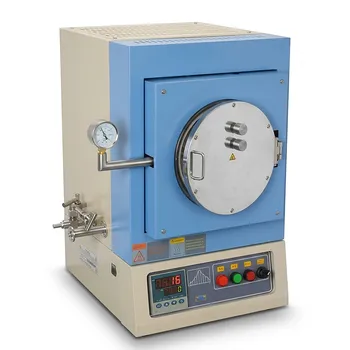
1100°C High Temperature Quartz Chamber Furnace 8 Inch OD with 7.6 Liter Capacity and Vacuum Atmosphere Capability
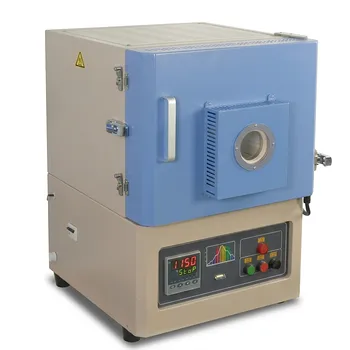
High Temperature Benchtop Muffle Furnace with Quartz Observation Window for Thermal Imaging and Material Analysis
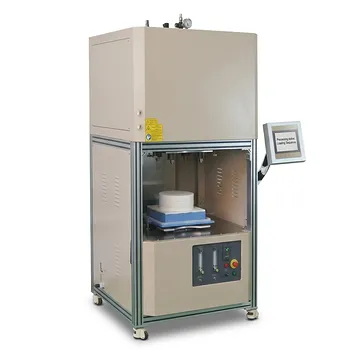
High Temperature Vertical Atmosphere Controlled Furnace with Automatic Bottom Loading and 1700°C Capacity for Advanced Material Research
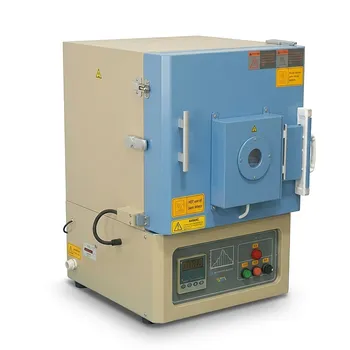
High Temperature Benchtop Muffle Furnace 1500C with 3.6L Chamber and Quartz Observation Window
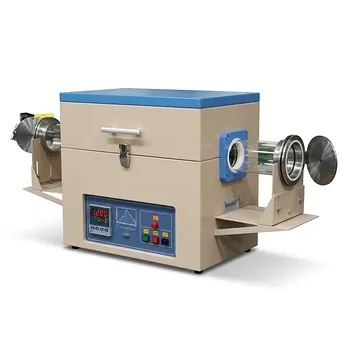
High Temperature 1200C Split Tube Furnace with Hinged Vacuum Flanges and 4 Inch Quartz Tube for Laboratory Research
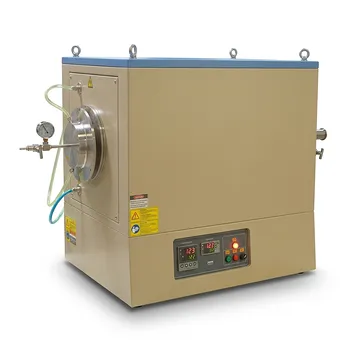
1100°C Large Diameter Quartz Tube Furnace with 24 Inch Heating Zone and Water Cooled Flanges

1200°C 5 Inch Vertical Quartz Tube Furnace with Stainless Steel Vacuum Flanges
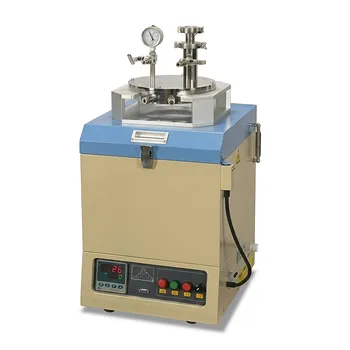
Vertical Vacuum Furnace 1100C High Temperature 8 Inch Quartz Chamber Water Cold Flange System
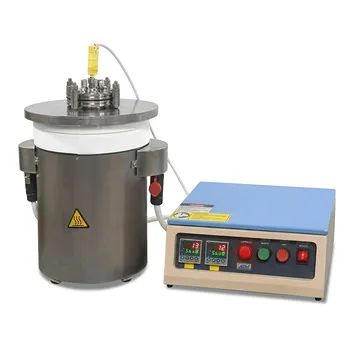
600°C Vertical Crucible Furnace with SS316 Alloy Reactor and 6 Port Vacuum Flange
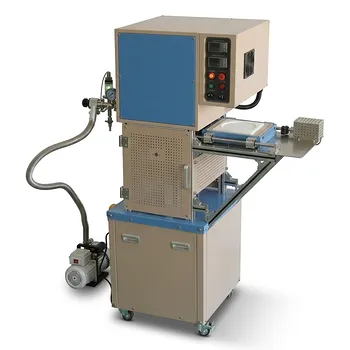
1200°C Bottom Loading Vacuum Furnace with Rapid Gas Cooling and 8.6 Inch Diameter Quartz Chamber
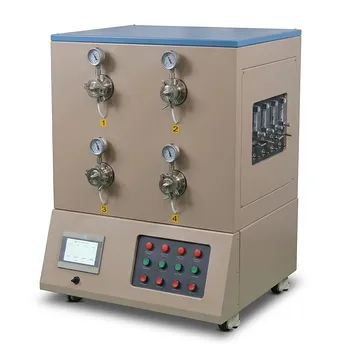
High Throughput 1200C Four Channel Tube Furnace with 3 Inch Quartz Tubes for Multi Zone Annealing and Material Research

High Temperature Automated 5 Inch Tube Furnace for Autonomous Material Research and Advanced Laboratory R&D
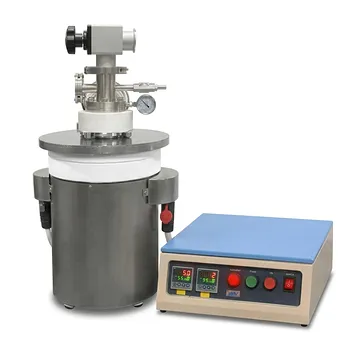
1100C High Temperature Vacuum Crucible Furnace with Quartz Chamber for Thermal Processing and Sintering
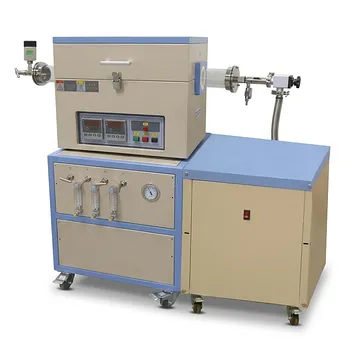
Dual Zone Quartz Tube Furnace with 80mm Diameter 1200C Max Temperature 3 Channel Gas Mixer and Vacuum Pump System
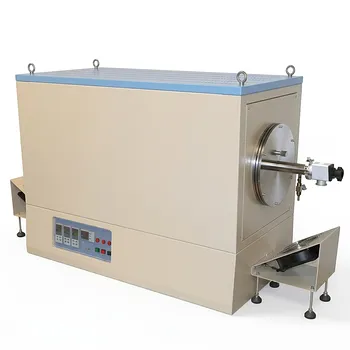
1100°C Three Zone Tube Furnace with 8.5 to 11 Inch OD Quartz Tube and Vacuum Flanges for Large Wafer Processing
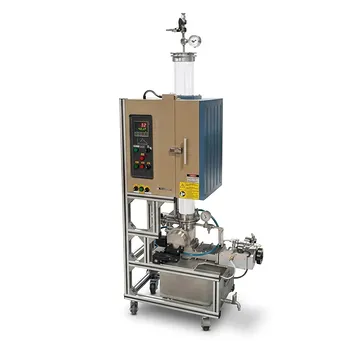
1200C High Temperature Atmosphere Controlled Vertical Quenching Tube Furnace with 4 Inch Quartz Tube