What is the role of a high-temperature tube atmosphere furnace in pyrolysis? Achieve Precise Pd NPs/NO-C Synthesis
Updated 3 months ago
The high-temperature tube atmosphere furnace is the primary reactor for converting Salen-Pd precursors into Pd NPs/NO-C composites. It provides the strictly controlled thermal and chemical environment required to simultaneously carbonize the organic framework and reduce palladium ions into highly dispersed nanoparticles while ensuring the synergistic doping of nitrogen and oxygen.
Core Takeaway: The furnace serves as a precision-controlled micro-environment that synchronizes thermal decomposition and chemical doping. By isolating the precursor from oxygen and applying specific heating curves, it dictates the final catalyst's microstructure, atomic dispersion, and elemental composition.
Precision Thermal Control and Precursor Transformation
Facilitating Controlled Thermal Decomposition
The furnace applies precise heating curves that allow the Salen-Pd precursor to undergo a staged decomposition rather than an abrupt combustion. This gradual breakdown is essential for maintaining the structural integrity of the resulting carbon framework.
By managing the rate of temperature increase, the furnace ensures that volatile components are removed systematically. This control directly influences the porosity and surface area of the final Pd NPs/NO-C composite.
Driving High-Temperature Carbonization
At elevated temperatures, the organic components of the precursor are converted into a stable carbon lattice. The furnace provides the high-energy environment needed to achieve graphitization, which enhances the electrical conductivity of the catalyst.
This carbonization process is what "locks" the palladium in place. Without the stable thermal field of the tube furnace, the carbon support would fail to form a coherent structure to host the active metal sites.
Atmospheric Engineering and Chemical Integrity
Maintaining a Stable Inert Environment
The furnace utilizes a continuous flow of inert gases, such as Argon or Nitrogen, to displace oxygen. This is critical because any presence of oxygen at high temperatures would lead to the combustion of the carbon framework and the unwanted oxidation of palladium.
The rigorous sealing performance of the tube furnace ensures that the purity of the atmosphere is maintained throughout the pyrolysis. This enables the successful synthesis of high-purity composites without secondary phase contaminants.
Enabling Synergistic Nitrogen and Oxygen Doping
The furnace environment facilitates the integration of nitrogen and oxygen atoms into the carbon lattice. As the precursor decomposes, these atoms are chemically bonded into the framework, creating active functional groups like quaternary nitrogen (N-Q).
This "synergistic doping" is a temperature-dependent process. The furnace allows for the specific thermal window where these atoms can be incorporated without being driven off as gaseous waste.
Structural Evolution and Particle Dispersion
Achieving Highly Dispersed Palladium Nanoparticles
The uniform temperature field within the furnace prevents the palladium atoms from migrating and clumping into large, inactive masses. Instead, it promotes the formation of highly dispersed palladium (Pd) nanoparticles.
This high dispersion is vital for catalytic efficiency, as it maximizes the available surface area of the metal. The furnace’s ability to provide consistent heat distribution ensures that these nanoparticles are uniform across the entire sample.
Anchoring Metal Sites into the Framework
Through thermal polycondensation, the furnace helps "anchor" the metal ions into the emerging nitrogen-doped carbon lattice. This prevents the palladium from leaching out during subsequent chemical reactions.
The resulting structure is a stable dual-doped carbon framework that encapsulates the Pd NPs. This encapsulation protects the active sites while allowing reactants to reach them through the porous structure.
Understanding the Trade-offs and Challenges
Heat Transfer vs. Atmosphere Flow
While high gas flow rates ensure a pure atmosphere, they can sometimes create temperature gradients within the tube. If the gas is not pre-heated or the flow is too aggressive, the precursor may experience non-uniform carbonization.
Over-Graphitization and Surface Area Loss
Excessive temperatures or prolonged residence times in the furnace can lead to excessive graphitization. While this improves conductivity, it can also collapse the micropores, reducing the specific surface area and burying active Pd sites.
Volatilization of Active Components
Certain dopants or even metal species can become volatile at extreme temperatures. Finding the "equilibrium temperature" is a critical challenge; the furnace must be hot enough to carbonize the support but not so hot that it drives off the very nitrogen or oxygen atoms intended for doping.
How to Apply This to Your Synthesis Goals
Strategic Recommendations for Catalyst Design
- If your primary focus is maximizing catalytic surface area: Use a moderate heating rate (e.g., 5°C/min) and a slightly lower peak temperature to prevent the collapse of the porous carbon structure.
- If your primary focus is high electrical conductivity: Aim for higher pyrolysis temperatures (above 900°C) to promote a higher degree of graphitization in the carbon framework.
- If your primary focus is preventing metal agglomeration: Ensure a strict inert atmosphere and utilize a precursor with strong nitrogen-coordination sites to "lock" the Pd atoms in place early in the heating cycle.
- If your primary focus is specific N/O doping ratios: Carefully calibrate the furnace dwell time, as prolonged exposure at peak heat can cause the preferential loss of oxygen functional groups.
The high-temperature tube atmosphere furnace is not merely a heater, but a sophisticated chemical reactor that defines the atomic architecture and functional performance of the Pd NPs/NO-C composite.
Summary Table:
| Stage of Pyrolysis | Role of the Tube Furnace | Key Result for Catalyst |
|---|---|---|
| Decomposition | Precise heating curve control | Controlled porosity & surface area |
| Carbonization | High-energy thermal field | Stable carbon lattice & conductivity |
| Atmosphere Control | Inert gas (Ar/N2) displacement | Prevention of oxidation & high purity |
| Chemical Doping | Defined thermal window | Synergistic Nitrogen & Oxygen doping |
| Metal Dispersion | Uniform temperature distribution | Anchored, non-agglomerated Pd nanoparticles |
Optimize Your Advanced Material Synthesis with THERMUNITS
Precise thermal processing is the foundation of high-performance catalyst synthesis. THERMUNITS is a leading manufacturer of high-temperature laboratory equipment, providing the accuracy and reliability required for material science and industrial R&D.
From achieving uniform atomic dispersion to ensuring stable atmospheric integrity, our equipment is designed to meet your most demanding research goals. Our comprehensive range includes:
- Advanced Furnaces: Tube, Muffle, Vacuum, Atmosphere, Rotary, and Hot Press Furnaces.
- Specialized Systems: CVD/PECVD systems, Vacuum Induction Melting (VIM), and Electric Rotary Kilns.
- R&D Essentials: Dental Furnaces, Thermal Elements, and custom heat treatment solutions.
Ready to elevate your lab's thermal processing capabilities? Contact THERMUNITS today for a tailored solution that drives your innovation forward.
References
- Xue‐Feng Cheng, Jianmei Lu. N, O Co‐Doping Enhanced Adsorption of Chloramphenicol for Highly Efficient and Robust Electrocatalytic Hydrodechlorination. DOI: 10.1002/cjoc.202400293
Mentioned Products
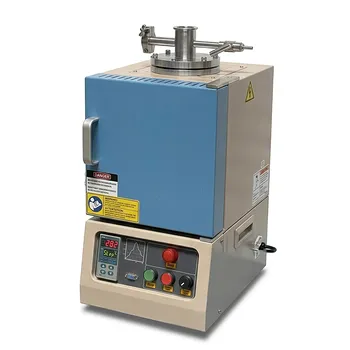
- 1750°C High Temperature Benchtop Vacuum Atmosphere Tube Furnace with Kanthal Super 1800 Heating Elements and 60mm Alumina Processing Tube
- 1700C High Temperature Alumina Tube Furnace with 18 Inch Heated Zone and Vacuum Sealing Flanges
- High Temperature 1200C Split Tube Furnace for CVD Research and Vacuum Atmosphere Heat Treatment
- High Temperature Vertical Atmosphere Controlled Furnace with Automatic Bottom Loading and 1700°C Capacity for Advanced Material Research
- Vertical 1700C Vacuum and Atmosphere Tube Furnace with 80mm Alumina Tube
People Also Ask
- What core functions does a high-temperature vacuum tube furnace provide? Optimize np-CuSn Sintering & Joint Integrity
- What is the role of a high-temperature tube furnace in the calcination process of ZnO/In2O3 nanocomposites?
- What role does a high-temperature tube furnace play in the sulfidation heat treatment of CoS@C/MXene nanocomposites? Guide
- Why is a high-temperature tube furnace required for CuAlO2 heat treatment? Master Phase Transformation Today
- What role does a high-temperature tube furnace play in executing nitrogen absorption kinetic experiments? Expert Insights

Tech Team · ThermUnits
Last updated on Jun 02, 2026
Related Products

1750°C High Temperature Benchtop Vacuum Atmosphere Tube Furnace with Kanthal Super 1800 Heating Elements and 60mm Alumina Processing Tube
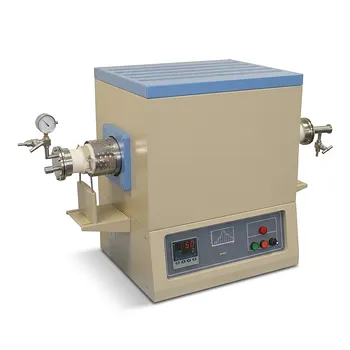
1700C High Temperature Alumina Tube Furnace with 18 Inch Heated Zone and Vacuum Sealing Flanges
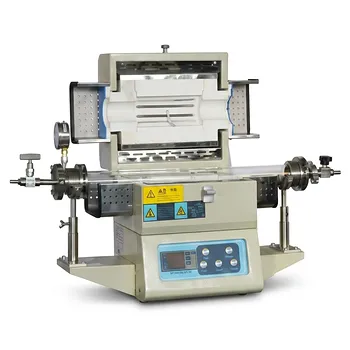
High Temperature 1200C Split Tube Furnace for CVD Research and Vacuum Atmosphere Heat Treatment
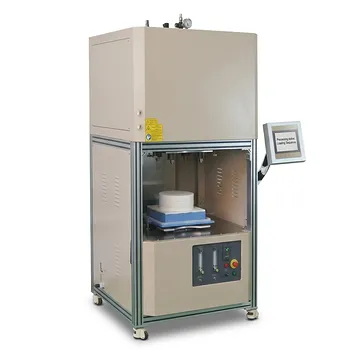
High Temperature Vertical Atmosphere Controlled Furnace with Automatic Bottom Loading and 1700°C Capacity for Advanced Material Research

Vertical 1700C Vacuum and Atmosphere Tube Furnace with 80mm Alumina Tube
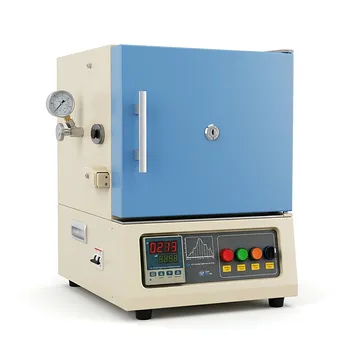
1200C Hybrid Muffle and Tube Furnace for Material Research with Dual Atmosphere Control Quartz Tubes
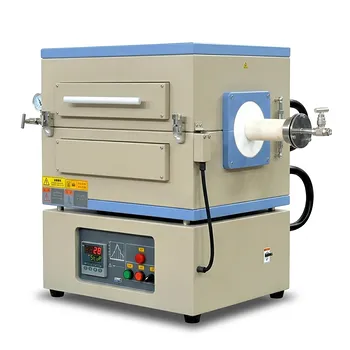
1500°C Split Tube Furnace with Alumina Tube and Vacuum Sealing Flanges for Material Research

1100°C High Temperature Quartz Chamber Furnace 8 Inch OD with 7.6 Liter Capacity and Vacuum Atmosphere Capability

High Temperature Tube Furnace 1500C with Sliding Flanges and 50mm OD for Rapid Thermal Processing Fast Heating and Cooling

High Temperature 1700C Tube Furnace with High Vacuum Turbomolecular Pump System and Multi Channel Mass Flow Controller Gas Mixer

Compact High Temperature 1600C Tube Furnace with 50mm Alumina Tube and Vacuum Flanges for Material Sintering

High Temperature 1700C Vertical Tube Furnace for Powder Spherification and Material Sintering

High Temperature 1700C Benchtop Tube Furnace with 5 Inch Heating Zone High Purity Alumina Tube and Vacuum Sealing Flanges
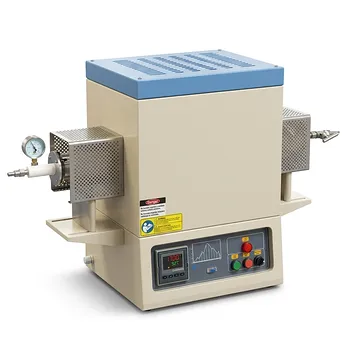
High Temperature Three Zone Tube Furnace 1700C with Alumina Tube and Water Cooled Flanges

High Temperature 1700C Six Zone Split Tube Furnace with Alumina Tube and Water Cooled Flanges

1800C High Temperature Compact Vacuum Tube Furnace with 60mm OD Alumina Tube and Kanthal MoSi2 Heating Elements

High Temperature Automated 5 Inch Tube Furnace for Autonomous Material Research and Advanced Laboratory R&D
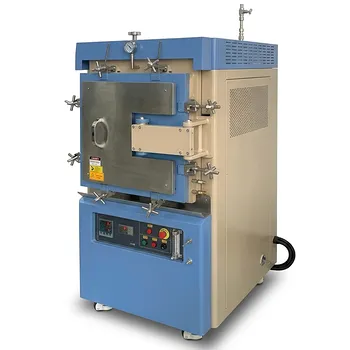
Atmosphere Controlled Muffle Furnace 1700C Maximum Temperature 80L High Capacity Vacuum Inert Gas Box Furnace
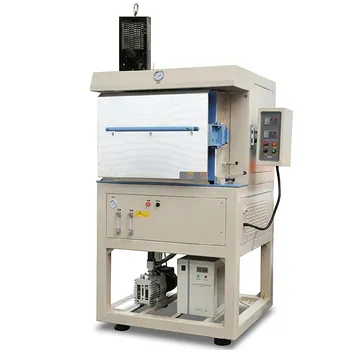
1200C Hydrogen Atmosphere Box Furnace with 5 Heated Sides and 64L Chamber