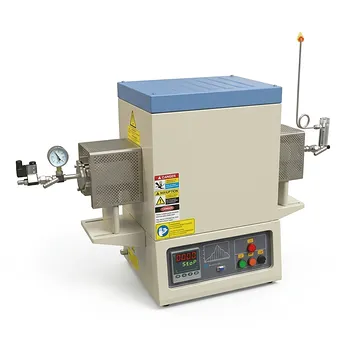
What is the role of a high-temperature tube furnace in the heat treatment of FeCoNi@CNTs powder? Advanced Synthesis Guide
Updated 3 months ago
The high-temperature tube furnace serves as a precision-controlled thermal reactor. It provides the specific environment—typically ranging from 500 °C to 900 °C within a controlled argon atmosphere—required to facilitate the simultaneous pyrolysis of precursors, the catalytic growth of carbon nanotubes (CNTs), and the in-situ alloying of FeCoNi medium-entropy nanoparticles.
Core Takeaway: The tube furnace is the fundamental engine for synthesizing FeCoNi@CNTs because it synchronizes complex chemical reactions, including metal ion reduction and carbon lattice formation, within a strictly anaerobic environment.
Facilitating Complex Chemical Transformations
Conversion of Precursors
The furnace provides the thermal energy necessary to convert cyanamide precursors into a g-C3N4 network. This transformation is a critical intermediate step that sets the stage for the subsequent development of the carbon framework.
In-Situ Carbon Nanotube Growth
By utilizing the catalytic effect of transition metals (Fe, Co, Ni), the furnace drives the growth of carbon nanotubes directly from the carbon-rich precursors. This process occurs simultaneously with the thermal treatment, ensuring the nanotubes are formed in a single-step operation.
Pyrolysis of Organic Skeletons
The furnace drives the pyrolysis of organic skeletons, such as metal-organic frameworks (MOFs), into stable carbon structures. This thermal energy induces the rearrangement of metal components, transforming them from organic complexes into specific crystalline structures.
Precision Control of Metallurgical Phases
Reduction and Alloying
A primary role of the furnace is to provide a reducing or inert atmosphere that facilitates the reduction of metal ions. Within the tube, Fe, Co, and Ni ions are reduced and alloyed in-situ to form medium-entropy alloy nanoparticles.
Encapsulation and Stabilization
The furnace environment ensures that these alloy nanoparticles are encapsulated within the inner walls of the carbon nanotubes. This encapsulation is vital for preventing the agglomeration of nanoparticles and ensuring long-term structural stability.
Achieving Single-Phase Structures
By precisely controlling the heating curve (often at rates like 5 °C/min) and implementing multi-stage insulation, the furnace allows for the formation of stable single-phase face-centered cubic (FCC) structures. This level of control is essential for the high-entropy and medium-entropy alloying processes.
Engineering the Carbon Microstructure
Defect Density Regulation
The tube furnace allows for heat treatments at specific temperature gradients (e.g., 500 °C, 700 °C, and 900 °C) to control the degree of chemical activation. This precision is used to induce specific densities of vacancy defects within the CNT lattice, which can tune the material's electromagnetic properties.
Enhancing Crystallinity
High-temperature annealing within the furnace removes amorphous carbon and surface impurities. This process repairs defects in the carbon tube walls, significantly improving the crystallinity and electrical conductivity of the final powder.
Nitrogen Doping
When using specific precursors like melamine or cyanamide under nitrogen protection, the furnace facilitates the formation of nitrogen-doped carbon skeletons. This doping is essential for creating high specific surface areas and active sites for catalytic applications.
Understanding the Trade-offs
Atmosphere Sensitivity
The integrity of the FeCoNi@CNTs depends entirely on the sealing properties of the furnace. Even trace amounts of oxygen can lead to the oxidation of the FeCoNi nanoparticles, preventing proper alloying and degrading the electrical properties of the CNTs.
Heating Rate Constraints
Rapid heating can lead to non-uniform phase distribution or poor encapsulation. Conversely, excessively slow heating rates may lead to grain growth, where the alloy nanoparticles become too large, reducing the effective surface area and performance of the material.
Scaling and Throughput
While tube furnaces offer high precision for laboratory-scale synthesis, maintaining thermal uniformity across a large volume of powder is challenging. Inconsistent temperature zones within the tube can lead to variations in CNT diameter and defect density across a single batch.
How to Apply This to Your Project
Making the Right Choice for Your Goal
- If your primary focus is maximum electrical conductivity: Prioritize high-temperature annealing (900 °C+) to repair carbon lattice defects and remove amorphous carbon.
- If your primary focus is precise medium-entropy alloying: Use a slow heating rate (5 °C/min) with multi-stage insulation to ensure complete metal reduction and phase stabilization.
- If your primary focus is electromagnetic shielding: Optimize the temperature gradients during KOH activation to induce a specific density of vacancy defects.
- If your primary focus is catalytic activity: Focus on lower-temperature ranges (around 700 °C–800 °C) to maintain smaller nanoparticle sizes and prevent excessive sintering.
By mastering the thermal and atmospheric parameters of the tube furnace, you can precisely tune the synergistic relationship between the FeCoNi alloy and its carbon nanotube host.
Summary Table:
| Key Role | Specific Function | Technical Impact |
|---|---|---|
| Thermal Reactor | Facilitates pyrolysis of g-C3N4 & MOFs | Converts precursors into stable carbon frameworks |
| Catalytic Growth | Drives transition metal catalytic reactions | Enables in-situ single-step carbon nanotube (CNT) growth |
| In-Situ Alloying | Precise reduction of Fe, Co, and Ni ions | Forms stable single-phase (FCC) medium-entropy nanoparticles |
| Phase Control | Multi-stage insulation & precise heating rates | Prevents grain growth and ensures nanoparticle encapsulation |
| Microstructure Tuning | Regulates temperature gradients (500-900°C) | Controls defect density, crystallinity, and nitrogen doping |
Elevate Your Material Research with THERMUNITS
Precise thermal control is the difference between an amorphous mixture and a high-performance medium-entropy alloy. THERMUNITS is a leading manufacturer of high-temperature laboratory equipment designed specifically for material science and industrial R&D.
Whether you are synthesizing FeCoNi@CNTs, developing advanced catalysts, or engineering electromagnetic shielding materials, our comprehensive range of thermal processing solutions—including Tube, Vacuum, Atmosphere, and Rotary furnaces, as well as CVD/PECVD systems—provides the atmospheric purity and temperature stability your research demands.
Ready to optimize your heat treatment process? Contact our engineering team today to discuss your specific application and discover how our high-precision furnaces can accelerate your R&D breakthroughs.
References
- Xinxue Tang, Juan Song. Epsilon-near-zero and magnetically driven properties for medium-entropy FeCoNi alloy particle-doped CNTs and their derivatives. DOI: 10.1007/s42114-024-01136-6
Mentioned Products
- High Temperature Tube Furnace 1500C with Sliding Flanges and 50mm OD for Rapid Thermal Processing Fast Heating and Cooling
- High Temperature 1700C Tube Furnace with High Vacuum Turbomolecular Pump System and Multi Channel Mass Flow Controller Gas Mixer
- 1750°C High Temperature Benchtop Vacuum Atmosphere Tube Furnace with Kanthal Super 1800 Heating Elements and 60mm Alumina Processing Tube
- High Temperature 1700C Benchtop Tube Furnace with 5 Inch Heating Zone High Purity Alumina Tube and Vacuum Sealing Flanges
- 1700C High Temperature Alumina Tube Furnace with 18 Inch Heated Zone and Vacuum Sealing Flanges
People Also Ask
- How are high-temperature tube furnaces utilized to repair etching damage? Precision Lattice Restoration Solutions
- What role does a high-temperature tube furnace play in CVD synthesis of silicon nanowires? Master VLS Growth Precision.
- What core conditions does a high-temperature tube furnace provide for rGO aerogels? Mastering Precision Synthesis.
- What role does a high-temperature tube furnace play in the sulfidation heat treatment of CoS@C/MXene nanocomposites? Guide
- How does precision tube furnace control influence CoFe nanoparticle formation? Master Your Bimetallic Synthesis.

Tech Team · ThermUnits
Last updated on Jun 03, 2026
Related Products
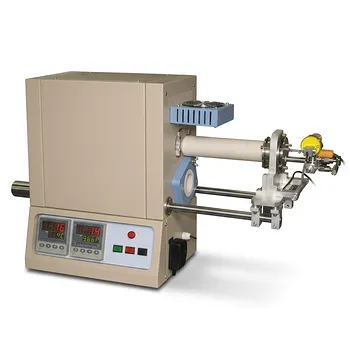
High Temperature Tube Furnace 1500C with Sliding Flanges and 50mm OD for Rapid Thermal Processing Fast Heating and Cooling

High Temperature 1700C Tube Furnace with High Vacuum Turbomolecular Pump System and Multi Channel Mass Flow Controller Gas Mixer
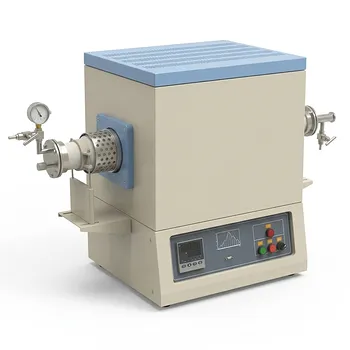
1750°C High Temperature Benchtop Vacuum Atmosphere Tube Furnace with Kanthal Super 1800 Heating Elements and 60mm Alumina Processing Tube
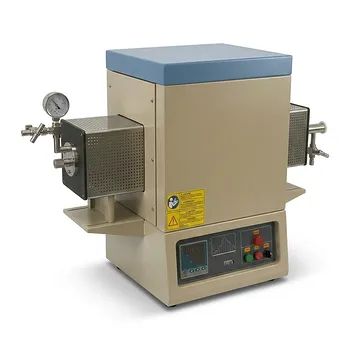
High Temperature 1700C Benchtop Tube Furnace with 5 Inch Heating Zone High Purity Alumina Tube and Vacuum Sealing Flanges
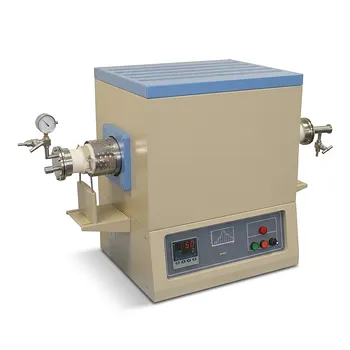
1700C High Temperature Alumina Tube Furnace with 18 Inch Heated Zone and Vacuum Sealing Flanges
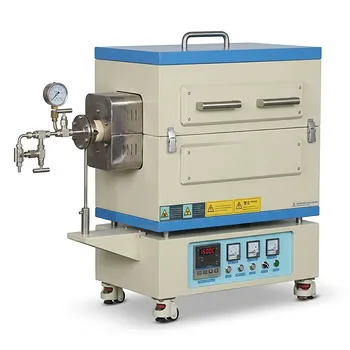
High Temperature Split Tube Furnace 1500C for Material Research Vacuum and Atmosphere Thermal Processing

1800C High Temperature Compact Vacuum Tube Furnace with 60mm OD Alumina Tube and Kanthal MoSi2 Heating Elements

Compact High Temperature 1600C Tube Furnace with 50mm Alumina Tube and Vacuum Flanges for Material Sintering
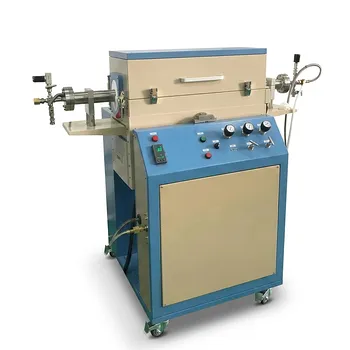
High Temperature Rocking Tube Furnace 1700°C Alumina Processing Tube with Precision Oscillation for Material Synthesis
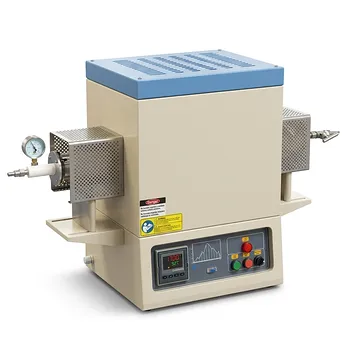
High Temperature Three Zone Tube Furnace 1700C with Alumina Tube and Water Cooled Flanges

High Temperature 1700C Vertical Tube Furnace for Powder Spherification and Material Sintering
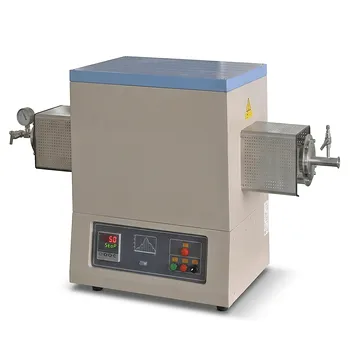
High Temperature 1700C Tube Furnace with 4 Inch OD Alumina Tube and Vacuum Sealing Flanges
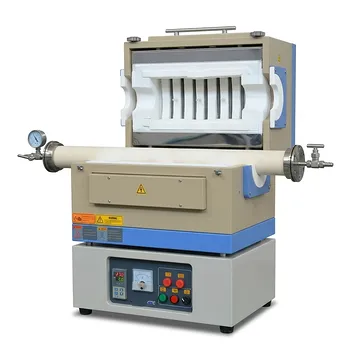
High Temperature 1600C Split Tube Furnace Vacuum Flanges Valves Optional 60mm 80mm Alumina Tube

High Temperature Automated 5 Inch Tube Furnace for Autonomous Material Research and Advanced Laboratory R&D
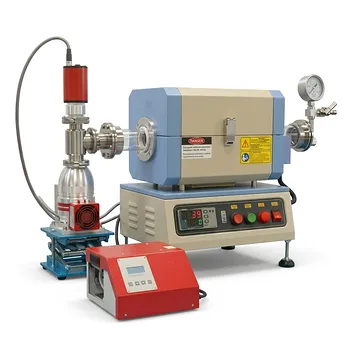
High Vacuum Compact Tube Furnace 1200C with Integrated Turbo Pump System and 8 Inch Heating Zone
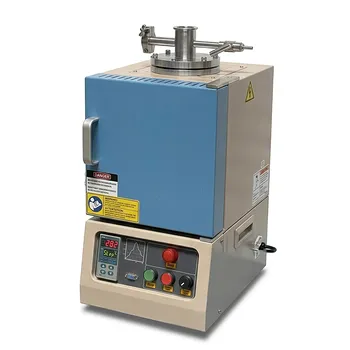
High Temperature Hybrid Muffle and Tube Furnace with Vacuum Capability and PID Control

1100C Tube Furnace with Vacuum Flange and Programmable Temperature Controller for Material Science and Industrial Heat Treatment
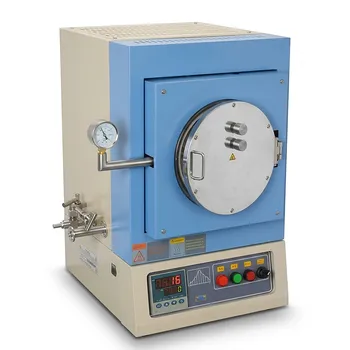
1100°C High Temperature Quartz Chamber Furnace 8 Inch OD with 7.6 Liter Capacity and Vacuum Atmosphere Capability
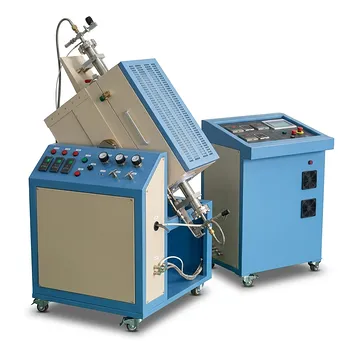
1100C High Pressure Rocking Tube Furnace with 2 Inch Super Alloy Processing Tube for Material Synthesis