What's the role of tube furnaces in HOM-m MgFe2O4/MgO synthesis? Mastering Thermal Transitions
Updated 3 months ago
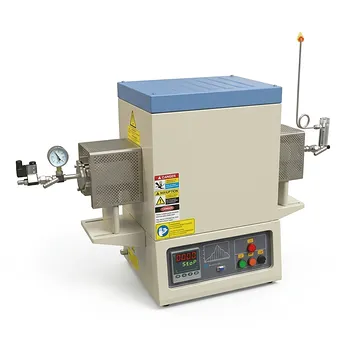
The high-temperature tube furnace is the critical thermal reactor used to transform precursors into the final MgFe2O4/MgO composite through a multi-stage heating process. It enables the sequential removal of organic templates and triggers the solid-phase reaction required to form the spinel phase heterostructure. By providing a stable, programmable environment, the furnace ensures the material achieves high crystallinity while preserving its complex, hierarchically ordered pore structure.
Core Takeaway: The tube furnace acts as a controlled environment for precise thermochemical transitions, specifically managing template decomposition and the high-temperature solid-state synthesis of the MgFe2O4/MgO heterojunction.
Facilitating Multistage Thermal Decomposition
The synthesis of hierarchically ordered materials requires the removal of sacrificial templates that define the pore structure. The tube furnace provides the thermal energy necessary to eliminate these components without collapsing the architectural framework.
Preliminary Decomposition of Soft Templates
At approximately 300°C, the furnace facilitates the initial breakdown of soft templates and organic precursors. This controlled heating prevents rapid gas evolution that could rupture the delicate nascent structure of the composite.
Complete Removal of Hard Templates
To achieve the "macroporous" aspect of the HOM-m structure, Polystyrene (PS) hard templates must be fully excised. The tube furnace maintains a stable environment at 550°C to ensure complete combustion and removal of these templates, leaving behind a defined macroporous network.
Enabling Solid-Phase Heterostructure Formation
Beyond simple heating, the tube furnace is the site of the chemical transformation where individual oxides merge into a functional composite.
Triggering the Spinel Phase Reaction
At the target temperature of 550°C, the furnace provides the activation energy for a solid-phase reaction between magnesium and iron oxides. This reaction results in the formation of the MgFe2O4 spinel phase, which exists in a heterostructure with MgO.
Promoting High Crystallinity
A precise thermal field is essential for the atoms to rearrange into a highly ordered crystalline lattice. The tube furnace’s ability to maintain constant temperatures allows for the growth of stable crystalline grains, which is vital for the material’s final chemical and physical properties.
Maintaining Structural Integrity and Atmosphere
The role of the furnace extends beyond temperature to include the physical and chemical stability of the reaction environment.
Preserving Hierarchical Order
The "Hierarchically Ordered" nature of the composite is sensitive to thermal shock and uneven heating. The tube furnace provides uniform heating and controlled cooling rates, which prevent structural collapse and ensure the mesopores and macropores remain intact after template removal.
Atmospheric Control and Sealing
Like many advanced synthesis processes, the tube furnace uses its sealed environment to manage the reaction atmosphere. This prevents unwanted oxidation or contamination, ensuring that the transition from metal-organic precursors to oxides proceeds along the intended chemical pathway.
Understanding the Trade-offs
While the tube furnace is indispensable, it presents specific challenges that must be managed to ensure successful synthesis.
- Sintering vs. Porosity: Excessive temperatures or prolonged dwell times can lead to over-sintering. This causes the fine mesoporous structures to fuse, significantly reducing the surface area and defeating the purpose of the hierarchical design.
- Heating Rate Sensitivity: If the heating rate is too aggressive, the rapid decomposition of templates can generate internal pressure. This may lead to macro-cracks or the total mechanical failure of the ordered composite.
- Thermal Gradients: In larger tube furnaces, slight variations in temperature between the center and the edges of the tube can lead to inhomogeneous phase distribution in the final MgFe2O4/MgO product.
How to Apply This to Your Synthesis Goal
When utilizing a high-temperature tube furnace for synthesizing complex oxide composites, your settings should align with your specific structural requirements.
- If your primary focus is Maximum Surface Area: Utilize slower heating rates (e.g., 2-5°C/min) during the 300°C–550°C transition to ensure templates are removed gently without collapsing the mesopores.
- If your primary focus is Phase Purity and Crystallinity: Ensure the furnace is calibrated for high temperature stability at 550°C and consider a longer dwell time to allow the solid-phase reaction to reach equilibrium.
- If your primary focus is Structural Consistency: Use a multi-stage insulation process to ensure the core of the precursor material reaches the target temperature simultaneously with the surface.
The tube furnace is the bridge between a disordered precursor and a highly functional, hierarchically ordered heterostructure.
Summary Table:
| Synthesis Stage | Temp | Key Role in Composite Formation |
|---|---|---|
| Soft Template Breakdown | ~300°C | Prevents rapid gas evolution & structural rupture |
| Hard Template Removal | 550°C | Complete combustion of PS templates for macropores |
| Spinel Phase Reaction | 550°C | Enables solid-phase reaction for MgFe2O4/MgO |
| Crystallization | Target | Ensures high crystallinity and stable grain growth |
| Atmospheric Control | Constant | Prevents unwanted oxidation and contamination |
Optimize Your Advanced Material Synthesis with THERMUNITS
Achieving the perfect hierarchically ordered structure requires uncompromising thermal precision. THERMUNITS is a leading manufacturer of high-temperature laboratory equipment, dedicated to supporting material science and industrial R&D worldwide.
Our specialized solutions, including Tube Furnaces, Muffle Furnaces, Vacuum & Atmosphere Furnaces, CVD/PECVD systems, Rotary Furnaces, and Hot Press furnaces, provide the stable, programmable environments necessary for complex heterojunction synthesis and high-purity heat treatments. From Dental Furnaces and Electric Rotary Kilns to Vacuum Induction Melting (VIM) systems and high-quality Thermal Elements, we deliver the technology needed to preserve complex pore structures and enhance phase purity.
Ready to enhance your lab's R&D capabilities? Contact our experts today for a custom thermal solution tailored to your research goals.
References
- Lina Zhang, Baixiong Liu. Hierarchically Ordered Macroporous–Mesoporous (HOM-m) MgFe2O4/MgO for Highly Efficient Adsorption of Ce(III) and La(III): Experimental Study and DFT Calculation Analysis. DOI: 10.3390/separations11120333
Mentioned Products
- High Temperature Tube Furnace 1500C with Sliding Flanges and 50mm OD for Rapid Thermal Processing Fast Heating and Cooling
- High Temperature 1700C Tube Furnace with High Vacuum Turbomolecular Pump System and Multi Channel Mass Flow Controller Gas Mixer
- 1750°C High Temperature Benchtop Vacuum Atmosphere Tube Furnace with Kanthal Super 1800 Heating Elements and 60mm Alumina Processing Tube
- High Temperature 1700C Benchtop Tube Furnace with 5 Inch Heating Zone High Purity Alumina Tube and Vacuum Sealing Flanges
- 1700C High Temperature Alumina Tube Furnace with 18 Inch Heated Zone and Vacuum Sealing Flanges
People Also Ask
- How are high-temperature tube furnaces utilized to repair etching damage? Precision Lattice Restoration Solutions
- What core conditions does a high-temperature tube furnace provide for rGO aerogels? Mastering Precision Synthesis.
- What role does a high-temperature tube furnace play in CVD synthesis of silicon nanowires? Master VLS Growth Precision.
- How does precision tube furnace control influence CoFe nanoparticle formation? Master Your Bimetallic Synthesis.
- What role does a high-temperature tube furnace play in the sulfidation heat treatment of CoS@C/MXene nanocomposites? Guide

Tech Team · ThermUnits
Last updated on Jun 03, 2026
Related Products
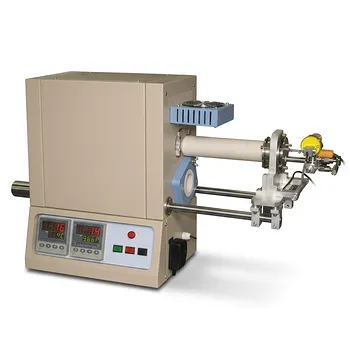
High Temperature Tube Furnace 1500C with Sliding Flanges and 50mm OD for Rapid Thermal Processing Fast Heating and Cooling

High Temperature 1700C Tube Furnace with High Vacuum Turbomolecular Pump System and Multi Channel Mass Flow Controller Gas Mixer

1750°C High Temperature Benchtop Vacuum Atmosphere Tube Furnace with Kanthal Super 1800 Heating Elements and 60mm Alumina Processing Tube

High Temperature 1700C Benchtop Tube Furnace with 5 Inch Heating Zone High Purity Alumina Tube and Vacuum Sealing Flanges
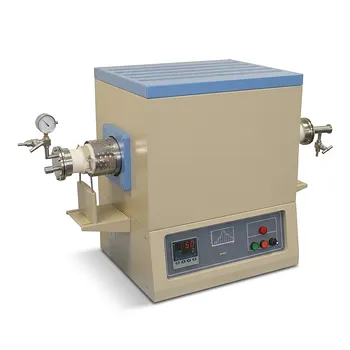
1700C High Temperature Alumina Tube Furnace with 18 Inch Heated Zone and Vacuum Sealing Flanges
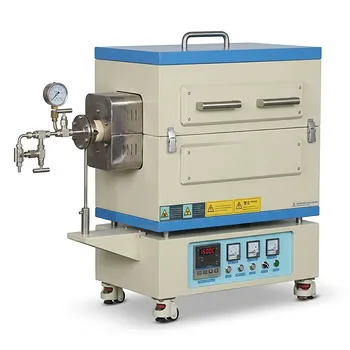
High Temperature Split Tube Furnace 1500C for Material Research Vacuum and Atmosphere Thermal Processing

Compact High Temperature 1600C Tube Furnace with 50mm Alumina Tube and Vacuum Flanges for Material Sintering

1800C High Temperature Compact Vacuum Tube Furnace with 60mm OD Alumina Tube and Kanthal MoSi2 Heating Elements
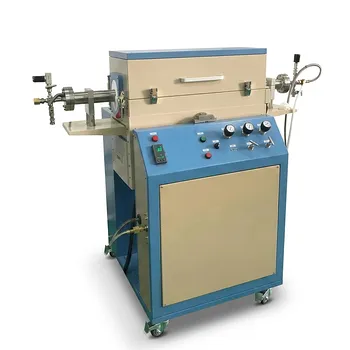
High Temperature Rocking Tube Furnace 1700°C Alumina Processing Tube with Precision Oscillation for Material Synthesis
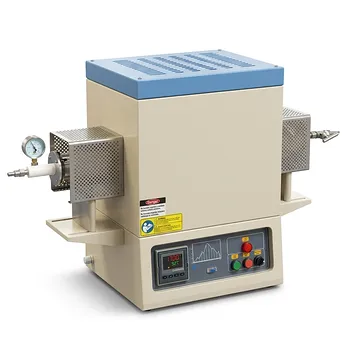
High Temperature Three Zone Tube Furnace 1700C with Alumina Tube and Water Cooled Flanges

High Temperature 1700C Vertical Tube Furnace for Powder Spherification and Material Sintering
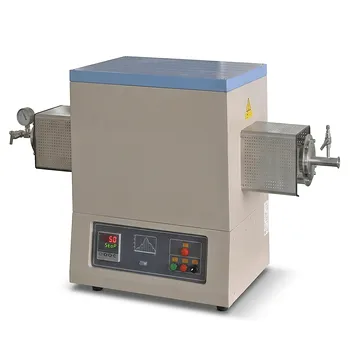
High Temperature 1700C Tube Furnace with 4 Inch OD Alumina Tube and Vacuum Sealing Flanges
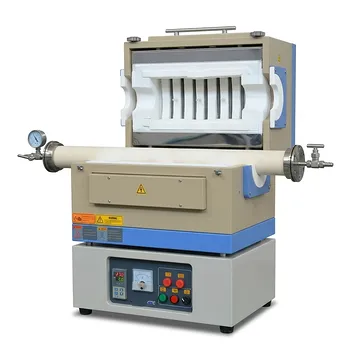
High Temperature 1600C Split Tube Furnace Vacuum Flanges Valves Optional 60mm 80mm Alumina Tube

High Temperature Automated 5 Inch Tube Furnace for Autonomous Material Research and Advanced Laboratory R&D
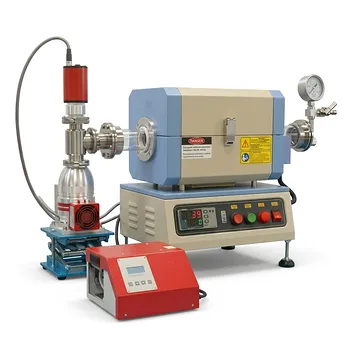
High Vacuum Compact Tube Furnace 1200C with Integrated Turbo Pump System and 8 Inch Heating Zone
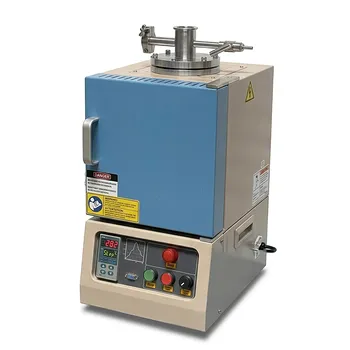
High Temperature Hybrid Muffle and Tube Furnace with Vacuum Capability and PID Control
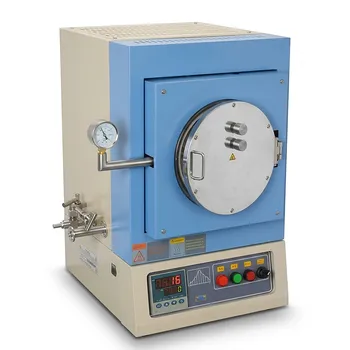
1100°C High Temperature Quartz Chamber Furnace 8 Inch OD with 7.6 Liter Capacity and Vacuum Atmosphere Capability
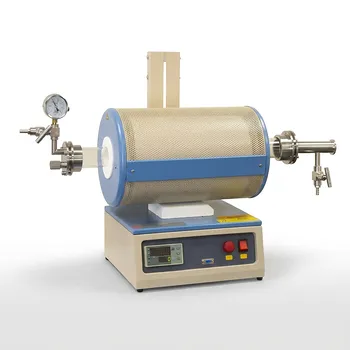
1100C Tube Furnace with Vacuum Flange and Programmable Temperature Controller for Material Science and Industrial Heat Treatment
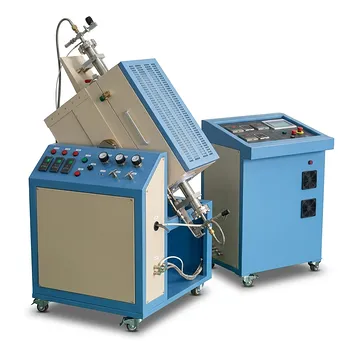
1100C High Pressure Rocking Tube Furnace with 2 Inch Super Alloy Processing Tube for Material Synthesis