What is the role of a tube furnace in MOF carbonization? Achieve High-Performance Catalysts with Precision Control
Updated 3 months ago
The high vacuum or atmosphere tube furnace serves as the foundational reaction environment for the thermal transformation of Metal-Organic Frameworks (MOFs) into high-performance catalysts. It provides the strictly controlled inert or reducing atmospheres and precise heating profiles required to convert organic ligands into conductive carbon matrices. By managing the thermal field and gas composition, the furnace ensures the formation of stable, carbon-encapsulated metal nanoparticles while preserving the structural integrity and porosity of the material.
While MOFs offer unique precursor structures, they are inherently unstable until properly carbonized. The tube furnace solves this by enabling controlled pyrolysis that transforms these precursors into durable catalysts while preventing unwanted oxidation or the loss of critical surface area.
Environmental Control and Material Protection
Maintaining Inert Gas Protection
The furnace provides a sealed environment for high-purity inert gases like Argon (Ar) or Nitrogen (N2). This protection is vital to prevent the unintended oxidation of the carbon support or metal species at temperatures often exceeding 800 °C.
Facilitating Reducing Atmospheres
By introducing reducing gas mixtures such as H2/Ar, the furnace facilitates the conversion of polymer components into nitrogen-doped carbon (NC) layers. This precise atmospheric control is critical for reducing metal components into uniformly dispersed nanoparticles and constructing efficient catalytic interfaces.
Preservation of Oxygen Vacancies
In specific applications like Co-MOF decomposition, an oxygen-free environment is required to avoid deep oxidation of metal oxides. Using an inert atmosphere in the tube furnace helps preserve oxygen vacancy (Ov) structures, which are often the primary active sites for electrochemical reactions.
Structural Evolution and Porosity Management
Pyrolysis of Organic Ligands
The furnace generates the stable thermal field necessary for the pyrolytic carbonization of organic ligands. This process removes volatiles and transforms the MOF precursor into a nanocrystalline composite, such as CaO/ZnO or carbon-encapsulated metal clusters.
Retaining Microporous Frameworks
Precise temperature control ensures that the resulting carbon material retains the original framework's microporous structure. By carefully managing the heating rate, the furnace allows volatiles to escape without collapsing the pores, resulting in ultra-high specific surface areas.
Formation of Conductive Nanowalls
The high-temperature treatment facilitates the formation of self-supported nanowall arrays. This structural evolution significantly improves electrical conductivity and ensures the catalyst remains stable during rigorous electrochemical cycles.
Active Site Engineering and Stabilization
Preventing Sintering and Agglomeration
A primary role of the furnace is to anchor metal ions within the carbon matrix during pyrolysis. By controlling the heating rate (e.g., 5 °C/min), the furnace prevents the sintering and agglomeration of nanoparticles, ensuring a high density of active sites.
Phase Transformation and Fixation
The furnace provides the energy required to convert precursors, such as iron salts or ammonium molybdate, into stable active species like Fe3O4 or Mo2C. This in-situ carbonization ensures that active components are effectively anchored within the porous substrate.
Encapsulation for Longevity
Through thermal decomposition and reorganization, the furnace helps create carbon-encapsulated metal nanoparticles. This encapsulation provides structural stabilization, protecting the metal core from leaching or poisoning during chemical reactions.
Understanding the Technical Trade-offs
Heating Rate vs. Structural Integrity
While high heating rates increase throughput, they can cause rapid gas evolution that ruptures the MOF's delicate pore structure. Conversely, excessively slow heating may lead to the gradual collapse of the framework before carbonization is complete.
Temperature Limits and Phase Purity
Operating at higher temperatures (e.g., 900 °C) enhances conductivity and crystallinity but increases the risk of metal particle growth. Selecting the optimal temperature is a trade-off between the desired phase (like molybdenum carbide) and the maintenance of a high surface area.
Atmosphere Purity and Cost
Maintaining a high-vacuum or ultra-pure gas flow is essential for avoiding trace oxygen contamination. However, this increases the complexity and cost of the process, requiring a balance between the sensitivity of the metal species and available resources.
How to Apply This to Your Project
Recommendations for Catalyst Synthesis
- If your primary focus is maximizing specific surface area: Use a slow heating rate (2-5 °C/min) and a constant temperature dwell to allow volatiles to escape without collapsing micropores.
- If your primary focus is preventing metal nanoparticle sintering: Ensure your carrier gas is high-purity Ar or N2 and consider lower carbonization temperatures to keep metal clusters ultrafine.
- If your primary focus is creating nitrogen-doped interfaces: Utilize a reducing atmosphere like H2/Ar or N2 during the carbonization of precursors containing nitrogen-rich ligands.
- If your primary focus is preventing oxidation of carbides or sensitive oxides: Utilize a high-vacuum purge followed by a strictly sealed inert gas flow throughout the entire heating and cooling cycle.
The tube furnace remains the indispensable tool for transforming delicate MOF architectures into robust, high-performance catalytic materials.
Summary Table:
| Key Role | Impact on MOF-Derived Catalysts | Technical Implementation |
|---|---|---|
| Atmospheric Shielding | Prevents oxidation of carbon/metal species | High-purity Ar/N2 or High Vacuum purge |
| Reducing Environments | Forms nitrogen-doped carbon (NC) layers | H2/Ar or N2 gas mixture flow |
| Thermal Stability | Preserves microporous framework structures | Precise heating rates (2-5 °C/min) |
| Active Site Engineering | Prevents sintering and agglomeration | Controlled cooling and thermal dwell |
| Structural Fixation | Nanoparticle encapsulation for longevity | In-situ carbonization at 800°C+ |
Maximize Your Material Synthesis with THERMUNITS
Transition from MOF precursors to superior catalysts with the precision of THERMUNITS. As a global leader in high-temperature laboratory equipment, we specialize in providing the thermal accuracy and atmospheric purity essential for material science and industrial R&D.
Our comprehensive range of solutions includes:
- Advanced Tube & Atmosphere Furnaces for precise carbonization.
- Muffle, Vacuum, and Rotary Furnaces for diverse heat treatments.
- CVD/PECVD Systems and Vacuum Induction Melting (VIM) for next-gen materials.
- Special application tools like Dental Furnaces, Hot Press Furnaces, and Electric Rotary Kilns.
Ready to elevate your lab’s efficiency and research outcomes? Contact our technical experts today to find the ideal thermal processing solution for your project.
References
- Dezhi Kong, Hui Ying Yang. Rational Construction of 3D Self‐Supported MOF‐Derived Cobalt Phosphide‐Based Hollow Nanowall Arrays for Efficient Overall Water Splitting At large Current Density. DOI: 10.1002/smll.202310012
Mentioned Products
- 1750°C High Temperature Benchtop Vacuum Atmosphere Tube Furnace with Kanthal Super 1800 Heating Elements and 60mm Alumina Processing Tube
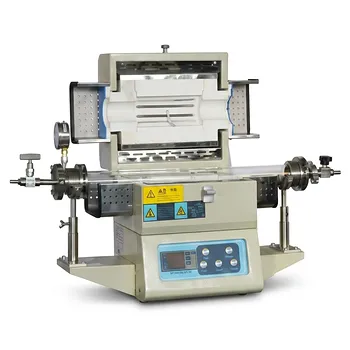
- High Temperature 1200C Split Tube Furnace for CVD Research and Vacuum Atmosphere Heat Treatment
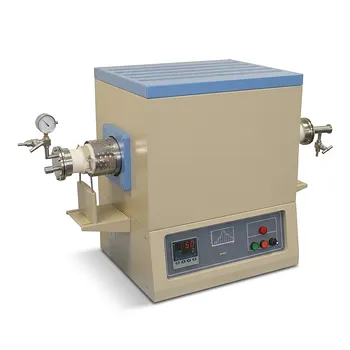
- 1700C High Temperature Alumina Tube Furnace with 18 Inch Heated Zone and Vacuum Sealing Flanges
- Vertical 1700C Vacuum and Atmosphere Tube Furnace with 80mm Alumina Tube
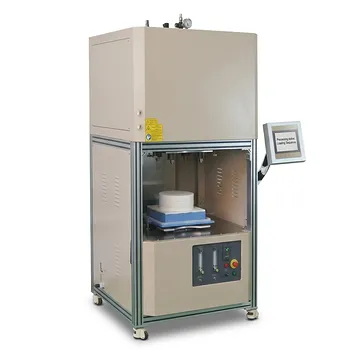
- High Temperature Vertical Atmosphere Controlled Furnace with Automatic Bottom Loading and 1700°C Capacity for Advanced Material Research
People Also Ask
- What core functions does a high-temperature vacuum tube furnace provide? Optimize np-CuSn Sintering & Joint Integrity
- What is the role of a high-temperature tube furnace in the calcination process of ZnO/In2O3 nanocomposites?
- What role does a high-temperature tube furnace play in the sulfidation heat treatment of CoS@C/MXene nanocomposites? Guide
- Why is a high-temperature tube furnace required for CuAlO2 heat treatment? Master Phase Transformation Today
- What role does a high-temperature tube furnace play in executing nitrogen absorption kinetic experiments? Expert Insights

Tech Team · ThermUnits
Last updated on Jun 03, 2026
Related Products

1750°C High Temperature Benchtop Vacuum Atmosphere Tube Furnace with Kanthal Super 1800 Heating Elements and 60mm Alumina Processing Tube
High Temperature 1200C Split Tube Furnace for CVD Research and Vacuum Atmosphere Heat Treatment
1700C High Temperature Alumina Tube Furnace with 18 Inch Heated Zone and Vacuum Sealing Flanges

Vertical 1700C Vacuum and Atmosphere Tube Furnace with 80mm Alumina Tube
High Temperature Vertical Atmosphere Controlled Furnace with Automatic Bottom Loading and 1700°C Capacity for Advanced Material Research
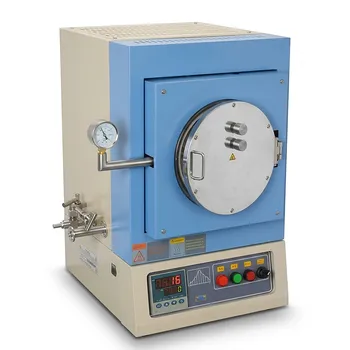
1100°C High Temperature Quartz Chamber Furnace 8 Inch OD with 7.6 Liter Capacity and Vacuum Atmosphere Capability
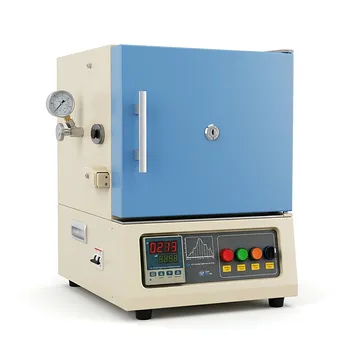
1200C Hybrid Muffle and Tube Furnace for Material Research with Dual Atmosphere Control Quartz Tubes
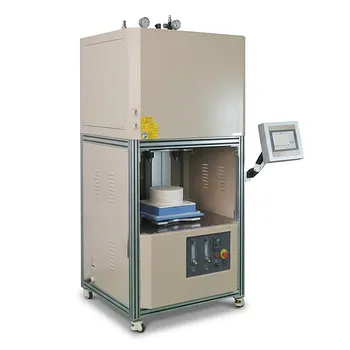
High Temperature Vertical Atmosphere Controlled Furnace 1700C Automatic Bottom Loading 13 Liter Vacuum Thermal System
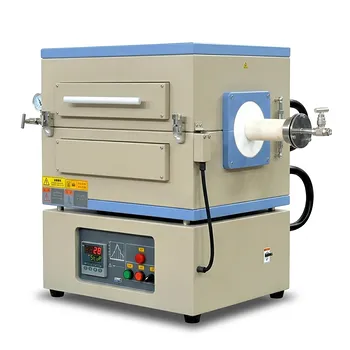
1500°C Split Tube Furnace with Alumina Tube and Vacuum Sealing Flanges for Material Research

High Temperature 1700C Tube Furnace with High Vacuum Turbomolecular Pump System and Multi Channel Mass Flow Controller Gas Mixer

1800C High Temperature Compact Vacuum Tube Furnace with 60mm OD Alumina Tube and Kanthal MoSi2 Heating Elements
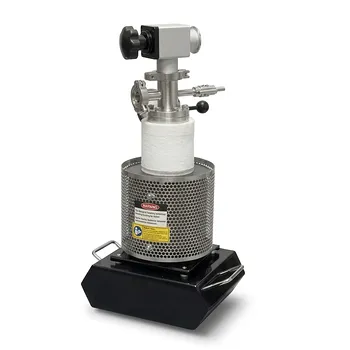
High Temperature 1100C Compact Top Loading Vertical Vacuum Tube Furnace for High Vacuum Noble Metal Melting and Material Research
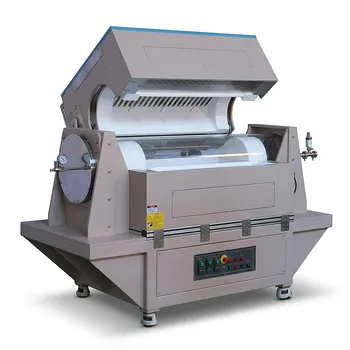
Three Zone Tube Furnace with 11 Inch or 15 Inch Quartz Tube and Hinged Flanges for Vacuum Atmosphere Heat Treatment
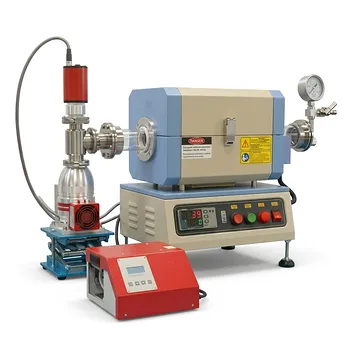
High Vacuum Compact Tube Furnace 1200C with Integrated Turbo Pump System and 8 Inch Heating Zone

Compact Vertical Split Quartz Tube Furnace with Stainless Steel Vacuum Flanges for Rapid Thermal Quenching and Controlled Atmosphere Material Processing
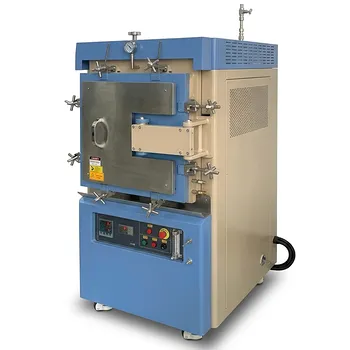
Atmosphere Controlled Muffle Furnace 1700C Maximum Temperature 80L High Capacity Vacuum Inert Gas Box Furnace
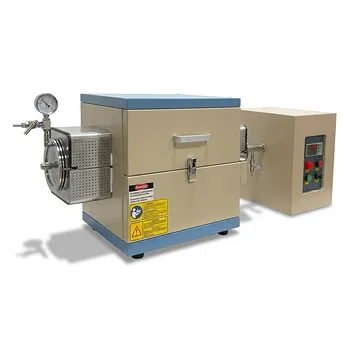
1200C High Temperature 5 Inch Split Vacuum Tube Furnace with 12 Inch Heating Zone and Separated PID Controller
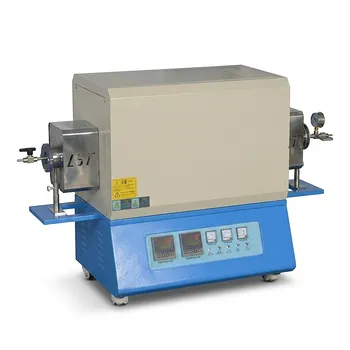
High Temperature Dual Zone Vacuum Tube Furnace for Material Research and CVD Processing

High Temperature 1700C Vertical Tube Furnace for Powder Spherification and Material Sintering
