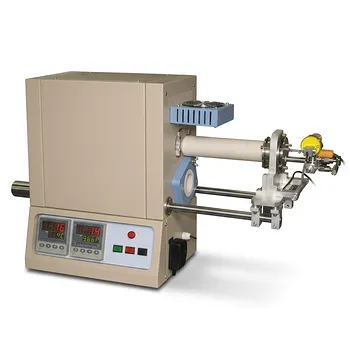
What is the role of a laboratory tube furnace in Na2Ba(NH2)4 synthesis? Master Precise Stepped Heating Programs
Updated 3 months ago
The laboratory tube furnace acts as the primary thermal regulator for $Na_2Ba(NH_2)_4$ synthesis, executing a precise two-stage thermal profile. It facilitates a critical pre-reaction phase at 670 K followed by a final synthesis phase at 870 K, ensuring a controlled transition from reactant dissolution to supersaturated crystallization.
The core role of the tube furnace is to manage the kinetic pathway of the reaction through programmable heating, transforming raw precursors into large, structurally perfect single crystals by strictly controlling the state of saturation.
The Mechanics of the Stepped Heating Program
Managing the Pre-Reaction Phase at 670 K
The first stage of the program occurs at 670 K, where the furnace provides the energy necessary for the initial dissolution of reactants. This stage is vital for creating a homogenous mixture before the final chemical transformation begins. By maintaining a stable temperature at this level, the furnace prevents premature or uneven reactions that could degrade crystal quality.
Facilitating Final Synthesis at 870 K
Once the pre-reaction is complete, the furnace ramps to 870 K to initiate the final synthesis phase. This higher temperature provides the thermal environment required for the material to reach a state of supersaturated crystallization. The precise nature of the tube furnace ensures that this transition is uniform across the entire sample.
Ensuring Structural Perfection
The ultimate goal of this stepped process is the growth of single crystals with high structural integrity. The furnace’s ability to follow a specific temperature curve allows for the slow, orderly arrangement of atoms. This minimizes defects and ensures that the $Na_2Ba(NH_2)_4$ crystals are large enough for detailed characterization or application.
The Technical Necessity of the Tube Furnace
Precise Programmable Control
A standard heating element cannot achieve the delicate balance required for complex amide synthesis. The programmable capabilities of a tube furnace allow researchers to set specific ramp rates and dwell times for the 670 K and 870 K stages. This precision is what enables the repeatable production of specific crystal morphologies.
Thermal Uniformity and Isothermal Zones
Tube furnaces are designed to provide a uniform thermal field, which is critical when transitioning from dissolution to crystallization. If temperature gradients exist within the reaction vessel, different parts of the sample may crystallize at different rates. This uniformity ensures that the entire batch of $Na_2Ba(NH_2)_4$ undergoes the same phase transformation simultaneously.
Atmosphere and Environment Isolation
While the primary focus is temperature, the hermetic design of the tube furnace allows for a controlled atmosphere. This is essential for amide synthesis, as it protects sensitive precursors from moisture or oxygen. The furnace acts as both a heat source and a protective barrier, maintaining the chemical purity of the reaction.
Understanding the Trade-offs
Ramp Rates and Thermal Stress
While precise heating is beneficial, aggressive ramp rates between the 670 K and 870 K stages can introduce thermal stress. If the temperature increases too quickly, it may lead to secondary nucleation rather than the growth of large single crystals. Balancing speed with crystal quality is a constant challenge in furnace programming.
Dwell Time Limitations
Extended dwell times at 870 K ensure complete synthesis but can also lead to precursor degradation or unwanted side reactions. Finding the "golden window" of time is necessary to ensure complete decomposition of precursors without compromising the final product. Researchers must carefully calibrate the furnace based on the specific volume of the reactants.
How to Apply This to Your Synthesis Goals
To achieve the best results in $Na_2Ba(NH_2)_4$ synthesis, your approach to furnace management should align with your specific research objectives.
- If your primary focus is crystal size: Use slower ramp rates between the 670 K and 870 K stages to encourage the growth of fewer, larger crystals rather than many small ones.
- If your primary focus is phase purity: Ensure the 670 K pre-reaction phase is long enough to achieve total dissolution of all precursors before moving to the synthesis temperature.
- If your primary focus is throughput: Utilize a furnace with a larger isothermal zone to process multiple reaction vessels simultaneously while maintaining identical thermal conditions.
By mastering the stepped heating capabilities of the tube furnace, you can transition from simple material production to the precise engineering of advanced crystalline structures.
Summary Table:
| Heating Stage | Temperature (K) | Primary Function | Synthesis Outcome |
|---|---|---|---|
| Pre-reaction | 670 K | Reactant dissolution & homogenization | Prevents premature or uneven reactions |
| Final Synthesis | 870 K | Supersaturated crystallization | Growth of large, perfect single crystals |
| Ramp Control | Programmable | Managing kinetic pathways | Minimizes thermal stress and defects |
Elevate Your Research Precision with THERMUNITS
Achieving perfect crystalline structures like $Na_2Ba(NH_2)_4$ requires more than just heat—it requires absolute thermal control. THERMUNITS is a leading manufacturer of high-temperature laboratory equipment dedicated to material science and industrial R&D. We provide the precision tools necessary to master complex stepped heating profiles and ensure repeatable, high-purity results.
Our comprehensive thermal solutions include:
- Advanced Furnaces: Tube, Muffle, Vacuum, Atmosphere, Rotary, and Hot Press furnaces.
- Specialized Systems: CVD/PECVD systems, Dental Furnaces, and Vacuum Induction Melting (VIM) furnaces.
- Industrial Solutions: Electric rotary kilns and high-performance Thermal Elements.
Why Partner with THERMUNITS? By choosing THERMUNITS, you gain access to equipment designed for superior thermal uniformity, programmable accuracy, and atmosphere isolation—essential for sensitive chemical synthesis and advanced material characterization.
Ready to optimize your lab’s thermal processing? Contact our technical experts today to find the perfect solution for your synthesis goals!
References
- Florian M. Engelsberger, Wolfgang Schnick. Ammonothermal Synthesis and Crystal Structure of the Ternary Amide Na<sub>2</sub>Ba(NH<sub>2</sub>)<sub>4</sub>. DOI: 10.1002/zaac.202400053
Mentioned Products
- Multi Position Tube Furnace 1100C for Laboratory Material Research and Advanced Industrial Thermal Processing
- Ten Zone Multi Orientation Laboratory Tube Furnace for 1200C High Temperature Gradient Thermal Processing
- High Temperature 1200C Split Tube Furnace with Hinged Vacuum Flanges and 4 Inch Quartz Tube for Laboratory Research
- 1100°C Vertical Laboratory Furnace for DIY Tubular Reactors with PID Temperature Controller
- High Temperature Automated 5 Inch Tube Furnace for Autonomous Material Research and Advanced Laboratory R&D
People Also Ask
- Why use a tube furnace for oxygen annealing LaCrO3/LaMnO3? Optimize Phase Transition & Magnetic Performance.
- What key role does a laboratory high-temperature tube furnace play in the production of carbon nanofibers? Guide
- How is a laboratory high-temperature tube furnace utilized to research the products of aluminothermic reduction? Advanced Metallurgical Solutions
- What is the role of a laboratory tube furnace in the carbonization process of porous carbon foam (PCF)? Master 3D Synthesis
- What role does a laboratory tube furnace play in the pyrolysis and carbonization of biomass? Optimize Thermal Research.

Tech Team · ThermUnits
Last updated on Jun 03, 2026
Related Products
Multi Position Tube Furnace 1100C for Laboratory Material Research and Advanced Industrial Thermal Processing
Ten Zone Multi Orientation Laboratory Tube Furnace for 1200C High Temperature Gradient Thermal Processing
High Temperature 1200C Split Tube Furnace with Hinged Vacuum Flanges and 4 Inch Quartz Tube for Laboratory Research
1100°C Vertical Laboratory Furnace for DIY Tubular Reactors with PID Temperature Controller

High Temperature Automated 5 Inch Tube Furnace for Autonomous Material Research and Advanced Laboratory R&D
Compact Split Tube Furnace with Integrated Vacuum System and Precision Temperature Calibrator

1800C High Temperature Compact Vacuum Tube Furnace with 60mm OD Alumina Tube and Kanthal MoSi2 Heating Elements
1250C Compact Split Tube Furnace with 8 Inch Heating Zone and Programmable Controller
Laboratory Tilting Rotary Tubular Furnaces for Material Science and Industrial Heat Treatment
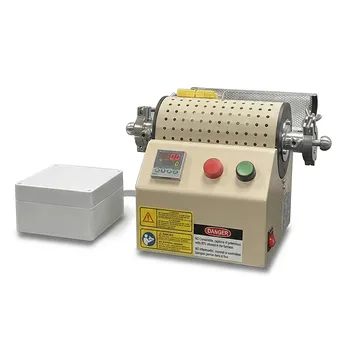
1000C Mini Tube Furnace with 20mm Quartz Tube and Vacuum Flanges for Material Science Research and Controlled Atmosphere Small Sample Processing
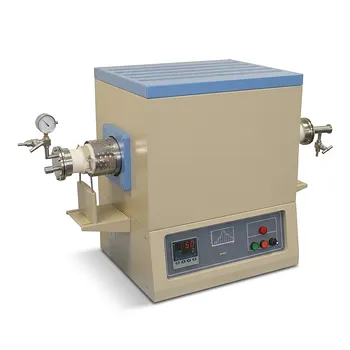
1700C High Temperature Alumina Tube Furnace with 18 Inch Heated Zone and Vacuum Sealing Flanges
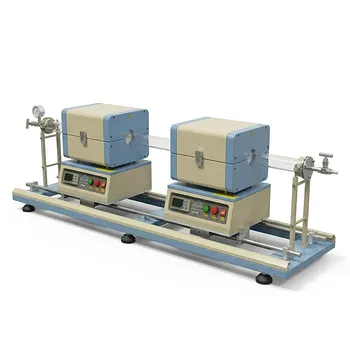
1200C Max Dual Sliding Tube Furnace with 50 mm Tube Flanges for CVD
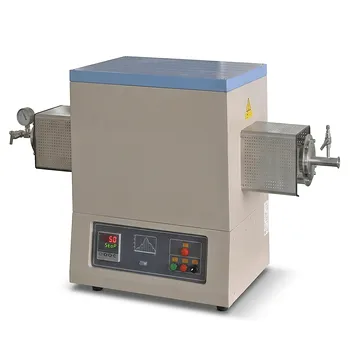
High Temperature 1700C Tube Furnace with 4 Inch OD Alumina Tube and Vacuum Sealing Flanges
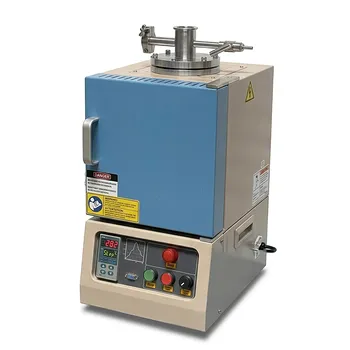
High Temperature Hybrid Muffle and Tube Furnace with Vacuum Capability and PID Control
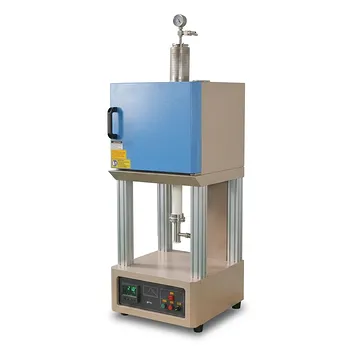
Hybrid High Temperature Tube and Box Furnace 1700C with 2 Inch Alumina Tube for Material Research
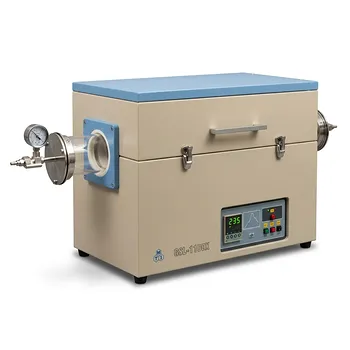
Single Zone Tube Furnace 5 Inch Quartz Tube 36 Inch Heating Zone Vacuum Flanges

High Temperature 1700C Vertical Tube Furnace for Powder Spherification and Material Sintering

1100C Tube Furnace with Vacuum Flange and Programmable Temperature Controller for Material Science and Industrial Heat Treatment

High Temperature 1700C Tube Furnace with High Vacuum Turbomolecular Pump System and Multi Channel Mass Flow Controller Gas Mixer