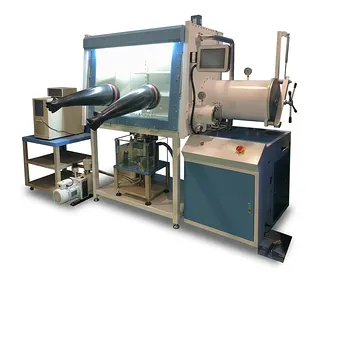
What is the role of an industrial-grade MOCVD system in the growth of WS2? Scale to Wafer-Level Production
Updated 3 months ago
Industrial-grade Metal-Organic Chemical Vapor Deposition (MOCVD) systems are the primary technology for transitioning monolayer tungsten disulfide ($WS_2$) from laboratory samples to wafer-scale production. By utilizing gas-phase precursors like tungsten hexacarbonyl ($W(CO)_6$) and hydrogen sulfide ($H_2S$) at temperatures of 950°C, these systems achieve the extreme precision required for atom-thick uniformity. This controlled environment ensures that the $WS_2$ film covers the entire surface of a 12-inch (300mm) wafer, making it viable for modern semiconductor manufacturing.
The core role of an industrial MOCVD system is to provide a highly stable, reproducible environment that facilitates "layer closure" across large-area substrates. It bridges the gap between small-scale flakes and continuous, electronic-grade thin films by replacing unpredictable solid precursors with precisely metered gas-phase chemicals.
Precision Control of Precursor Chemistry
Transitioning from Solids to Gas-Phase Metal-Organics
Standard Chemical Vapor Deposition (CVD) often relies on the sublimation of solid powders like $WO_3$ and sulfur. This method is difficult to scale because the vapor concentration fluctuates based on the surface area and temperature of the powder.
Industrial MOCVD systems solve this by using metal-organic precursors like $W(CO)_6$. These are delivered in the gas phase, allowing for mass-flow controllers to regulate the exact number of atoms entering the reaction chamber at any given second.
Maintaining Optimal Partial Pressure Ratios
The quality of a monolayer $WS_2$ film depends heavily on the ratio between tungsten and sulfur atoms. MOCVD systems allow engineers to fine-tune the partial pressure ratios of these gases with high resolution.
This precise tuning prevents the formation of unwanted 3D clusters or secondary layers. By keeping the concentrations stable, the system promotes lateral grain growth, encouraging atoms to spread out into a single, continuous sheet.
Scaling to Industrial Wafer Dimensions
Achieving Uniformity on 12-inch Wafers
While academic setups often produce $WS_2$ on small "coupons," industrial MOCVD is designed for 12-inch (300mm) wafers. The system must maintain a uniform environment across a massive surface area to ensure the film's electrical properties are consistent.
Through advanced heating elements and gas distribution manifolds, the system ensures that every part of the wafer experiences the same growth conditions. This level of large-area uniformity is the prerequisite for integrating $WS_2$ into commercial logic and memory devices.
Managing High-Temperature Thermal Profiles
Growing high-quality $WS_2$ requires a sustained reaction temperature of 950°C. Industrial systems are engineered to provide a strictly controlled thermal environment that prevents localized hot or cold spots.
These systems use sophisticated temperature profiles to manage the heating and cooling cycles. This prevents the wafer from warping and ensures that the chemical reactions occur at the intended kinetic rates across the entire substrate.
Understanding the Trade-offs and Challenges
Equipment Complexity and Cost
The move to industrial MOCVD involves a significant increase in capital expenditure. The high-precision gas delivery systems, vacuum pumps, and safety scrubbers required for $H_2S$ make these systems far more expensive than standard tube furnaces.
Safety and Precursor Handling
The chemicals used in MOCVD, such as hydrogen sulfide ($H_2S$) and metal carbonyls, are toxic and require rigorous safety protocols. Managing these gases at high temperatures and pressures increases the operational complexity of the facility.
Thermal Budget Constraints
A growth temperature of 950°C is relatively high for many "back-end" semiconductor processes. This high thermal budget means $WS_2$ usually needs to be grown on a separate substrate and then transferred, or grown very early in the fabrication flow to avoid damaging other components.
How to Apply This to Your Project
Industrial MOCVD is the definitive choice for those moving from fundamental material science to device-level integration and pilot production.
- If your primary focus is fundamental material research: A standard powder-based CVD tube furnace is often more cost-effective for exploring new dopants or basic crystal shapes.
- If your primary focus is semiconductor device integration: You should prioritize industrial MOCVD to ensure the uniformity and repeatability required for lithography and etching.
- If your primary focus is large-scale manufacturing: MOCVD is the only viable path to achieving the 300mm wafer compatibility necessary for modern foundry standards.
The industrial-grade MOCVD system effectively transforms the growth of $WS_2$ from a delicate chemical reaction into a robust, controllable manufacturing process.
Summary Table:
| Feature | Industrial MOCVD System | Standard Powder CVD |
|---|---|---|
| Precursor Type | Gas-phase Metal-Organics | Solid-phase Powders |
| Scalability | 300mm (12-inch) Wafers | Small Research Coupons |
| Control Mechanism | Mass-Flow Controllers | Temperature/Sublimation |
| Uniformity | High (Electronic Grade) | Variable (3D Clusters) |
| Primary Goal | Commercial Manufacturing | Fundamental Research |
Accelerate your material science breakthroughs with THERMUNITS, a leading manufacturer of high-temperature laboratory equipment. From advanced CVD/PECVD systems for monolayer growth to specialized Tube, Vacuum, and Atmosphere furnaces, we provide the precision thermal solutions required for modern industrial R&D. Whether you are scaling WS2 production or developing new semiconductor processes, our expertise in Hot Press furnaces, VIM, and Rotary kilns ensures your lab achieves superior results. Contact our expert team today to find the perfect heat treatment solution for your application.
References
- Zaoyang Lin, Annelies Delabie. Impact of monolayer WS2 surface properties on the gate dielectrics formation by atomic layer deposition. DOI: 10.1116/6.0003894
Mentioned Products
- Versatile Chemical Vapor Deposition Tube Furnace System for Advanced Material Research and Industrial Coating Processes
- Cylindrical Resonator MPCVD Machine System for Microwave Plasma Chemical Vapor Deposition and Lab Diamond Growth
- Multi Heating Zones CVD Tube Furnace System for Precision Chemical Vapor Deposition and Advanced Material Synthesis
- 915MHz MPCVD Diamond Machine Microwave Plasma Chemical Vapor Deposition System Reactor
- Radio Frequency Plasma Enhanced Chemical Vapor Deposition RF PECVD System for Laboratory and Industrial Thin Film Growth
People Also Ask
- How does a sliding rail design benefit the CVD process within a furnace ventilation hood? Enhance Control & Quenching
- What role do by-product desorption and evacuation play in CVD film quality? Key Factors for High-Purity Films
- How does the deposition process occur within a Chemical Vapor Deposition (CVD) reactor? Explore the 5-Stage Growth Cycle
- Why is CVD preferred over PVD for high-aspect-ratio features? Superior Conformality for Semiconductor Fabrication
- How do temperature regimes influence the growth rate of films in a CVD system? Master CVD Kinetics for Superior Thin Films

Tech Team · ThermUnits
Last updated on Jun 02, 2026
Related Products
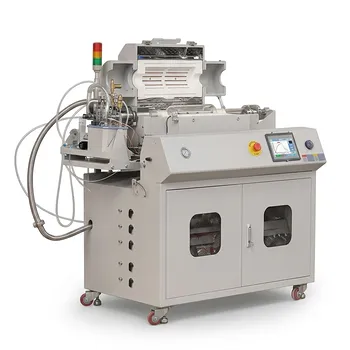
Versatile Chemical Vapor Deposition Tube Furnace System for Advanced Material Research and Industrial Coating Processes
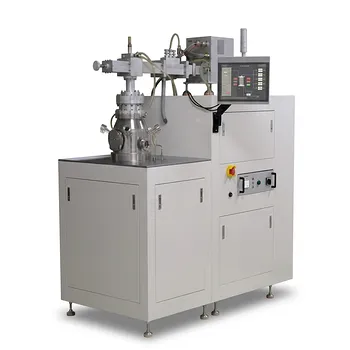
Cylindrical Resonator MPCVD Machine System for Microwave Plasma Chemical Vapor Deposition and Lab Diamond Growth
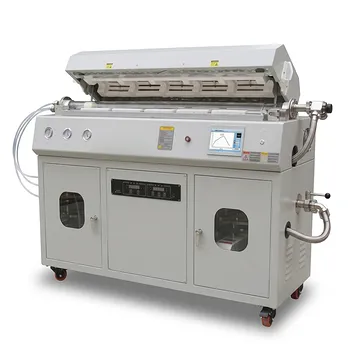
Multi Heating Zones CVD Tube Furnace System for Precision Chemical Vapor Deposition and Advanced Material Synthesis
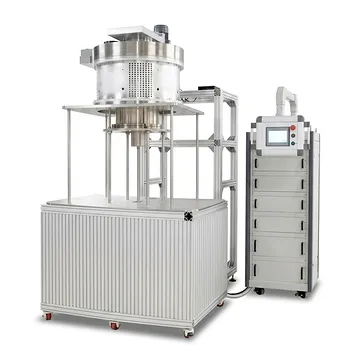
915MHz MPCVD Diamond Machine Microwave Plasma Chemical Vapor Deposition System Reactor
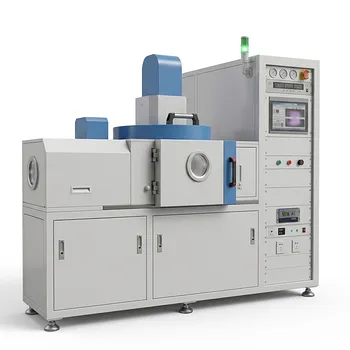
Radio Frequency Plasma Enhanced Chemical Vapor Deposition RF PECVD System for Laboratory and Industrial Thin Film Growth
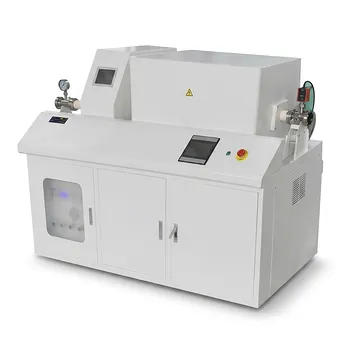
Chemical Vapor Deposition CVD System Slide PECVD Tube Furnace with Liquid Gasifier PECVD Machine
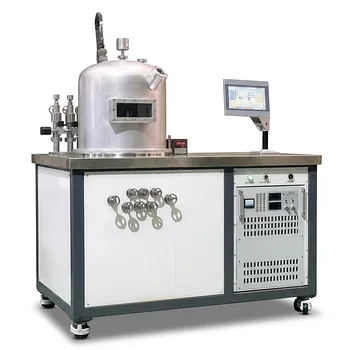
HFCVD Machine System for Nano Diamond Coating on Drawing Dies and Industrial Tools
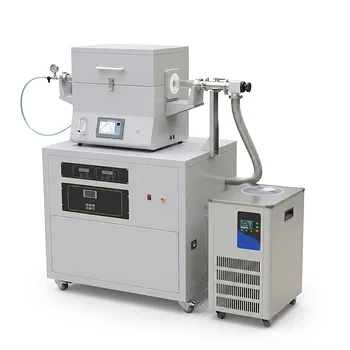
Split Chamber CVD Tube Furnace with Vacuum Station Chemical Vapor Deposition System Machine
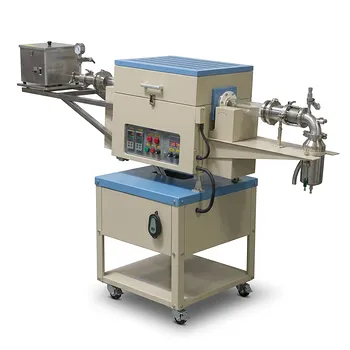
Two Zone Rotary CVD Furnace with Automatic Feeding and Receiving System for Powder Processing
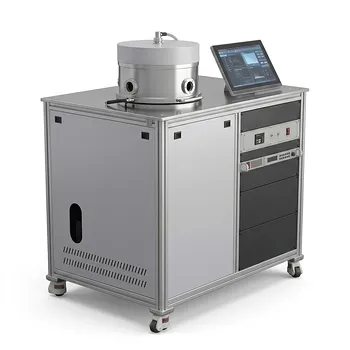
Inclined Rotary Plasma Enhanced Chemical Vapor Deposition PECVD System for Thin Film Deposition and Nanomaterial Synthesis
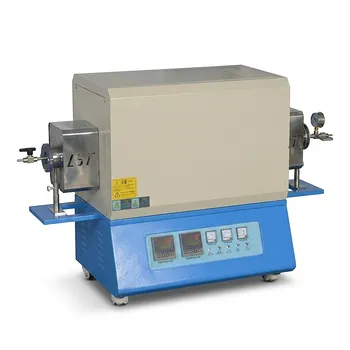
High Temperature Dual Zone Vacuum Tube Furnace for Material Research and CVD Processing
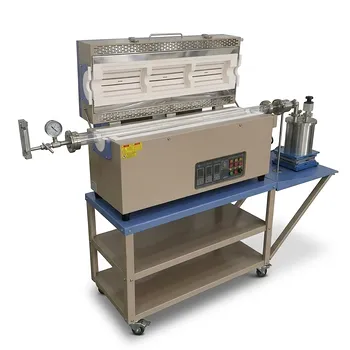
5 Inch Two Zone Rotary Tube Furnace 1100C for Powder CVD and Material Synthesis
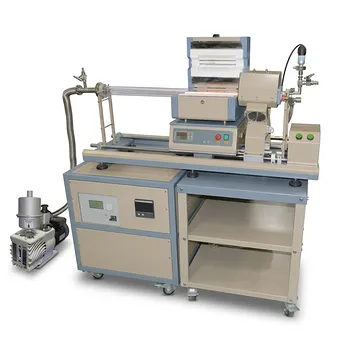
1200C Max Compact Auto-Sliding PECVD Furnace with 2 Inch Tube and Vacuum Pump
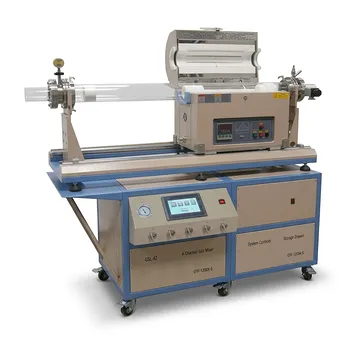
Dual Tube 100mm 80mm CVD Sliding Furnace with 4 Channel Gas Mixing and Vacuum System
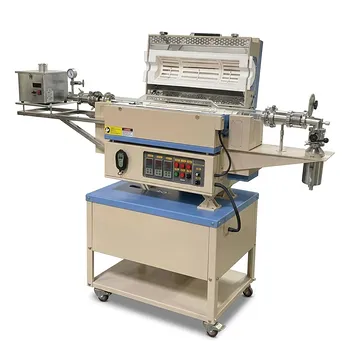
5 Inch Rotary Tube Furnace with Automatic Feeding and Receiving System 1200C Three Zone CVD Powder Processing
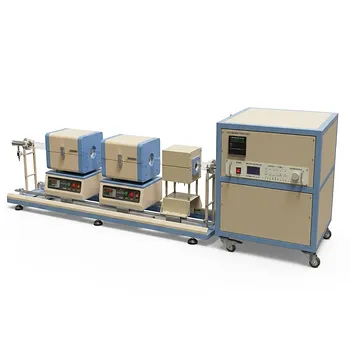
1200C Dual Sliding Tube Furnace with Dual Tubes and Flanges for PECVD Processes
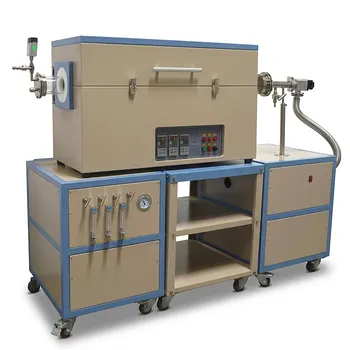
Three Zone Quartz Tube Furnace with 3 Channel Gas Mixer Vacuum Pump and Anti Corrosive Vacuum Gauge
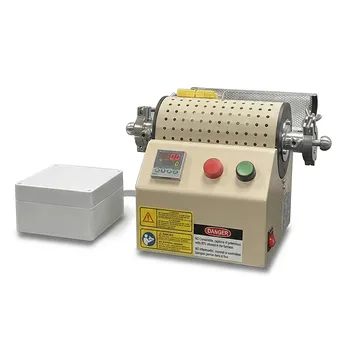
1000C Mini Tube Furnace with 20mm Quartz Tube and Vacuum Flanges for Material Science Research and Controlled Atmosphere Small Sample Processing
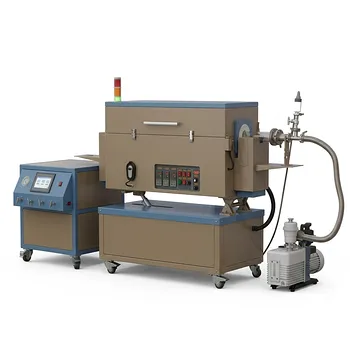
5 Inch Three Zone Rotary Tube Furnace with Integrated Gas Delivery System and 1200C Capability for Advanced Material CVD Processing