What is the role of an industrial tube furnace in the thermal oxidation of Ti6Al4V? Enhance Surface Hardness & Durability
Updated 3 months ago
The industrial tube furnace serves as the primary reactive environment and thermal regulator for the thermal oxidation of Ti6Al4V alloy. It provides the sustained, high-temperature energy necessary to facilitate a chemical reaction between the titanium atoms on the alloy's surface and atmospheric oxygen. This controlled process creates a protective titanium dioxide (TiO2) layer and a subsurface oxygen diffusion zone (ODZ), which are essential for enhancing the alloy's surface hardness and wear resistance.
Core Takeaway: An industrial tube furnace transforms the surface of Ti6Al4V by maintaining precise isothermal conditions that allow oxygen atoms to penetrate the substrate and form a hardened composite layer. This equipment is the decisive factor in controlling the thickness, phase composition, and mechanical integrity of the oxidized surface.
The Mechanics of Thermal Oxidation in a Controlled Environment
Facilitating the Gas-Metal Reaction
The tube furnace acts as a reactor where energy is transferred to the Ti6Al4V alloy to initiate oxidation. By heating the material within a range of 400°C to 700°C, the furnace provides the thermal activation required for oxygen molecules to dissociate and react with surface titanium.
Establishing the Oxygen Diffusion Zone (ODZ)
Beyond the surface layer, the furnace enables the formation of the Oxygen Diffusion Zone (ODZ) underneath the oxide scale. The consistent heat allows oxygen atoms to migrate into the titanium crystal lattice, creating a "case-hardening" effect that supports the brittle outer oxide layer and prevents it from delaminating under stress.
Regulating Phase Composition
The furnace environment determines whether the resulting oxide is primarily the rutile phase of titanium dioxide. Precise control over temperatures, often reaching up to 900°C for specific applications, ensures the growth of a stable microstructure that is critical for the alloy's performance in aerospace or biomedical settings.
Precision Control as a Quality Determinant
Managing Long-Term Isothermal Holding
Thermal oxidation is time-dependent, often requiring extended durations such as 36 hours of constant heating. The industrial tube furnace is designed to maintain a "soak" temperature with minimal fluctuation, ensuring that the oxide layer grows uniformly across the entire surface of the component.
Controlling Heating and Cooling Rates
Advanced furnaces provide programmable heating rates (e.g., 10°C/s) to prevent thermal shock and ensure a smooth transition to the target temperature. This control is vital for homogenizing the alloy’s internal components and establishing a stable initial microstructure before the final oxidation layer is set.
Simulating Operational Stress
Some specialized tube furnaces allow for automated sample displacement, moving the alloy between high-temperature zones and room-temperature environments. This simulates the cyclical thermal stresses experienced by components like aero-engine blades, allowing engineers to test how well the oxide layer adheres to the substrate.
Understanding the Trade-offs and Limitations
The Risk of Excessive Oxidation
While a thicker oxide layer generally improves wear resistance, excessive time or temperature in the furnace can lead to an overly brittle surface. If the oxide scale grows too thick, it may become susceptible to spallation (flaking off), which can lead to premature component failure.
Oxygen Enrichment and Embrittlement
A deep Oxygen Diffusion Zone increases hardness but can simultaneously reduce the fatigue strength of the Ti6Al4V alloy. The furnace must be calibrated to balance the "surface hardness" needs against the "bulk ductility" required for structural integrity.
Precision vs. Throughput
Maintaining high-precision atmospheric and temperature control often limits the volume of parts that can be treated at once. Achieving uniform phase distribution across a large batch of complex internal geometries poses a significant challenge for standard tube furnace configurations.
How to Apply This to Your Project
When selecting a furnace protocol for Ti6Al4V thermal oxidation, your parameters should align with the material's final environment.
- If your primary focus is Maximum Surface Hardness: Target higher temperatures (near 700°C) and longer durations to maximize the depth of the oxygen diffusion zone.
- If your primary focus is Fatigue Resistance: Use lower oxidation temperatures (400°C-500°C) to minimize the thickness of the brittle ODZ while still achieving a protective surface film.
- If your primary focus is Biomedical Compatibility: Ensure the furnace maintains a clean, stable atmosphere at approximately 525°C to promote the precipitation of phases that increase mechanical strength for implants.
- If your primary focus is Aerospace Durability: Utilize a furnace with rapid heating and cooling controls to simulate thermal cycles and ensure the oxide layer's thermodynamic stability.
The industrial tube furnace is more than a heater; it is the fundamental tool for engineering the surface chemistry of titanium alloys.
Summary Table:
| Feature | Role in Ti6Al4V Oxidation | Primary Benefit |
|---|---|---|
| Temperature Control | Sustains 400°C to 700°C range | Facilitates TiO2 layer & rutile phase formation |
| Isothermal Holding | Maintains constant heat for up to 36h+ | Ensures uniform layer thickness & depth |
| Atmospheric Regulation | Manages oxygen dissociation levels | Creates a stable Oxygen Diffusion Zone (ODZ) |
| Programmable Rates | Controls heating and cooling cycles | Prevents thermal shock and surface delamination |
Elevate Your Material Research with THERMUNITS Precision
Achieving the perfect oxide layer on Ti6Al4V requires uncompromising thermal precision. THERMUNITS is a leading manufacturer of high-temperature laboratory equipment, providing the advanced technology needed for rigorous material science and industrial R&D.
Whether you are engineering aerospace components or biomedical implants, our comprehensive range of thermal solutions—including Tube, Muffle, Vacuum, Atmosphere, Rotary, and Hot Press furnaces, as well as CVD/PECVD systems and Vacuum Induction Melting (VIM) furnaces—offers the stability and control your project demands.
Ready to optimize your heat treatment process? Contact us today to discuss your specific requirements and discover how our equipment can enhance your lab's performance.
References
- Qunfeng Zeng, Xunkai Wei. Study on High-Temperature, Ultra-Low Wear Behaviors of Ti6Al4V Alloy with Thermal Oxidation Treatment. DOI: 10.3390/coatings14040416
Mentioned Products
- 1200C Sliding Tube Furnace for Rapid Thermal Processing and CVD Graphene Growth with 100mm OD Capacity
- 1100C Tube Furnace with Vacuum Flange and Programmable Temperature Controller for Material Science and Industrial Heat Treatment
- 900°C Max Rotary Tube Furnace with 8 Inch 310S Alloy Tube and Optional Multi Zone Heating for Industrial Material Calcination
- High Temperature Tube Furnace 1500C with Sliding Flanges and 50mm OD for Rapid Thermal Processing Fast Heating and Cooling
- Compact High Temperature 1600C Tube Furnace with 50mm Alumina Tube and Vacuum Flanges for Material Sintering
People Also Ask
- Why is a Tube Furnace typically utilized for CVD? Achieve Precision in Graphene and 2D Material Synthesis
- Why use CVD and a tube furnace for Pd3P0.95/NC catalyst phosphidation? Ensure high phase purity and performance.
- What is the function of CVD furnaces in graphene prep? Enhancing Photodetector Charge Transport
- CVD Tube Furnace Advantages for Pd-P Catalyst Durability: Precision Control for 40,000+ Cycles
- How does a tube furnace system equipped with gas mass flow controllers facilitate the MCW process? Optimize Graphene Yield

Tech Team · ThermUnits
Last updated on Jun 03, 2026
Related Products
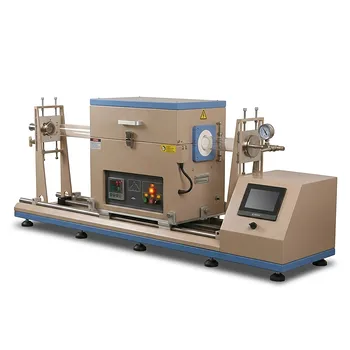
1200C Sliding Tube Furnace for Rapid Thermal Processing and CVD Graphene Growth with 100mm OD Capacity

1100C Tube Furnace with Vacuum Flange and Programmable Temperature Controller for Material Science and Industrial Heat Treatment
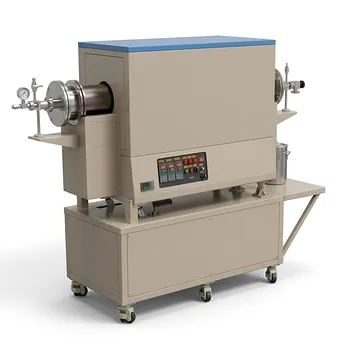
900°C Max Rotary Tube Furnace with 8 Inch 310S Alloy Tube and Optional Multi Zone Heating for Industrial Material Calcination

High Temperature Tube Furnace 1500C with Sliding Flanges and 50mm OD for Rapid Thermal Processing Fast Heating and Cooling

Compact High Temperature 1600C Tube Furnace with 50mm Alumina Tube and Vacuum Flanges for Material Sintering
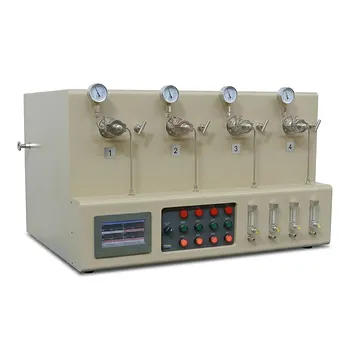
High Temperature 1700C 4 Channel Tube Furnace 1 Inch Alumina Tube for Hi-Throughput Annealing
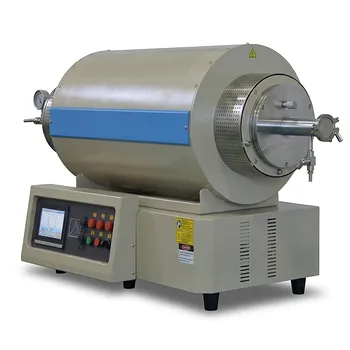
1200C Max Three Zone Tube Furnace 6 Inch OD Max with Tube and Flange

High Temperature 1700C Vertical Tube Furnace for Powder Spherification and Material Sintering

High Temperature 1700C Six Zone Split Tube Furnace with Alumina Tube and Water Cooled Flanges
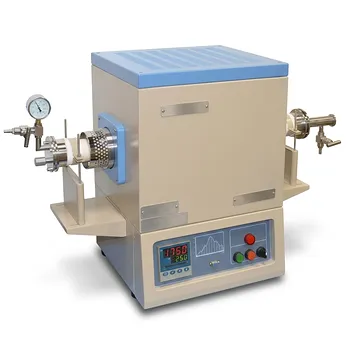
High Temperature Compact Vacuum Tube Furnace 1750C Max 60mm OD Alumina Tube

High Temperature 1700C Benchtop Tube Furnace with 5 Inch Heating Zone High Purity Alumina Tube and Vacuum Sealing Flanges
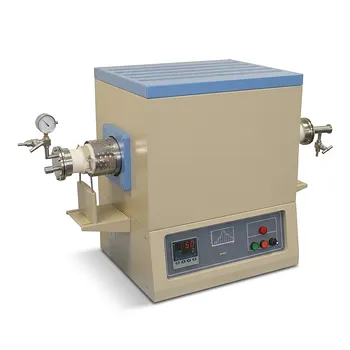
1700C High Temperature Alumina Tube Furnace with 18 Inch Heated Zone and Vacuum Sealing Flanges
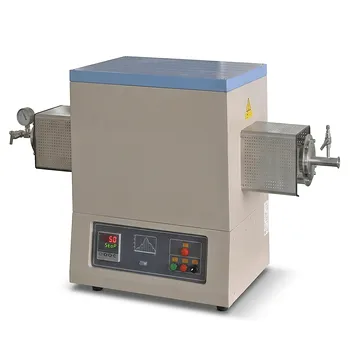
High Temperature 1700C Tube Furnace with 4 Inch OD Alumina Tube and Vacuum Sealing Flanges

1800C High Temperature Compact Vacuum Tube Furnace with 60mm OD Alumina Tube and Kanthal MoSi2 Heating Elements

Vertical 1700C Vacuum and Atmosphere Tube Furnace with 80mm Alumina Tube

1750°C High Temperature Benchtop Vacuum Atmosphere Tube Furnace with Kanthal Super 1800 Heating Elements and 60mm Alumina Processing Tube
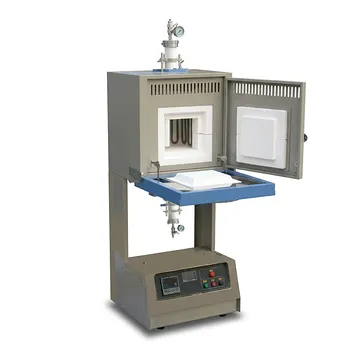
Vertical Hybrid High Temperature Furnace 1500C Alumina Tube SOFC Fuel Cell Testing Laboratory Heat Treatment Research Equipment
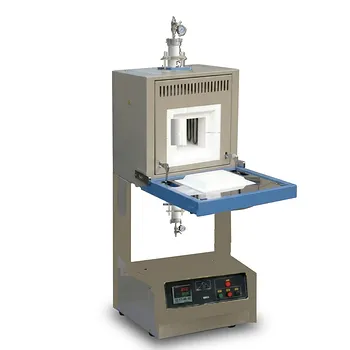
High Temperature Vertical Hybrid Furnace with Alumina Tube and SiC Heating for SOFC Coin Cell Testing and Atmosphere Processing
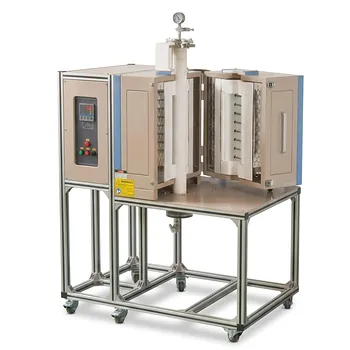
High Temperature 1700C Vertical Split Tube Furnace for Material Quenching and Single Crystal Growth
