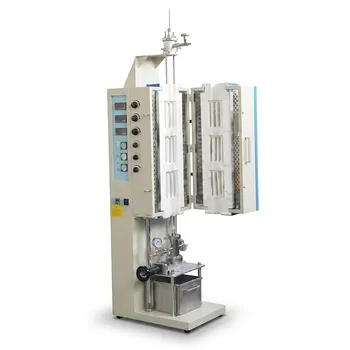
What is the specific value of a high-precision tube furnace? Achieve Precision in Fe-Pd Alloy Phase Identification
Updated 3 months ago
The primary value of a high-precision tube furnace in Fe-Pd alloy research lies in its ability to maintain exceptional thermal field uniformity and long-term stability. This level of control is necessary to accurately identify the incredibly narrow two-phase region within the Fe-Pd eutectoid zone, which spans only 0.6 to 1 atomic percent. Standard heating equipment often lacks the resolution to prevent temperature fluctuations, which can inadvertently trigger the formation of non-equilibrium phases instead of allowing the alloy to reach true thermodynamic equilibrium.
Core Takeaway: High-precision tube furnaces provide the stable, uniform environment required to isolate specific thermodynamic phases (such as L1₀ and L1₂) in narrow alloy regions. Without this precision, temperature drift introduces non-equilibrium artifacts that obscure the actual phase boundaries of the material.
The Necessity of Precision in Fe-Pd Phase Identification
Mapping Narrow Two-Phase Boundaries
The Fe-Pd system is characterized by an extremely narrow two-phase region in its eutectoid zone. Standard furnaces often have thermal gradients that exceed the width of this 0.6 to 1 at pct region, making it impossible to isolate specific transitions. High-precision equipment ensures that the entire sample exists within the same narrow thermal window.
Eliminating Non-Equilibrium Miscellaneous Phases
When studying isothermal decomposition at temperatures like 650°C or 525°C, even minor fluctuations can disrupt the transition process. These fluctuations cause "miscellaneous" non-equilibrium phases to emerge, which do not represent the material's true state. A stable furnace allows the L1₀, L1₂, or L1' phases to reach a state of true thermodynamic equilibrium.
Uniform Thermal History
For a study to be valid, every section of the Fe-Pd sample must undergo an identical thermal history. Uniform thermal fields ensure that the decomposition occurs simultaneously and consistently across the specimen. This consistency is the only way to correlate specific temperatures with the resulting crystal structures and morphologies.
Beyond Equilibrium: Managing Complex Thermal Cycles
Precise Multi-Stage Heating Control
Advanced research often requires complex cycles, such as normalizing at 900°C followed by tempering at lower temperatures. High-precision furnaces allow for the strict control of these multi-stage processes, which are vital for adjusting the balance between different phases. This level of control directly impacts the final material properties, such as low-temperature impact toughness.
Environmental Control for Synthesis
Beyond temperature, these furnaces often manage the chemical environment through Chemical Vapor Deposition (CVD) or specific atmospheric annealing. This ensures that precursors transform under exact physical and chemical conditions. This precision is critical when producing nanomaterials with specific crystal structures that are sensitive to atmospheric contaminants or pressure changes.
Understanding the Trade-offs
Equipment Complexity and Maintenance
The sophisticated sensors and heating elements required for high-precision control are more delicate than those in standard furnaces. Regular calibration is mandatory to ensure the furnace does not drift over time, which adds to the operational overhead. Failure to calibrate can lead to "false precision," where the display is stable but the internal temperature is inaccurate.
Throughput and Heating Rates
High-precision furnaces often prioritize stability over raw heating speed. If an experiment requires rapid quenching or ultra-fast thermal cycling, a standard tube furnace or a specialized rapid thermal processor might be more efficient. The focus on uniformity often necessitates a slower approach to reaching target temperatures to avoid overshooting.
Applying Thermal Precision to Your Research Goals
Choosing the right equipment depends entirely on the sensitivity of the alloy system you are investigating.
- If your primary focus is defining narrow phase boundaries: You must use a high-precision tube furnace to avoid the overlap of thermal gradients with the narrow 0.6–1 at pct eutectoid regions.
- If your primary focus is achieving true thermodynamic equilibrium: Utilize equipment with long-term stability to ensure that samples held at 525°C or 650°C do not develop non-equilibrium artifacts due to temperature drift.
- If your primary focus is optimizing mechanical toughness: Invest in a furnace capable of strict multi-stage heating cycles to precisely balance the ratio of martensite and retained austenite.
Precision thermal control is not merely a preference but a technical requirement for uncovering the subtle thermodynamic truths of complex alloy systems.
Summary Table:
| Feature | High-Precision Tube Furnace | Standard Heating Equipment |
|---|---|---|
| Thermal Uniformity | Exceptional; maintains narrow windows (0.6-1 at%) | Poor; gradients often exceed narrow phase regions |
| Phase Stability | Prevents non-equilibrium "miscellaneous" phases | Risk of temperature drift triggering artifacts |
| Thermal History | Uniform across entire specimen for valid correlation | Inconsistent; varies across different sample sections |
| Process Control | Supports complex multi-stage cycles & CVD/Atmosphere | Limited to basic heating and cooling cycles |
| Primary Use Case | Precision metallurgy and thermodynamic equilibrium | General heat treatment and high-throughput bulk heating |
Elevate Your Material Research with THERMUNITS Precision
As a global leader in high-temperature laboratory equipment, THERMUNITS provides the specialized thermal solutions required for advanced material science and industrial R&D. Our high-precision Tube Furnaces, CVD/PECVD systems, and Atmosphere Furnaces are engineered to deliver the thermal uniformity and long-term stability essential for isolating narrow phase boundaries in complex alloys like Fe-Pd.
From Muffle and Rotary furnaces to Vacuum Induction Melting (VIM) and Hot Press systems, we offer a comprehensive range of equipment designed to achieve true thermodynamic equilibrium and optimize material properties.
Ready to eliminate non-equilibrium artifacts in your study?
Contact THERMUNITS today to discuss your specific heat treatment requirements with our experts!
References
- Adrian Savovici, Jerrold A. Floro. Ordered-Phase Equilibria in the Eutectoid Region of Bulk Fe-Pd. DOI: 10.1007/s11661-024-07577-4
Mentioned Products
- High Temperature 1700C Benchtop Tube Furnace with 5 Inch Heating Zone High Purity Alumina Tube and Vacuum Sealing Flanges
- Compact High Temperature 1600C Tube Furnace with 50mm Alumina Tube and Vacuum Flanges for Material Sintering
- High Temperature 1700C Vertical Tube Furnace for Powder Spherification and Material Sintering
- 1200C High Throughput Multi Channel Tube Furnace with 50mm Quartz Tubes for Annealing and Material Phase Diagram Research
- High Temperature Tube Furnace 1500C with Sliding Flanges and 50mm OD for Rapid Thermal Processing Fast Heating and Cooling
People Also Ask
- How are high-temperature tube furnaces utilized to repair etching damage? Precision Lattice Restoration Solutions
- What is the function of a high-temperature tube furnace in the synthesis of g-C3N4? Optimize Thermal Polycondensation
- What impact does the heating rate of a tube furnace have on biochar microstructure? Optimize Your Material R&D.
- What is the role of a high-temperature tube furnace in the calcination process of ZnO/In2O3 nanocomposites?
- Conditions for nZVI Synthesis in Tube Furnaces? Learn to Optimize Thermal and Atmospheric Control for High Purity.

Tech Team · ThermUnits
Last updated on Jun 03, 2026
Related Products

High Temperature 1700C Benchtop Tube Furnace with 5 Inch Heating Zone High Purity Alumina Tube and Vacuum Sealing Flanges

Compact High Temperature 1600C Tube Furnace with 50mm Alumina Tube and Vacuum Flanges for Material Sintering

High Temperature 1700C Vertical Tube Furnace for Powder Spherification and Material Sintering
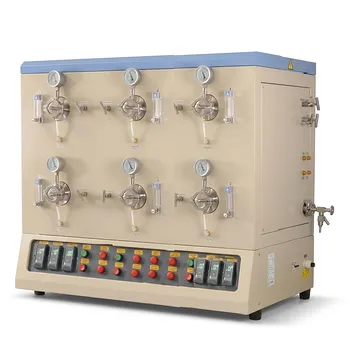
1200C High Throughput Multi Channel Tube Furnace with 50mm Quartz Tubes for Annealing and Material Phase Diagram Research

High Temperature Tube Furnace 1500C with Sliding Flanges and 50mm OD for Rapid Thermal Processing Fast Heating and Cooling

High Temperature Automated 5 Inch Tube Furnace for Autonomous Material Research and Advanced Laboratory R&D
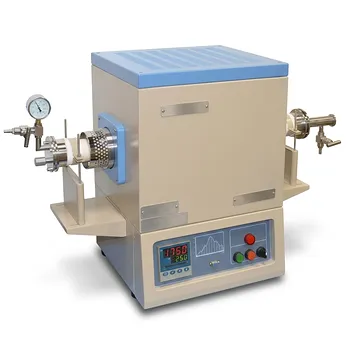
High Temperature Compact Vacuum Tube Furnace 1750C Max 60mm OD Alumina Tube

High Temperature 1700C Tube Furnace with 4 Inch OD Alumina Tube and Vacuum Sealing Flanges
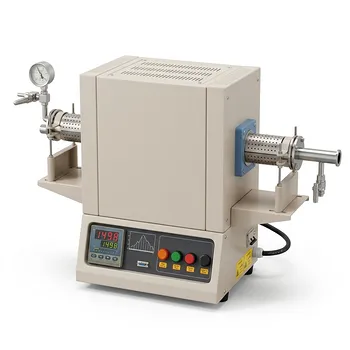
1500C High Temperature Compact Tube Furnace 2 Inch OD with Vacuum Flanges and Complete Accessories

High Temperature 1700C Six Zone Split Tube Furnace with Alumina Tube and Water Cooled Flanges

High Temperature 1700C Tube Furnace with High Vacuum Turbomolecular Pump System and Multi Channel Mass Flow Controller Gas Mixer

1800C High Temperature Compact Vacuum Tube Furnace with 60mm OD Alumina Tube and Kanthal MoSi2 Heating Elements
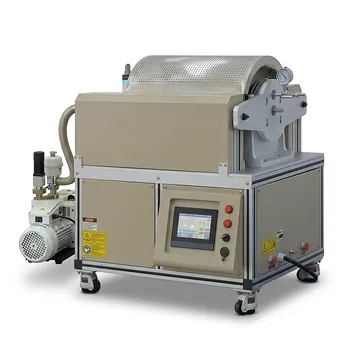
Automated 1200 C Tube Furnace for AI Material Research with 6 Inch OD and Sliding Flange
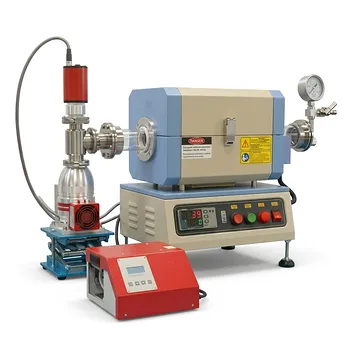
High Vacuum Compact Tube Furnace 1200C with Integrated Turbo Pump System and 8 Inch Heating Zone

1750°C High Temperature Benchtop Vacuum Atmosphere Tube Furnace with Kanthal Super 1800 Heating Elements and 60mm Alumina Processing Tube
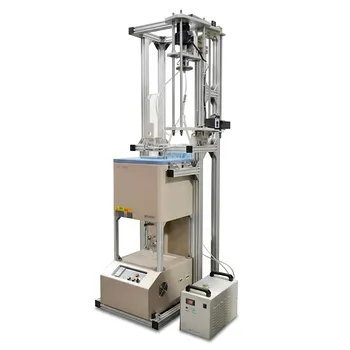
500C Vacuum Vertical Tube Furnace 84mm OD Sample Rotation Lifting System
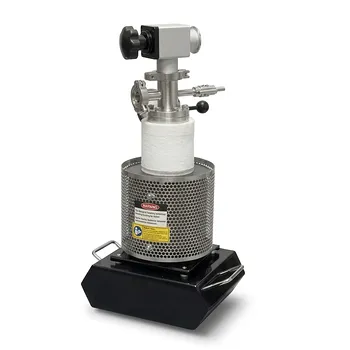
High Temperature 1100C Compact Top Loading Vertical Vacuum Tube Furnace for High Vacuum Noble Metal Melting and Material Research

1200°C 5 Inch Vertical Quartz Tube Furnace with Stainless Steel Vacuum Flanges
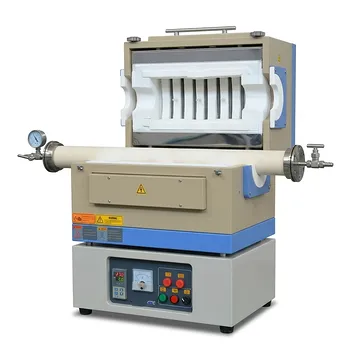
High Temperature 1600C Split Tube Furnace Vacuum Flanges Valves Optional 60mm 80mm Alumina Tube