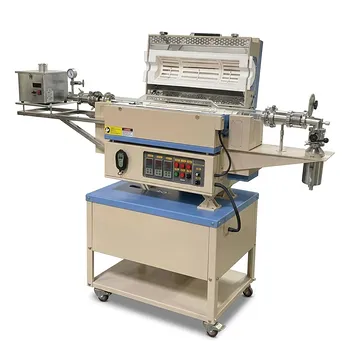
What is the necessity of fast quenching for catalyst annealing? Preserving High-Performance Microstructures
Updated 3 months ago
The technical necessity of a fast-quenching furnace lies in its ability to "freeze" specific atomic arrangements at the exact moment the annealing cycle concludes. By mechanically moving samples from a high-temperature zone to room temperature in seconds, the system preserves metastable metal distributions and microscopic structures that are thermodynamically unstable at lower temperatures. This immediate thermal arrest is the only way to prevent the uncontrolled structural evolution—such as nanoparticle growth or phase segregation—that naturally occurs during standard, slow furnace cooling.
Core Takeaway: Fast quenching acts as a kinetic "stop button," locking in the high-performance microscopic states achieved at high temperatures. Without this rapid cooling, the cooling phase itself becomes an uncontrolled second heat treatment that can degrade the catalyst's effectiveness.
Preserving the Metastable State
Arresting Kinetic Profiles
During high-temperature annealing, catalyst atoms rearrange into specific, high-energy distributions known as metastable states.
Fast quenching removes the thermal energy required for further movement, essentially trapping these atoms in their optimal high-temperature configuration before they can revert to a lower-energy, less active state.
Rapid Relocation Mechanics
A specialized furnace system facilitates this by physically relocating the sample from the heating core to a cold zone or room-temperature environment.
This transition must be nearly instantaneous to ensure the cooling rate outpaces the rate of atomic diffusion within the catalyst material.
Mitigating Thermal Degradation Effects
Preventing Nanoparticle Agglomeration
Slow cooling allows nanoparticles to remain mobile for an extended period, which often leads to sintering or agglomeration.
By quenching the sample, you eliminate the "tail" of the heat cycle, ensuring the high dispersion of the supported catalyst is maintained and the active surface area remains maximized.
Avoiding Phase Separation
In multi-component catalysts, slow cooling can trigger phase separation, where mixed elements begin to unmix as the temperature drops.
A quenching device ensures that the chemical homogeneity achieved at peak temperature is preserved, preventing the formation of undesired secondary phases that could poison the catalytic reaction.
Understanding the Trade-offs
The Risk of Thermal Stress
The most significant risk in fast quenching is the introduction of thermal shock to the catalyst support or the quartz housing.
Rapid temperature changes can cause mechanical fracturing or micro-cracking in sensitive ceramic supports if the materials' thermal expansion coefficients are not properly matched.
Equipment Complexity and Cost
Implementing a fast-quenching system requires specialized automated sliders or drop-mechanisms that can operate under controlled atmospheres.
This increases the mechanical complexity of the furnace setup and requires more rigorous maintenance to ensure seals remain vacuum-tight during the rapid movement of internal components.
How to Apply This to Your Project
Recommendations for Catalyst Development
- If your primary focus is maximizing active surface area: Prioritize a furnace with a motorized quenching track to ensure nanoparticle sizes are strictly limited by the annealing temperature, not the cooling rate.
- If your primary focus is alloy or bimetallic stability: Use fast quenching to prevent the segregation of metals, ensuring that the synergetic effects of the multi-metal interface are physically "locked" into the catalyst.
- If your primary focus is material durability: Conduct a tiered cooling study to determine the slowest possible quench rate that still preserves the desired structure, thereby minimizing unnecessary thermal stress on your sample.
By controlling the thermal trajectory of your material with precision, you transform the cooling process from a variable into a controlled tool for material optimization.
Summary Table:
| Key Feature | Technical Necessity | Benefit for Catalysts |
|---|---|---|
| Metastable States | Rapid thermal arrest | "Freezes" optimal atomic configurations to maximize activity |
| Particle Control | Eliminates cooling "tail" | Prevents sintering and maintains high nanoparticle dispersion |
| Phase Integrity | Stops atomic diffusion | Maintains chemical homogeneity and prevents phase separation |
| Kinetic Control | Instantaneous relocation | Transforms cooling from a variable into a controlled tool |
Elevate Your Material Research with THERMUNITS Precision
Achieving high-performance catalysts requires more than just heating—it requires absolute control over the entire thermal trajectory. THERMUNITS is a leading manufacturer of high-temperature laboratory equipment designed specifically for material science and industrial R&D.
We provide specialized furnace systems that allow you to "lock in" the microscopic states your research demands. Our comprehensive range of thermal processing solutions includes:
- Advanced Furnaces: Muffle, Vacuum, Atmosphere, Tube, Rotary, and Hot Press systems.
- Specialized Systems: CVD/PECVD systems, Dental Furnaces, and Electric Rotary Kilns.
- Industrial R&D: Vacuum Induction Melting (VIM) furnaces and high-quality Thermal Elements.
Ready to optimize your annealing process and prevent thermal degradation?
Contact THERMUNITS Today to consult with our experts and find the perfect high-precision heat treatment solution for your laboratory.
References
- Xinlong Ma, Jie Zeng. Propane wet reforming over PtSn nanoparticles on γ-Al2O3 for acetone synthesis. DOI: 10.1038/s41467-024-52702-x
Mentioned Products
- Rapid Thermal Processing Furnace 1100C Atmosphere Controlled Bottom Loading RTP System for Wafer Annealing and Catalysis Research
- Rapid Thermal Processing Atmosphere Controlled Bottom Loading Furnace 1100C with 50C Per Second Heating Rate for Wafer Annealing
- Compact Atmosphere Controlled Rapid Thermal Processing RTP Furnace with 4 Inch ID Quartz Tube 1100C
- 1200C High Temperature 5 Inch Sliding Tube Furnace for Rapid Thermal Processing RTP and Wafer Annealing
- 950C Rapid Thermal Processing Furnace for 12 Inch Wafer CSS Coating with Rotating Substrate Holder
People Also Ask
- What role does a SiC-coated graphite susceptor play in H2Se selenization? Boost RTP Thermal Uniformity & Film Purity.
- What are the functional advantages of an RTP system for surface deposition? Enhance Heterojunction Interface Integrity
- Why is an atmosphere-controlled annealing furnace required for the post-treatment of synthesized KTiOPO4 thin films? KTP
- What are the advantages of RTPR for Pd1/PU catalyst synthesis? Achieve superior single-atom dispersion and stability.
- Why is 1100°C in situ annealing required after LZO and DTO deposition? Achieve High-Quality Thin Film Synthesis

Tech Team · ThermUnits
Last updated on Jun 03, 2026
Related Products
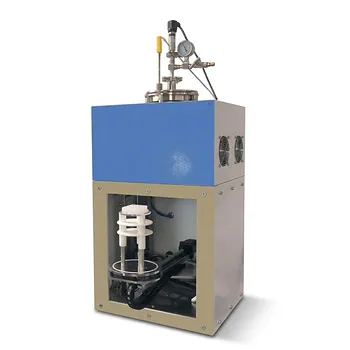
Rapid Thermal Processing Furnace 1100C Atmosphere Controlled Bottom Loading RTP System for Wafer Annealing and Catalysis Research
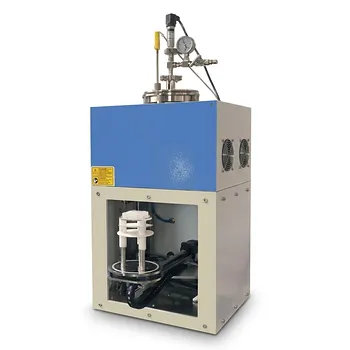
Rapid Thermal Processing Atmosphere Controlled Bottom Loading Furnace 1100C with 50C Per Second Heating Rate for Wafer Annealing
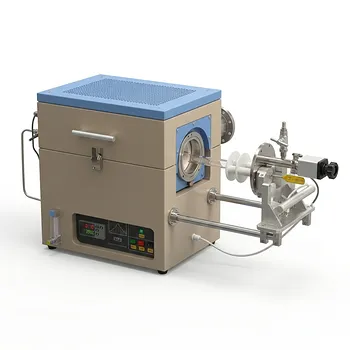
Compact Atmosphere Controlled Rapid Thermal Processing RTP Furnace with 4 Inch ID Quartz Tube 1100C
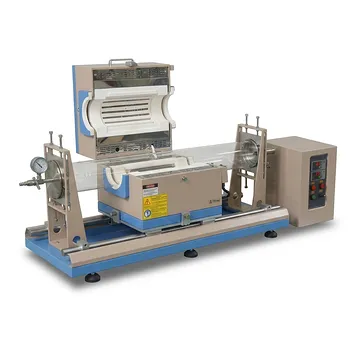
1200C High Temperature 5 Inch Sliding Tube Furnace for Rapid Thermal Processing RTP and Wafer Annealing
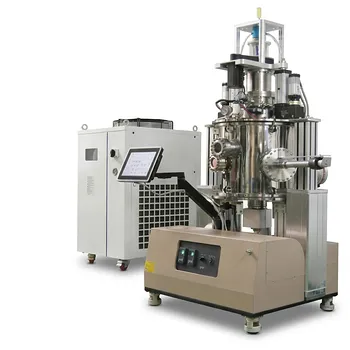
950C Rapid Thermal Processing Furnace for 12 Inch Wafer CSS Coating with Rotating Substrate Holder
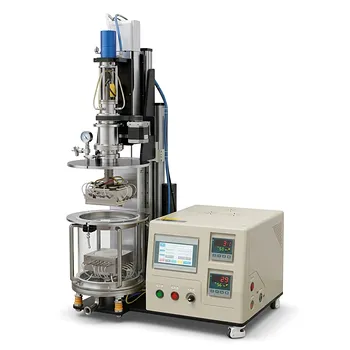
High Temperature 800C Rapid Thermal Processing Furnace with Rotating Sample Holder for Close Spaced Sublimation and Thin Film Solar Cell Research
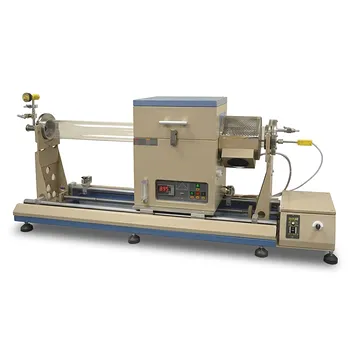
900 ºC Max Sliding RTP Tube Furnace with Rapid IR Heating and 4 Inch OD Quartz Tube

Compact Vertical Split Quartz Tube Furnace with Stainless Steel Vacuum Flanges for Rapid Thermal Quenching and Controlled Atmosphere Material Processing
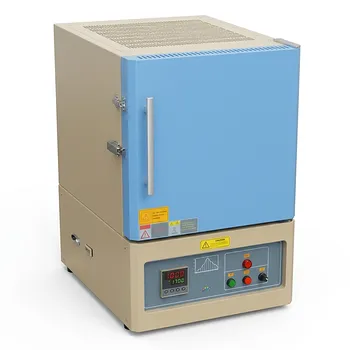
Large Bench Top 1700C High Temperature Muffle Furnace with 19L Chamber for Advanced Material Sintering and Annealing
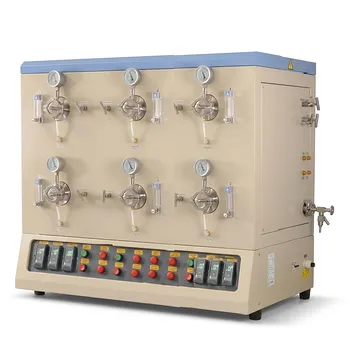
1200C High Throughput Multi Channel Tube Furnace with 50mm Quartz Tubes for Annealing and Material Phase Diagram Research
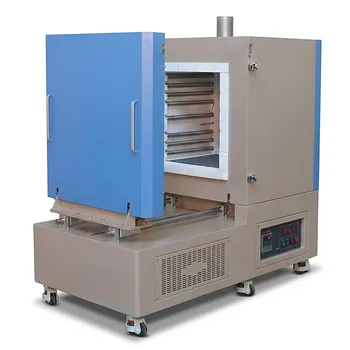
1200C Five Side Heating Muffle Furnace with Sliding Door 125L Volume High Temperature Heat Treatment System for Large Scale Sintering and Annealing
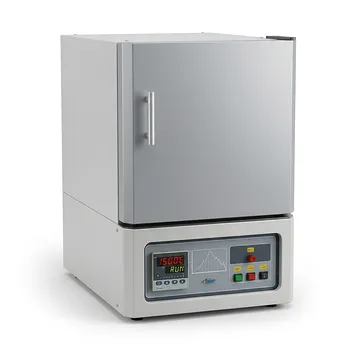
High Temperature 1500C Benchtop Muffle Furnace 3.6L Alumina Fiber Chamber Programmable Controller Sintering Annealing Carbonization Thermal Processing System
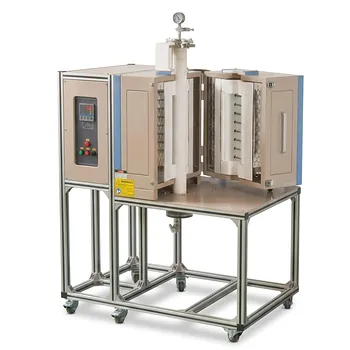
High Temperature 1700C Vertical Split Tube Furnace for Material Quenching and Single Crystal Growth
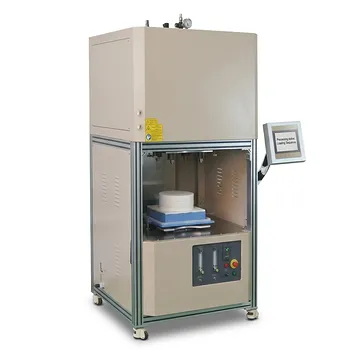
High Temperature Vertical Atmosphere Controlled Furnace with Automatic Bottom Loading and 1700°C Capacity for Advanced Material Research
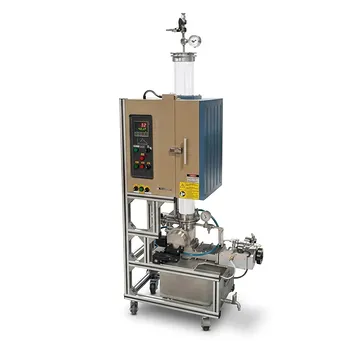
1200C High Temperature Atmosphere Controlled Vertical Quenching Tube Furnace with 4 Inch Quartz Tube
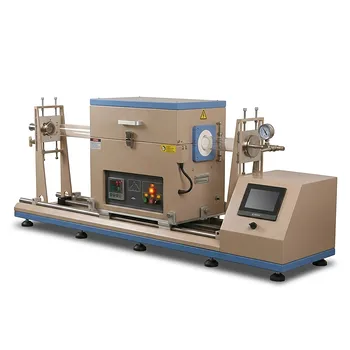
1200C Sliding Tube Furnace for Rapid Thermal Processing and CVD Graphene Growth with 100mm OD Capacity
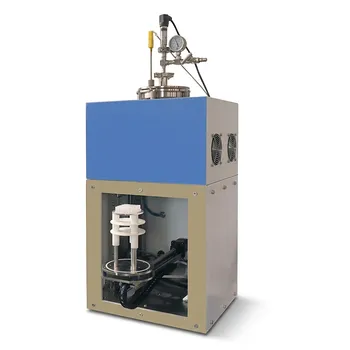
Rapid Thermal Processing RTP Atmosphere Controlled Bottom Loading Furnace 1100C High Throughput 50C per Second Heating Rate
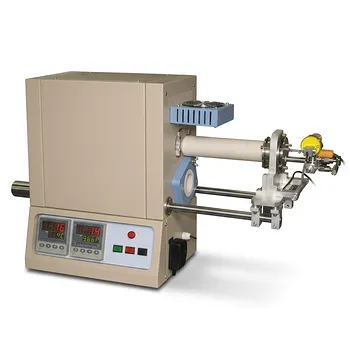
High Temperature Tube Furnace 1500C with Sliding Flanges and 50mm OD for Rapid Thermal Processing Fast Heating and Cooling
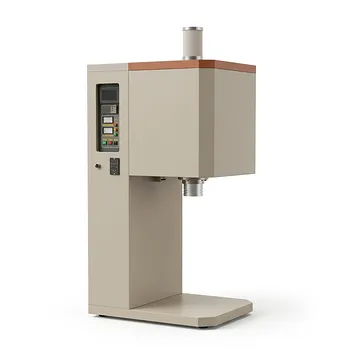
Vertical Openable Tube Furnace 0-1700c High Temperature Laboratory System for CVD and Vacuum Heat Treatment