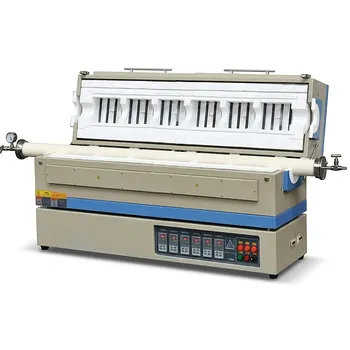
What process environment does a vacuum tube furnace provide for silica glass pyrolysis? Ensure Crack-Free Results
Updated 3 months ago
A controlled, low-pressure environment is the defining characteristic of a vacuum tube furnace during the thermal decomposition stage of silica glass production. This specialized atmosphere is strictly oxygen-deficient and operates under a slow, programmed heating cycle to facilitate the gentle removal of organic binders. By maintaining these conditions, the furnace ensures that gaseous byproducts are discharged without damaging the delicate silica nanoparticle framework, effectively preventing cracks during the debinding process.
Core Takeaway: The vacuum tube furnace provides an oxygen-free, low-pressure thermal environment that allows polymer matrices to decompose and degas slowly, preserving the structural integrity of the silica green body before final sintering.
The Role of Atmospheric Control in Pyrolysis
Establishing an Oxygen-Deficient Environment
The furnace removes ambient air to create an oxygen-deficient atmosphere, which is critical for preventing the premature or uncontrolled oxidation of the polymer matrix. By eliminating oxygen, the furnace ensures that the organic components decompose via pyrolysis rather than combustion. This controlled chemical breakdown is essential for maintaining the purity of the silica glass precursor.
Facilitating Low-Pressure Gas Discharge
Operating under low-pressure or vacuum conditions significantly reduces the boiling points of the volatile organic compounds being released. This lower pressure environment creates a driving force that helps gaseous products migrate out of the green body more efficiently. Without this vacuum, gas pressure could build up within the pores, leading to internal stresses.
Precision Thermal Management and Structural Integrity
Implementing Slow Heating Programs
The success of the decomposition stage relies on a precise, slow heating program rather than rapid temperature spikes. Gradually increasing the temperature allows the polymer matrix to break down at a rate that the material's porosity can accommodate. This "gentle" decomposition is the primary defense against the physical impact of gas release, which is a leading cause of structural failure in green bodies.
Protecting the Nanoparticle Framework
During pyrolysis, the silica nanoparticles are in a vulnerable state as the "glue" of the polymer matrix disappears. The vacuum tube furnace provides a stable thermal field that prevents localized hotspots, which could cause uneven shrinkage. By balancing the rate of gas discharge with the strength of the nanoparticle framework, the furnace ensures the sample remains crack-free.
Transitioning from Organic to Inorganic
The furnace facilitates the critical transition of the material from an organic-rich state to an inorganic silica network. As the polymers are removed, the remaining structure consists of a pure silica nanoparticle framework. This stage prepares the material for the final sintering stage, where much higher temperatures (up to 1300°C) and higher vacuum levels (10⁻⁵ bar) are used to eliminate remaining micropores.
Understanding the Trade-offs and Risks
The Risk of Entrapped Gases
If the vacuum level is insufficient or the heating rate is too aggressive, gaseous byproducts can become trapped within the matrix. This leads to the formation of internal bubbles or "bloating," which ruins the optical transparency of the final glass. Even minor fluctuations in pressure during the decomposition phase can result in permanent structural defects.
Balancing Time and Throughput
While slow heating rates are necessary for material integrity, they significantly increase the duration of the production cycle. Engineers must find the "sweet spot" where the heating is fast enough for industrial efficiency but slow enough to avoid mechanical stress. Over-optimizing for speed almost always results in a higher scrap rate due to cracking.
Applying Furnace Control to Your Production Goals
Recommendations for Process Optimization
The specific settings of your vacuum tube furnace should align with the geometry and composition of your silica green bodies.
- If your primary focus is preventing structural cracks: Prioritize a slower ramp-rate in the heating program (e.g., 1-3°C per minute) to ensure the internal gas pressure never exceeds the strength of the nanoparticle framework.
- If your primary focus is maximum optical clarity: Ensure the vacuum system can maintain a low-pressure environment consistently to assist in the complete diffusion and removal of all interfacial moisture and volatiles.
- If your primary focus is high-volume throughput: Use a furnace with a highly uniform temperature field to allow for faster heating cycles without creating the localized thermal gradients that cause warping.
The technical precision of the vacuum tube furnace’s environment is the single most important factor in transforming a fragile polymer-silica composite into a high-performance glass component.
Summary Table:
| Feature | Environmental Characteristic | Primary Benefit |
|---|---|---|
| Atmosphere | Oxygen-deficient / Vacuum | Prevents combustion; ensures pure pyrolysis |
| Pressure | Controlled Low-pressure | Efficiently discharges gases; prevents bloating |
| Temperature | Slow Programmed Heating | Avoids thermal stress and protects nanoparticle structure |
| Stability | Uniform Thermal Field | Eliminates localized hotspots and uneven shrinkage |
Elevate Your Material Research with THERMUNITS
Precision in thermal decomposition is critical for the success of high-performance silica glass and advanced material R&D. THERMUNITS is a leading manufacturer of high-temperature laboratory equipment, offering a comprehensive range of solutions including Vacuum Tube Furnaces, Muffle, Atmosphere, Rotary, and Hot Press furnaces, as well as CVD/PECVD systems and Vacuum Induction Melting (VIM) technology.
Our equipment is engineered to provide the stable thermal fields and precise atmospheric control necessary to transform fragile precursors into high-quality inorganic networks without structural defects.
Ready to optimize your heat treatment process? Contact our technical team today to discuss your specific R&D requirements and discover how THERMUNITS can enhance your laboratory's efficiency.
References
- Ziyong Li, Xiewen Wen. One-photon three-dimensional printed fused silica glass with sub-micron features. DOI: 10.1038/s41467-024-46929-x
Mentioned Products
- High Vacuum Compact Tube Furnace 1200C with Integrated Turbo Pump System and 8 Inch Heating Zone
- 1800C High Temperature Compact Vacuum Tube Furnace with 60mm OD Alumina Tube and Kanthal MoSi2 Heating Elements
- 500C Vacuum Vertical Tube Furnace 84mm OD Sample Rotation Lifting System
- 1200C High Temperature 5 Inch Split Vacuum Tube Furnace with 12 Inch Heating Zone and Separated PID Controller
- 1750°C High Temperature Benchtop Vacuum Atmosphere Tube Furnace with Kanthal Super 1800 Heating Elements and 60mm Alumina Processing Tube
People Also Ask
- What core functions does a high-temperature vacuum tube furnace provide? Optimize np-CuSn Sintering & Joint Integrity
- What is the primary function of a high vacuum tube furnace in the in-situ grain growth experiments of silicon steel?
- Why is a high-vacuum tube furnace required for the pyrolysis phase of BCMoMn electrocatalysts? Key for Catalyst Precision
- What are the functions of a tube furnace in PCC annealing? Optimize Carbonization & Porosity
- What is the Role of Vacuum Tube Furnaces in Ti1-xAlxN Research? Master Age Hardening & Stability

Tech Team · ThermUnits
Last updated on Jun 02, 2026
Related Products
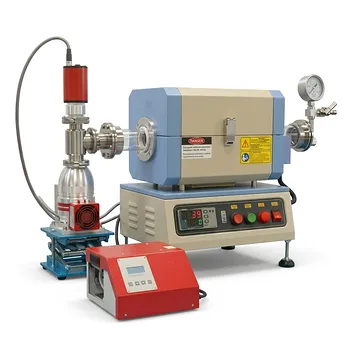
High Vacuum Compact Tube Furnace 1200C with Integrated Turbo Pump System and 8 Inch Heating Zone

1800C High Temperature Compact Vacuum Tube Furnace with 60mm OD Alumina Tube and Kanthal MoSi2 Heating Elements
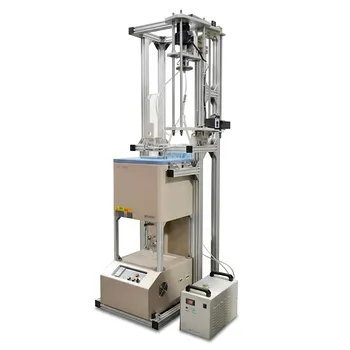
500C Vacuum Vertical Tube Furnace 84mm OD Sample Rotation Lifting System
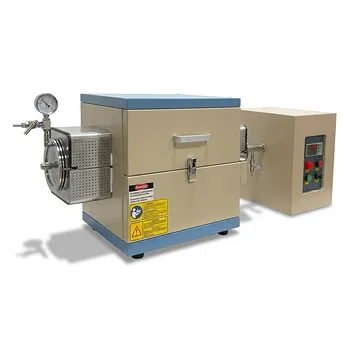
1200C High Temperature 5 Inch Split Vacuum Tube Furnace with 12 Inch Heating Zone and Separated PID Controller
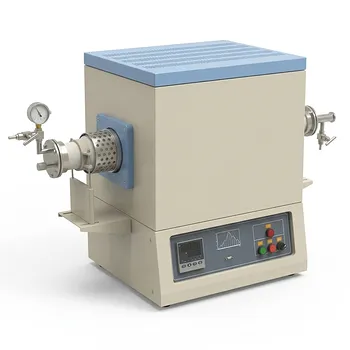
1750°C High Temperature Benchtop Vacuum Atmosphere Tube Furnace with Kanthal Super 1800 Heating Elements and 60mm Alumina Processing Tube
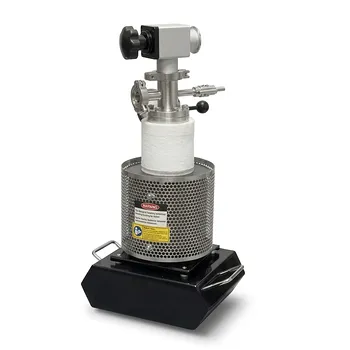
High Temperature 1100C Compact Top Loading Vertical Vacuum Tube Furnace for High Vacuum Noble Metal Melting and Material Research
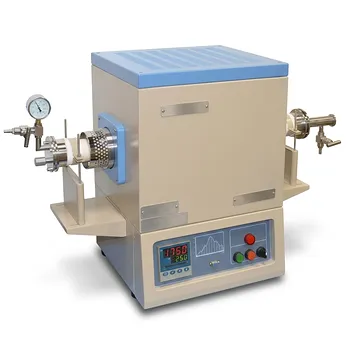
High Temperature Compact Vacuum Tube Furnace 1750C Max 60mm OD Alumina Tube
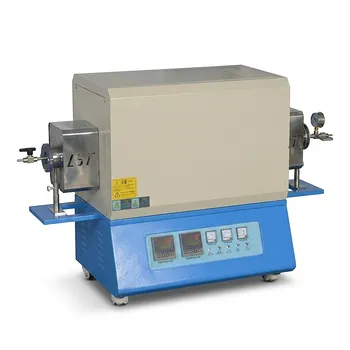
High Temperature Dual Zone Vacuum Tube Furnace for Material Research and CVD Processing

Vertical 1700C Vacuum and Atmosphere Tube Furnace with 80mm Alumina Tube

High Temperature 1700C Tube Furnace with High Vacuum Turbomolecular Pump System and Multi Channel Mass Flow Controller Gas Mixer
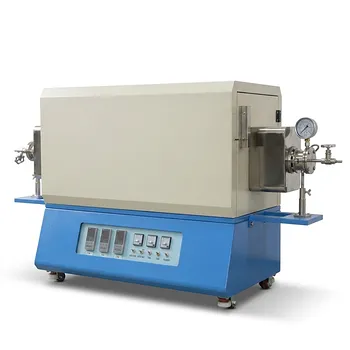
Three Temperature Zone High Temperature Vacuum Tube Furnace for CVD and Material Sintering
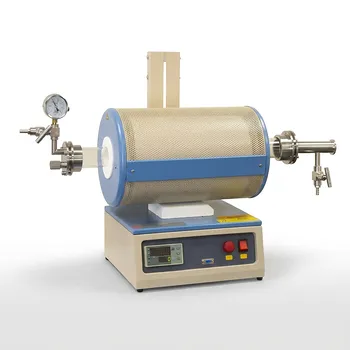
1100C Tube Furnace with Vacuum Flange and Programmable Temperature Controller for Material Science and Industrial Heat Treatment
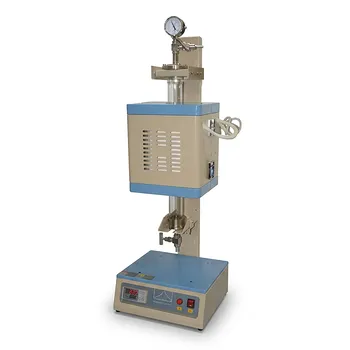
Compact Vertical Split Quartz Tube Furnace with Stainless Steel Vacuum Flanges for Rapid Thermal Quenching and Controlled Atmosphere Material Processing
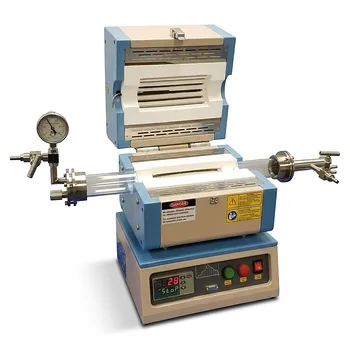
Compact Split Tube Furnace with Integrated Vacuum System and Precision Temperature Calibrator
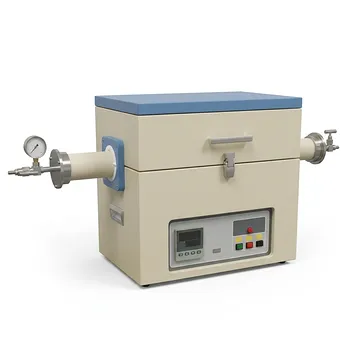
1250C Split Tube Furnace with 3 Inch Mullite Tube and Vacuum Sealing Flanges for Precision Thermal Processing
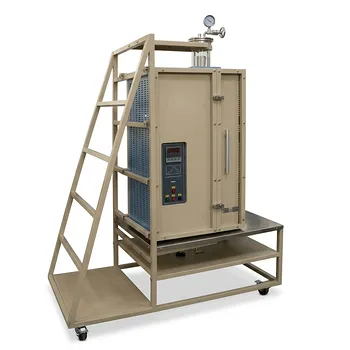
Split Vertical Tube Furnace with 1200C Quartz Tube and Stainless Steel Vacuum Flanges for Rapid Thermal Processing
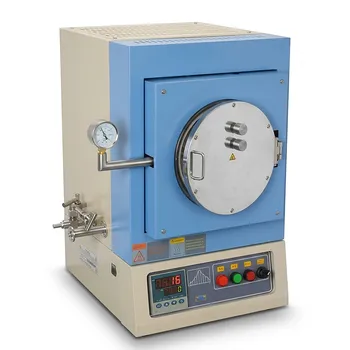
1100°C High Temperature Quartz Chamber Furnace 8 Inch OD with 7.6 Liter Capacity and Vacuum Atmosphere Capability

Compact High Temperature 1600C Tube Furnace with 50mm Alumina Tube and Vacuum Flanges for Material Sintering
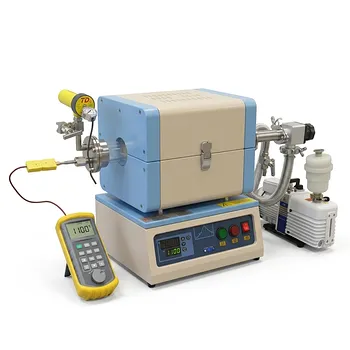
Compact Split Tube Furnace with Insertable Temperature Calibrator and Integrated Vacuum System