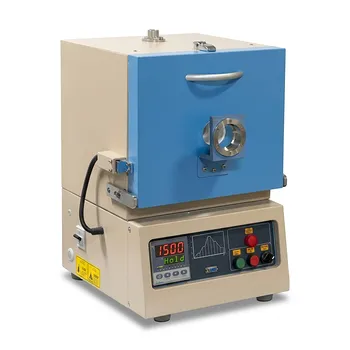
What role does a ceramic tube furnace play in controlling parameters for the co-pyrolysis of pine wood and polystyrene?
Updated 3 months ago
The ceramic tube furnace serves as the foundational reactor for co-pyrolysis, providing the thermal precision and atmospheric isolation required to transform biomass and plastics into high-value fuels. By establishing a clearly defined heating zone, the furnace allows for the exact manipulation of heating rates and the maintenance of stable isothermal conditions. This level of control is essential for targeting the production of hydrocarbons in the aviation fuel range, specifically at temperatures between 450 °C and 550 °C.
The ceramic tube furnace acts as a precision "thermal envelope" that decouples reaction variables, allowing researchers to isolate the effects of temperature, time, and atmosphere. Its primary role is to ensure that the synergistic effects between pine wood and polystyrene occur under highly reproducible and oxygen-free conditions.
Precision Thermal Management
Establishing Isothermal Stability
Isothermal conditions are critical for identifying the specific decomposition windows of pine wood and polystyrene. The furnace maintains a constant thermal state, preventing the temperature fluctuations that could lead to unpredictable cracking of hydrocarbon chains.
Controlling Heating Rates and Curves
The ability to program specific heating curves allows researchers to dictate the speed at which feedstocks transition from solid to vapor. This control directly influences the dehydration and carbonization stages of the pine wood’s lignin and cellulose components.
Uniformity of the Temperature Field
A high-quality ceramic tube ensures an even distribution of heat across the reaction zone. This uniformity is vital for microstructural consistency, preventing localized "hot spots" that might cause premature carbon phase segregation or uneven product quality.
Atmospheric and Kinetic Control
Maintaining an Inert Environment
The furnace’s sealed design facilitates the use of inert gas purges, such as Nitrogen or Argon, to effectively exclude oxygen. This isolation ensures the process remains a true pyrolysis reaction, preventing the combustion of the polystyrene and wood fibers.
Linear Flow Path and Volatiles Management
The closed linear flow path within the tube allows for the precise management of residence time for volatile gases. By controlling the flow of inert gas, researchers can sweep away primary vapors before they undergo unwanted secondary reactions or excessive cracking.
Integration of Monitoring Tools
Modern tube furnaces utilize integrated K-type thermocouples to monitor the internal environment in real-time. This feedback loop allows for the fine-tuning of parameters between 300 °C and 600 °C, which is the window where the most significant interactions between biomass and polymers occur.
Understanding the Trade-offs
Scale and Throughput Limitations
While tube furnaces offer unmatched precision at the laboratory scale, they are inherently limited by sample volume. Results obtained in a small-diameter tube may not translate perfectly to large-scale industrial reactors where heat transfer dynamics differ.
Thermal Stress and Material Fatigue
Ceramic tubes are susceptible to thermal shock if the heating or cooling cycles are too aggressive. Maintaining the integrity of the tube is critical; any hairline fracture can compromise the inert atmosphere and introduce oxygen, ruining the experimental baseline.
How to Apply This to Your Research
Selecting Parameters for Targeted Outcomes
- If your primary focus is maximizing aviation fuel yield: Focus on maintaining precise isothermal control within the 450 °C to 550 °C range to optimize the hydrocarbon composition.
- If your primary focus is analyzing reaction kinetics: Use a linear heating program to observe the distinct temperatures at which the pine wood and polystyrene begin to synergize.
- If your primary focus is product purity: Ensure a high-integrity seal and a continuous nitrogen flow to eliminate any potential for oxidation during the thermal treatment.
By mastering the thermal and atmospheric variables of the ceramic tube furnace, researchers can effectively bridge the gap between raw organic precursors and high-performance synthetic fuels.
Summary Table:
| Feature | Role in Co-pyrolysis | Research Benefit |
|---|---|---|
| Thermal Stability | Maintains constant 450°C - 550°C | Targets high-value aviation fuel hydrocarbons |
| Inert Atmosphere | Nitrogen/Argon gas isolation | Prevents combustion and ensures product purity |
| Heating Rates | Programmable thermal curves | Dictates biomass dehydration and carbonization |
| Residence Time | Linear flow path management | Prevents unwanted secondary cracking of vapors |
| Real-time Monitoring | Integrated K-type thermocouples | Allows fine-tuning of synergy between feedstocks |
Elevate Your Research with THERMUNITS High-Precision Furnaces
Are you looking to achieve unmatched precision in your co-pyrolysis or material science experiments? THERMUNITS is a leading manufacturer of high-temperature laboratory equipment dedicated to industrial R&D. We provide the thermal stability and atmospheric control essential for complex reactions.
Our comprehensive range of thermal processing solutions includes:
- Tube and Rotary Furnaces for continuous or batch co-pyrolysis
- Vacuum and Atmosphere Furnaces for oxygen-sensitive processes
- CVD/PECVD Systems for advanced chemical vapor deposition
- Muffle, Hot Press, and Vacuum Induction Melting (VIM) Furnaces
- Dental Furnaces and Thermal Elements
Whether you are scaling up bio-fuel production or exploring new material boundaries, our expert team is ready to provide the custom heat treatment solutions you need.
Contact THERMUNITS today to optimize your lab’s thermal processing!
References
- Ayden Kemp, Sushil Adhikari. Production of Aviation Fuel-Range Hydrocarbons Through Catalytic Co-Pyrolysis of Polystyrene and Southern Pine. DOI: 10.3390/catal14110806
Mentioned Products
- Compact High Temperature 1600C Tube Furnace with 50mm Alumina Tube and Vacuum Flanges for Material Sintering
- Vertical 1700C Vacuum and Atmosphere Tube Furnace with 80mm Alumina Tube
- 1800C High Temperature Compact Vacuum Tube Furnace with 60mm OD Alumina Tube and Kanthal MoSi2 Heating Elements
- 1100°C Large Diameter Quartz Tube Furnace with 24 Inch Heating Zone and Water Cooled Flanges
- High Temperature Tube Furnace 1500C with Sliding Flanges and 50mm OD for Rapid Thermal Processing Fast Heating and Cooling
People Also Ask
- What is the role of a high-temperature tube furnace in the calcination process of ZnO/In2O3 nanocomposites?
- Why is a high-temperature tube furnace required for CuAlO2 heat treatment? Master Phase Transformation Today
- Function of tube furnaces in cellulose aerogel carbonization? Achieve High-Performance Materials
- What role does a high-temperature tube furnace play in the carbonization? Mastering Precision Carbon Synthesis
- What role does a high-temperature tube furnace play in executing nitrogen absorption kinetic experiments? Expert Insights

Tech Team · ThermUnits
Last updated on Jun 03, 2026
Related Products

Compact High Temperature 1600C Tube Furnace with 50mm Alumina Tube and Vacuum Flanges for Material Sintering

Vertical 1700C Vacuum and Atmosphere Tube Furnace with 80mm Alumina Tube

1800C High Temperature Compact Vacuum Tube Furnace with 60mm OD Alumina Tube and Kanthal MoSi2 Heating Elements
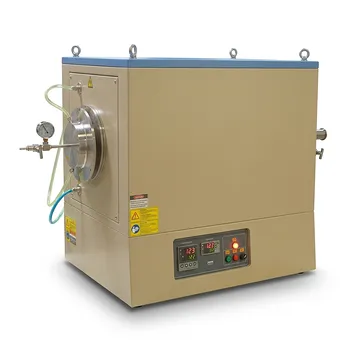
1100°C Large Diameter Quartz Tube Furnace with 24 Inch Heating Zone and Water Cooled Flanges
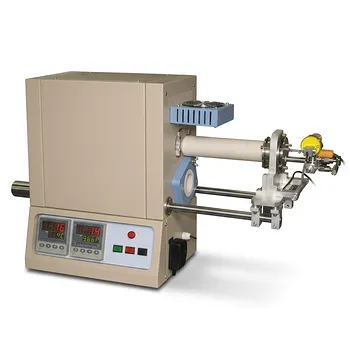
High Temperature Tube Furnace 1500C with Sliding Flanges and 50mm OD for Rapid Thermal Processing Fast Heating and Cooling
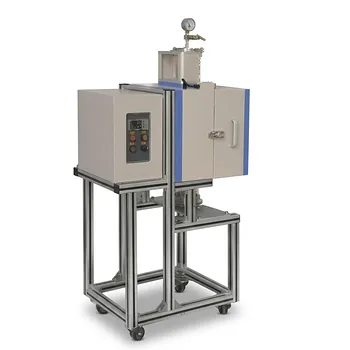
1200°C 5 Inch Vertical Quartz Tube Furnace with Stainless Steel Vacuum Flanges

High Temperature 1700C Benchtop Tube Furnace with 5 Inch Heating Zone High Purity Alumina Tube and Vacuum Sealing Flanges
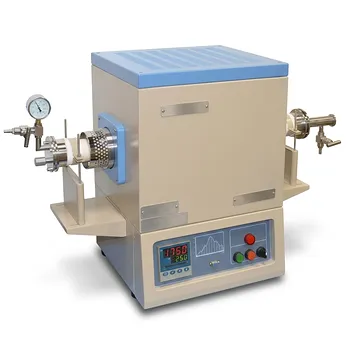
High Temperature Compact Vacuum Tube Furnace 1750C Max 60mm OD Alumina Tube
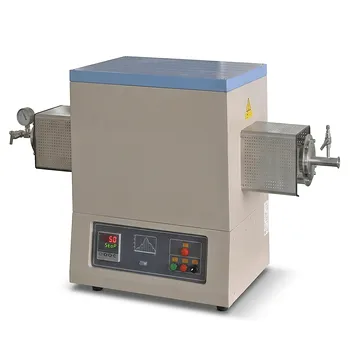
High Temperature 1700C Tube Furnace with 4 Inch OD Alumina Tube and Vacuum Sealing Flanges

High Temperature 1700C Vertical Tube Furnace for Powder Spherification and Material Sintering
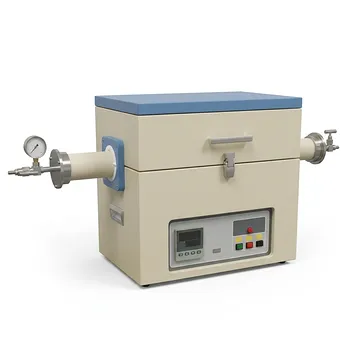
1250C Split Tube Furnace with 3 Inch Mullite Tube and Vacuum Sealing Flanges for Precision Thermal Processing
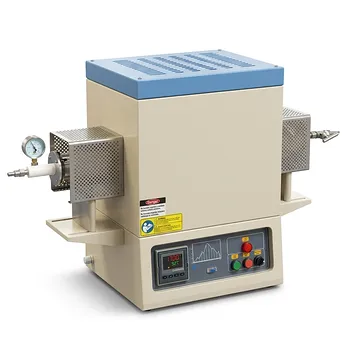
High Temperature Three Zone Tube Furnace 1700C with Alumina Tube and Water Cooled Flanges
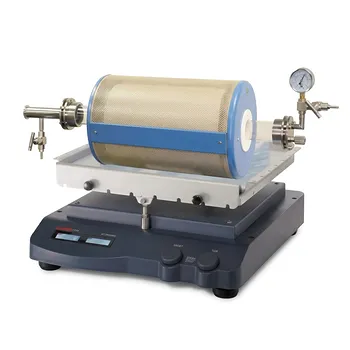
High Temperature Rocking Tube Furnace with Quartz Tube and Vacuum Flange for Materials Synthesis
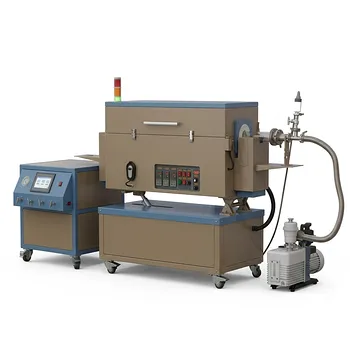
5 Inch Three Zone Rotary Tube Furnace with Integrated Gas Delivery System and 1200C Capability for Advanced Material CVD Processing

High Temperature 1700C Tube Furnace with High Vacuum Turbomolecular Pump System and Multi Channel Mass Flow Controller Gas Mixer
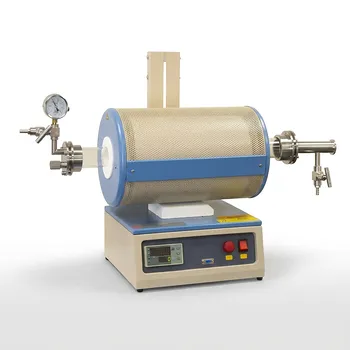
1100C Tube Furnace with Vacuum Flange and Programmable Temperature Controller for Material Science and Industrial Heat Treatment
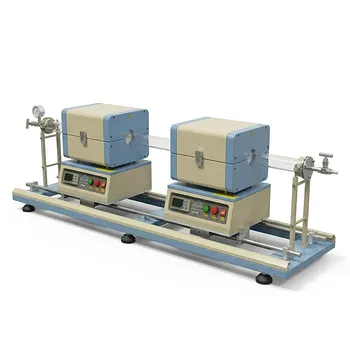
1200C Max Dual Sliding Tube Furnace with 50 mm Tube Flanges for CVD
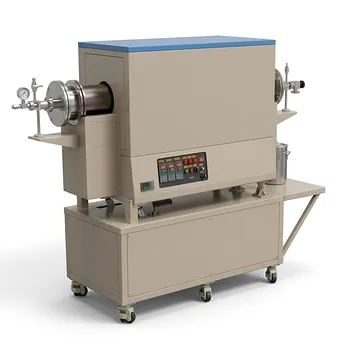
900°C Max Rotary Tube Furnace with 8 Inch 310S Alloy Tube and Optional Multi Zone Heating for Industrial Material Calcination
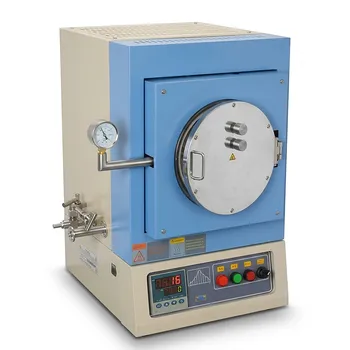
1100°C High Temperature Quartz Chamber Furnace 8 Inch OD with 7.6 Liter Capacity and Vacuum Atmosphere Capability