Role of Vacuum Pumps in MoS2 LP-CVD: Engineering Sulfur Vacancies for Advanced Material R&D
Updated 3 months ago
In LP-CVD, a high-performance vacuum pump is the primary engine for engineering defects within the Molybdenum Disulfide ($MoS_2$) lattice. By maintaining a stable low-pressure environment of approximately 1 Torr, the system fundamentally alters gas transport and reaction kinetics. This specific pressure regime, combined with the near-total exclusion of oxygen, accelerates chemical kinetics to induce high-density sulfur vacancy defects, allowing for precise in-situ regulation of the material’s electronic properties.
The vacuum pump system transitions the growth process from passive deposition to active defect engineering. It manipulates the mean free path of precursors and reaction kinetics to intentionally create sulfur vacancies, which are essential for tailoring the catalytic and electronic performance of $MoS_2$.
Accelerating Reaction Kinetics via Pressure Control
Achieving the Critical 1 Torr Environment
A high-performance vacuum pump is essential for maintaining a precise growth environment of approximately 1 Torr. This specific pressure level is the threshold required to shift the CVD process into the "low-pressure" regime, which is distinct from atmospheric growth.
Enhancing the Mean Free Path
By reducing the internal pressure, the vacuum system significantly increases the mean free path of gas-phase molecules. This ensures that precursor vapors, such as sulfur and molybdenum trioxide, can reach the substrate with fewer gas-phase collisions, reducing unwanted dust formation and side reactions.
Regulating Gas Transport Dynamics
The vacuum pump provides the mechanical force necessary to manage the flow of carrier gases and precursor vapors through the reaction tube. This controlled flow ensures that the concentration of reactants remains consistent across the substrate, facilitating the growth of large-area crystals despite the introduction of defects.
Engineering Sulfur Vacancies in the Lattice
The Role of Oxygen Exclusion
Before the growth process begins, the vacuum pump evacuates the reaction chamber to pressures below 0.1 kPa to remove residual air. Eliminating oxygen is critical because it prevents the unwanted oxidation of precursors and creates the high-purity environment necessary for sulfur vacancies to form without interference.
Inducing High-Density Sulfur Vacancies
In an environment with extremely low oxygen content and controlled low pressure, the accelerated reaction kinetics favor the formation of vacancies. These sulfur vacancies are "engineered" in-situ, meaning they are built into the $MoS_2$ lattice during the growth phase rather than being added later.
In-Situ Regulation of Defect Density
The vacuum system allows researchers to fine-tune the defect density by adjusting the operating pressure. By manipulating the balance between precursor delivery and vacuum extraction, the system provides a lever to increase or decrease the concentration of sulfur vacancies as needed for specific applications.
Understanding the Trade-offs
Balancing Defect Density and Crystal Quality
While sulfur vacancies provide active sites for catalysis, excessive defect density can compromise the structural integrity of the $MoS_2$ monolayer. A high-performance pump must maintain extreme stability, as even minor pressure fluctuations can lead to uncontrolled cracking or non-uniformity in the crystal lattice.
Precursor Utilization vs. Vacuum Strength
Stronger vacuum levels increase the mean free path but can also lead to the rapid depletion of precursor vapors before they can deposit on the substrate. Finding the "sweet spot" requires balancing the pumping speed with the sublimation rates of the solid sulfur and molybdenum sources.
Contamination Risks at Deep Vacuums
While high-performance pumps are designed to clean the chamber, back-streaming of pump oil or mechanical vibrations can introduce new impurities or structural defects. Maintaining a "clean" vacuum is as important as maintaining a "strong" vacuum to ensure that the engineered defects are purely sulfur vacancies.
How to Apply This to Your Project
Recommendations for Synthesis Goals
- If your primary focus is maximizing catalytic activity: Operate the vacuum system at the lower end of the LP-CVD range (~1 Torr) to maximize sulfur vacancy density and create more active edge sites.
- If your primary focus is high-mobility semiconductor devices: Prioritize the initial evacuation phase to reach deep vacuum levels (below 0.1 kPa) to ensure total oxygen exclusion before stabilizing growth pressure.
- If your primary focus is large-area uniformity: Focus on the stability of the vacuum pump's pressure control to ensure a consistent mean free path across the entire length of the quartz tube.
The strategic use of a high-performance vacuum pump transforms the reaction chamber into a precision laboratory for the atomic-scale tailoring of $MoS_2$ properties.
Summary Table:
| Key Function | Role in LP-CVD Process | Impact on MoS2 Lattice |
|---|---|---|
| Pressure Control | Maintains stable ~1 Torr environment | Accelerates kinetics for sulfur vacancies |
| Oxygen Exclusion | Evacuates chamber to < 0.1 kPa | Prevents oxidation & ensures high purity |
| Gas Transport | Increases mean free path of precursors | Ensures uniform large-area crystal growth |
| Defect Regulation | Adjusts pumping speed/extraction | Fine-tunes in-situ sulfur vacancy density |
Elevate Your Material Research with THERMUNITS Precision
Achieving the perfect defect density in $MoS_2$ requires uncompromising vacuum stability and thermal precision. THERMUNITS is a leading manufacturer of high-temperature laboratory equipment, providing specialized solutions for material science and industrial R&D.
Our comprehensive range of thermal processing systems—including CVD/PECVD systems, Vacuum and Atmosphere Furnaces, Tube and Rotary Furnaces, and high-performance Vacuum Induction Melting (VIM) units—are engineered to give you total control over your synthesis environment. Whether you are inducing sulfur vacancies for catalysis or optimizing semiconductors, we provide the tools necessary for atomic-scale tailoring.
Ready to optimize your heat treatment process? Contact us today to discuss your specific research requirements and discover how our advanced thermal solutions can accelerate your breakthroughs.
References
- Irfan Haider Abidi, Sumeet Walia. Oxygen Driven Defect Engineering of Monolayer MoS<sub>2</sub> for Tunable Electronic, Optoelectronic, and Electrochemical Devices. DOI: 10.1002/adfm.202402402
Mentioned Products
- Radio Frequency Plasma Enhanced Chemical Vapor Deposition RF PECVD System for Laboratory and Industrial Thin Film Growth
- 915MHz MPCVD Diamond Machine Microwave Plasma Chemical Vapor Deposition System Reactor
- Cylindrical Resonator MPCVD Machine System for Microwave Plasma Chemical Vapor Deposition and Lab Diamond Growth
- Chemical Vapor Deposition CVD System Slide PECVD Tube Furnace with Liquid Gasifier PECVD Machine
- Split Chamber CVD Tube Furnace with Vacuum Station Chemical Vapor Deposition System Machine
People Also Ask
- What are the advantages of PECVD systems for nano flame retardant films? Protect Heat-Sensitive Polymers with Precision
- How does PECVD differ from conventional thermal CVD? Key Advantages of Low-Temperature Deposition for R&D
- What is the role of CVD/PECVD systems in the research of optoelectronic materials and functional coatings? Expert Guide
- What are the benefits of using PECVD for optical and photonic coatings? Achieve High-Precision Thin-Film Deposition
- How do RF frequency and power settings influence the characteristics of a PECVD process? Master Quality & Efficiency

Tech Team · ThermUnits
Last updated on Jun 02, 2026
Related Products
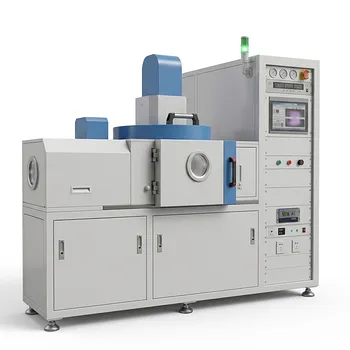
Radio Frequency Plasma Enhanced Chemical Vapor Deposition RF PECVD System for Laboratory and Industrial Thin Film Growth
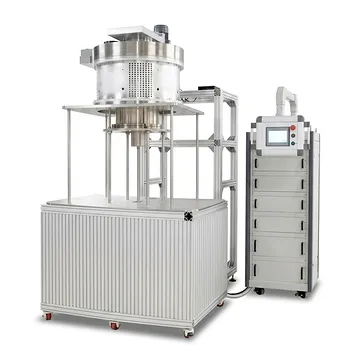
915MHz MPCVD Diamond Machine Microwave Plasma Chemical Vapor Deposition System Reactor
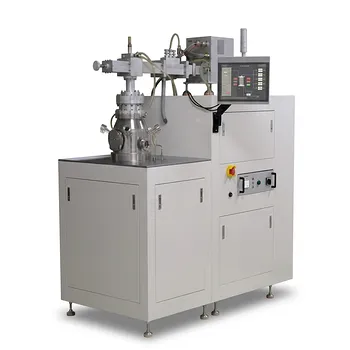
Cylindrical Resonator MPCVD Machine System for Microwave Plasma Chemical Vapor Deposition and Lab Diamond Growth
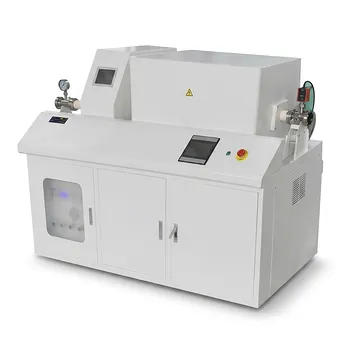
Chemical Vapor Deposition CVD System Slide PECVD Tube Furnace with Liquid Gasifier PECVD Machine
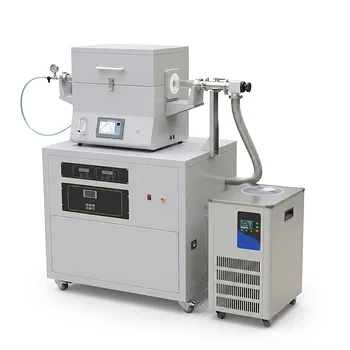
Split Chamber CVD Tube Furnace with Vacuum Station Chemical Vapor Deposition System Machine
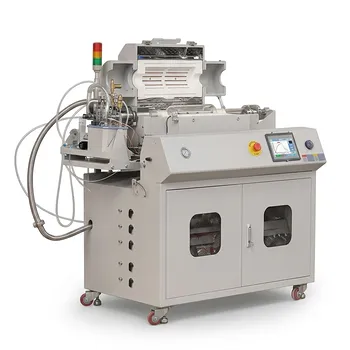
Versatile Chemical Vapor Deposition Tube Furnace System for Advanced Material Research and Industrial Coating Processes
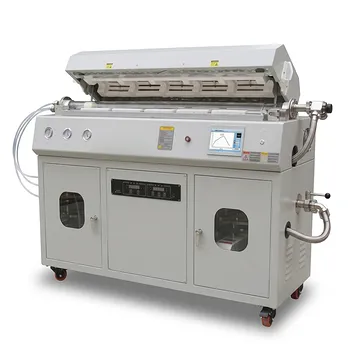
Multi Heating Zones CVD Tube Furnace System for Precision Chemical Vapor Deposition and Advanced Material Synthesis
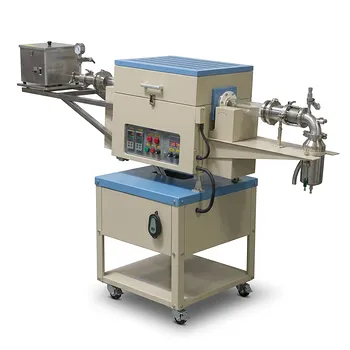
Two Zone Rotary CVD Furnace with Automatic Feeding and Receiving System for Powder Processing
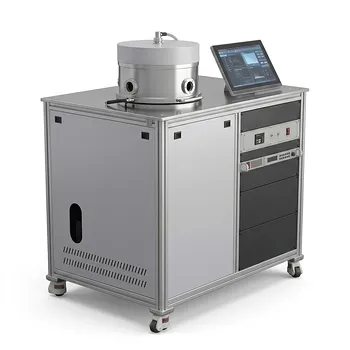
Inclined Rotary Plasma Enhanced Chemical Vapor Deposition PECVD System for Thin Film Deposition and Nanomaterial Synthesis
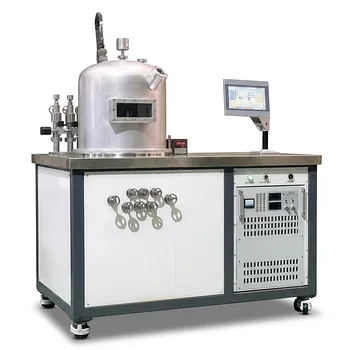
HFCVD Machine System for Nano Diamond Coating on Drawing Dies and Industrial Tools
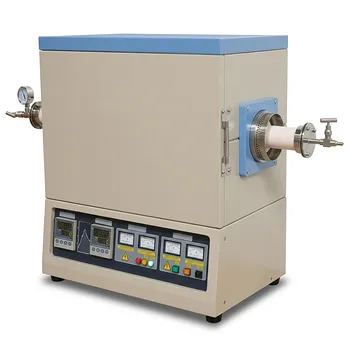
High Temperature 1700C Dual Zone Tube Furnace for Material Science and Industrial Chemical Vapor Deposition Research
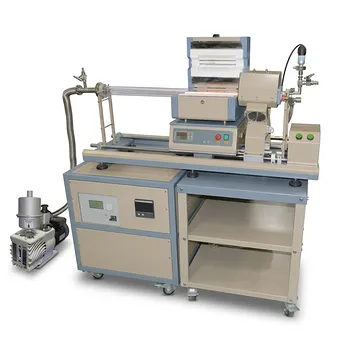
1200C Max Compact Auto-Sliding PECVD Furnace with 2 Inch Tube and Vacuum Pump
Molybdenum Disilicide MoSi2 Thermal Elements Electric Furnace Heating Element High Temperature Resistance
Dual Tube 100mm 80mm CVD Sliding Furnace with 4 Channel Gas Mixing and Vacuum System
1000C Mini Tube Furnace with 20mm Quartz Tube and Vacuum Flanges for Material Science Research and Controlled Atmosphere Small Sample Processing
1200C Sliding Internal Crucible Tube Furnace for Controlled Atmosphere Thin Film Deposition and Material Sublimation Research
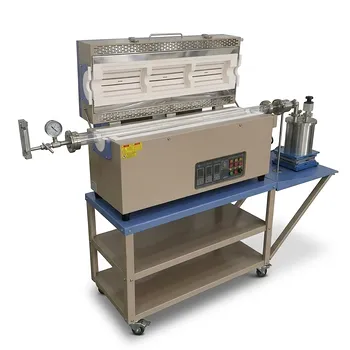
5 Inch Two Zone Rotary Tube Furnace 1100C for Powder CVD and Material Synthesis
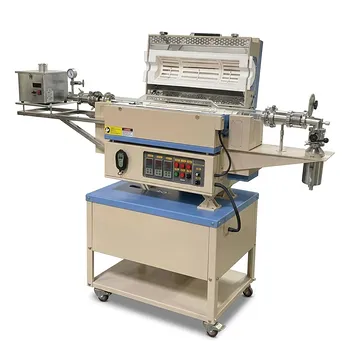
5 Inch Rotary Tube Furnace with Automatic Feeding and Receiving System 1200C Three Zone CVD Powder Processing
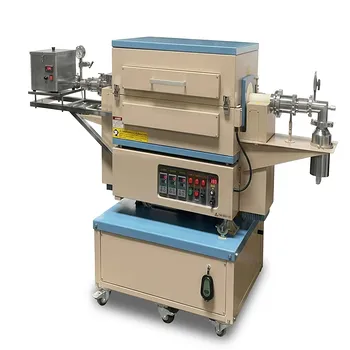
1500C 3-Zone Rotary Tube Furnace 60mm with Automatic Powder Feeding and Receiving System for Continuous Material Synthesis
