Role of Atmosphere Tube Furnaces in MOF to Nanoporous Carbon Conversion: Achieving Precision Heat Treatment
Updated 3 months ago
The high-temperature atmosphere tube furnace serves as a controlled anaerobic reactor that facilitates the pyrolytic carbonization of organic ligands while preserving the structural integrity of the precursor. By maintaining a stable, oxygen-deficient thermal field—typically around 800 °C—the furnace enables the thermal decomposition of the Metal-Organic Framework (MOF) into a conductive carbon skeleton. This precise environment ensures that volatiles are removed without oxidizing the carbon, resulting in a nanoporous material with an ultra-high specific surface area.
The tube furnace is the critical instrument for "template-engaged synthesis," providing the specific inert atmosphere and thermal precision required to transform a sacrificial MOF framework into a functional, porous carbon structure.
Creating an Oxygen-Free Environment for Pyrolysis
Preventing Oxidative Degradation
The primary role of the atmosphere furnace is to provide a strictly controlled inert environment, typically using high-purity nitrogen or argon. Without this anaerobic condition, the organic components of the MOF would simply combust into CO2 and water vapor rather than carbonizing. The furnace's superior sealing performance ensures that oxygen levels remain low enough to prevent the oxidative loss of the carbon material during high-temperature treatment.
Facilitating Organic Ligand Carbonization
Under the protection of an inert gas, the furnace allows organic ligands within the MOF to undergo pyrolytic carbonization. As the temperature rises, the chemical bonds within the ligands break and reorganize into a stable, conductive carbon skeleton. This process is essential for converting a non-conductive framework into a high-performance material suitable for electrochemical applications.
Precision Thermal Control and Structural Preservation
Maintaining Microporous Architectures
A key advantage of the tube furnace is its ability to provide a stable thermal field that ensures uniform pyrolysis. By controlling the heating rate and isothermal holding time, the furnace allows the carbon material to retain the original framework's microporous structure. This "templating" effect is what results in the ultra-high specific surface area characteristic of MOF-derived carbons.
Managing Volatile Removal and Pore Formation
The furnace facilitates the controlled removal of volatiles, which is the process that generates the nanoporous network. Multi-stage heating programs, often managed via PID control systems, prevent thermal overshoot that could cause the framework to collapse. This precise management of heat allows for the self-assembly of stable three-dimensional carbon structures or nanowall arrays.
Chemical Reorganization and Functionalization
Metal Nanoparticle Encapsulation
During the carbonization process, metal ions within the MOF are often reduced and encapsulated within the emerging carbon layers. The tube furnace provides the environment necessary for this structural stabilization, protecting metal nanoparticles from agglomeration. This results in carbon-encapsulated metal structures that exhibit high electrical conductivity and chemical stability.
Heteroatom Doping and Activation
The furnace also enables the chemical activation and precise heteroatom doping (such as Nitrogen or Sulfur) of the carbon substrate. By maintaining specific temperatures and gas flows, the furnace promotes reactions between activation agents and the carbon precursor. This leads to highly developed pore structures and specific chemical forms that enhance the material's performance in catalysis or energy storage.
Understanding the Trade-offs
Atmospheric Purity vs. Cost
While nitrogen is a cost-effective inert gas, some MOF precursors may require higher-purity Argon to prevent minor nitridation reactions. Selecting the wrong gas or having a slight leak in the tube seals can lead to the "deep oxidation" of metal components or the complete loss of the carbon framework.
Heating Rates and Structural Integrity
Rapid heating can lead to "thermal shock," causing the MOF crystals to shatter and destroying the desired nanoporous morphology. Conversely, excessively long dwell times at high temperatures may lead to pore sintering, where the fine micropores merge, significantly reducing the material's specific surface area.
How to Apply This to Your Project
Making the Right Choice for Your Goal
- If your primary focus is maximizing specific surface area: Use a slow, multi-stage heating program with a long isothermal hold at approximately 800 °C to ensure complete carbonization without framework collapse.
- If your primary focus is high electrical conductivity: Opt for higher temperatures (up to 1000 °C) to increase the graphitization degree of the carbon skeleton, though this may slightly reduce the total pore volume.
- If your primary focus is preserving metal active sites: Use an Argon atmosphere and lower carbonization temperatures (around 600 °C) to prevent the deep oxidation of metal centers or the loss of oxygen vacancies.
The atmosphere tube furnace is not merely a heat source, but a precision tool that dictates the final pore geometry and chemical functionality of MOF-derived carbon materials.
Summary Table:
| Key Function | Process Detail | Material Benefit |
|---|---|---|
| Inert Environment | Oxygen-free N2/Ar atmosphere | Prevents oxidation; preserves carbon skeleton |
| Thermal Control | PID-managed heating rates | Maintains micropores & prevents framework collapse |
| Chemical Synthesis | Pyrolytic carbonization | High conductivity & metal encapsulation |
| Activation | Heteroatom doping (N, S) | Enhanced catalytic & energy storage performance |
Elevate Your Material Research with THERMUNITS Precision Furnaces
Are you looking to optimize the conversion of MOFs into high-performance nanoporous carbon? THERMUNITS is a leading manufacturer of high-temperature laboratory equipment specifically designed for material science and industrial R&D. Our comprehensive range of thermal processing solutions—including Atmosphere Tube Furnaces, Vacuum Furnaces, CVD/PECVD systems, Hot Press Furnaces, and Electric Rotary Kilns—provides the precise thermal fields and atmospheric control necessary for advanced heat treatment.
Partner with us to achieve superior structural integrity and chemical functionality in your research. Contact THERMUNITS today to find the perfect furnace for your lab!
References
- Shiteng Qin, Hongyu Zhao. Study on the influence mechanism of carbothermal reduction and selective leaching of valuable metals in spent lithium batteries. DOI: 10.1002/jctb.7645
Mentioned Products
- 1750°C High Temperature Benchtop Vacuum Atmosphere Tube Furnace with Kanthal Super 1800 Heating Elements and 60mm Alumina Processing Tube
- 1700C High Temperature Alumina Tube Furnace with 18 Inch Heated Zone and Vacuum Sealing Flanges
- High Temperature 1200C Split Tube Furnace for CVD Research and Vacuum Atmosphere Heat Treatment
- High Temperature Split Tube Furnace 1500C for Material Research Vacuum and Atmosphere Thermal Processing
- High Temperature Vertical Atmosphere Controlled Furnace with Automatic Bottom Loading and 1700°C Capacity for Advanced Material Research
People Also Ask
- What core functions does a high-temperature vacuum tube furnace provide? Optimize np-CuSn Sintering & Joint Integrity
- What is the role of a high-temperature tube furnace in the calcination process of ZnO/In2O3 nanocomposites?
- What role does a high-temperature tube furnace play in the sulfidation heat treatment of CoS@C/MXene nanocomposites? Guide
- Why is a high-temperature tube furnace required for CuAlO2 heat treatment? Master Phase Transformation Today
- What role does a high-temperature tube furnace play in executing nitrogen absorption kinetic experiments? Expert Insights

Tech Team · ThermUnits
Last updated on Jun 02, 2026
Related Products

1750°C High Temperature Benchtop Vacuum Atmosphere Tube Furnace with Kanthal Super 1800 Heating Elements and 60mm Alumina Processing Tube
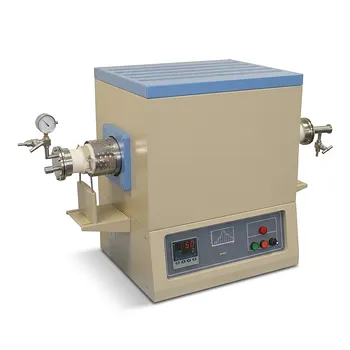
1700C High Temperature Alumina Tube Furnace with 18 Inch Heated Zone and Vacuum Sealing Flanges
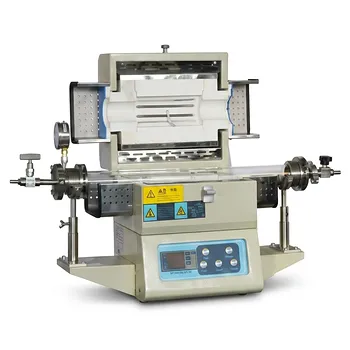
High Temperature 1200C Split Tube Furnace for CVD Research and Vacuum Atmosphere Heat Treatment
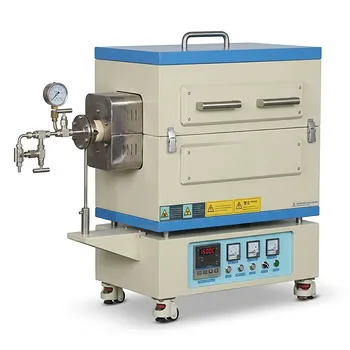
High Temperature Split Tube Furnace 1500C for Material Research Vacuum and Atmosphere Thermal Processing
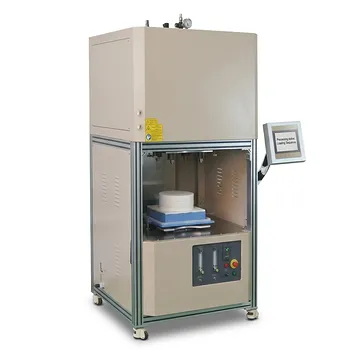
High Temperature Vertical Atmosphere Controlled Furnace with Automatic Bottom Loading and 1700°C Capacity for Advanced Material Research
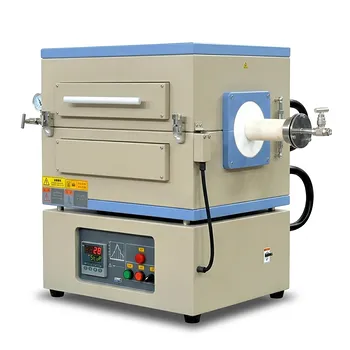
1500°C Split Tube Furnace with Alumina Tube and Vacuum Sealing Flanges for Material Research
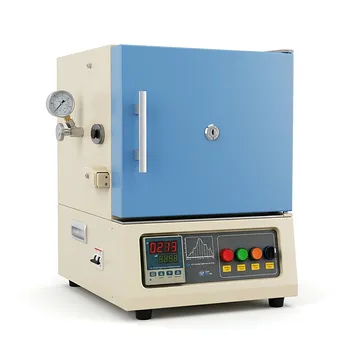
1200C Hybrid Muffle and Tube Furnace for Material Research with Dual Atmosphere Control Quartz Tubes

Vertical 1700C Vacuum and Atmosphere Tube Furnace with 80mm Alumina Tube
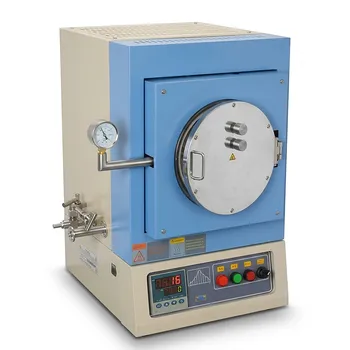
1100°C High Temperature Quartz Chamber Furnace 8 Inch OD with 7.6 Liter Capacity and Vacuum Atmosphere Capability

High Temperature Tube Furnace 1500C with Sliding Flanges and 50mm OD for Rapid Thermal Processing Fast Heating and Cooling

High Temperature 1700C Tube Furnace with High Vacuum Turbomolecular Pump System and Multi Channel Mass Flow Controller Gas Mixer

High Temperature 1700C Vertical Tube Furnace for Powder Spherification and Material Sintering

Compact High Temperature 1600C Tube Furnace with 50mm Alumina Tube and Vacuum Flanges for Material Sintering

High Temperature 1700C Benchtop Tube Furnace with 5 Inch Heating Zone High Purity Alumina Tube and Vacuum Sealing Flanges
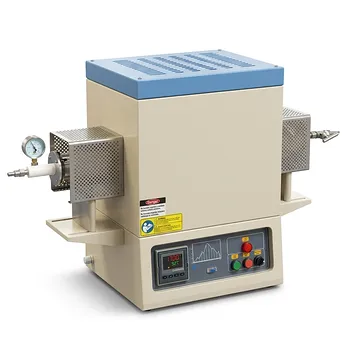
High Temperature Three Zone Tube Furnace 1700C with Alumina Tube and Water Cooled Flanges
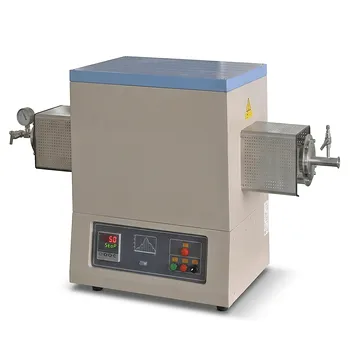
High Temperature 1700C Tube Furnace with 4 Inch OD Alumina Tube and Vacuum Sealing Flanges

High Temperature 1700C Six Zone Split Tube Furnace with Alumina Tube and Water Cooled Flanges

High Temperature Automated 5 Inch Tube Furnace for Autonomous Material Research and Advanced Laboratory R&D
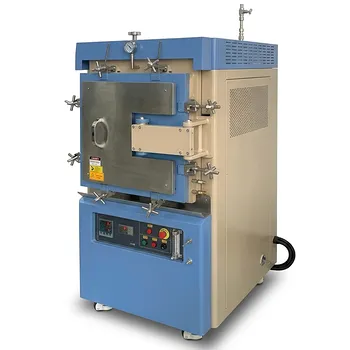
Atmosphere Controlled Muffle Furnace 1700C Maximum Temperature 80L High Capacity Vacuum Inert Gas Box Furnace
