What role does a high-temperature atmosphere tube furnace play in the synthesis of TiO2@NC precursors? Precision Guide.
Updated 5 months ago
The high-temperature atmosphere tube furnace serves as the critical reactor for the structural transformation of Metal-Organic Frameworks (MOFs) into functional composites. It provides a stable argon-protected environment for the controlled pyrolysis of $NH_2$-MIL-125 frameworks at $600^\circ C$. This process simultaneously converts organic ligands into a nitrogen-doped carbon (NC) skeleton and transforms titanium elements into uniformly distributed titanium dioxide ($TiO_2$) nanoparticles.
The furnace acts as a precision-controlled environment that orchestrates the simultaneous carbonization of organic matter and the crystallization of metal oxides. By isolating the reaction from oxygen and maintaining thermal stability, it establishes the essential structural foundation required for subsequent material functionalization.
Facilitating Controlled Pyrolysis and Phase Transformation
Conversion of MOF into Nitrogen-Doped Carbon
The tube furnace provides the thermal energy necessary to break down the organic ligands within the $NH_2$-MIL-125 framework. Under an inert argon atmosphere, these ligands undergo pyrolysis rather than combustion, forming a conductive nitrogen-doped carbon skeleton.
In-Situ Formation of $TiO_2$ Nanoparticles
As the organic framework decomposes, the titanium nodes within the MOF are transformed into $TiO_2$ nanoparticles. The furnace ensures these particles are distributed uniformly throughout the carbon matrix, preventing the agglomeration that typically degrades material performance.
Precise Control of Crystallinity
High-temperature treatment allows for the precise tuning of the $TiO_2$ crystal phase, often favoring the anatase phase which is highly valued for its catalytic activity. The furnace’s ability to maintain specific heating rates and dwell times is critical for achieving the desired grain size and phase composition.
Maintaining Atmospheric Integrity and Purity
Prevention of Oxidative Degradation
By providing a continuous flow of inert gas like argon or nitrogen, the furnace prevents the carbon precursors from reacting with oxygen. This inert environment ensures the stability and high yield of the final carbon product, preventing it from turning into ash or $CO_2$.
Removal of Volatile Impurities
The enclosed heating environment effectively eliminates residual trace moisture and volatile organic compounds (VOCs). This purification step is essential for creating a clean interface between the $TiO_2$ and the carbon nitrogen framework, which is vital for electron transport.
Integration of Functional Nitrogen Groups
In nitrogen-rich environments, the furnace facilitates the integration of nitrogen atoms into the carbon lattice to form quaternary nitrogen (N-Q) functional groups. These groups enhance the chemical reactivity and adsorption capabilities of the $TiO_2@NC$ precursor.
Understanding the Trade-offs and Pitfalls
The Risk of Thermal Inhomogeneity
In larger tube furnaces, maintaining a uniform temperature across the entire precursor bed can be challenging. Thermal gradients may lead to inconsistent crystallization or uneven carbonization, resulting in a precursor with varying performance characteristics.
Gas Flow Dynamics
The rate of gas flow is a double-edged sword; too low, and byproduct gases may linger and contaminate the sample; too high, and it may cause thermal instability or strip away volatile active species. Precise mass flow control is required to balance these factors effectively.
Material Stress and Fracturing
Rapid heating or cooling cycles within the furnace can induce internal stress within the $TiO_2@NC$ structure. This can lead to micro-cracking or the detachment of $TiO_2$ nanoparticles from the carbon support, compromising the structural integrity of the precursor.
How to Apply This to Your Project
Recommendations for Material Synthesis
- If your primary focus is maximizing conductivity: Prioritize a higher pyrolysis temperature (e.g., $700^\circ C$ to $800^\circ C$) within a nitrogen atmosphere to increase the degree of graphitization in the carbon skeleton.
- If your primary focus is catalytic activity: Use a strictly controlled $600^\circ C$ argon environment to ensure the $TiO_2$ remains in the anatase phase with a high specific surface area.
- If your primary focus is structural purity: Implement a two-stage heating program that includes a low-temperature "soak" at $110^\circ C$ to remove all moisture before proceeding to high-temperature carbonization.
The high-temperature atmosphere tube furnace is not merely a heater, but a sophisticated chemical reactor that defines the morphology, phase, and purity of the $TiO_2@NC$ precursor.
Summary Table:
| Function | Impact on TiO2@NC Precursor | Key Process Parameters |
|---|---|---|
| Controlled Pyrolysis | Converts MOF ligands into a conductive N-doped carbon skeleton | Temp (600°C-800°C), Argon flow |
| Phase Transformation | Ensures uniform TiO2 nanoparticle distribution (Anatase phase) | Heating rate, Dwell time |
| Atmospheric Shielding | Prevents oxidation; maintains high carbon yield and purity | Inert gas purity, Mass flow control |
| Impurity Removal | Eliminates VOCs and moisture for better electron transport | Vacuum integrity, Gas dynamics |
| N-Doping | Facilitates formation of Quaternary Nitrogen (N-Q) groups | Atmosphere composition, Nitrogen source |
Elevate Your Advanced Material Synthesis with THERMUNITS
Achieving the perfect TiO2@NC structure requires more than just heat—it requires precise atmospheric control and thermal uniformity. THERMUNITS is a leading manufacturer of high-temperature laboratory equipment dedicated to supporting material science and industrial R&D. Our specialized thermal solutions ensure your precursors achieve the exact crystallinity and phase purity your research demands.
Our Comprehensive Thermal Processing Solutions Include:
- Tube & Atmosphere Furnaces: Optimized for MOF pyrolysis and controlled chemical reactions.
- Vacuum, Muffle, & Hot Press Furnaces: For high-performance sintering and material consolidation.
- CVD/PECVD Systems: Advanced solutions for chemical vapor deposition.
- Industrial Equipment: Electric rotary kilns, Vacuum Induction Melting (VIM) furnaces, and Rotary furnaces.
- Specialized Labs: Dental furnaces and high-quality Thermal Elements.
Maximize your lab’s efficiency and research accuracy with our industry-leading technology. Contact us today to discuss your heat treatment requirements!
References
- Tianhao Yao, Xiaogang Han. Encapsulation of Titanium Disulfide into MOF‐Derived N,S‐Doped Carbon Nanotablets Toward Suppressed Shuttle Effect and Enhanced Sodium Storage Performance. DOI: 10.1002/smll.202311126
Mentioned Products
- 1750°C High Temperature Benchtop Vacuum Atmosphere Tube Furnace with Kanthal Super 1800 Heating Elements and 60mm Alumina Processing Tube
- 1700C High Temperature Alumina Tube Furnace with 18 Inch Heated Zone and Vacuum Sealing Flanges
- High Temperature 1200C Split Tube Furnace for CVD Research and Vacuum Atmosphere Heat Treatment
- High Temperature Split Tube Furnace 1500C for Material Research Vacuum and Atmosphere Thermal Processing
- High Temperature Vertical Atmosphere Controlled Furnace with Automatic Bottom Loading and 1700°C Capacity for Advanced Material Research
People Also Ask
- What core functions does a high-temperature vacuum tube furnace provide? Optimize np-CuSn Sintering & Joint Integrity
- What is the role of a high-temperature tube furnace in the calcination process of ZnO/In2O3 nanocomposites?
- What role does a high-temperature tube furnace play in the sulfidation heat treatment of CoS@C/MXene nanocomposites? Guide
- Why is a high-temperature tube furnace required for CuAlO2 heat treatment? Master Phase Transformation Today
- What role does a high-temperature tube furnace play in executing nitrogen absorption kinetic experiments? Expert Insights

Tech Team · ThermUnits
Last updated on Apr 14, 2026
Related Products
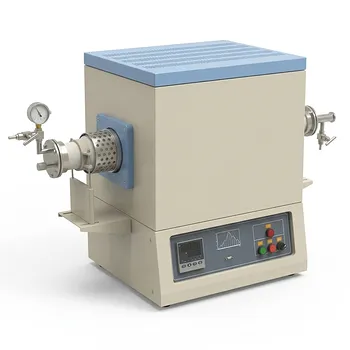
1750°C High Temperature Benchtop Vacuum Atmosphere Tube Furnace with Kanthal Super 1800 Heating Elements and 60mm Alumina Processing Tube
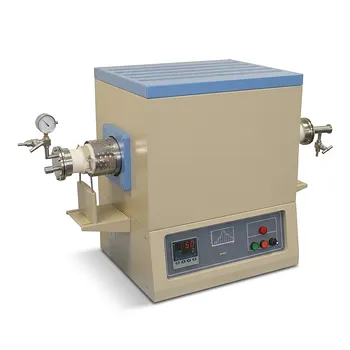
1700C High Temperature Alumina Tube Furnace with 18 Inch Heated Zone and Vacuum Sealing Flanges
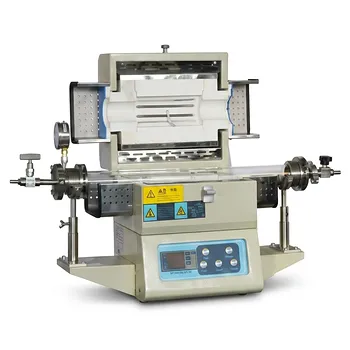
High Temperature 1200C Split Tube Furnace for CVD Research and Vacuum Atmosphere Heat Treatment
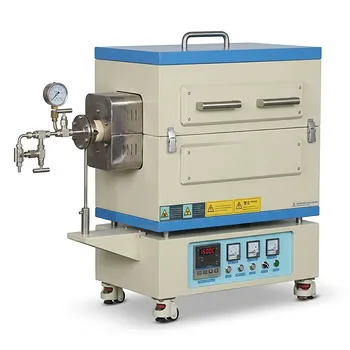
High Temperature Split Tube Furnace 1500C for Material Research Vacuum and Atmosphere Thermal Processing
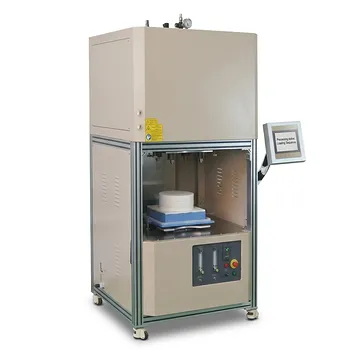
High Temperature Vertical Atmosphere Controlled Furnace with Automatic Bottom Loading and 1700°C Capacity for Advanced Material Research
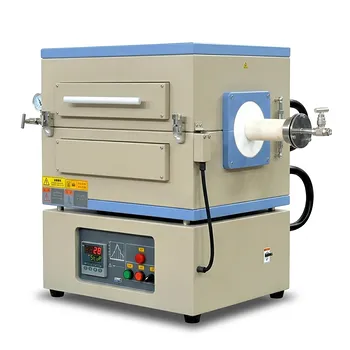
1500°C Split Tube Furnace with Alumina Tube and Vacuum Sealing Flanges for Material Research
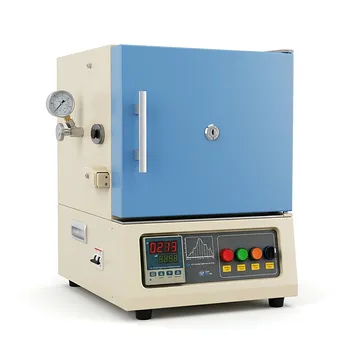
1200C Hybrid Muffle and Tube Furnace for Material Research with Dual Atmosphere Control Quartz Tubes

Vertical 1700C Vacuum and Atmosphere Tube Furnace with 80mm Alumina Tube
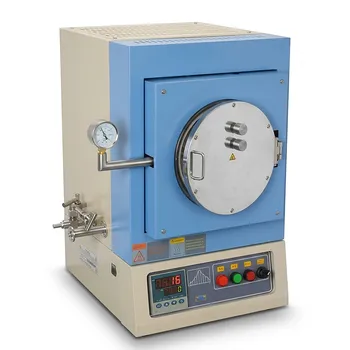
1100°C High Temperature Quartz Chamber Furnace 8 Inch OD with 7.6 Liter Capacity and Vacuum Atmosphere Capability

High Temperature Tube Furnace 1500C with Sliding Flanges and 50mm OD for Rapid Thermal Processing Fast Heating and Cooling

High Temperature 1700C Tube Furnace with High Vacuum Turbomolecular Pump System and Multi Channel Mass Flow Controller Gas Mixer

High Temperature 1700C Vertical Tube Furnace for Powder Spherification and Material Sintering

Compact High Temperature 1600C Tube Furnace with 50mm Alumina Tube and Vacuum Flanges for Material Sintering

High Temperature 1700C Benchtop Tube Furnace with 5 Inch Heating Zone High Purity Alumina Tube and Vacuum Sealing Flanges
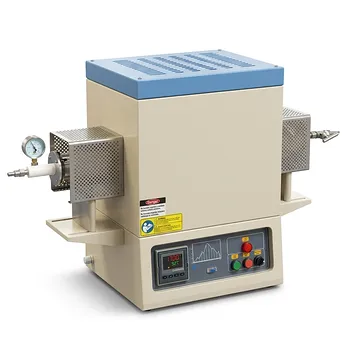
High Temperature Three Zone Tube Furnace 1700C with Alumina Tube and Water Cooled Flanges

High Temperature 1700C Six Zone Split Tube Furnace with Alumina Tube and Water Cooled Flanges
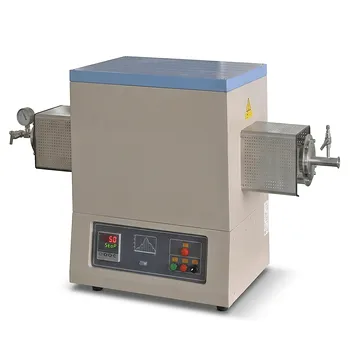
High Temperature 1700C Tube Furnace with 4 Inch OD Alumina Tube and Vacuum Sealing Flanges

High Temperature Automated 5 Inch Tube Furnace for Autonomous Material Research and Advanced Laboratory R&D
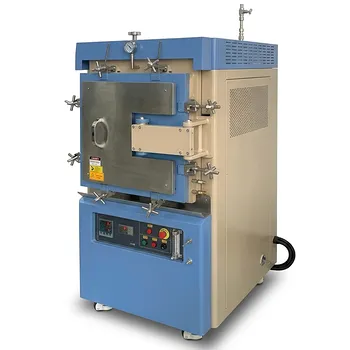
Atmosphere Controlled Muffle Furnace 1700C Maximum Temperature 80L High Capacity Vacuum Inert Gas Box Furnace
