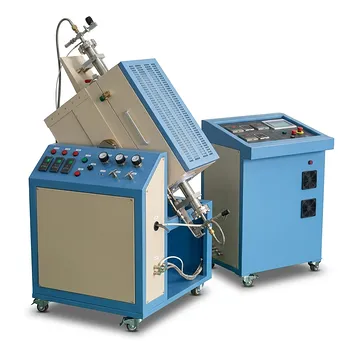
What role does a high-temperature tube furnace play in NiO nanoparticle synthesis? Optimize Your Sol-Gel Calcination
Updated 3 months ago
The high-temperature tube furnace is the critical thermal reactor used during the calcination phase to transform nickel hydroxide precursors into crystalline Nickel Oxide (NiO) nanoparticles. By providing a controlled, high-heat environment—typically ranging from 400°C to 500°C—the furnace facilitates the thermal decomposition of "green" precipitates, removes volatile organic impurities, and dictates the final crystalline structure and optoelectronic properties of the material.
The tube furnace serves as the catalyst for phase transformation, converting amorphous intermediates into a stable, face-centered cubic (FCC) nanostructure. Its ability to maintain precise temperatures and specific atmospheres is what allows researchers to fine-tune the particle size, purity, and surface area of the resulting NiO.
Facilitating Phase Transformation and Crystallinity
Conversion of Nickel Hydroxide to Nickel Oxide
The primary role of the furnace is to drive the chemical transition from nickel hydroxide intermediates to nanostructured Nickel Oxide. Through a process called calcination, thermal energy breaks the chemical bonds of the precursor, reorganizing the atoms into a stable metal oxide.
Development of Crystalline Structure
Precision temperature control ensures the nanoparticles achieve a high degree of crystallinity. In NiO synthesis, this often results in a face-centered cubic structure, which is essential for the material’s stability and its performance in catalytic or electronic applications.
Managing Transition States
The furnace allows for specific heating durations, often around three hours, to ensure the transition from an amorphous state to a crystalline one is complete. This duration is vital to prevent the formation of mixed-phase intermediates that could degrade material performance.
Purification and Structural Modification
Removal of Volatile Impurities
As the "green" precipitates are heated, the tube furnace incinerates and removes volatile impurities and residual organic components. This purification step is necessary to produce a wide-bandgap metal oxide with high purity and optimal optoelectronic response characteristics.
Creating Micro-voids and Porosity
When synthesizing NiO thin films or specialized particles, the furnace can be used to degrade polymers like polyvinyl butyral (PVB) within the precursor. This thermal degradation creates micro-voids in the nickel oxide matrix, increasing the specific surface area and improving light transmittance.
Controlling Particle Size
By adjusting the calcination temperature—for example, choosing between 420°C and 500°C—the furnace directly influences the grain growth of the nanoparticles. Higher temperatures generally lead to larger crystals, while lower, strictly controlled temperatures help maintain a smaller, high-surface-area nanopowder.
The Importance of Atmosphere Control
Oxidation State Stability
Unlike standard muffle furnaces, a tube furnace allows for a sealed, controlled atmosphere using gases like oxygen or air. This environment is critical for stabilizing the oxidation state of nickel and ensuring the resulting oxide does not suffer from unwanted cation mixing.
Anaerobic and Reducing Environments
For complex NiO-based catalysts, the tube furnace can provide an anaerobic environment using nitrogen protection. This allows for the simultaneous reduction of metal nitrates and the carbonization of organic precursors into protective graphene layers without oxidizing the entire structure prematurely.
Understanding the Trade-offs and Constraints
The Risk of Sintering and Agglomeration
While high heat is necessary for crystallinity, excessive temperatures or prolonged residence times can lead to sintering. This cause nanoparticles to fuse together, significantly reducing the active surface area and ruining the "nano" characteristics of the powder.
Thermal Gradients and Uniformity
The primary challenge in tube furnace operation is maintaining thermal uniformity across the entire sample length. If the temperature fluctuates within the tube, the resulting batch of NiO may exhibit inconsistent particle sizes and non-uniform crystalline properties.
Heating and Cooling Rates
The speed at which the furnace reaches its target temperature (the ramp rate) significantly impacts the final morphology. Rapid heating can cause structural defects, while overly slow cooling can lead to unwanted secondary phase growth or internal stresses in the NiO lattice.
How to Optimize Your Synthesis Goal
Applying This to Your Project
To achieve the best results in your sol-gel synthesis, you must tailor the furnace settings to your specific application requirements.
- If your primary focus is high optoelectronic clarity: Use a temperature near 500°C in an air atmosphere to ensure the complete removal of polymers and the creation of a high-transmittance matrix.
- If your primary focus is catalytic activity: Aim for a lower calcination temperature (around 400°C to 420°C) to maximize specific surface area and prevent the loss of active sites through sintering.
- If your primary focus is structural purity: Utilize a multi-stage heating profile with a stable oxygen flow to suppress cation mixing and ensure a highly crystalline, pure-phase NiO.
By mastering the thermal environment of the tube furnace, you transform a raw chemical precipitate into a high-performance, nanostructured functional material.
Summary Table:
| Stage/Function | Impact on NiO Nanoparticles | Key Control Parameters |
|---|---|---|
| Calcination | Converts precursors to crystalline FCC structure | Temp (400°C - 500°C) |
| Purification | Removes volatile impurities and organic residues | Residence time (~3 hours) |
| Atmosphere Control | Stabilizes oxidation states and prevents cation mixing | Gas type (O2, Air, or N2) |
| Morphology Control | Determines grain growth, particle size, and porosity | Heating/Cooling ramp rates |
Elevate Your Material Research with THERMUNITS
As a leading manufacturer of high-temperature laboratory equipment for material science and industrial R&D, THERMUNITS provides the precision thermal solutions required for high-performance nanoparticle synthesis. Our advanced Tube Furnaces and Atmosphere Furnaces offer the temperature uniformity and atmosphere control essential for mastering NiO crystallinity and purity.
From Muffle and Vacuum furnaces to CVD/PECVD systems, Electric Rotary Kilns, and Hot Press solutions, we empower researchers to achieve superior material properties.
Ready to optimize your heat treatment process? Contact our technical experts today for a custom consultation!
References
- Bhishma Pandit, Keun Heo. Self-Powered Broadband Photodetector Based on NiO/Si Heterojunction Incorporating Graphene Transparent Conducting Layer. DOI: 10.3390/nano14060551
Mentioned Products
- High Temperature Tube Furnace 1500C with Sliding Flanges and 50mm OD for Rapid Thermal Processing Fast Heating and Cooling
- High Temperature 1700C Tube Furnace with High Vacuum Turbomolecular Pump System and Multi Channel Mass Flow Controller Gas Mixer
- High Temperature 1700C Benchtop Tube Furnace with 5 Inch Heating Zone High Purity Alumina Tube and Vacuum Sealing Flanges
- 1750°C High Temperature Benchtop Vacuum Atmosphere Tube Furnace with Kanthal Super 1800 Heating Elements and 60mm Alumina Processing Tube
- Compact High Temperature 1600C Tube Furnace with 50mm Alumina Tube and Vacuum Flanges for Material Sintering
People Also Ask
- How are high-temperature tube furnaces utilized to repair etching damage? Precision Lattice Restoration Solutions
- What core conditions does a high-temperature tube furnace provide for rGO aerogels? Mastering Precision Synthesis.
- What role does a high-temperature tube furnace play in CVD synthesis of silicon nanowires? Master VLS Growth Precision.
- How does precision tube furnace control influence CoFe nanoparticle formation? Master Your Bimetallic Synthesis.
- What role does a high-temperature tube furnace play in the sulfidation heat treatment of CoS@C/MXene nanocomposites? Guide

Tech Team · ThermUnits
Last updated on Jun 03, 2026
Related Products

High Temperature Tube Furnace 1500C with Sliding Flanges and 50mm OD for Rapid Thermal Processing Fast Heating and Cooling

High Temperature 1700C Tube Furnace with High Vacuum Turbomolecular Pump System and Multi Channel Mass Flow Controller Gas Mixer

High Temperature 1700C Benchtop Tube Furnace with 5 Inch Heating Zone High Purity Alumina Tube and Vacuum Sealing Flanges
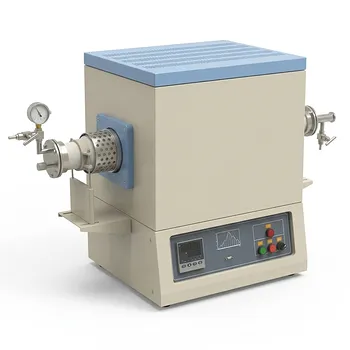
1750°C High Temperature Benchtop Vacuum Atmosphere Tube Furnace with Kanthal Super 1800 Heating Elements and 60mm Alumina Processing Tube

Compact High Temperature 1600C Tube Furnace with 50mm Alumina Tube and Vacuum Flanges for Material Sintering
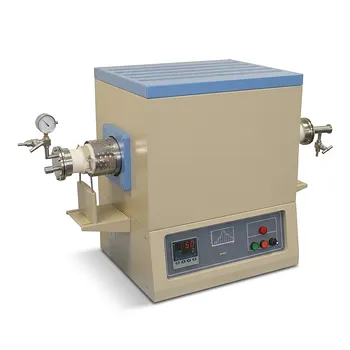
1700C High Temperature Alumina Tube Furnace with 18 Inch Heated Zone and Vacuum Sealing Flanges

1800C High Temperature Compact Vacuum Tube Furnace with 60mm OD Alumina Tube and Kanthal MoSi2 Heating Elements
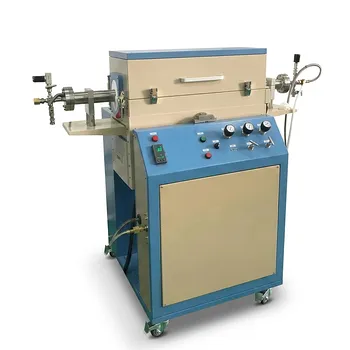
High Temperature Rocking Tube Furnace 1700°C Alumina Processing Tube with Precision Oscillation for Material Synthesis
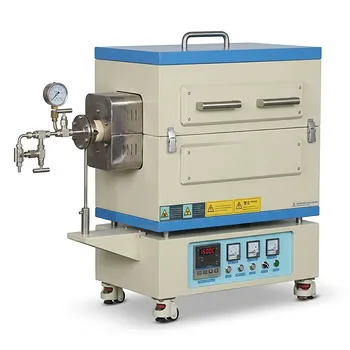
High Temperature Split Tube Furnace 1500C for Material Research Vacuum and Atmosphere Thermal Processing

High Temperature 1700C Vertical Tube Furnace for Powder Spherification and Material Sintering
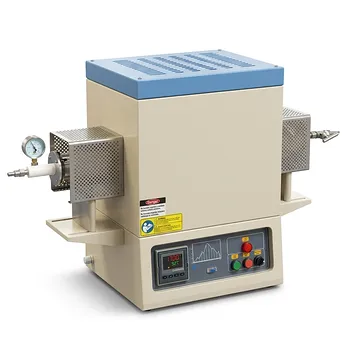
High Temperature Three Zone Tube Furnace 1700C with Alumina Tube and Water Cooled Flanges

High Temperature 1700C Six Zone Split Tube Furnace with Alumina Tube and Water Cooled Flanges
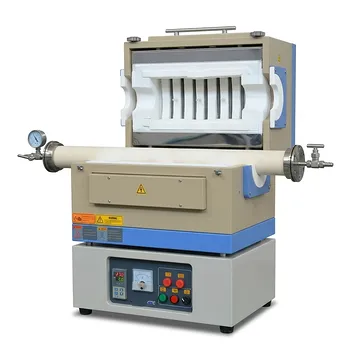
High Temperature 1600C Split Tube Furnace Vacuum Flanges Valves Optional 60mm 80mm Alumina Tube

High Temperature Automated 5 Inch Tube Furnace for Autonomous Material Research and Advanced Laboratory R&D

1100C Tube Furnace with Vacuum Flange and Programmable Temperature Controller for Material Science and Industrial Heat Treatment
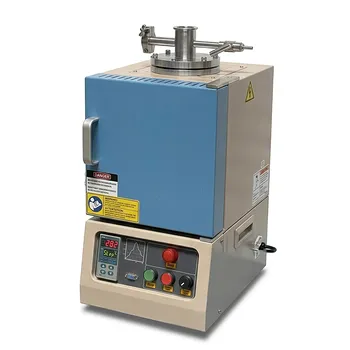
High Temperature Hybrid Muffle and Tube Furnace with Vacuum Capability and PID Control
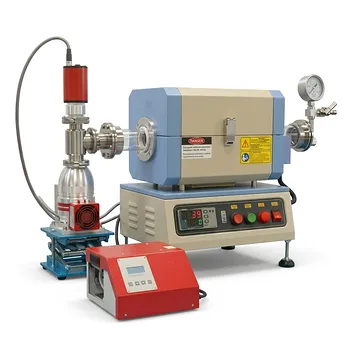
High Vacuum Compact Tube Furnace 1200C with Integrated Turbo Pump System and 8 Inch Heating Zone

1700C Hydrogen Gas Tube Furnace with 60mm Alumina Process Tube and Integrated Hydrogen Safety Detector
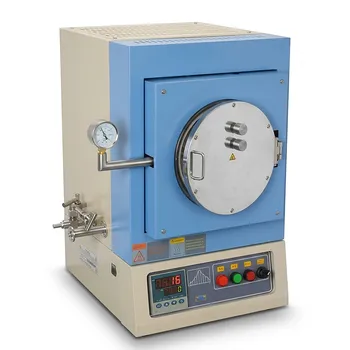
1100°C High Temperature Quartz Chamber Furnace 8 Inch OD with 7.6 Liter Capacity and Vacuum Atmosphere Capability