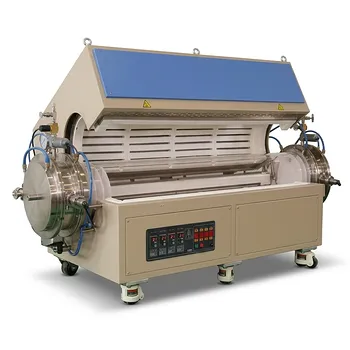
What role does a high-temperature tube furnace play in the Stage II carbonization of C/C composites? Enhance Integrity.
Updated 3 months ago
In Stage II carbonization, the high-temperature tube furnace serves as the primary vessel for the thermal decomposition and chemical transformation of the composite’s polymer matrix. It provides a precisely controlled, oxygen-free environment that allows temperatures to reach up to 1250 °C. This environment is essential for stripping away non-carbon atoms and converting the precursor into a stable, high-purity carbon matrix.
The high-temperature tube furnace is the central mechanism for structural consolidation, ensuring that organic precursors evolve into a rigid carbon skeleton. By balancing extreme heat with meticulous atmospheric control, the furnace prevents material failure while optimizing the chemical purity of the final composite.
Facilitating Molecular Transformation
Thermal Decomposition and Carbonization
The furnace provides the extreme thermal energy—often exceeding 1000 °C—required to break the chemical bonds of the polymer matrix. During this process, non-carbon elements such as hydrogen, oxygen, and nitrogen are driven off as volatile gases.
This leaves behind a pure carbon matrix that surrounds the reinforcement fibers, a step critical for the material’s final chemical stability and density.
Structural Reorganization of the Matrix
Beyond simple decomposition, the furnace facilitates the reorganization of carbon chains into more stable structures. Depending on the precursor used (such as phenolic resin or pitch), the furnace helps transition the material into amorphous, mesophase, or pseudo-graphitic carbon.
This reorganization is what grants the carbon-carbon composite its high electrical conductivity and thermal resistance.
Ensuring Structural Integrity
Mitigation of Internal Gas Pressure
A critical role of the furnace is its precise temperature control system, which often utilizes very slow heating rates (e.g., 1 °C/min). This slow ramp-up is vital to manage the "gas escape pressure" generated as the polymer decomposes.
If the furnace heats too quickly, the rapid release of volatiles can create internal pressure that leads to macro-cracks and delamination within the composite.
Atmospheric Protection and Uniformity
The furnace maintains a strictly inert atmosphere, typically using argon or nitrogen, to prevent the carbon from oxidizing at high temperatures. Without this protective shield, the carbon fibers would burn away before the matrix could fully form.
Furthermore, the temperature field uniformity within the tube ensures that the degree of carbonization is consistent across the entire specimen, preventing localized weak points.
Understanding the Trade-offs
Heating Rate vs. Production Throughput
There is a direct trade-off between the quality of the carbon matrix and the speed of production. While a slow heating rate of 1 °C/min prevents cracking, it significantly extends the manufacturing cycle, increasing energy consumption and costs.
Atmosphere Choice: Argon vs. Nitrogen
While nitrogen is more cost-effective for many carbonization processes, argon is often preferred for Stage II carbonization of high-performance composites. Argon is truly inert, whereas nitrogen can occasionally react with certain precursors at extreme temperatures, potentially altering the intended chemical composition.
Thermal Gradient Challenges
In large-scale tube furnaces, maintaining a perfectly uniform temperature across the entire tube length can be difficult. Any significant thermal gradient can lead to uneven carbonization, which compromises the mechanical strength and ablation performance of the final part.
Applying Furnace Parameters to Your Goal
How to Optimize Your Carbonization Process
The specific configuration of your high-temperature tube furnace should be dictated by the intended application of the carbon-carbon composite.
- If your primary focus is mechanical strength and crack prevention: Prioritize a furnace with highly granular PID control to maintain ultra-slow heating rates (1 °C/min) during the peak volatile release phase.
- If your primary focus is high electrical conductivity: Aim for the upper limits of the furnace's temperature range (1200 °C - 1250 °C) to promote the formation of more ordered, graphitic-like carbon structures.
- If your primary focus is cost-effective batch processing: Utilize a furnace with a large "constant temperature zone" and consider nitrogen atmosphere protection if the precursor chemistry allows.
Mastering the thermal and atmospheric variables of the tube furnace is the definitive step in transforming a fragile polymer precursor into a high-performance carbon-carbon composite.
Summary Table:
| Key Role | Technical Mechanism | Primary Benefit |
|---|---|---|
| Molecular Transformation | Thermal decomposition up to 1250°C | Creates high-purity, stable carbon matrix |
| Structural Consolidation | Reorganization of carbon chains | Enhances electrical & thermal conductivity |
| Crack Mitigation | Precise PID control (1°C/min ramp) | Prevents internal gas pressure & delamination |
| Oxidation Protection | Inert atmosphere (Argon/Nitrogen) | Protects reinforcement fibers at extreme heat |
| Quality Uniformity | Consistent temperature field | Ensures reliable mechanical strength across parts |
Elevate Your Material Research with THERMUNITS
Mastering Stage II carbonization requires absolute precision in temperature and atmosphere. THERMUNITS is a leading manufacturer of high-temperature laboratory equipment dedicated to supporting material science and industrial R&D. We provide the advanced thermal processing solutions needed to transform fragile precursors into high-performance carbon-carbon composites.
Our comprehensive range includes:
- Tube & Atmosphere Furnaces: Optimized for precise carbonization and inert gas control.
- Vacuum & Hot Press Furnaces: For advanced densification and structural integrity.
- CVD/PECVD & Rotary Kilns: Specialized systems for complex material synthesis.
- Dental & Muffle Furnaces: Versatile heat treatment for diverse lab applications.
Whether you are refining carbonization cycles or developing new composite structures, our expert-engineered furnaces ensure uniform heating and reliable performance.
Ready to optimize your lab’s efficiency? Contact us today to find your perfect thermal solution!
References
- Dharneedar Ravichandran, Kenan Song. 3D printing carbon–carbon composites with multilayered architecture for enhanced multifunctional properties. DOI: 10.1039/d4ta02267j
Mentioned Products
- High Temperature Dual Zone Rotating Tube Furnace 1500C Silicon Carbide Heating for Advanced Material Synthesis
- High Temperature 1200C Split Tube Furnace for CVD Research and Vacuum Atmosphere Heat Treatment
- High Temperature Tube Furnace 1500C with Sliding Flanges and 50mm OD for Rapid Thermal Processing Fast Heating and Cooling
- High Temperature 1700C Vertical Tube Furnace for Powder Spherification and Material Sintering
- Compact High Temperature 1600C Tube Furnace with 50mm Alumina Tube and Vacuum Flanges for Material Sintering
People Also Ask
- What is the function of CVD furnaces in graphene prep? Enhancing Photodetector Charge Transport
- Why use CVD and a tube furnace for Pd3P0.95/NC catalyst phosphidation? Ensure high phase purity and performance.
- CVD Tube Furnace Advantages for Pd-P Catalyst Durability: Precision Control for 40,000+ Cycles
- How does a rotary tube furnace improve the processing of granular materials? Enhance Uniformity and Reaction Kinetics
- How does a Chemical Vapor Deposition (CVD) tube furnace facilitate synchronized nitridation? Precision Nano-Engineering.

Tech Team · ThermUnits
Last updated on Jun 03, 2026
Related Products
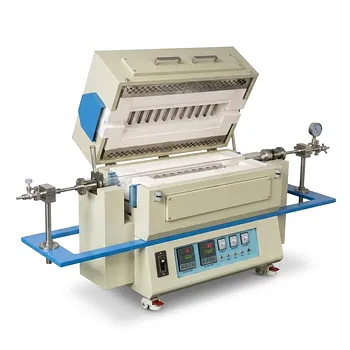
High Temperature Dual Zone Rotating Tube Furnace 1500C Silicon Carbide Heating for Advanced Material Synthesis
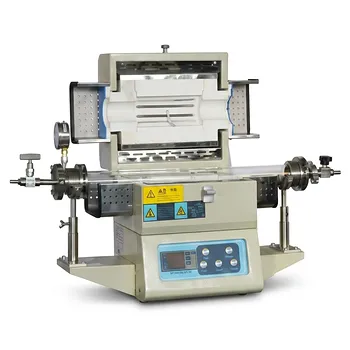
High Temperature 1200C Split Tube Furnace for CVD Research and Vacuum Atmosphere Heat Treatment
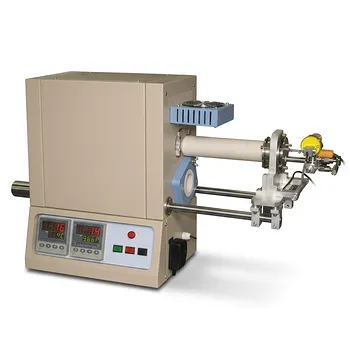
High Temperature Tube Furnace 1500C with Sliding Flanges and 50mm OD for Rapid Thermal Processing Fast Heating and Cooling

High Temperature 1700C Vertical Tube Furnace for Powder Spherification and Material Sintering

Compact High Temperature 1600C Tube Furnace with 50mm Alumina Tube and Vacuum Flanges for Material Sintering

High Temperature 1700C Tube Furnace with High Vacuum Turbomolecular Pump System and Multi Channel Mass Flow Controller Gas Mixer
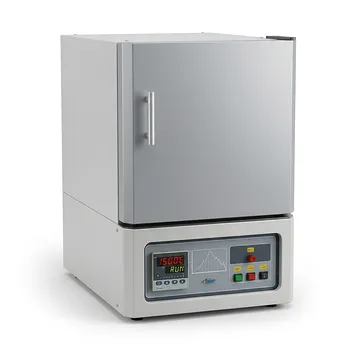
High Temperature 1500C Benchtop Muffle Furnace 3.6L Alumina Fiber Chamber Programmable Controller Sintering Annealing Carbonization Thermal Processing System
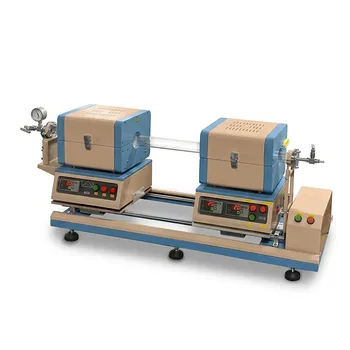
High Temperature 1200C Automatic Sliding Dual Zone Tube Furnace for 2D Transition Metal Dichalcogenides Growth and Material Sublimation Research
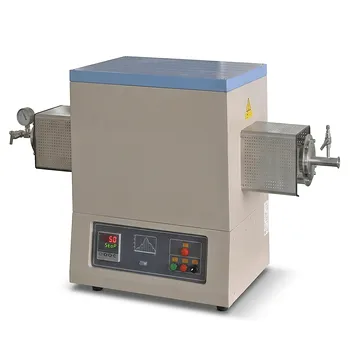
High Temperature 1700C Tube Furnace with 4 Inch OD Alumina Tube and Vacuum Sealing Flanges

1750°C High Temperature Benchtop Vacuum Atmosphere Tube Furnace with Kanthal Super 1800 Heating Elements and 60mm Alumina Processing Tube

High Temperature 1700C Benchtop Tube Furnace with 5 Inch Heating Zone High Purity Alumina Tube and Vacuum Sealing Flanges
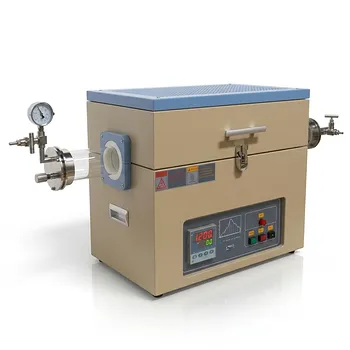
High Temperature 1200C Split Tube Furnace with Optional Quartz Tube Sizes and Vacuum Sealing Flanges for Material Science Research
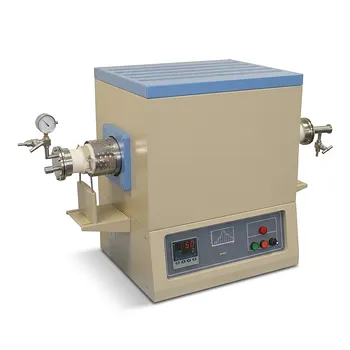
1700C High Temperature Alumina Tube Furnace with 18 Inch Heated Zone and Vacuum Sealing Flanges
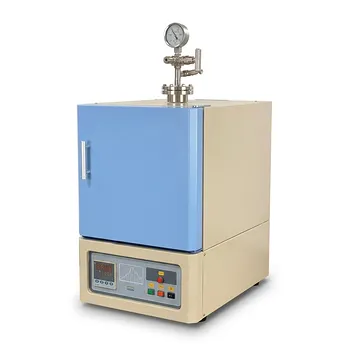
Hybrid High Temperature Muffle and Tube Furnace with 1500C Capability and Vacuum Flange Assembly

1800C High Temperature Compact Vacuum Tube Furnace with 60mm OD Alumina Tube and Kanthal MoSi2 Heating Elements
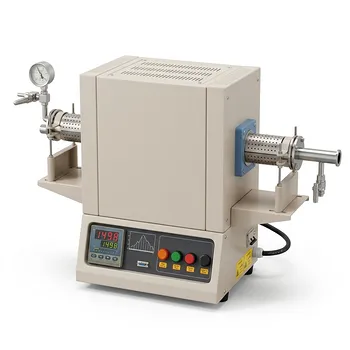
1500C High Temperature Compact Tube Furnace 2 Inch OD with Vacuum Flanges and Complete Accessories
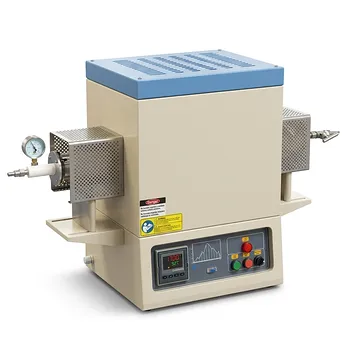
High Temperature Three Zone Tube Furnace 1700C with Alumina Tube and Water Cooled Flanges
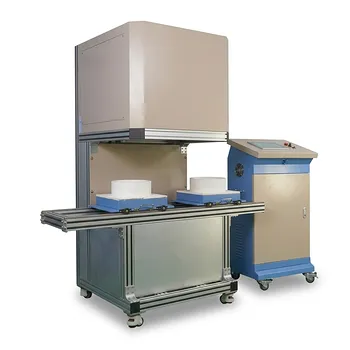
High Temperature Bottom Loading Vertical Furnace 1700C Dual Stage Sample Processing System 18L Large Capacity Thermal Treatment Equipment

High Temperature Automated 5 Inch Tube Furnace for Autonomous Material Research and Advanced Laboratory R&D