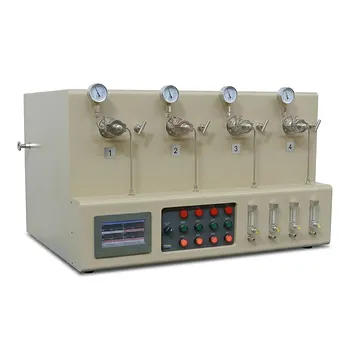
What role does a Tube Furnace play in the heat treatment of AISI M2 high-speed steel? Precision Control & Protection
Updated 3 months ago
The Tube Furnace serves as the primary thermal processing environment for AISI M2 high-speed steel, facilitating critical transformations like preheating, austenitizing, and tempering. It provides the necessary high-temperature stability (up to 1200°C) required to modify the steel's microstructure while simultaneously using flowing inert or reactive gases to protect the surface from oxidation. This dual-control mechanism ensures that the steel achieves its characteristic hardness and wear resistance without compromising its chemical integrity.
The Tube Furnace is the essential hardware for AISI M2 heat treatment because it isolates the material within a controlled microenvironment, allowing for the precise dissolution of carbides and the prevention of surface decarburization.
Precision Control of Thermal Cycles
Executing Multi-Stage Heat Treatment
AISI M2 steel requires a sophisticated heat treatment profile involving preheating, austenitizing, and tempering. The tube furnace allows for the precise regulation of temperature curves and soaking times necessary to move the material through these stages without causing thermal shock.
Achieving High-Temperature Austenitization
To reach its full potential, M2 steel must be heated to approximately 1200°C. The tube furnace provides a stable thermal field that supplies the energy required for the austenite matrix to form properly before quenching.
Ensuring Temperature Field Uniformity
Because AISI M2 performance depends on consistent grain size, the furnace’s ability to maintain a linear and uniform heating space is vital. This uniformity prevents localized overheating, which could lead to grain growth or inconsistent hardness across the specimen.
Atmospheric Protection and Surface Integrity
Preventing Oxidation and Decarburization
At the high temperatures required for M2 steel, exposure to ambient air leads to rapid surface oxidation and the loss of carbon (decarburization). By introducing flowing gases like argon into the sealed furnace tube, the equipment creates a protective "blanket" that preserves the steel's surface chemistry.
Maintaining Chemical Composition
The integrity of the surface chemical composition is critical for the hardening process. A tube furnace ensures that the results of the heat treatment are controlled by internal diffusion kinetics rather than interference from an external oxide layer.
Flexibility in Atmosphere Switching
For advanced metallurgical research, the tube furnace allows for the introduction of specific flow rates of various gases. This flexibility is essential when testing how different environments affect the phase transition kinetics of the steel.
Microstructural Refinement
Dissolution of Brittle Carbides
In its as-cast or initial state, M2 steel contains coarse, brittle carbides that can reduce toughness. The high-temperature environment of the tube furnace facilitates the full dissolution of these carbides into the austenite matrix, which is necessary for achieving a high-performance microstructure.
Regulating Phase Transformations
The precise cooling and soaking capabilities of the furnace allow for the fine regulation of nanometer-scale precipitates. This level of control is what ultimately determines the final tensile strength, hardness, and wear resistance of the alloy.
Understanding the Trade-offs
Geometry and Volume Limitations
The most significant limitation of a tube furnace is its physical configuration. The narrow, linear heating space is ideal for small samples or rods but cannot accommodate large or complex-shaped industrial components.
Thermal Shock and Material Constraints
Quartz or ceramic tubes used in these furnaces are sensitive to rapid temperature changes. While they provide excellent atmospheric isolation, they require careful heating and cooling ramps to prevent the tube itself from cracking.
Batch vs. Continuous Processing
Tube furnaces are generally better suited for batch processing and R&D rather than high-volume continuous production. For larger-scale operations, the precision of a tube furnace is often traded for the throughput of larger vacuum or atmosphere furnaces.
How to Apply This to Your Project
Making the Right Choice for Your Goal
- If your primary focus is R&D and material characterization: Utilize the tube furnace’s superior atmospheric sealing to isolate the effects of temperature on phase kinetics without external contamination.
- If your primary focus is maximum surface hardness: Ensure a steady flow of inert gas (like Argon) throughout the austenitizing stage to prevent decarburization of the surface layer.
- If your primary focus is optimizing toughness: Focus on the precise soaking time at 1200°C to ensure the complete dissolution of brittle carbides into the matrix before quenching.
By mastering the atmospheric and thermal variables within the tube furnace, you can unlock the full mechanical potential of AISI M2 high-speed steel.
Summary Table:
| Process Stage | Key Function of Tube Furnace | Material Outcome |
|---|---|---|
| Preheating & Austenitizing | Stable 1200°C thermal field | Formation of proper austenite matrix |
| Atmosphere Control | Flowing inert gas (Argon/Nitrogen) | Prevents oxidation and decarburization |
| Microstructural Refinement | Controlled soaking times | Dissolution of brittle carbides for toughness |
| Tempering | Precise temperature regulation | Stress relief and final hardness adjustment |
Optimize Your Material Performance with THERMUNITS
As a leading manufacturer of high-temperature laboratory equipment for material science and industrial R&D, THERMUNITS offers the precision technology required to master complex alloys like AISI M2. Our comprehensive range of thermal solutions—including Tube, Vacuum, Atmosphere, Muffle, and Rotary furnaces, as well as CVD/PECVD systems and Vacuum Induction Melting (VIM) furnaces—is designed to deliver superior uniformity and atmospheric integrity.
Whether you are refining microstructures in a lab or scaling up industrial heat treatment, our equipment ensures consistent, high-quality results. Ready to upgrade your thermal processing capabilities? Contact our expert team today to find the perfect solution for your R&D needs.
References
- Christian I. Chiadikobi, David Weston. Microstructural and Mechanical Characterisation of Quenched, Quenched and Tempered AISI M2 High-Speed Steel Subjected to Deep Cryogenic Treatment. DOI: 10.1007/s11661-024-07613-3
Mentioned Products
- Vertical Openable Tube Furnace 0-1700c High Temperature Laboratory System for CVD and Vacuum Heat Treatment
- High Temperature Dual Zone Tube Furnace for Material Science Research and Professional Thermal Processing
- 1100C Tube Furnace with Vacuum Flange and Programmable Temperature Controller for Material Science and Industrial Heat Treatment
- High Temperature Tube Furnace 1500C with Sliding Flanges and 50mm OD for Rapid Thermal Processing Fast Heating and Cooling
- Automated Sliding Tube Furnace for Fast Heating and Cooling 2 Inch OD 1100C Max
People Also Ask
- Why is a Tube Furnace typically utilized for CVD? Achieve Precision in Graphene and 2D Material Synthesis
- What role does a high-temperature vertical tube furnace play in simulating high-carbon ferromanganese slag formation?
- What functions does a vertical high-temperature tube furnace perform? Master Industrial Sintering & R&D Simulation
- How does a vertical tube furnace facilitate thermoelectric alloy melting? Precision synthesis for material homogeneity.
- How is an industrial-grade vertical tube furnace utilized in smelting leaching residues? Enhance Metal Recovery Efficiency

Tech Team · ThermUnits
Last updated on Jun 03, 2026
Related Products
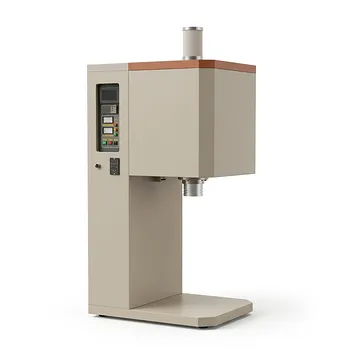
Vertical Openable Tube Furnace 0-1700c High Temperature Laboratory System for CVD and Vacuum Heat Treatment
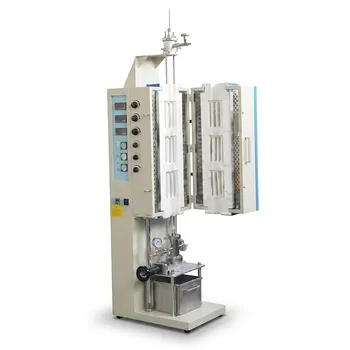
High Temperature Dual Zone Tube Furnace for Material Science Research and Professional Thermal Processing

1100C Tube Furnace with Vacuum Flange and Programmable Temperature Controller for Material Science and Industrial Heat Treatment

High Temperature Tube Furnace 1500C with Sliding Flanges and 50mm OD for Rapid Thermal Processing Fast Heating and Cooling
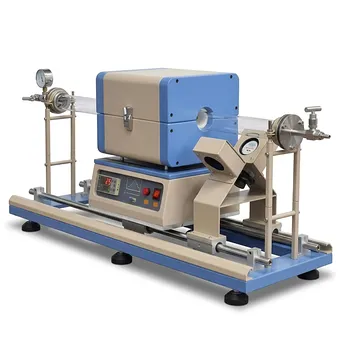
Automated Sliding Tube Furnace for Fast Heating and Cooling 2 Inch OD 1100C Max
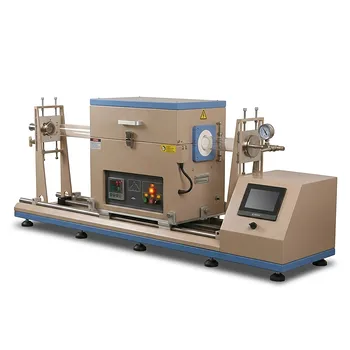
1200C Sliding Tube Furnace for Rapid Thermal Processing and CVD Graphene Growth with 100mm OD Capacity
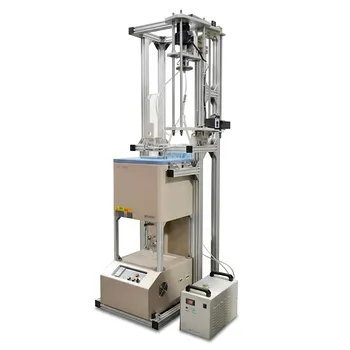
500C Vacuum Vertical Tube Furnace 84mm OD Sample Rotation Lifting System
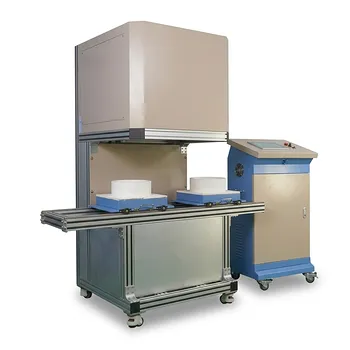
High Temperature Bottom Loading Vertical Furnace 1700C Dual Stage Sample Processing System 18L Large Capacity Thermal Treatment Equipment
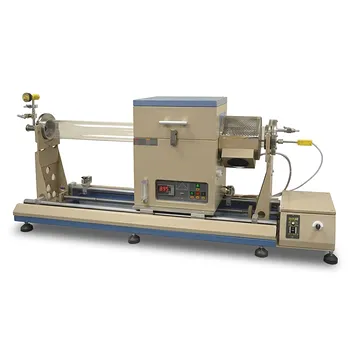
900 ºC Max Sliding RTP Tube Furnace with Rapid IR Heating and 4 Inch OD Quartz Tube
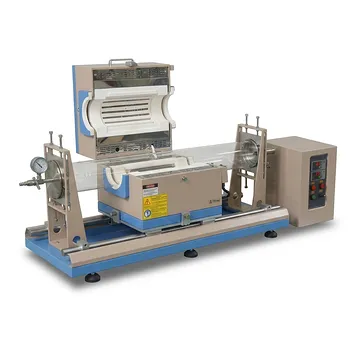
1200C High Temperature 5 Inch Sliding Tube Furnace for Rapid Thermal Processing RTP and Wafer Annealing
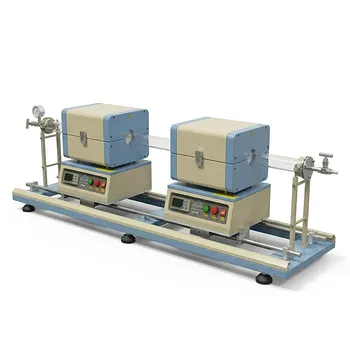
1200C Max Dual Sliding Tube Furnace with 50 mm Tube Flanges for CVD
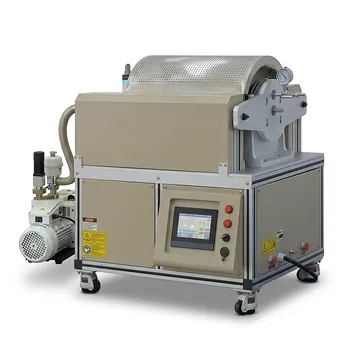
Automated 1200 C Tube Furnace for AI Material Research with 6 Inch OD and Sliding Flange
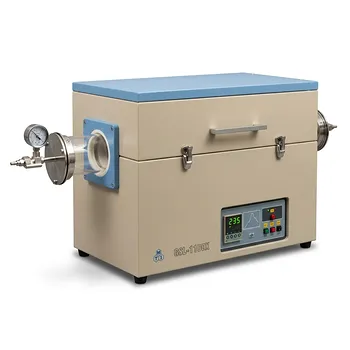
Single Zone Tube Furnace 5 Inch Quartz Tube 36 Inch Heating Zone Vacuum Flanges

1200C High Throughput Multi Channel Tube Furnace with 50mm Quartz Tubes for Annealing and Material Phase Diagram Research

1800C High Temperature Compact Vacuum Tube Furnace with 60mm OD Alumina Tube and Kanthal MoSi2 Heating Elements

High Temperature 1700C Benchtop Tube Furnace with 5 Inch Heating Zone High Purity Alumina Tube and Vacuum Sealing Flanges

1200°C 5 Inch Vertical Quartz Tube Furnace with Stainless Steel Vacuum Flanges
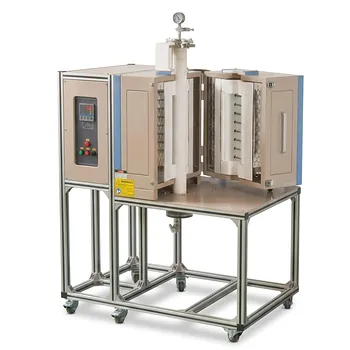
High Temperature 1700C Vertical Split Tube Furnace for Material Quenching and Single Crystal Growth
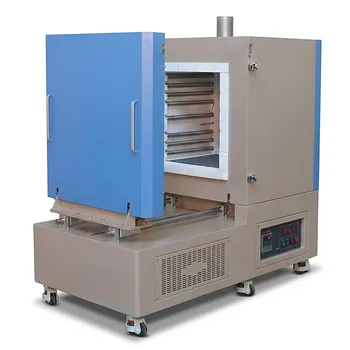
1200C Five Side Heating Muffle Furnace with Sliding Door 125L Volume High Temperature Heat Treatment System for Large Scale Sintering and Annealing