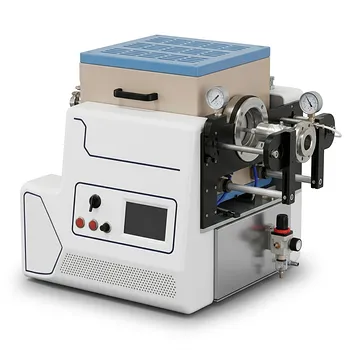
What role does an industrial tube furnace play in the SPC of germanium layers? Enhancing Thin Film Quality & Purity
Updated 3 months ago
Industrial tube furnaces serve as the definitive thermal environment for the Solid Phase Crystallization (SPC) of germanium thin films, providing the precise temperature control and atmospheric purity required for structural transformation. By maintaining a constant 400°C environment, the furnace facilitates the atomic rearrangement of germanium from an amorphous state into a stable polycrystalline structure. This process relies on the furnace's ability to provide uniform heat over extended durations while shielding the material from atmospheric contamination.
The industrial tube furnace is the critical enabling technology for germanium SPC, providing a stable, oxygen-free thermal zone that ensures complete crystalline transformation and allows for the precise management of residual mechanical stress.
Driving the Solid-Phase Transformation
Maintaining Thermal Stability at 400°C
The primary function of the tube furnace is to sustain a highly stable thermal zone at 400°C, the specific threshold required to drive germanium's phase change. This temperature is high enough to provide the energy needed for atomic mobility but low enough to keep the material in a solid state.
Uniformity across the heating zone is essential to ensure that the entire germanium layer crystallizes at the same rate. This prevents the formation of localized defects or inconsistent grain sizes that could compromise the film's electrical properties.
Facilitating Long-Duration Annealing
Solid Phase Crystallization is not instantaneous; it requires long-duration annealing to allow the crystal lattice to form properly. Industrial tube furnaces are designed for these extended cycles, maintaining consistent heat without fluctuations that could interrupt the crystallization front.
By providing a steady energy input over several hours, the furnace ensures that the amorphous-to-polycrystalline transition is completed thoroughly. This results in a high-quality phase purity similar to those achieved in other high-temperature chemical syntheses.
Atmospheric Control and Stress Management
Preventing Oxidation with Inert Nitrogen Flow
The furnace provides a strictly controlled inert atmosphere, typically utilizing a continuous flow of high-purity nitrogen. This is vital for germanium, as it prevents the material from reacting with oxygen or moisture at elevated temperatures.
By evacuating oxygen and maintaining this protective flow, the furnace ensures the chemical integrity of the thin film. This mimics the anaerobic environments used in other pyrolysis processes to prevent oxidative burnout or unwanted chemical side reactions.
Managing Residual Stress and Substrate Mismatch
A sophisticated tube furnace allows for controllable cooling phases, which is critical for managing the physical relationship between the germanium layer and its substrate. Because different materials expand and contract at different rates, rapid cooling can lead to significant mechanical failure.
The furnace's superior temperature control allows engineers to mitigate residual stress caused by substrate mismatch. By tailoring the cooling curve, the furnace helps preserve the adhesion and structural stability of the germanium layer.
Understanding the Trade-offs
Processing Time vs. Material Quality
While the tube furnace provides the highest degree of crystal quality, the SPC process is inherently slow compared to liquid-phase methods. The requirement for long-duration annealing means that throughput is limited, making it a "quality-first" rather than "speed-first" approach.
Temperature Precision vs. Energy Requirements
Maintaining a precise 400°C environment over a large industrial tube for many hours involves significant energy consumption. Any deviation in temperature can result in incomplete crystallization, meaning the cost of precision is a non-negotiable factor in the production of high-performance germanium layers.
Applying This to Your Project
Recommendations for Process Optimization
Choosing the right furnace parameters depends entirely on the specific requirements of your germanium application.
- If your primary focus is maximum carrier mobility: Prioritize the uniformity of the thermal zone and extend the annealing duration to ensure the largest possible grain size in the polycrystalline structure.
- If your primary focus is mechanical durability: Focus on the cooling curve programming of the furnace to minimize the impact of thermal expansion differences between the germanium and the substrate.
- If your primary focus is film purity: Ensure the furnace's gas delivery system is capable of maintaining a high-flow, high-purity nitrogen environment to eliminate all traces of oxygen during the heating cycle.
By mastering the stable thermal environment of the industrial tube furnace, you can transform fragile amorphous germanium into a robust, high-performance polycrystalline material.
Summary Table:
| Key Furnace Feature | Role in SPC Process | Impact on Germanium Layer |
|---|---|---|
| Stable 400°C Thermal Zone | Provides energy for atomic mobility | Ensures uniform polycrystalline structure |
| Long-Duration Annealing | Maintains steady heat over hours | Guarantees complete phase transformation |
| Inert Nitrogen Atmosphere | Evacuates oxygen and moisture | Prevents oxidation and chemical contamination |
| Programmable Cooling | Manages thermal contraction rates | Minimizes residual stress and substrate mismatch |
Optimize Your Material Transformation with THERMUNITS
Precise thermal control is the difference between a defective layer and a high-performance semiconductor. THERMUNITS is a leading manufacturer of high-temperature laboratory equipment, providing the precision and reliability required for advanced material science and industrial R&D.
Whether you are performing Solid Phase Crystallization (SPC), chemical vapor deposition, or complex alloying, our comprehensive range of thermal solutions is engineered for excellence:
- Specialized Furnaces: Tube, Muffle, Vacuum, Atmosphere, Rotary, and Hot Press Furnaces.
- Advanced Systems: CVD/PECVD systems, Vacuum Induction Melting (VIM) furnaces, and Electric Rotary Kilns.
- Expert Components: Dental furnaces, high-quality thermal elements, and custom heat treatment setups.
Ready to elevate your lab's efficiency and film purity? Contact THERMUNITS today to consult with our experts on the perfect furnace configuration for your research or production goals.
References
- Kota Igura, Kaoru Toko. Strain-dependent grain boundary properties of n-type germanium layers. DOI: 10.1038/s41598-024-56282-0
Mentioned Products
- High Temperature 1700C Vertical Tube Furnace for Powder Spherification and Material Sintering
- 1100C Tube Furnace with Vacuum Flange and Programmable Temperature Controller for Material Science and Industrial Heat Treatment
- Compact Vertical Split Quartz Tube Furnace with Stainless Steel Vacuum Flanges for Rapid Thermal Quenching and Controlled Atmosphere Material Processing
- High Vacuum Compact Tube Furnace 1200C with Integrated Turbo Pump System and 8 Inch Heating Zone
- Compact High Temperature 1600C Tube Furnace with 50mm Alumina Tube and Vacuum Flanges for Material Sintering
People Also Ask
- What role does a high-temperature vertical tube furnace play in simulating high-carbon ferromanganese slag formation?
- What functions does a vertical high-temperature tube furnace perform? Master Industrial Sintering & R&D Simulation
- What is the primary function of a high-temperature tube furnace in Cu1-N-C synthesis? Precision Thermal Control.
- High-Temp Tube Furnace Role in Converting Microbial Proteins to Iron Single-Atom Sites: Expert Synthesis Guide
- What impact does the heating rate of a tube furnace have on biochar microstructure? Optimize Your Material R&D.

Tech Team · ThermUnits
Last updated on Jun 03, 2026
Related Products

High Temperature 1700C Vertical Tube Furnace for Powder Spherification and Material Sintering
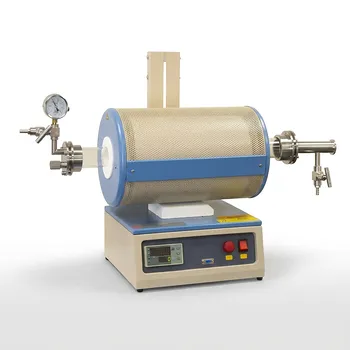
1100C Tube Furnace with Vacuum Flange and Programmable Temperature Controller for Material Science and Industrial Heat Treatment
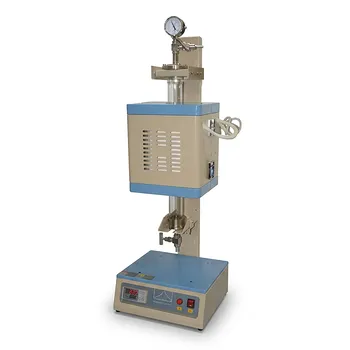
Compact Vertical Split Quartz Tube Furnace with Stainless Steel Vacuum Flanges for Rapid Thermal Quenching and Controlled Atmosphere Material Processing
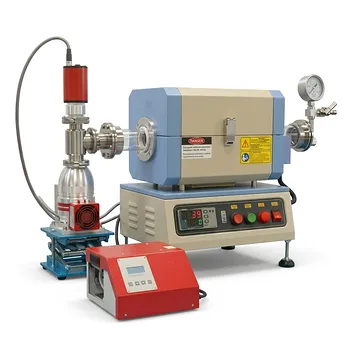
High Vacuum Compact Tube Furnace 1200C with Integrated Turbo Pump System and 8 Inch Heating Zone

Compact High Temperature 1600C Tube Furnace with 50mm Alumina Tube and Vacuum Flanges for Material Sintering
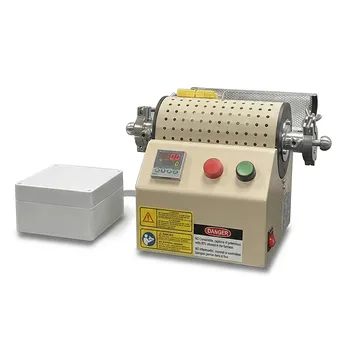
1000C Mini Tube Furnace with 20mm Quartz Tube and Vacuum Flanges for Material Science Research and Controlled Atmosphere Small Sample Processing

1800C High Temperature Compact Vacuum Tube Furnace with 60mm OD Alumina Tube and Kanthal MoSi2 Heating Elements
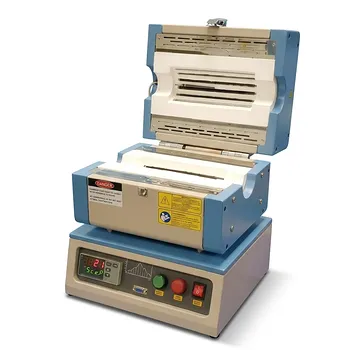
1250C Compact Split Tube Furnace with 8 Inch Heating Zone and Programmable Controller
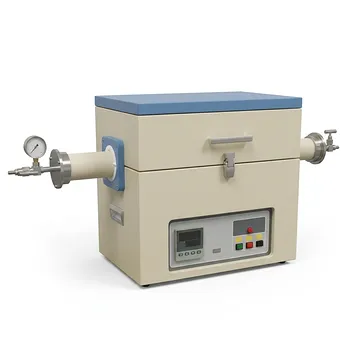
1250C Split Tube Furnace with 3 Inch Mullite Tube and Vacuum Sealing Flanges for Precision Thermal Processing
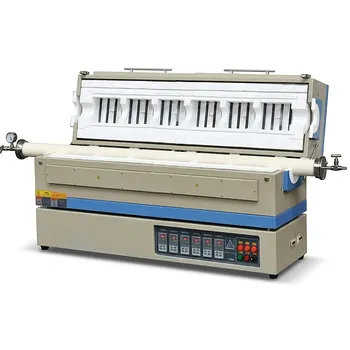
High Temperature 1700C Six Zone Split Tube Furnace with Alumina Tube and Water Cooled Flanges
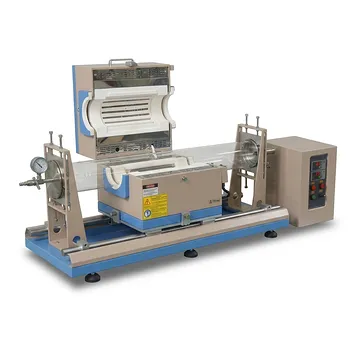
1200C High Temperature 5 Inch Sliding Tube Furnace for Rapid Thermal Processing RTP and Wafer Annealing

Vertical 1700C Vacuum and Atmosphere Tube Furnace with 80mm Alumina Tube
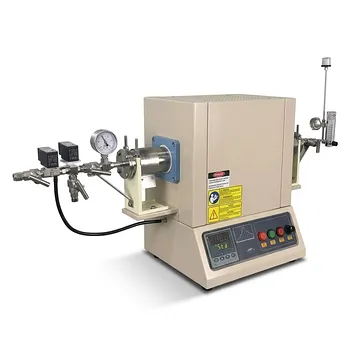
1500C Compact Hydrogen Gas Tube Furnace with 2 Inch Alumina Tube and Hydrogen Detector

High Temperature 1700C Tube Furnace with High Vacuum Turbomolecular Pump System and Multi Channel Mass Flow Controller Gas Mixer
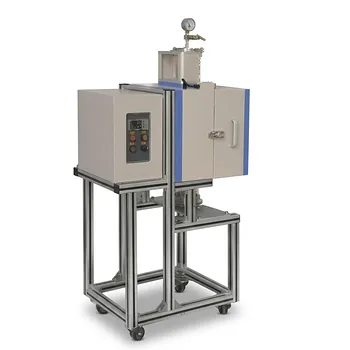
1200°C 5 Inch Vertical Quartz Tube Furnace with Stainless Steel Vacuum Flanges
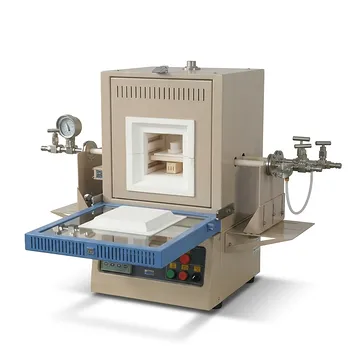
1700C Compact Hybrid Furnace with Dual Layer Box Sintering and Controlled Atmosphere Alumina Tubes
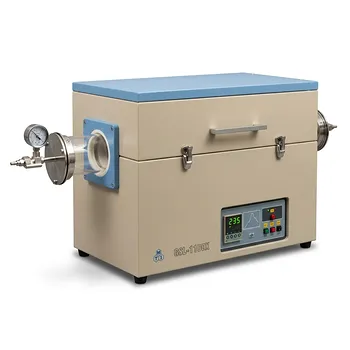
Single Zone Tube Furnace 5 Inch Quartz Tube 36 Inch Heating Zone Vacuum Flanges
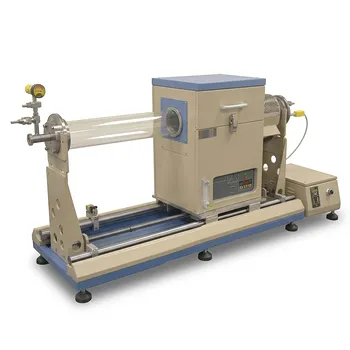
Rapid Thermal Processing Sliding Tube Furnace with 4 Inch OD Quartz Tube and 900C IR Heating
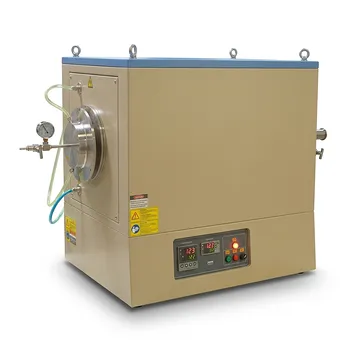
1100°C Large Diameter Quartz Tube Furnace with 24 Inch Heating Zone and Water Cooled Flanges