What roles do quartz tubes and slides play in CVD for graphene growth? Insights on Performance and 800°C Limits.
Updated 3 months ago
In hot-wall chemical vapor deposition (CVD), high-purity quartz tubes function as the primary reaction chamber, while quartz slides serve as the structural support for metal growth substrates. While these components are prized for their thermal stability and vacuum integrity, they face a critical limitation: at temperatures exceeding 800°C, the silicon dioxide ($SiO_2$) can become mobile and release gas-phase contaminants. These impurities deposit onto the growth surface, forming granular defects that significantly degrade the electrical and mechanical properties of the resulting graphene film.
Core Takeaway: Quartz components provide the essential thermal and chemical environment for graphene synthesis, but they transition from "inert" to "contaminant sources" above 800°C. This mobility of silicon dioxide introduces granular impurities that compromise the integrity of the graphene lattice.
The Structural Roles of Quartz in CVD
The Quartz Tube as the Reaction Vessel
The quartz tube acts as the central hot-wall reactor, providing a controlled, high-vacuum environment necessary for chemical reactions. It ensures that the system remains isolated from atmospheric impurities while maintaining a steady-state, isothermal zone for consistent film growth.
Thermal Management and Pyrolysis
High-purity quartz is selected for its superior thermal shock resistance and ability to withstand temperatures often reaching 1000°C to 1160°C. This high-temperature environment is required for the pyrolysis (thermal decomposition) of carbon precursors, such as methane or ethanol, on the catalyst surface.
Quartz Slides as Substrate Supports
Quartz slides provide a stable, flat surface to hold metal catalysts like copper foil or nickel-cobalt alloys. They ensure the substrate remains positioned correctly within the furnace's peak heating zone, facilitating uniform gas flow across the growth area.
Critical Limitations and Contamination Risks
The 800°C Threshold for Silicon Mobility
Although quartz is structurally stable at high temperatures, it is not perfectly inert. Once reaction temperatures exceed 800°C, the silicon dioxide within the tube and slides can become chemically mobile.
Formation of Gas-Phase Contaminants
At these elevated temperatures, $SiO_2$ can convert into gas-phase contaminants that circulate within the reaction chamber. These vapors interact with the carbon-forming environment, leading to the unintended deposition of silicon-based particles.
Impact on Graphene Quality
The resulting granular impurities integrate into the graphene film as it nucleates and grows. These defects disrupt the honeycomb lattice, leading to a significant reduction in electron mobility and a decrease in the overall mechanical strength of the film.
Understanding the Trade-offs
Structural Integrity vs. Chemical Purity
Quartz is often marketed as "chemically inert" because it does not melt or deform significantly at 1000°C. However, the distinction between mechanical stability and chemical purity is vital; the tube may look perfect while it is actively contaminating your sample.
Vacuum Performance vs. Outgassing
While quartz tubes are excellent for maintaining high-vacuum seals, the vapor pressure of contaminants increases with temperature. Operating at the upper limits of quartz (above 1000°C) increases the risk of "shadowing" or ghosting on the substrate caused by these microscopic emissions.
How to Apply This to Your Project
Recommendations for High-Performance Growth
- If your primary focus is maximizing electrical conductivity: Monitor your growth temperatures strictly and, if possible, utilize barrier layers or alternative crucible materials if you must exceed 800°C for long periods.
- If your primary focus is large-area uniformity at lower temperatures: Standard high-purity quartz is an ideal and cost-effective solution, provided your process stays within the 700°C to 800°C range.
- If your primary focus is high-temperature pyrolysis (>1000°C): Be prepared to perform aggressive post-growth characterization (such as Raman spectroscopy or AFM) to identify granular silicon impurities that may have migrated from the quartz components.
By balancing the structural benefits of quartz with an awareness of its thermal-chemical limits, researchers can better control the purity and performance of CVD-grown graphene.
Summary Table:
| Component | Primary Role in CVD | Critical Temperature Limit | Impact of Overheating (>800°C) |
|---|---|---|---|
| Quartz Tube | Reaction chamber & vacuum vessel | ~800°C (Chemical mobility) | Release of gas-phase contaminants |
| Quartz Slide | Substrate support for metal catalysts | ~800°C (Chemical mobility) | Formation of granular defects in film |
| Graphene Film | Final synthesized product | N/A | Reduced electron mobility & strength |
| Metal Catalyst | Pyrolysis surface (Cu, Ni, etc.) | Varies by material | Contamination by silicon-based particles |
Optimize Your Material Research with THERMUNITS
Precision and purity are critical in graphene synthesis. THERMUNITS is a leading manufacturer of high-temperature laboratory equipment for material science and industrial R&D. We offer a comprehensive range of thermal processing solutions, including CVD/PECVD systems, Tube furnaces, Vacuum furnaces, and Atmosphere furnaces, specifically designed to meet the rigorous demands of advanced heat treatment.
Whether you are scaling up graphene production or conducting fundamental research, our equipment ensures precise temperature control and vacuum integrity to help you overcome contamination challenges.
Ready to upgrade your lab's capabilities? Contact THERMUNITS today to find the perfect thermal solution for your research needs!
References
- Xiaoming Tu, Xuesong Li. Silicon oxide particles size evolution during CVD graphene growth on Cu substrates. DOI: 10.61935/acetr.2.1.2024.p454
Mentioned Products
- Dual Tube 100mm 80mm CVD Sliding Furnace with 4 Channel Gas Mixing and Vacuum System
- Radio Frequency Plasma Enhanced Chemical Vapor Deposition RF PECVD System for Laboratory and Industrial Thin Film Growth
- High Temperature 1200C Automatic Sliding Dual Zone Tube Furnace for 2D Transition Metal Dichalcogenides Growth and Material Sublimation Research
- HFCVD Machine System for Nano Diamond Coating on Drawing Dies and Industrial Tools
- Cylindrical Resonator MPCVD Machine System for Microwave Plasma Chemical Vapor Deposition and Lab Diamond Growth
People Also Ask
- How does the Sweet Spot region within a chemical vapor deposition reactor influence the morphology control of VOx particles?
- What is the purpose of placing quartz crystals at the inlet and outlet of a CVD reaction tube? Optimize MoS2 Synthesis
- Why is a double-zone tube furnace required for CVD of WS2? Master Thermal Precision for High-Quality 2D Materials
- What are the temperature control requirements for a tube furnace used in pyrolysis and CVD? Master Thermal Precision
- What is the primary function of a dual-zone tube furnace in CVD MoS2 synthesis? Achieve Precise Thermal Control

Tech Team · ThermUnits
Last updated on Jun 03, 2026
Related Products
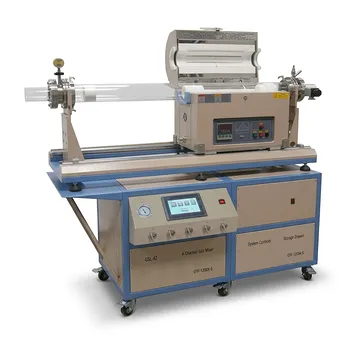
Dual Tube 100mm 80mm CVD Sliding Furnace with 4 Channel Gas Mixing and Vacuum System
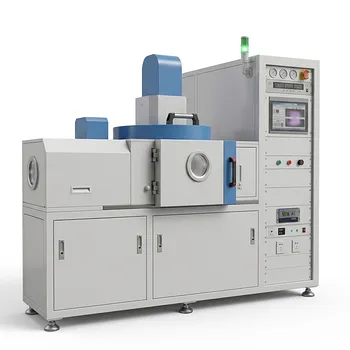
Radio Frequency Plasma Enhanced Chemical Vapor Deposition RF PECVD System for Laboratory and Industrial Thin Film Growth
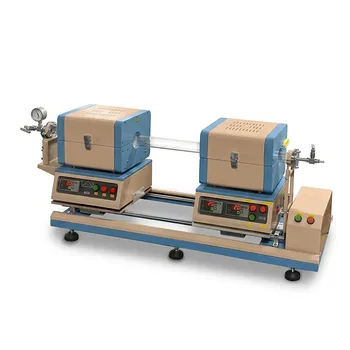
High Temperature 1200C Automatic Sliding Dual Zone Tube Furnace for 2D Transition Metal Dichalcogenides Growth and Material Sublimation Research
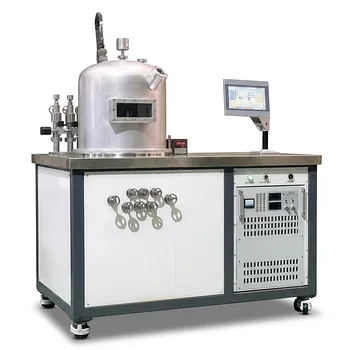
HFCVD Machine System for Nano Diamond Coating on Drawing Dies and Industrial Tools
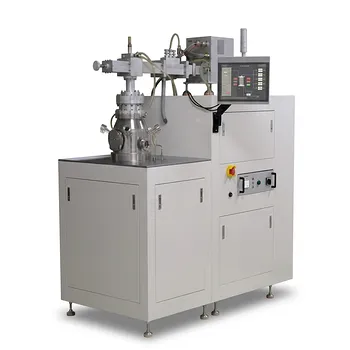
Cylindrical Resonator MPCVD Machine System for Microwave Plasma Chemical Vapor Deposition and Lab Diamond Growth
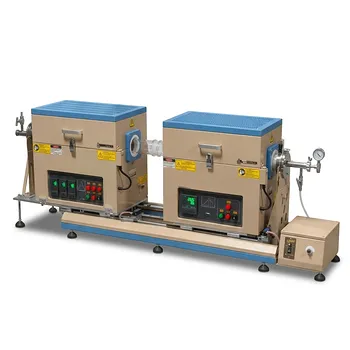
1200C Dual Temperature Zone Slidable Tube Furnace for 2D Material Growth and TCVD Synthesis
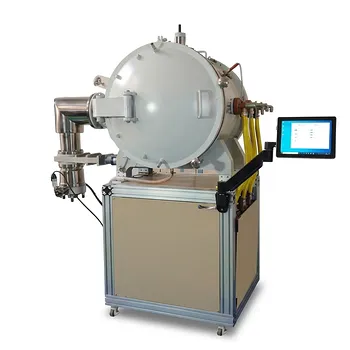
High Temperature Cold Wall Vacuum Furnace for Advanced Material Sintering and Annealing 1600C Heating Area 200x200x300mm
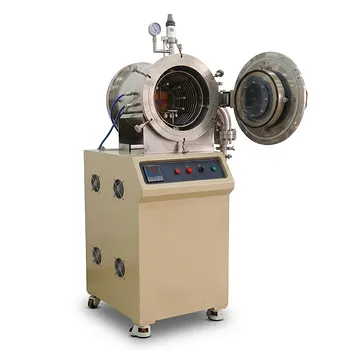
High Temperature Cold Wall High Vacuum Chamber Furnace 1400C for Advanced Material Processing
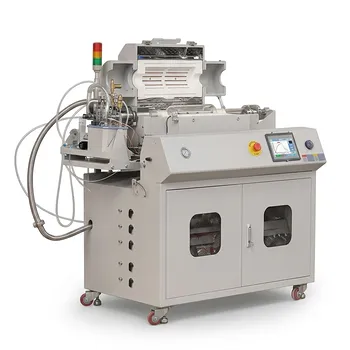
Versatile Chemical Vapor Deposition Tube Furnace System for Advanced Material Research and Industrial Coating Processes
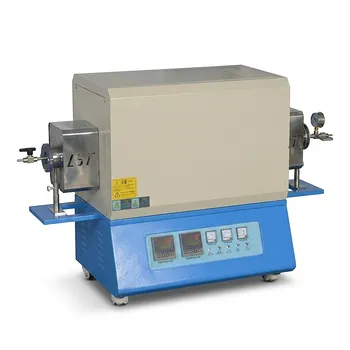
High Temperature Dual Zone Vacuum Tube Furnace for Material Research and CVD Processing

High Temperature 1700C Benchtop Tube Furnace with 5 Inch Heating Zone High Purity Alumina Tube and Vacuum Sealing Flanges
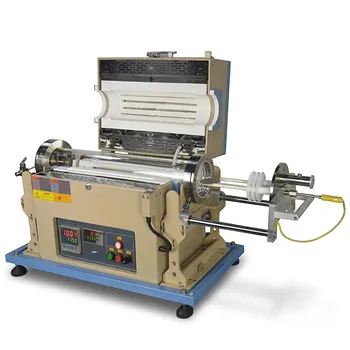
1200°C High Temperature 4 Inch Tube Furnace with Sliding Flange for CVD Systems
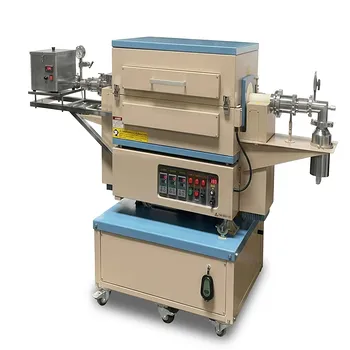
1500C 3-Zone Rotary Tube Furnace 60mm with Automatic Powder Feeding and Receiving System for Continuous Material Synthesis
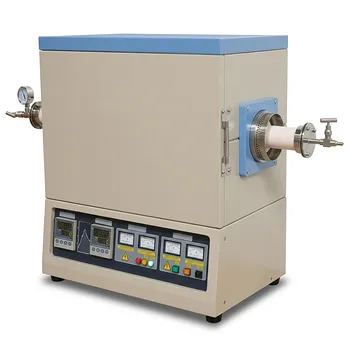
High Temperature 1700C Dual Zone Tube Furnace for Material Science and Industrial Chemical Vapor Deposition Research
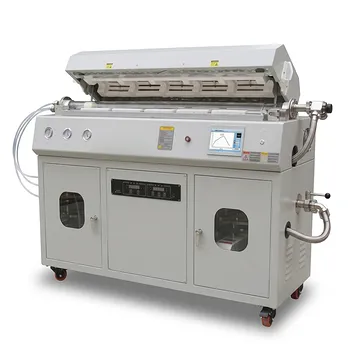
Multi Heating Zones CVD Tube Furnace System for Precision Chemical Vapor Deposition and Advanced Material Synthesis
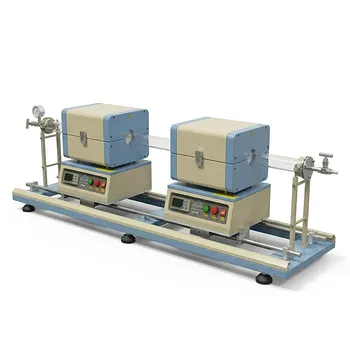
1200C Max Dual Sliding Tube Furnace with 50 mm Tube Flanges for CVD