What roles does a high-temperature tube furnace play in the carbonization and boron doping of porous carbon? High-Precision Synthesis.
Updated 3 months ago
The high-temperature tube furnace serves as the foundational reactor for synthesizing advanced materials, providing the strictly controlled environment required for complex chemical transformations. Specifically, it enables the simultaneous carbonization of organic precursors and the chemical integration of boron atoms into the resulting framework. By maintaining temperatures between 800 °C and 1000 °C under an inert atmosphere, the furnace facilitates the decomposition of boron sources and the creation of a stable, conductive carbon support.
Core Takeaway: A high-temperature tube furnace is the critical tool for achieving uniform pyrolysis and heteroatom doping; it provides the precise thermal energy and oxygen-free conditions necessary to transform organic precursors into porous carbon with tailored electronic properties.
Orchestrating Carbonization and Pyrolysis
Facilitating Thermal Decomposition
The furnace provides the high-precision thermal energy required to drive the pyrolysis of organic precursors, such as petroleum pitch or biomass. This process removes volatile components and leaves behind a solid carbonaceous skeleton.
Maintaining Atmosphere Integrity
A strictly controlled inert environment (typically nitrogen or argon) is maintained within the tube to prevent the combustion of the sample. This oxygen-deficient atmosphere allows for the formation of a stable conductive framework rather than the material simply burning away.
Executing Multi-Stage Heating
Advanced tube furnaces utilize PID control systems to manage complex heating curves, such as multi-step ramps and dwells. This precision prevents thermal overshoot, ensuring that the precursors undergo uniform pyrolysis and self-assemble into stable three-dimensional structures.
The Mechanics of Boron Doping
Driving Boric Acid Decomposition
At high temperatures—specifically between 800 °C and 1000 °C—the furnace facilitates the thermal decomposition of boron-containing precursors like boric acid. This decomposition is necessary to release boron atoms so they can be integrated into the emerging carbon lattice.
Tuning Electronic Structures
The furnace provides the sustained energy required for boron atoms to bond within the carbon framework, a process known as heteroatom doping. This integration modifies the electronic structure of the support material, which significantly enhances its interaction with active metal particles in catalytic applications.
Engineering Porosity and Morphology
Controlling Pore Architecture
By adjusting the furnace temperature, researchers can precisely control the ratio of micropores to mesopores in the carbon support. This structural tuning is vital for creating the necessary surface area required to load active sites for specific chemical reactions.
Facilitating Chemical Activation
The furnace environment promotes chemical reactions between activation agents (like K2CO3 or ZnCl2) and the carbon substrate. These agents "etch" or corrode the carbon at high temperatures, creating highly developed pore structures that would be impossible to achieve through thermal treatment alone.
Preserving Template Morphology
When using mineral templates to shape the carbon, the furnace allows the carbon source to undergo aromatization directly on the template surface. This ensures that the final carbon material retains the specific micro-morphology imparted by the template.
Understanding the Trade-offs
Heating Rate vs. Structural Integrity
While rapid heating can increase throughput, it often leads to non-uniform carbonization or structural collapse of the pores. A slow ramp rate (e.g., 5°C/min) is generally required to allow gases to escape without damaging the emerging carbon framework.
Atmosphere Purity and Oxidation Risks
Even trace amounts of oxygen can lead to the partial oxidation of the carbon, which alters the surface chemistry and reduces the initial coulombic efficiency. Maintaining a continuous purge of high-purity gas is resource-intensive but necessary for high-quality results.
Temperature Limits and Graphitization
Operating at the lower end of the temperature range (700 °C) may result in incomplete doping, while extremely high temperatures (above 1200 °C) can lead to graphitization. Excessive graphitization may reduce the interlayer spacing, which can be detrimental if the material is intended for specific battery or supercapacitor applications.
How to Apply This to Your Project
Recommendations for Material Synthesis
- If your primary focus is maximizing surface area: Utilize a tube furnace to facilitate chemical activation with agents like K2CO3 at temperatures between 700 °C and 900 °C.
- If your primary focus is enhancing catalytic activity: Prioritize precise temperature control between 800 °C and 1000 °C to ensure the successful integration of boron atoms into the carbon lattice.
- If your primary focus is structural consistency: Employ a multi-stage heating program with a PID controller to prevent thermal overshoot during the critical pyrolysis phase.
- If your primary focus is preventing material loss: Ensure a constant flow of high-purity inert gas (nitrogen or argon) to maintain a strictly oxygen-free environment throughout the heating and cooling cycles.
Through the masterful control of temperature and atmosphere, the tube furnace transforms raw organic matter into a sophisticated, boron-doped porous framework ready for high-performance applications.
Summary Table:
| Process Phase | Furnace Function | Core Benefit |
|---|---|---|
| Carbonization | Uniform Pyrolysis | Creates a stable conductive carbon framework |
| Boron Doping | Precision Heating (800-1000°C) | Enables heteroatom integration into carbon lattice |
| Porosity Tuning | Chemical Activation | Facilitates etching for high-surface-area structures |
| Atmosphere Control | Inert Gas Management | Prevents oxidation and preserves material integrity |
Elevate Your Material Research with THERMUNITS
Achieving precise boron doping and uniform carbonization requires the high-performance thermal solutions that THERMUNITS specializes in. As a leading manufacturer of material science equipment, we offer a comprehensive range of Tube, Muffle, Vacuum, and Atmosphere furnaces, as well as CVD/PECVD systems and Vacuum Induction Melting (VIM) units. Our PID-controlled systems ensure the thermal stability and oxygen-free environments critical for your R&D success.
Contact our technical experts today to find your ideal furnace solution!
References
- Hui Liu, Qingshan Zhao. A Palladium Catalyst Supported on Boron-Doped Porous Carbon for Efficient Dehydrogenation of Formic Acid. DOI: 10.3390/nano14060549
Mentioned Products
- High Temperature Tube Furnace 1500C with Sliding Flanges and 50mm OD for Rapid Thermal Processing Fast Heating and Cooling
- High Temperature 1700C Tube Furnace with High Vacuum Turbomolecular Pump System and Multi Channel Mass Flow Controller Gas Mixer
- 1750°C High Temperature Benchtop Vacuum Atmosphere Tube Furnace with Kanthal Super 1800 Heating Elements and 60mm Alumina Processing Tube
- High Temperature 1700C Benchtop Tube Furnace with 5 Inch Heating Zone High Purity Alumina Tube and Vacuum Sealing Flanges
- 1700C High Temperature Alumina Tube Furnace with 18 Inch Heated Zone and Vacuum Sealing Flanges
People Also Ask
- How are high-temperature tube furnaces utilized to repair etching damage? Precision Lattice Restoration Solutions
- What core conditions does a high-temperature tube furnace provide for rGO aerogels? Mastering Precision Synthesis.
- What role does a high-temperature tube furnace play in CVD synthesis of silicon nanowires? Master VLS Growth Precision.
- How does precision tube furnace control influence CoFe nanoparticle formation? Master Your Bimetallic Synthesis.
- What role does a high-temperature tube furnace play in the sulfidation heat treatment of CoS@C/MXene nanocomposites? Guide

Tech Team · ThermUnits
Last updated on Jun 02, 2026
Related Products

High Temperature Tube Furnace 1500C with Sliding Flanges and 50mm OD for Rapid Thermal Processing Fast Heating and Cooling

High Temperature 1700C Tube Furnace with High Vacuum Turbomolecular Pump System and Multi Channel Mass Flow Controller Gas Mixer

1750°C High Temperature Benchtop Vacuum Atmosphere Tube Furnace with Kanthal Super 1800 Heating Elements and 60mm Alumina Processing Tube

High Temperature 1700C Benchtop Tube Furnace with 5 Inch Heating Zone High Purity Alumina Tube and Vacuum Sealing Flanges
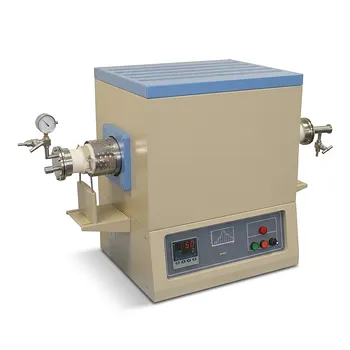
1700C High Temperature Alumina Tube Furnace with 18 Inch Heated Zone and Vacuum Sealing Flanges
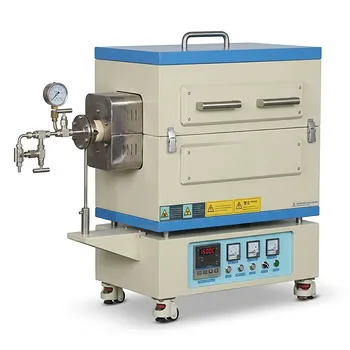
High Temperature Split Tube Furnace 1500C for Material Research Vacuum and Atmosphere Thermal Processing

Compact High Temperature 1600C Tube Furnace with 50mm Alumina Tube and Vacuum Flanges for Material Sintering

1800C High Temperature Compact Vacuum Tube Furnace with 60mm OD Alumina Tube and Kanthal MoSi2 Heating Elements
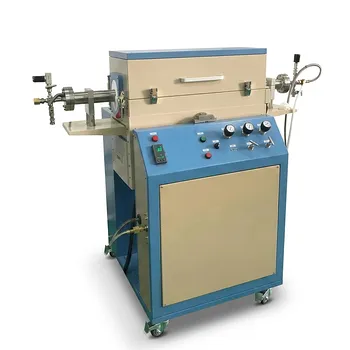
High Temperature Rocking Tube Furnace 1700°C Alumina Processing Tube with Precision Oscillation for Material Synthesis
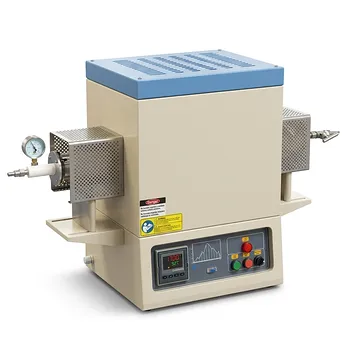
High Temperature Three Zone Tube Furnace 1700C with Alumina Tube and Water Cooled Flanges

High Temperature 1700C Vertical Tube Furnace for Powder Spherification and Material Sintering
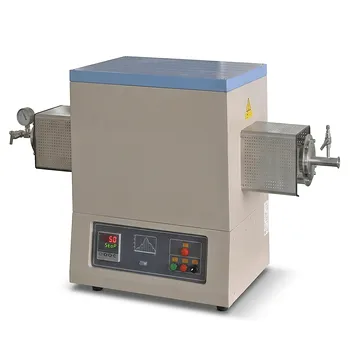
High Temperature 1700C Tube Furnace with 4 Inch OD Alumina Tube and Vacuum Sealing Flanges
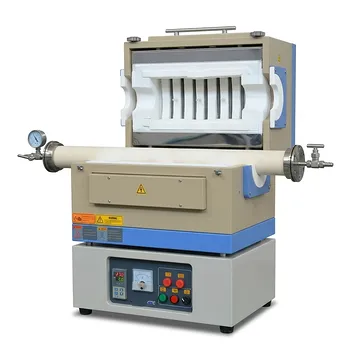
High Temperature 1600C Split Tube Furnace Vacuum Flanges Valves Optional 60mm 80mm Alumina Tube

High Temperature Automated 5 Inch Tube Furnace for Autonomous Material Research and Advanced Laboratory R&D
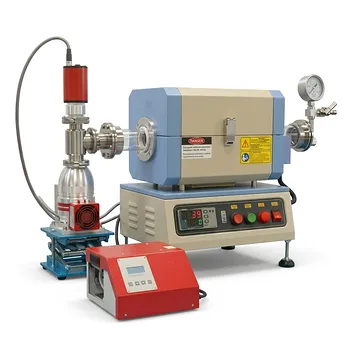
High Vacuum Compact Tube Furnace 1200C with Integrated Turbo Pump System and 8 Inch Heating Zone
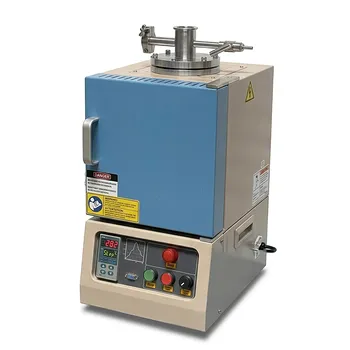
High Temperature Hybrid Muffle and Tube Furnace with Vacuum Capability and PID Control
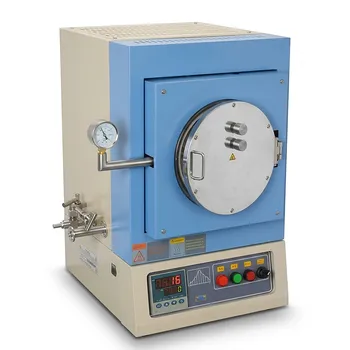
1100°C High Temperature Quartz Chamber Furnace 8 Inch OD with 7.6 Liter Capacity and Vacuum Atmosphere Capability

1100C Tube Furnace with Vacuum Flange and Programmable Temperature Controller for Material Science and Industrial Heat Treatment
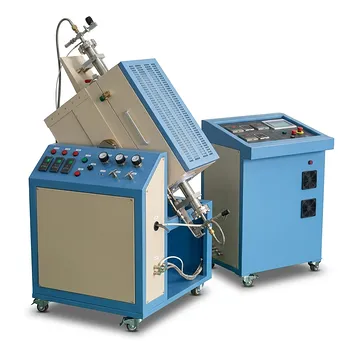
1100C High Pressure Rocking Tube Furnace with 2 Inch Super Alloy Processing Tube for Material Synthesis
