Why are dual-temperature zones used for VOx@VACNT synthesis? Achieve Precise Control in CVD Nanomaterial Production
Updated 3 months ago
The use of independent heating zones is essential to decouple the sublimation of precursors from the high-temperature reaction process. In the synthesis of $VO_x@VACNT$ composites, this configuration allows for the precise maintenance of a narrow temperature window (200°C to 250°C) required to vaporize the solid $VO(acac)_2$ precursor. Without this separation, the precursor would undergo premature thermal decomposition, ruining the quality of the vapor deposition and the resulting thin film.
Core Takeaway: Independent thermal zones transform a volatile chemical reaction into a controlled manufacturing process. By isolating the precursor's sublimation phase, engineers ensure a stable, continuous vapor flux that is independent of the downstream reaction kinetics.
The Necessity of Decoupled Thermal Control
Protecting Precursor Chemical Integrity
The solid precursor $VO(acac)_2$ is thermally sensitive and requires a strict sublimation window between 200°C and 250°C. If the precursor is exposed to the much higher temperatures typically found in the main reaction zone, it will decompose into unintended byproducts before reaching the deposition site.
Achieving Steady-State Sublimation
Independent heating allows for the stable and continuous release of precursor molecules into the carrier gas stream. This consistency is vital for maintaining a uniform growth rate, which directly dictates the thickness and quality of the $VO_x$ layers on the carbon nanotubes.
Decoupling Concentration from Temperature
By using a separate heating source, such as a heating belt or a small furnace, the vapor pressure of the precursor can be tuned independently. This allows researchers to adjust the concentration of the chemical species in the system without changing the temperature at which the actual deposition or "growth" occurs on the substrate.
Optimizing the Deposition Environment
Managing Supersaturation Levels
In vapor deposition, the "supersaturation level"—or the density of the precursor vapor—determines the morphology and growth rate of the material. A dual-zone system allows for the precise adjustment of vapor concentration, enabling the fine-tuning of nanostructure dimensions and film density.
Preventing Premature Deposition and Clogging
Isolating the heating zones helps prevent the precursor from depositing on the reactor walls before it reaches the $VACNT$ forest. By maintaining a thermal gradient where the reaction zone is hotter than the sublimation zone, the precursor remains in a gas phase until it makes contact with the target deposition site.
Enhancing Process Controllability
The ability to "turn off" or "turn down" the sublimation zone independently of the main furnace provides a level of kinetic control that single-zone systems lack. This is critical for creating complex composite materials where the interface between the $VO_x$ and the $VACNT$ must be clean and well-defined.
Understanding the Trade-offs
Increased System Complexity
Implementing dual-temperature zones requires additional PID controllers, thermocouples, and insulation. This increases the potential points of failure in the experimental setup and requires more rigorous calibration to ensure thermal accuracy.
The Risk of "Cold Spots"
The transition area between the independent heating furnace and the main reaction zone is prone to cold spots. If the temperature drops below the sublimation point in these regions, the precursor will re-solidify, leading to tube clogging and inconsistent delivery of the material.
Thermal Lag and Stabilization Time
Managing two independent heat sources introduces complex thermal dynamics. It may take significantly longer for the entire system to reach a steady state, as the heat from the main furnace can sometimes "leak" into the sublimation zone, requiring careful shielding or physical separation.
How to Apply This to Your Synthesis Goals
To achieve the best results with $VO_x@VACNT$ composite materials, tailor your heating strategy to your specific performance requirements:
- If your primary focus is Film Uniformity: Prioritize the precision of the sublimation zone temperature to ensure a constant, non-pulsing vapor flux.
- If your primary focus is Scalability and Growth Rate: Focus on maximizing the independent vapor pressure control to increase the supersaturation levels in the reaction zone.
- If your primary focus is Material Purity: Use a sharp thermal gradient between zones to ensure the precursor only decomposes at the moment of contact with the substrate.
The strategic isolation of precursor sublimation is the fundamental bridge between unpredictable chemical reactions and highly engineered composite materials.
Summary Table:
| Feature | Benefit | Technical Importance |
|---|---|---|
| Decoupled Control | Prevents premature decomposition | Maintains precursor chemical integrity (200°C-250°C) |
| Independent Heating | Steady-state vapor flux | Ensures uniform thickness and growth rate of VOx layers |
| Vapor Pressure Tuning | Decouples concentration from temp | Allows adjustment of supersaturation levels for morphology control |
| Thermal Gradient | Prevents reactor wall clogging | Keeps precursor in gas phase until it reaches the VACNT target |
Elevate Your Nanomaterial Synthesis with THERMUNITS
Precision is the bridge between unpredictable reactions and high-performance materials. As a leading manufacturer of high-temperature laboratory equipment, THERMUNITS provides the specialized thermal solutions required for complex processes like $VO_x@VACNT$ synthesis.
Our comprehensive range includes:
- CVD/PECVD Systems & Multi-Zone Tube Furnaces: Perfect for decoupling sublimation and reaction kinetics.
- Specialized Furnaces: Muffle, Vacuum, Atmosphere, Rotary, and Hot Press furnaces for diverse R&D needs.
- Industrial Solutions: Electric rotary kilns, Vacuum Induction Melting (VIM) furnaces, and Dental furnaces.
- Quality Components: High-grade thermal elements designed for durability and thermal accuracy.
Whether you are conducting material science research or industrial R&D, our equipment offers the precise temperature control needed to eliminate "cold spots" and ensure steady-state sublimation.
Ready to optimize your thermal processing? Contact our engineering team today to discuss how THERMUNITS can enhance your laboratory's efficiency and material purity.
References
- Inga Dönges, Jörg J. Schneider. Selective Synthesis of 3D Aligned VO<sub>2</sub> and V<sub>2</sub>O<sub>5</sub> Carbon Nanotube Hybrid Materials by Chemical Vapor Deposition. DOI: 10.1002/chem.202402024
Mentioned Products
- High Temperature 1200C Automatic Sliding Dual Zone Tube Furnace for 2D Transition Metal Dichalcogenides Growth and Material Sublimation Research
- Two Zones CSS Furnace for Rapid Thermal Processing Thin Film Coating 3 Inch Diameter 650C
- High Temperature Dual Zone Split Tube Furnace for Advanced Atmosphere Sintering and Vacuum CVD Applications
- 1200C Dual Temperature Zone Slidable Tube Furnace for 2D Material Growth and TCVD Synthesis
- High Temperature 1700C Dual Zone Tube Furnace for Material Science and Industrial Chemical Vapor Deposition Research
People Also Ask
- What are the technical advantages of a dual-zone tube furnace for phosphidation? Optimize Cobalt Nanowall Synthesis.
- What is the value of a dual-zone tube furnace in coal ash deposition? Precision Simulation of Sodium Vapor Scaling.
- Why is a double-temperature zone tube furnace utilized for the preparation of monolayer MoS2? Precision CVD Explained
- What is the function of a high-precision dual-zone tube furnace in MAPbI3 deposition? Expert Perovskite Synthesis.
- What technical advantages does a Dual-zone Tube Furnace provide for ZnSe sulfidation? Precision & Quality Control.

Tech Team · ThermUnits
Last updated on Jun 03, 2026
Related Products
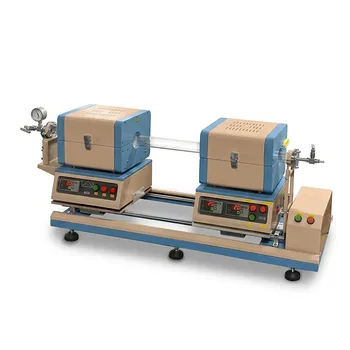
High Temperature 1200C Automatic Sliding Dual Zone Tube Furnace for 2D Transition Metal Dichalcogenides Growth and Material Sublimation Research
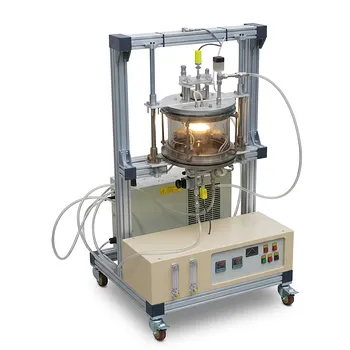
Two Zones CSS Furnace for Rapid Thermal Processing Thin Film Coating 3 Inch Diameter 650C
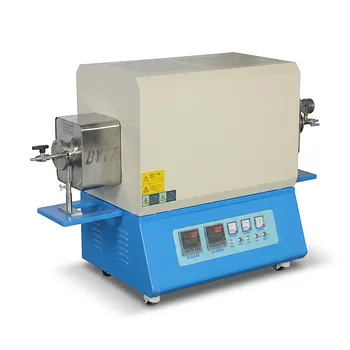
High Temperature Dual Zone Split Tube Furnace for Advanced Atmosphere Sintering and Vacuum CVD Applications
1200C Dual Temperature Zone Slidable Tube Furnace for 2D Material Growth and TCVD Synthesis
High Temperature 1700C Dual Zone Tube Furnace for Material Science and Industrial Chemical Vapor Deposition Research
Dual Zone Tube Furnace 1100C with 11 Inch Quartz Tube and Vacuum Flanges for 8 Inch Wafer Processing
Double Temperature Zone Double Cover Tube Furnace for High Temperature CVD and Vacuum Annealing
High Temperature Dual Zone Tube Furnace for Material Science Research and Professional Thermal Processing
High Temperature Dual Zone Vacuum Tube Furnace for Material Research and CVD Processing
High Temperature 1700C Dual Zone Rotary Tube Furnace with 60mm Alumina Tube and Precision Rotation Control
1100°C Dual Zone Rotary Tube Furnace with Automatic Feeding and Collection System for Continuous Powder Processing
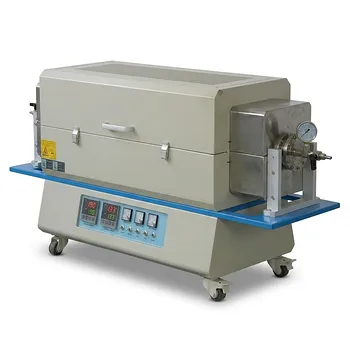
High Temperature Elongated Dual Zone Tube Furnace for Material Research and Industrial Heat Treatment
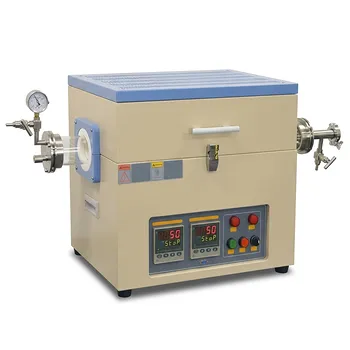
1200C Dual Zone Split Tube Furnace with Fused Quartz Tube and Vacuum Flanges Available in 60mm 80mm and 100mm Diameters
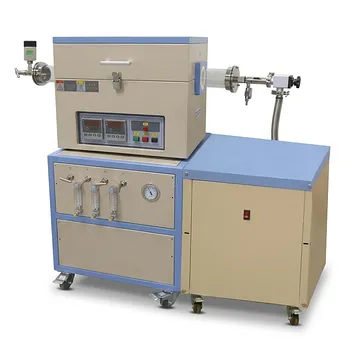
Dual Zone Quartz Tube Furnace with 80mm Diameter 1200C Max Temperature 3 Channel Gas Mixer and Vacuum Pump System
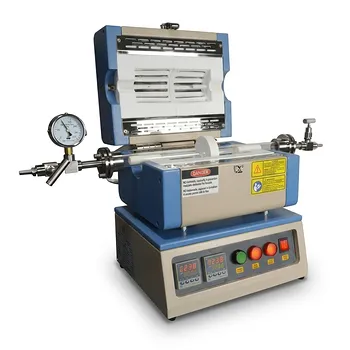
Dual Heating Zone 1200C Compact Split Tube Furnace with Optional 1" - 2" Tube and Vacuum Flanges
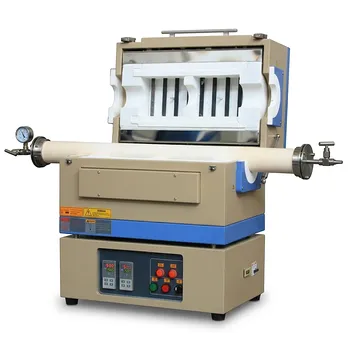
1500C Two Zone Split Tube Furnace with Vacuum Flange and 80mm Alumina Tube
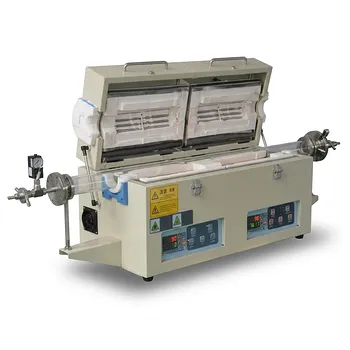
Elongated Two Temperature Zone Pipe Furnace for Industrial Heat Treatment and Material Science Research
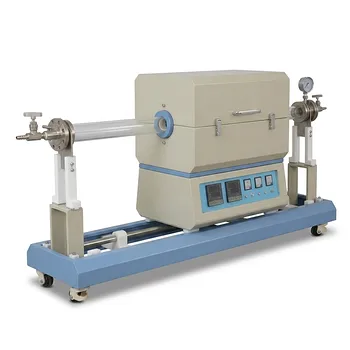
Double Zone Fast Heating Tube Furnace High Temperature Vacuum Atmosphere System
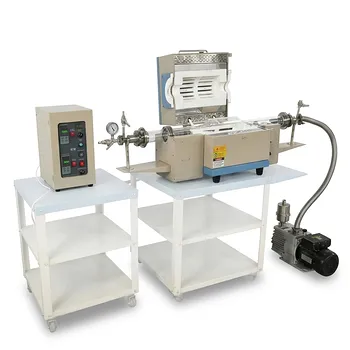
Two Zone Rotary Tube Furnace for Powder CVD Coating and Core Shell Material Synthesis 1100C