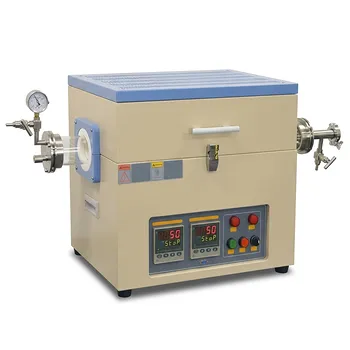
What role does a single-zone split tube furnace play in MoS2 CVD growth? High-Precision 2D Material Synthesis
Updated 3 months ago
The single-temperature zone split tube furnace acts as the fundamental reactor for the synthesis of monolayer Molybdenum Disulfide (MoS2). It provides the precise thermal energy required to vaporize solid precursors and facilitates their gas-phase reaction under a controlled atmosphere. By managing heating rates, reaction temperatures (typically near 750°C), and cooling cycles, this equipment ensures the formation of high-quality, large-area crystalline flakes.
Core Takeaway: A split tube furnace provides the high-purity, sealed thermal environment necessary for Chemical Vapor Deposition (CVD), enabling the precise evaporation of precursors and the subsequent deposition of monolayer MoS2. Its split-hinge design is particularly critical for rapid cooling, which prevents the degradation of the delicate monolayer morphology after growth.
Providing a High-Purity Thermal Environment
Precision Temperature Control
The furnace maintains a strictly controlled thermal field, often reaching a reaction plateau of 750°C. This high-precision heating is essential for the sublimation of precursors like sulfur powder and molybdenum sources (such as MoO3 or sodium molybdate) placed in alumina boats.
Atmosphere and Pressure Management
Using a high-purity quartz tube, the furnace isolates the reaction from external contaminants while maintaining a stable flow of Argon (Ar) carrier gas. This creates a protective environment for Atmospheric Pressure Chemical Vapor Deposition (APCVD), ensuring the resulting MoS2 flakes maintain high chemical purity.
Stable Flow Field Dynamics
The horizontal orientation and high aspect ratio of the tube facilitate a stable gas-phase reaction. This stability allows the vaporized precursors to move uniformly across the substrate, which is vital for achieving large-area, high-crystalline-quality monolayer wafers.
The Strategic Role of the Split Design
Rapid Natural Cooling
The "split" functionality allows the furnace to be opened immediately after the growth process is complete. This facilitates rapid natural cooling, which is a vital step in "quenching" the reaction to preserve the integrity and triangular morphology of the MoS2 monolayers.
Preventing Morphology Degradation
Slow cooling can lead to unwanted etching or additional layers of deposition. The ability to quickly drop the temperature ensures that the monolayer morphology is "locked in" and protected from thermal degradation or secondary chemical reactions.
Ease of Maintenance and Setup
The split design provides easy access to the quartz tube for cleaning and substrate placement. This ensures that precursor positioning—which is critical for utilizing the furnace's natural axial temperature gradients—can be performed with high repeatability.
Understanding the Trade-offs
Single-Zone vs. Multi-Zone Control
In a single-temperature zone furnace, all precursors and the substrate are heated by the same heating elements. This requires very strategic placement of precursors along the axial temperature gradient to ensure that sulfur and molybdenum reach their respective vaporization points at the correct time.
Potential for Thermal Non-Uniformity
While the furnace provides a stable thermal field, the edges of the heating zone may experience temperature drop-offs. If the substrate is too large or improperly positioned, the crystallinity of the MoS2 may vary, leading to polycrystalline structures rather than high-quality single crystals.
Precursor Sensitivity
Because a single-zone furnace cannot independently control the temperature of the sulfur and the molybdenum source, the process is highly sensitive to the heating rate. If the temperature rises too quickly, one precursor may exhaust before the other reaches its reaction threshold.
Optimizing Growth for Your Research Goals
How to Apply This to Your Project
To achieve the best results with a single-zone split tube furnace, your approach should be tailored to your specific material requirements.
- If your primary focus is High Crystalline Quality: Utilize a slow heating rate to ensure stable vapor pressure and place the substrate in the absolute center of the furnace for maximum thermal uniformity.
- If your primary focus is Large-Area Monolayers: Optimize the flow rate of the Argon carrier gas to ensure a consistent supply of precursors across the entire surface of the substrate.
- If your primary focus is Structural Integrity: Leverage the split-shell design to initiate rapid cooling as soon as the growth timer expires, preventing the monolayer from re-vaporizing or thickening.
By mastering the thermal gradients and cooling capabilities of the split tube furnace, you can consistently produce high-performance two-dimensional semiconductors.
Summary Table:
| Key Role | Benefit to MoS2 Synthesis | Feature Contribution |
|---|---|---|
| Thermal Precision | Ensures controlled sublimation of MoO3 and Sulfur | High-accuracy heating up to 750°C |
| Atmosphere Control | Protects chemical purity and stabilizes vapor flow | High-purity quartz tube & Argon carrier gas |
| Rapid Quenching | Preserves monolayer morphology and prevents etching | Strategic split-hinge furnace design |
| Gradient Utilization | Enables sequential precursor vaporization | Axial temperature gradient management |
Elevate Your Material Science Research with THERMUNITS
Achieving high-quality monolayer MoS2 requires absolute control over your thermal environment. THERMUNITS is a premier manufacturer of high-temperature laboratory equipment designed specifically for advanced material science and industrial R&D.
Our specialized split tube furnaces and CVD/PECVD systems provide the thermal stability and rapid cooling capabilities essential for 2D semiconductor synthesis. Beyond CVD, we offer a comprehensive range of solutions including:
- Muffle, Vacuum, and Atmosphere Furnaces
- Rotary Kilns and Hot Press Furnaces
- Vacuum Induction Melting (VIM) & Dental Furnaces
- High-Quality Thermal Elements
Don't let equipment limitations hinder your breakthrough. Contact our technical team today to find the perfect heat treatment solution tailored to your laboratory's needs.
References
- Renjith Nadarajan, Manikoth M. Shaijumon. Enhancing hydrogen evolution reaction activity through defects and strain engineering in monolayer MoS<sub>2</sub>. DOI: 10.1039/d4sc04874a
Mentioned Products
- High Temperature Dual Zone Split Tube Furnace for Advanced Atmosphere Sintering and Vacuum CVD Applications
- Eight Zone 1100C High Temperature Split Tube Furnace with 4 Inch OD Quartz Tube and Touch Screen Control Panel
- Six Zone Split Tube Furnace with Alumina Tube and Vacuum Flanges for 1500C High Temperature Thermal Processing and CVD
- Four Zone 1200C Multi Zone Split Tube Furnace with Independent Digital Temperature Controllers for One or Two Inch Processing Tubes
- Split Chamber CVD Tube Furnace with Vacuum Station Chemical Vapor Deposition System Machine
People Also Ask
- What is the function of a dual-zone tube furnace in CVD for 2D perovskites? Optimize Precision & Film Uniformity
- How is a dual-temperature zone tube furnace configured for MXene-based metal phosphides? Expert Synthesis Guide
- What are the technical advantages of a dual-zone tube furnace for phosphidation? Optimize Cobalt Nanowall Synthesis.
- What are the core functions of a dual-zone tube furnace in the growth of FexTaSe2 single crystals? CVT Synthesis Guide
- What is the primary function of an industrial-grade dual-zone tube furnace? Mastering CuInP2S6 CVT Crystal Growth

Tech Team · ThermUnits
Last updated on Jun 02, 2026
Related Products
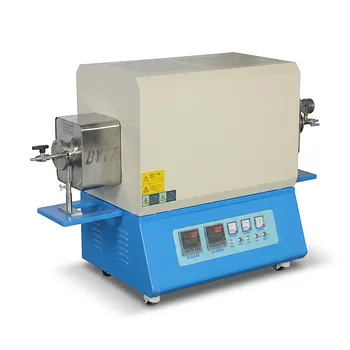
High Temperature Dual Zone Split Tube Furnace for Advanced Atmosphere Sintering and Vacuum CVD Applications
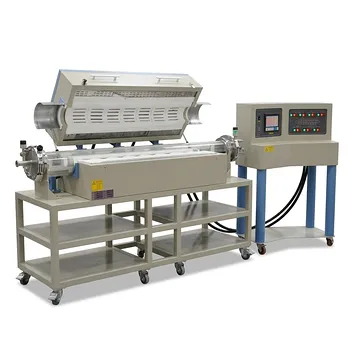
Eight Zone 1100C High Temperature Split Tube Furnace with 4 Inch OD Quartz Tube and Touch Screen Control Panel
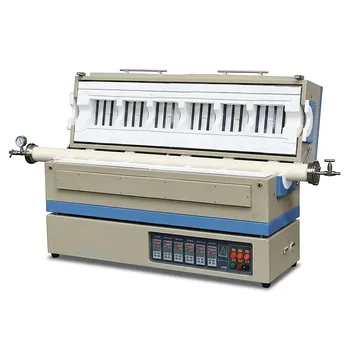
Six Zone Split Tube Furnace with Alumina Tube and Vacuum Flanges for 1500C High Temperature Thermal Processing and CVD
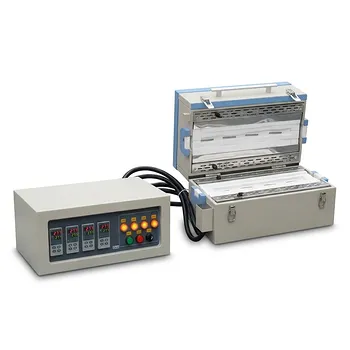
Four Zone 1200C Multi Zone Split Tube Furnace with Independent Digital Temperature Controllers for One or Two Inch Processing Tubes
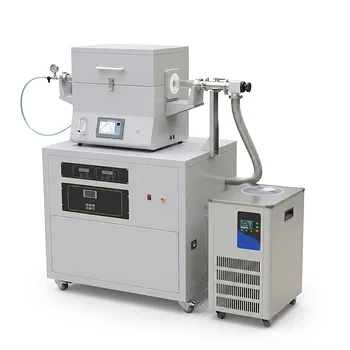
Split Chamber CVD Tube Furnace with Vacuum Station Chemical Vapor Deposition System Machine
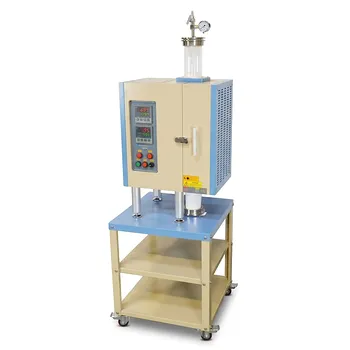
1100°C Dual Zone Split Vertical Tube Furnace with 4 Inch Quartz Tube and Vacuum Sealing Flanges
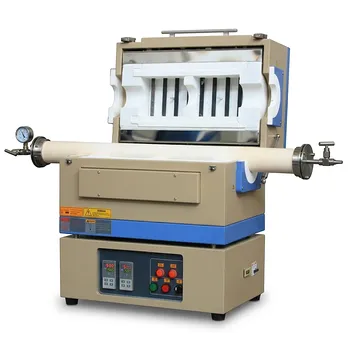
1500C Two Zone Split Tube Furnace with Vacuum Flange and 80mm Alumina Tube
Two Zone Rotary Tube Furnace for Powder CVD Coating and Core Shell Material Synthesis 1100C
Dual Zone Tube Furnace 1100C with 11 Inch Quartz Tube and Vacuum Flanges for 8 Inch Wafer Processing
High Temperature 1700C Dual Zone Tube Furnace for Material Science and Industrial Chemical Vapor Deposition Research
5 Inch Three Zone Rotary Tube Furnace with Integrated Gas Delivery System and 1200C Capability for Advanced Material CVD Processing
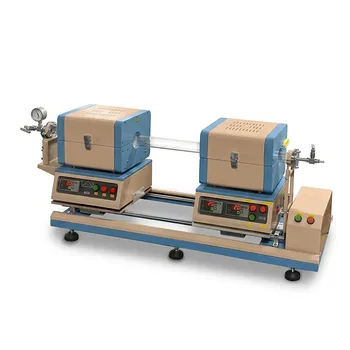
High Temperature 1200C Automatic Sliding Dual Zone Tube Furnace for 2D Transition Metal Dichalcogenides Growth and Material Sublimation Research
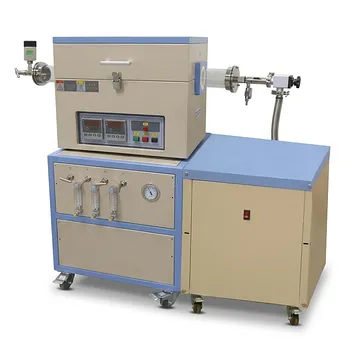
Dual Zone Quartz Tube Furnace with 80mm Diameter 1200C Max Temperature 3 Channel Gas Mixer and Vacuum Pump System
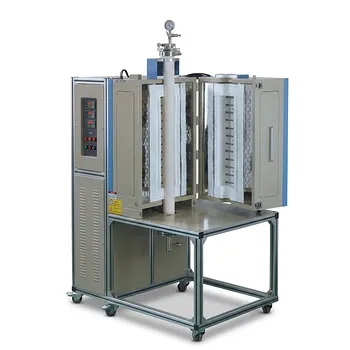
Three Zone Heating Split Vertical Tube Furnace 1700 High Temperature Vacuum Atmosphere Thermal Process System
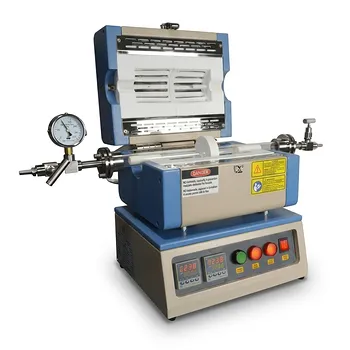
Dual Heating Zone 1200C Compact Split Tube Furnace with Optional 1" - 2" Tube and Vacuum Flanges
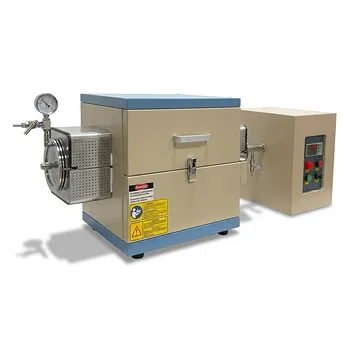
1200C High Temperature 5 Inch Split Vacuum Tube Furnace with 12 Inch Heating Zone and Separated PID Controller
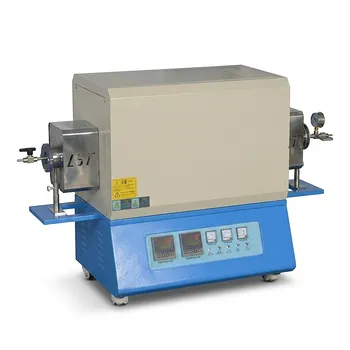
High Temperature Dual Zone Vacuum Tube Furnace for Material Research and CVD Processing
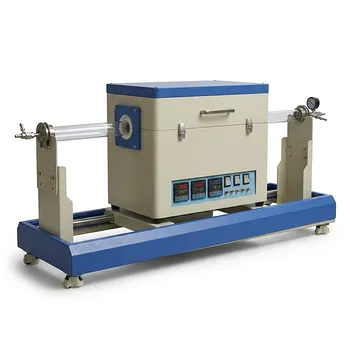
Double Temperature Zone Double Cover Tube Furnace for High Temperature CVD and Vacuum Annealing
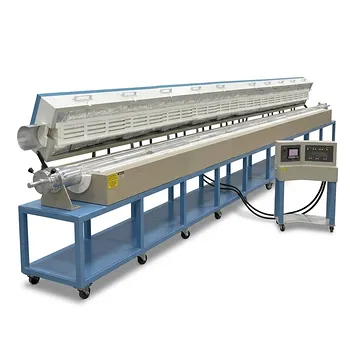
12 Zone Ultra Long Split Tube Furnace with 20 Foot Quartz Tube and 1100C Max Temperature