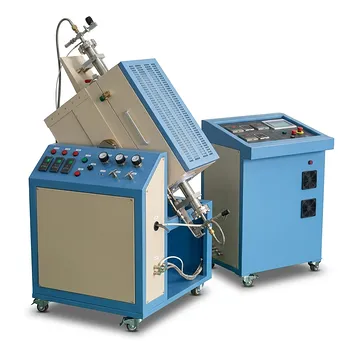
How does a high-temperature tube furnace facilitate MOF-derived Co3O4 synthesis? Precision Control for Advanced Materials
Updated 3 months ago
A high-temperature tube furnace acts as the primary reactor for the controlled structural evolution of Metal-Organic Frameworks (MOFs). It facilitates the precise thermal decomposition of organic ligands while simultaneously regulating the oxidation state of cobalt through rigid atmospheric control. This dual-action environment ensures the transition from a porous MOF precursor to a high-performance $\text{Co}_3\text{O}_4$ material with specific crystallinity, morphology, and defect densities.
The core utility of the tube furnace lies in its ability to decouple thermal energy from chemical reactivity. By providing a sealed, stable thermal field and a tunable gas environment, the furnace allows researchers to dictate whether the MOF precursor becomes a carbon-encapsulated metal, a defective oxide, or a pure spinel crystal.
Atmospheric Control and Phase Regulation
Inert Atmospheres for Carbonization
The tube furnace provides a sealed environment to maintain high-purity Argon (Ar) or other inert gases, which is essential for carbonization. This oxygen-free setting prevents the combustion of the organic framework, instead converting it into a carbon-encapsulated structure that enhances electrical conductivity.
Oxidizing Atmospheres for $\text{Co}_3\text{O}_4$ Synthesis
When the goal is the formation of spinel-type $\text{Co}_3\text{O}_4$, the furnace manages the introduction of oxygen or air to trigger thermal oxidation. This process transforms the MOF into highly reactive nanosheet arrays or cubic crystals while preserving the original morphological "template" of the precursor.
Complex Multi-Level Heterostructures
Advanced synthesis requires the introduction of specialized gas mixtures, such as $\text{H}_2/\text{Ar}$, to facilitate reduction and nitridation. The furnace enables the in-situ reorganization of materials into multi-level heterostructures, combining metallic cobalt, cobalt oxides ($\text{CoO}$), and nitrides for enhanced catalytic activity.
Thermal Precision and Structural Integrity
Managing Temperature Gradients and Ramp Rates
The furnace allows for precise heating rates (e.g., $2^\circ\text{C/min}$) which prevent structural collapse during the decomposition of organic components. Controlled ramp rates ensure a "topological transformation," allowing the material to maintain its shape while shifting from a MOF to an oxide.
Removal of Functional Groups and Volatiles
High-temperature calcination—often between $400^\circ\text{C}$ and $600^\circ\text{C}$—is used to drive off hydroxyl groups and other volatile functional groups. This solid-phase reaction is critical for achieving high phase purity and determining the final grain size of the nanoparticles.
Influence on Crystallinity and Grain Size
The stability of the thermal field directly dictates the crystallization degree and magnetic properties of the $\text{Co}_3\text{O}_4$ product. Precise temperature control allows for the regulation of grain growth, typically yielding particles in the 15 to 24 nm range.
Engineering Surface Defects and Vacancies
Preservation of Oxygen Vacancies ($\text{O}_\text{v}$)
By operating under a strictly controlled Argon atmosphere, the tube furnace prevents "deep oxidation" of the cobalt. This limitation is strategic, as it helps preserve oxygen vacancy structures, which serve as active sites for electrochemical reactions and ion adsorption.
Quantitative Oxygen Diffusion
The furnace enables the precise setting of low-temperature conditions (e.g., $200^\circ\text{C}$) to regulate the diffusion of oxygen molecules into the nanoparticle lattice. This allows for the steady growth of a $\text{Co}_3\text{O}_4$ shell, resulting in sophisticated core-shell intermediates with specific oxidation degrees.
Valence State Distribution
The excellent sealing of a tube furnace ensures a stable environment for regulating the valence state distribution of cobalt ions. This is a critical factor in optimizing the material for applications like the Hydrogen Evolution Reaction (HER) or heavy metal ion adsorption.
Critical Trade-offs in Thermal Processing
Porosity vs. Crystallinity
Higher temperatures generally improve crystallinity and phase purity but often lead to the collapse of the MOF’s inherent microporosity. Achieving the right balance requires a trade-off between the high surface area of the precursor and the structural stability of the final oxide.
Atmospheric Purity vs. Throughput
Maintaining a strictly inert atmosphere in a tube furnace is slower and more resource-intensive than using a standard muffle furnace in air. However, any oxygen leakage can lead to unintended carbon burnout or the loss of critical oxygen vacancies, compromising the material's performance.
Heating Rate vs. Structural Stress
Rapid heating can increase throughput but often introduces internal stresses that cause the fragmentation of nanosheet arrays. Slow ramp rates preserve the "nanowall" structure but significantly extend the synthesis timeline and energy consumption.
Applying Thermal Control to Your Project
To achieve the best results with MOF-derived materials, your furnace settings must align with your specific material goals.
- If your primary focus is high electrical conductivity: Use a strictly inert Argon atmosphere at temperatures above $500^\circ\text{C}$ to facilitate carbonization and metal encapsulation.
- If your primary focus is catalytic activity via defects: Utilize a tube furnace to precisely limit oxygen exposure, thereby maximizing the density of oxygen vacancies ($\text{O}_\text{v}$).
- If your primary focus is phase purity and crystallinity: Opt for a controlled oxidation environment (air) with a slow ramp rate to ensure the complete transformation into the spinel $\text{Co}_3\text{O}_4$ phase.
- If your primary focus is morphological preservation: Use low-temperature calcination and very slow heating rates to prevent the collapse of the delicate MOF-derived nanosheet structures.
Mastering the intersection of atmospheric chemistry and thermal gradients within the tube furnace is the definitive factor in transforming a MOF precursor into a functional cobalt oxide catalyst.
Summary Table:
| Process/Feature | Technical Function | Material Impact |
|---|---|---|
| Inert Atmosphere (Ar) | Prevents organic ligand combustion | Creates carbon-encapsulated structures for conductivity |
| Oxidizing Environment | Triggers controlled thermal oxidation | Forms spinel-type $Co_3O_4$ nanosheet arrays |
| Precise Ramp Rates | Manages structural decomposition stress | Preserves delicate morphological templates and "nanowalls" |
| Vacuum/Sealing | Regulates oxygen diffusion & valence states | Preserves oxygen vacancies ($O_v$) for catalytic activity |
| Thermal Stability | Dictates nanoparticle grain growth | Ensures uniform crystallinity (typically 15-24 nm range) |
Elevate Your Material Research with THERMUNITS Precision
As a leading manufacturer of high-temperature laboratory equipment for material science and industrial R&D, THERMUNITS provides the thermal precision necessary for sophisticated synthesis like MOF-derived $Co_3O_4$ catalysts. Our high-performance tube furnaces offer the stable thermal fields and rigorous atmospheric control required to master carbonization, calcination, and defect engineering.
Our Comprehensive Thermal Solutions Include:
- Furnaces: Tube, Muffle, Vacuum, Atmosphere, Rotary, Hot Press, and Dental Furnaces.
- Advanced Systems: CVD/PECVD systems and Vacuum Induction Melting (VIM) furnaces.
- Components: High-quality Thermal Elements and custom laboratory heat treatment equipment.
Whether you are focusing on electrochemical catalytic activity or high-conductivity energy storage materials, we have the expertise to support your workflow. Contact our technical team today to discuss your specific requirements and discover how our equipment can enhance your lab's efficiency!
References
- Jieli Guo, Hao Li. Development of MOF-derived Co3O4 microspheres composed of fiber stacks for simultaneous electrochemical detection of Pb2+ and Cu2+. DOI: 10.1007/s00604-024-06623-7
Mentioned Products
- High Temperature Tube Furnace 1500C with Sliding Flanges and 50mm OD for Rapid Thermal Processing Fast Heating and Cooling
- High Temperature 1700C Tube Furnace with High Vacuum Turbomolecular Pump System and Multi Channel Mass Flow Controller Gas Mixer
- 1750°C High Temperature Benchtop Vacuum Atmosphere Tube Furnace with Kanthal Super 1800 Heating Elements and 60mm Alumina Processing Tube
- High Temperature 1700C Benchtop Tube Furnace with 5 Inch Heating Zone High Purity Alumina Tube and Vacuum Sealing Flanges
- High Temperature Split Tube Furnace 1500C for Material Research Vacuum and Atmosphere Thermal Processing
People Also Ask
- How are high-temperature tube furnaces utilized to repair etching damage? Precision Lattice Restoration Solutions
- What core conditions does a high-temperature tube furnace provide for rGO aerogels? Mastering Precision Synthesis.
- What role does a high-temperature tube furnace play in CVD synthesis of silicon nanowires? Master VLS Growth Precision.
- How does precision tube furnace control influence CoFe nanoparticle formation? Master Your Bimetallic Synthesis.
- What role does a high-temperature tube furnace play in the sulfidation heat treatment of CoS@C/MXene nanocomposites? Guide

Tech Team · ThermUnits
Last updated on Jun 03, 2026
Related Products

High Temperature Tube Furnace 1500C with Sliding Flanges and 50mm OD for Rapid Thermal Processing Fast Heating and Cooling

High Temperature 1700C Tube Furnace with High Vacuum Turbomolecular Pump System and Multi Channel Mass Flow Controller Gas Mixer
1750°C High Temperature Benchtop Vacuum Atmosphere Tube Furnace with Kanthal Super 1800 Heating Elements and 60mm Alumina Processing Tube

High Temperature 1700C Benchtop Tube Furnace with 5 Inch Heating Zone High Purity Alumina Tube and Vacuum Sealing Flanges
High Temperature Split Tube Furnace 1500C for Material Research Vacuum and Atmosphere Thermal Processing
1700C High Temperature Alumina Tube Furnace with 18 Inch Heated Zone and Vacuum Sealing Flanges

1800C High Temperature Compact Vacuum Tube Furnace with 60mm OD Alumina Tube and Kanthal MoSi2 Heating Elements

Compact High Temperature 1600C Tube Furnace with 50mm Alumina Tube and Vacuum Flanges for Material Sintering
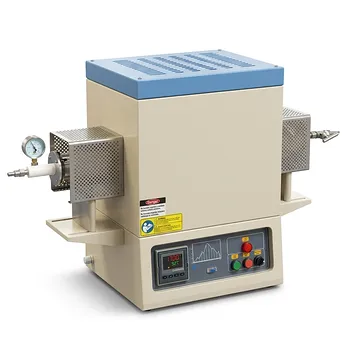
High Temperature Three Zone Tube Furnace 1700C with Alumina Tube and Water Cooled Flanges
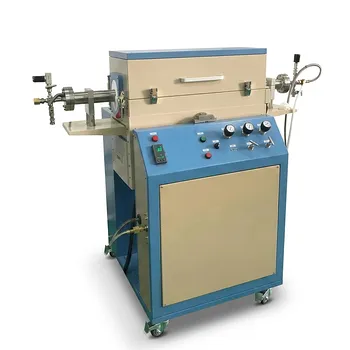
High Temperature Rocking Tube Furnace 1700°C Alumina Processing Tube with Precision Oscillation for Material Synthesis
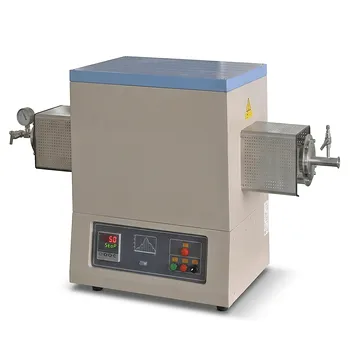
High Temperature 1700C Tube Furnace with 4 Inch OD Alumina Tube and Vacuum Sealing Flanges

High Temperature 1700C Vertical Tube Furnace for Powder Spherification and Material Sintering
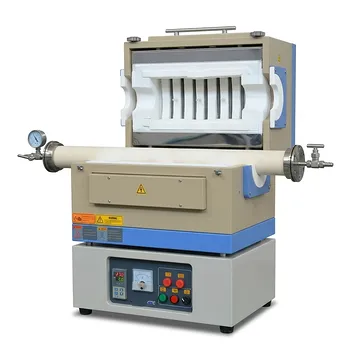
High Temperature 1600C Split Tube Furnace Vacuum Flanges Valves Optional 60mm 80mm Alumina Tube

High Temperature Automated 5 Inch Tube Furnace for Autonomous Material Research and Advanced Laboratory R&D

High Temperature 1700C Six Zone Split Tube Furnace with Alumina Tube and Water Cooled Flanges
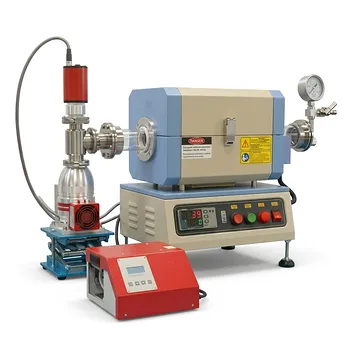
High Vacuum Compact Tube Furnace 1200C with Integrated Turbo Pump System and 8 Inch Heating Zone
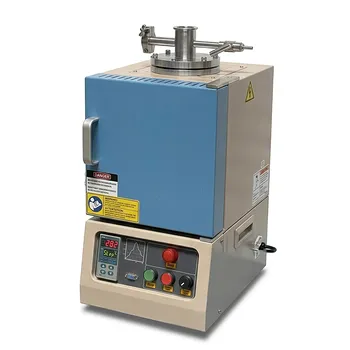
High Temperature Hybrid Muffle and Tube Furnace with Vacuum Capability and PID Control
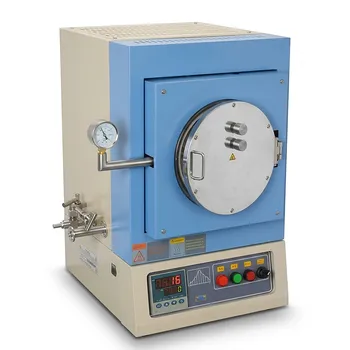
1100°C High Temperature Quartz Chamber Furnace 8 Inch OD with 7.6 Liter Capacity and Vacuum Atmosphere Capability
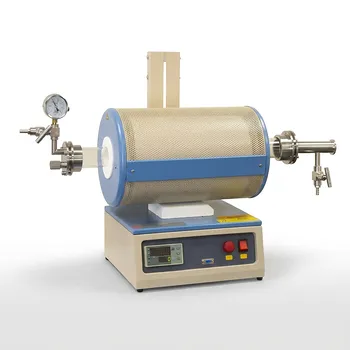
1100C Tube Furnace with Vacuum Flange and Programmable Temperature Controller for Material Science and Industrial Heat Treatment