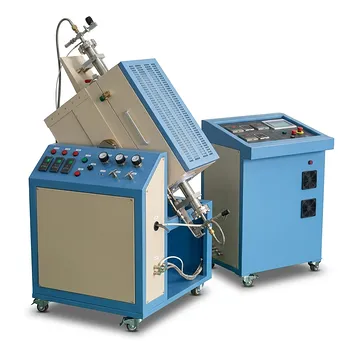
Why is a high-temperature tube furnace used for 500-hour aging tests? Ensure Long-Term Material Stability
Updated 3 months ago
The high-temperature tube furnace is the essential instrument for this aging test because it provides a continuous, stable, and controllable thermal environment required to simulate extreme industrial service conditions. By subjecting high-entropy ceramics to 1200°C for 500 hours, researchers can quantitatively evaluate the material's electrical stability—specifically its relative resistance drift ($\Delta R/R_0$)—to prove that high-entropy strategies effectively suppress structural disordering over long durations.
Core Takeaway: A high-temperature tube furnace validates the long-term industrial viability of high-entropy ceramics by providing the precise thermal stress needed to measure resistance stability and confirm that increased configurational entropy prevents lattice degradation.
Simulating Long-Term Industrial Service
Emulating Extreme Working Conditions
Industrial-grade tube furnaces are designed to maintain high temperatures for hundreds of hours, mirroring environments like reactor cores or gas turbines. This long-term thermal exposure is necessary to observe slow-acting degradation trends that would not be visible in short-term experiments.
Precise Atmosphere and Temperature Control
The sealed design of a tube furnace allows for operation in static air or specific atmospheres, such as argon or oxidizing environments. This precision ensures that the test environment remains constant, minimizing fluctuations that could lead to experimental errors in the material's performance data.
Accelerating Thermal Stress
By maintaining a constant 1200°C, the furnace provides the thermal activation energy required to test the limits of the material. This reveals how the ceramic handles continuous thermal stress and whether it can maintain its structural integrity without significant oxidation or phase separation.
Validating the High-Entropy Strategy
Suppressing Anion Sublattice Disorder
The 500-hour test specifically proves that high-entropy strategies—which increase configurational entropy—effectively inhibit the disordering of the anion sublattice. The tube furnace provides the stable environment needed to confirm that this atomic-level stability translates to macro-level performance.
Reducing Resistance Drift
A critical metric for these ceramics is the relative resistance drift rate, which can be as low as 0.83% after aging. The furnace allows for the quantitative evaluation of this drift, proving the material’s potential for high-precision electrical applications in extreme environments.
Pre-releasing Lattice Strain
High-temperature exposure during aging or pre-firing helps in pre-releasing internal lattice strain and promoting initial solid-state reactions. This results in a purer phase structure and higher density, which are vital for the durability of high-entropy pyrochlore ceramics.
Understanding the Trade-offs and Pitfalls
Risk of Cross-Contamination
In long-term tests, residual carbon deposits, tar, or soot from previous experiments can contaminate the sample. This requires a self-purification process, where the furnace is heated to high temperatures (e.g., 900°C) in an oxidizing atmosphere to clean the tube walls before a new test begins.
Balancing Uniformity and Duration
While tube furnaces offer excellent thermal uniformity, maintaining this over 500 hours requires high-quality heating elements and robust control systems. Any failure in the heating cycle can reset the aging process, as the diffusion kinetics and crystal nucleus formation are highly dependent on continuous heat.
Mechanical vs. Electrical Degradation
While the primary focus is often electrical stability, long-term aging can also reveal thermal expansion issues or the formation of micro-cracks. A failure to monitor both mechanical and electrical properties can lead to an incomplete understanding of how the material will behave in a real-world reactor or turbine.
How to Apply These Findings to Your Project
Making the Right Choice for Your Goal
- If your primary focus is electrical precision: Use the furnace to measure the resistance drift rate over at least 500 hours to ensure the material meets industrial stability standards.
- If your primary focus is structural integrity: Utilize the high-temperature environment to evaluate if the high-entropy phase remains a single-phase structure without dealloying or phase separation.
- If your primary focus is manufacturing scalability: Perform pre-firing at 1200°C to reduce volume shrinkage and ensure a high-density final product with minimal internal strain.
The high-temperature tube furnace serves as the definitive proving ground for ensuring that high-entropy ceramics can withstand the rigors of long-term industrial application.
Summary Table:
| Test Parameter | Role in 500h Aging Test | Key Material Benefit |
|---|---|---|
| 1200°C Constant Heat | Simulates extreme service conditions | Accelerates thermal stress validation |
| 500-Hour Duration | Evaluates long-term durability | Measures precise relative resistance drift |
| Atmosphere Control | Prevents sample contamination | Ensures phase purity and structural integrity |
| High-Entropy Strategy | Increases configurational entropy | Suppresses structural and lattice disorder |
Achieve Unmatched Precision with THERMUNITS
High-entropy ceramic testing demands absolute thermal stability. As a leading manufacturer of high-temperature laboratory equipment, THERMUNITS offers a comprehensive range of thermal processing solutions—including Tube, Muffle, Vacuum, Atmosphere, and Hot Press furnaces—engineered for demanding 500+ hour industrial R&D cycles. Our advanced CVD/PECVD systems and Rotary kilns provide the precise control needed to validate material performance in extreme environments.
Ready to optimize your heat treatment workflow? Contact us today to find the perfect solution for your research!
References
- Yi‐An Chen, Bo Gao. High-Entropy Thermistor Ceramics (La1/3Nd1/3M1/3)2(Zr1/2Sn1/2)2O7 (M = Sm, Eu, Gd, or Dy) with High Sensitivity for High-Temperature Measurements. DOI: 10.3390/s24237523
Mentioned Products
- High Temperature Tube Furnace 1500C with Sliding Flanges and 50mm OD for Rapid Thermal Processing Fast Heating and Cooling
- High Temperature 1700C Tube Furnace with High Vacuum Turbomolecular Pump System and Multi Channel Mass Flow Controller Gas Mixer
- 1750°C High Temperature Benchtop Vacuum Atmosphere Tube Furnace with Kanthal Super 1800 Heating Elements and 60mm Alumina Processing Tube
- High Temperature 1700C Benchtop Tube Furnace with 5 Inch Heating Zone High Purity Alumina Tube and Vacuum Sealing Flanges
- High Temperature Split Tube Furnace 1500C for Material Research Vacuum and Atmosphere Thermal Processing
People Also Ask
- How are high-temperature tube furnaces utilized to repair etching damage? Precision Lattice Restoration Solutions
- What core conditions does a high-temperature tube furnace provide for rGO aerogels? Mastering Precision Synthesis.
- What role does a high-temperature tube furnace play in CVD synthesis of silicon nanowires? Master VLS Growth Precision.
- How does precision tube furnace control influence CoFe nanoparticle formation? Master Your Bimetallic Synthesis.
- What role does a high-temperature tube furnace play in the sulfidation heat treatment of CoS@C/MXene nanocomposites? Guide

Tech Team · ThermUnits
Last updated on Jun 02, 2026
Related Products

High Temperature Tube Furnace 1500C with Sliding Flanges and 50mm OD for Rapid Thermal Processing Fast Heating and Cooling

High Temperature 1700C Tube Furnace with High Vacuum Turbomolecular Pump System and Multi Channel Mass Flow Controller Gas Mixer
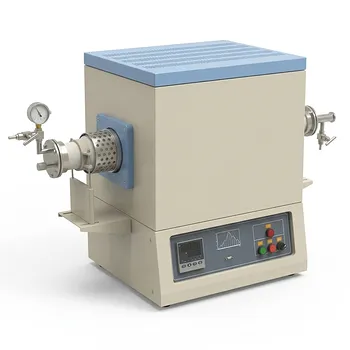
1750°C High Temperature Benchtop Vacuum Atmosphere Tube Furnace with Kanthal Super 1800 Heating Elements and 60mm Alumina Processing Tube

High Temperature 1700C Benchtop Tube Furnace with 5 Inch Heating Zone High Purity Alumina Tube and Vacuum Sealing Flanges
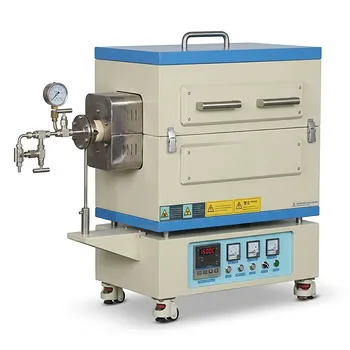
High Temperature Split Tube Furnace 1500C for Material Research Vacuum and Atmosphere Thermal Processing
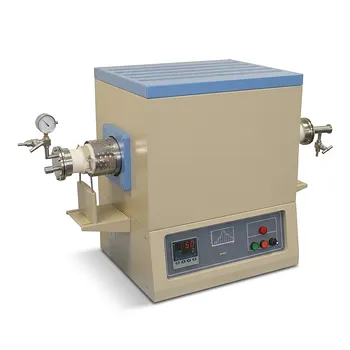
1700C High Temperature Alumina Tube Furnace with 18 Inch Heated Zone and Vacuum Sealing Flanges

Compact High Temperature 1600C Tube Furnace with 50mm Alumina Tube and Vacuum Flanges for Material Sintering

1800C High Temperature Compact Vacuum Tube Furnace with 60mm OD Alumina Tube and Kanthal MoSi2 Heating Elements
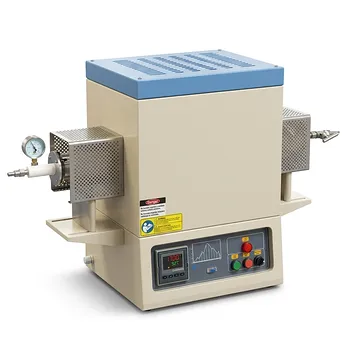
High Temperature Three Zone Tube Furnace 1700C with Alumina Tube and Water Cooled Flanges
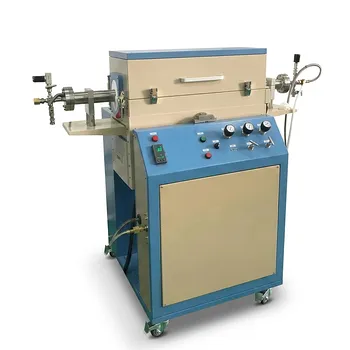
High Temperature Rocking Tube Furnace 1700°C Alumina Processing Tube with Precision Oscillation for Material Synthesis
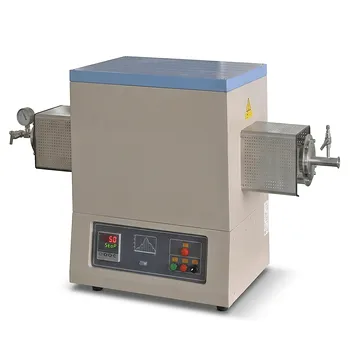
High Temperature 1700C Tube Furnace with 4 Inch OD Alumina Tube and Vacuum Sealing Flanges

High Temperature 1700C Vertical Tube Furnace for Powder Spherification and Material Sintering
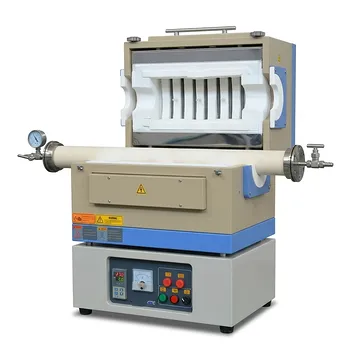
High Temperature 1600C Split Tube Furnace Vacuum Flanges Valves Optional 60mm 80mm Alumina Tube

High Temperature Automated 5 Inch Tube Furnace for Autonomous Material Research and Advanced Laboratory R&D

High Temperature 1700C Six Zone Split Tube Furnace with Alumina Tube and Water Cooled Flanges
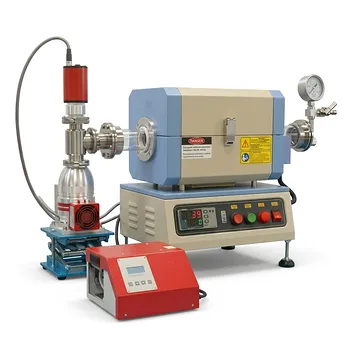
High Vacuum Compact Tube Furnace 1200C with Integrated Turbo Pump System and 8 Inch Heating Zone
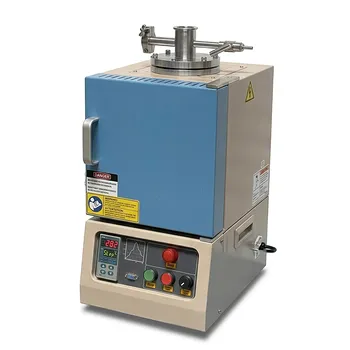
High Temperature Hybrid Muffle and Tube Furnace with Vacuum Capability and PID Control
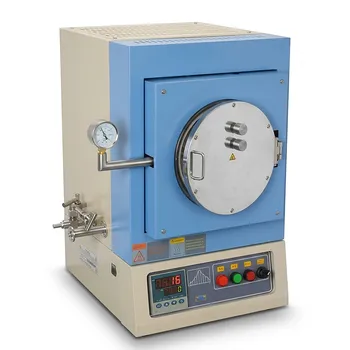
1100°C High Temperature Quartz Chamber Furnace 8 Inch OD with 7.6 Liter Capacity and Vacuum Atmosphere Capability

1100C Tube Furnace with Vacuum Flange and Programmable Temperature Controller for Material Science and Industrial Heat Treatment