Why is a CVD horizontal tube furnace required for 673 K heating? Ensure Fe–Ni/AC Catalyst Purity & Activation.
Updated 3 months ago
The CVD horizontal tube furnace is the indispensable tool for the 673 K activation of Fe–Ni/AC catalysts because it facilitates the precise removal of chemical impurities. Specifically, this thermal treatment eliminates residual nitrates and environmental humidity that would otherwise inhibit catalytic performance. By providing a stable, controlled environment, the furnace ensures that Fe–Ni active sites are fully exposed and purified for the subsequent growth of carbon nanotubes.
The 673 K heat treatment in a horizontal tube furnace acts as a critical purification and activation phase, transforming the precursor-loaded activated carbon into a functional catalyst. This step is essential for removing volatile contaminants and stabilizing the metal-support interface to ensure reliable catalytic activity.
The Role of Thermal Purification at 673 K
Elimination of Residual Nitrates and Moisture
During the preparation of Fe–Ni/AC catalysts, precursor salts like nitrates are often used. The 673 K (approximately 400 °C) thermal environment in the furnace is necessary to decompose these residual nitrates and drive off environmental humidity.
If these impurities remain, they can lead to unwanted side reactions or block the active pores of the activated carbon support. The horizontal tube design ensures that these gaseous byproducts are efficiently swept away from the sample by a continuous gas flow.
Activation of Catalytic Active Sites
The heat treatment at 673 K is the point where the catalyst transitions from a mixture of chemicals into a structured material. This temperature is sufficient to begin the activation of catalytic sites, ensuring the iron (Fe) and nickel (Ni) species are correctly positioned on the activated carbon (AC).
A stable thermal field is required to promote the initial bonding between the metal atoms and the carbon support. Without the precise temperature control offered by a CVD furnace, the active sites might not distribute uniformly, leading to poor performance.
Enhancing Catalyst Stability and Purity
Preparing the Surface for Carbon Nanotube Growth
The primary goal of activating the Fe–Ni/AC catalyst is often the subsequent growth of carbon nanotubes (CNTs). The 673 K treatment ensures the purity of the catalyst surface, which is vital because even trace contaminants can poison the catalyst during the CNT synthesis stage.
By "cleaning" the surface at this intermediate temperature, the furnace prepares the metal particles to act as nucleation points. This results in more consistent growth and higher-quality carbon structures.
Atmospheric Control for Metal Dispersion
A CVD horizontal tube furnace allows for the introduction of specific gases, such as nitrogen or argon, to create a protective atmosphere. This prevents the iron and nickel from oxidizing prematurely or agglomerating into large, inactive clumps.
High-precision control of the heating rate within the tube furnace is also essential. Gradual heating prevents the sudden release of vapors that could physically disrupt the delicate microporous and mesoporous structures of the activated carbon.
Understanding the Trade-offs
While horizontal tube furnaces are excellent for uniform heating of thin layers of catalyst, they have limitations. Unlike vertical tube furnaces, which allow gas to pass directly through a sample bed, horizontal furnaces rely on gas flowing over the surface of the material.
If the catalyst bed is too deep, the "shadow effect" may occur, where the bottom layers of the catalyst are not as effectively purified as the top layers. Furthermore, while 673 K is effective for removing nitrates, it may not be high enough to fully reduce metal oxides to their metallic state (Fe0), which often requires temperatures closer to 800 °C in a hydrogen atmosphere.
How to Apply This to Your Project
Recommendations for Catalyst Activation
- If your primary focus is maximizing purity: Ensure a high flow rate of inert gas during the 673 K hold to quickly remove decomposed nitrate vapors.
- If your primary focus is uniform active sites: Utilize a slow heating ramp (e.g., 2-5 °C/min) to prevent metal particle agglomeration during the activation phase.
- If your primary focus is subsequent CNT growth: Ensure the furnace tube is thoroughly cleaned between runs to prevent cross-contamination that could alter the growth morphology.
By mastering the controlled thermal environment of the tube furnace, you ensure the Fe–Ni/AC catalyst reaches its full potential for high-precision chemical synthesis.
Summary Table:
| Feature of Treatment | Function at 673 K | Impact on Fe–Ni/AC Catalyst |
|---|---|---|
| Thermal Purification | Decomposes nitrates & removes moisture | Prevents pore blocking and side reactions |
| Atmospheric Control | Provides inert gas (Ar/N2) environment | Prevents premature metal oxidation |
| Precise Heating Rate | Controlled ramp (2-5 °C/min) | Prevents metal particle agglomeration |
| Stable Thermal Field | Uniform heat distribution | Ensures consistent activation of active sites |
Elevate Your Advanced Material Research with THERMUNITS
Precision is the foundation of successful catalyst activation. THERMUNITS is a leading manufacturer of high-temperature laboratory equipment, providing the specialized thermal solutions required for material science and industrial R&D.
Our high-performance CVD/PECVD systems and Tube Furnaces (including Horizontal, Rotary, and Vacuum models) are engineered to deliver the exact 673 K stability and atmospheric purity your Fe–Ni/AC projects demand. Beyond tube furnaces, we offer a comprehensive range of Muffle, Atmosphere, Vacuum, and Hot Press furnaces, as well as Electric Rotary Kilns and Thermal Elements to support every stage of your heat treatment process.
Ready to optimize your lab’s thermal processing? Contact our technical experts today to request a quote!
References
- Zohreh Khoshraftar, Alireza Hemmati. Comprehensive investigation of isotherm, RSM, and ANN modeling of CO2 capture by multi-walled carbon nanotube. DOI: 10.1038/s41598-024-55836-6
Mentioned Products
- Vertical Openable Tube Furnace 0-1700c High Temperature Laboratory System for CVD and Vacuum Heat Treatment
- 5 Inch Three Zone Rotary Tube Furnace with Integrated Gas Delivery System and 1200C Capability for Advanced Material CVD Processing
- 1200C Max Dual Sliding Tube Furnace with 50 mm Tube Flanges for CVD
- 1200C Sliding Tube Furnace for Rapid Thermal Processing and CVD Graphene Growth with 100mm OD Capacity
- 1200°C High Temperature 4 Inch Tube Furnace with Sliding Flange for CVD Systems
People Also Ask
- Why is a Tube Furnace typically utilized for CVD? Achieve Precision in Graphene and 2D Material Synthesis
- What role does a high-temperature vertical tube furnace play in simulating high-carbon ferromanganese slag formation?
- What functions does a vertical high-temperature tube furnace perform? Master Industrial Sintering & R&D Simulation
- Why is a thermocouple sensor indispensable for monitoring the vertical tube furnace during gallium oxide nanowire production? Optimize VLS Growth
- How does a vertical tube furnace facilitate thermoelectric alloy melting? Precision synthesis for material homogeneity.

Tech Team · ThermUnits
Last updated on Jun 03, 2026
Related Products
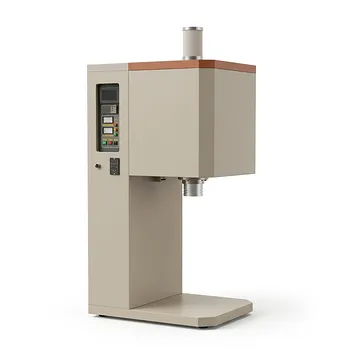
Vertical Openable Tube Furnace 0-1700c High Temperature Laboratory System for CVD and Vacuum Heat Treatment
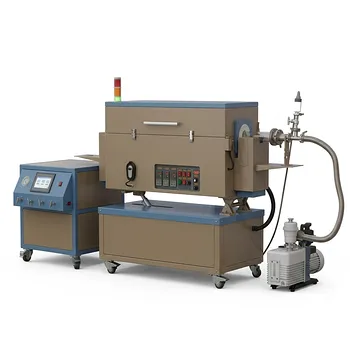
5 Inch Three Zone Rotary Tube Furnace with Integrated Gas Delivery System and 1200C Capability for Advanced Material CVD Processing
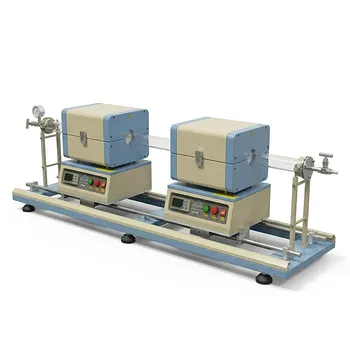
1200C Max Dual Sliding Tube Furnace with 50 mm Tube Flanges for CVD
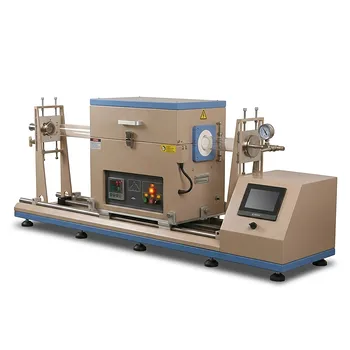
1200C Sliding Tube Furnace for Rapid Thermal Processing and CVD Graphene Growth with 100mm OD Capacity
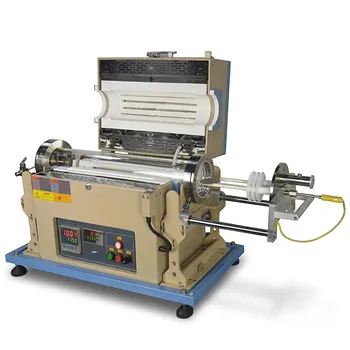
1200°C High Temperature 4 Inch Tube Furnace with Sliding Flange for CVD Systems
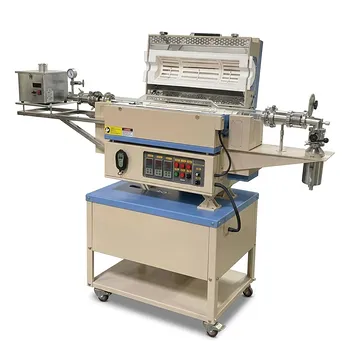
5 Inch Rotary Tube Furnace with Automatic Feeding and Receiving System 1200C Three Zone CVD Powder Processing
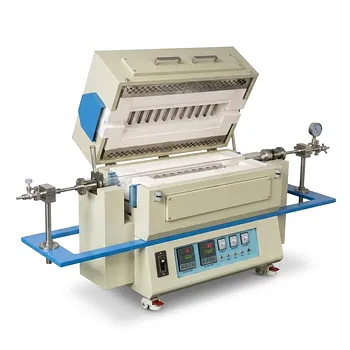
High Temperature Dual Zone Rotating Tube Furnace 1500C Silicon Carbide Heating for Advanced Material Synthesis
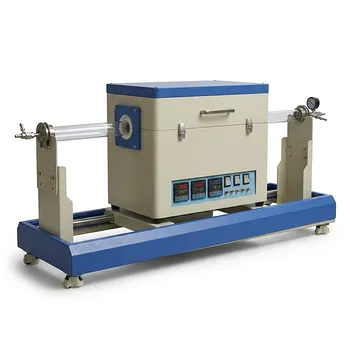
Double Temperature Zone Double Cover Tube Furnace for High Temperature CVD and Vacuum Annealing
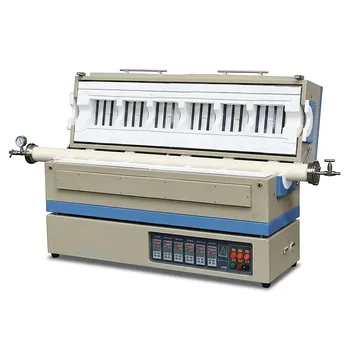
Six Zone Split Tube Furnace with Alumina Tube and Vacuum Flanges for 1500C High Temperature Thermal Processing and CVD

High Temperature 1700C Tube Furnace with High Vacuum Turbomolecular Pump System and Multi Channel Mass Flow Controller Gas Mixer
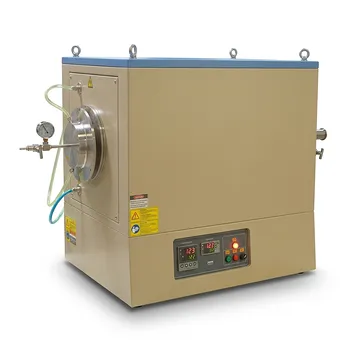
1100°C Large Diameter Quartz Tube Furnace with 24 Inch Heating Zone and Water Cooled Flanges
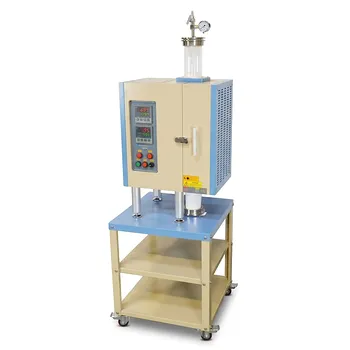
1100°C Dual Zone Split Vertical Tube Furnace with 4 Inch Quartz Tube and Vacuum Sealing Flanges
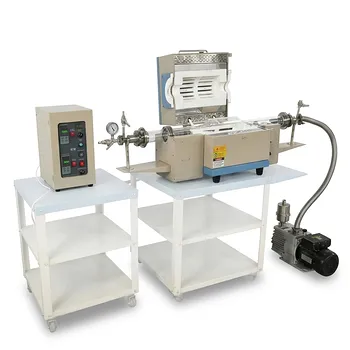
Two Zone Rotary Tube Furnace for Powder CVD Coating and Core Shell Material Synthesis 1100C
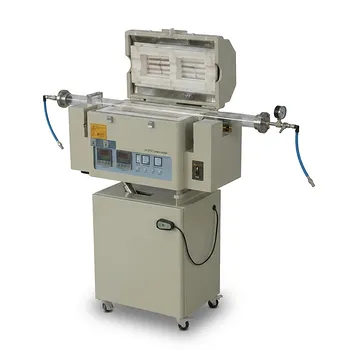
Double Temperature Revolving Tube Furnace with Precision Rotation and Adjustable Inclination for Advanced Material Research

High Temperature 1700C Benchtop Tube Furnace with 5 Inch Heating Zone High Purity Alumina Tube and Vacuum Sealing Flanges
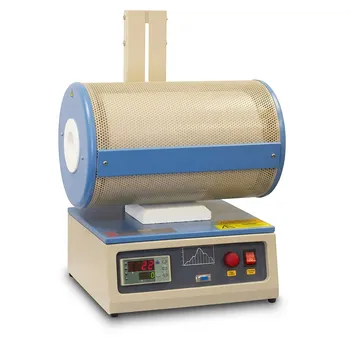
Multi Position Tube Furnace 1100C for Laboratory Material Research and Advanced Industrial Thermal Processing
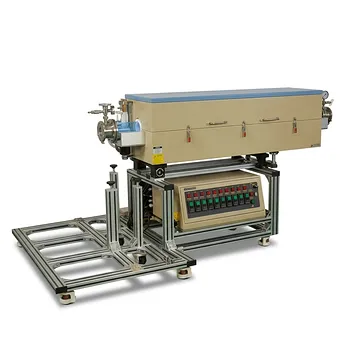
Ten Zone Multi Orientation Laboratory Tube Furnace for 1200C High Temperature Gradient Thermal Processing

Compact Vertical Split Quartz Tube Furnace with Stainless Steel Vacuum Flanges for Rapid Thermal Quenching and Controlled Atmosphere Material Processing
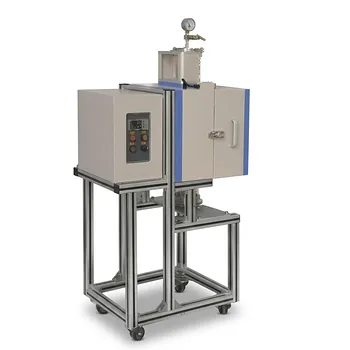
1200°C 5 Inch Vertical Quartz Tube Furnace with Stainless Steel Vacuum Flanges
