Why is a High-Precision Atmospheric Tube Furnace essential for the secondary calcination of Fe-NC catalysts? Optimize Results
Updated 3 months ago
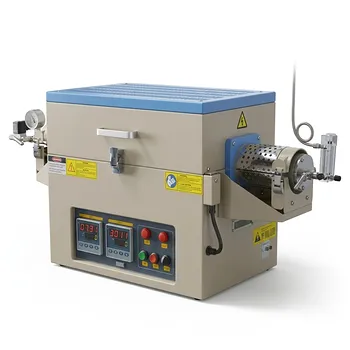
A High-Precision Atmospheric Tube Furnace is the indispensable reactor for the secondary calcination of Fe-NC catalysts. It provides the strictly controlled thermal environment—ranging from 800°C to 1,000°C—and the precise atmospheric chemistry required to transform raw precursors into active catalytic structures. Without the furnace's ability to maintain an oxygen-free, high-temperature state, the resulting material would fail to develop the Fe-Nx active sites and carbon nanotube morphologies necessary for high-performance applications.
The furnace serves as a precision chemical reactor that enables the structural evolution of precursors into nitrogen-doped carbon frameworks while simultaneously engineering the molecular-level coordination of iron atoms. It ensures that the transition from precursor to catalyst occurs without detrimental oxidation or metallic aggregation.
Facilitating Structural Evolution and Morphology
The Transformation of Carbon Precursors
During calcination, the tube furnace facilitates the structural evolution of precursors like g-C3N4 into advanced carbon structures. Under the influence of iron atoms at temperatures around 800°C, these precursors are converted into nitrogen-doped carbon nanotubes. This specific morphology is critical for providing the high surface area and electrical conductivity required for catalytic performance.
Control of Heating Rates
The furnace’s ability to provide a precise heating rate is essential for inducing specific carbon nanotube morphologies. Rapid or inconsistent heating can lead to structural defects or the collapse of the intended hollow nanorod or nanotube structures. Maintaining a stable temperature ramp ensures the uniform pyrolysis of metal-organic frameworks (MOFs) and other complex precursors.
Engineering Fe-Nx Active Coordination Sites
Formation of Single-Atom Catalytic Centers
The high-precision environment facilitates the pyrolysis reaction between the nitrogen source, iron source, and carbon matrix. This process leads to the formation of Fe-Nx coordination active sites, which are the engine of catalytic activity. The furnace allows for single-atom dispersion of iron within the nitrogen-doped carbon matrix, preventing the iron from forming inactive bulk clusters.
Regulation of Electronic Spin States
Secondary annealing within the furnace allows for the precise regulation of the electronic spin states of iron active centers. By controlling the thermal kinetics, researchers can optimize the oxygen reduction reaction (ORR) kinetics of the catalyst. This level of molecular engineering is only possible through the uniform temperature distribution provided by a high-quality tube furnace.
Maintaining Atmospheric Integrity and Purity
Prevention of Oxidation and Aggregation
A continuous flow of high-purity inert gas (such as nitrogen or argon) is required to prevent the oxidation of the carbon carrier and iron species. In the presence of even trace oxygen, iron atoms tend to aggregate into large particles, which significantly reduces the density of active sites. The furnace ensures a completely oxygen-free state during the critical 800°C–1,000°C window.
Creating Reducing Environments
In some synthesis protocols, the furnace utilizes a reducing atmosphere (such as H2/Ar) to further suppress oxidation. This environment is essential for the carbonization of the precursor and the successful construction of efficient single-atom catalytic centers. It also facilitates the formation of cyano and amino defects, which can optimize the energy band structure of the material.
Understanding the Trade-offs
Equipment Precision vs. Catalyst Quality
Using lower-precision equipment often results in temperature fluctuations that lead to non-uniform active site distribution. If the temperature is too low, the precursor will not fully transform into a conductive carbon framework; if it is too high or poorly controlled, the nitrogen-doped sites may decompose, lowering the active site density.
Atmosphere Control vs. Impurity Risk
If the furnace's atmospheric sealing is compromised, the introduction of oxygen will cause the oxidative degradation of the carbon matrix. This not only destroys the catalyst's structure but also results in the formation of iron oxides, which are far less effective for the oxygen reduction reaction than Fe-Nx sites.
How to Apply This to Your Synthesis Goal
Making the Right Choice for Your Project
To achieve the best results in Fe-NC catalyst synthesis, you must align your furnace settings with your specific structural goals.
- If your primary focus is single-atom dispersion: Use a reducing atmosphere (H2/Ar) and a stable 900°C–1,000°C environment to prevent iron aggregation.
- If your primary focus is carbon nanotube growth: Prioritize precise heating rate control at 800°C to facilitate the iron-catalyzed transformation of g-C3N4.
- If your primary focus is energy band engineering: Utilize lower-temperature atmosphere-controlled calcination (around 550°C) to induce specific cyano and amino defects.
Precision in both temperature and atmosphere is the foundation of high-performance catalyst manufacturing.
Summary Table:
| Key Feature | Role in Fe-NC Synthesis | Critical Parameter |
|---|---|---|
| Temperature Precision | Enables Fe-Nx coordination & carbon transformation | 800°C – 1,000°C |
| Atmosphere Control | Prevents oxidation & ensures single-atom dispersion | Inert (Ar/N2) / Reducing (H2) |
| Heating Rate Control | Facilitates specific carbon nanotube morphologies | Uniform ramp rates |
| Structural Integrity | Regulates electronic spin states of iron centers | Stable thermal kinetics |
Elevate Your Material Research with THERMUNITS
Achieving high-performance catalytic activity requires equipment that offers no compromise on precision. THERMUNITS is a leading manufacturer of high-temperature laboratory equipment, providing the advanced thermal processing solutions necessary for cutting-edge material science and industrial R&D.
Whether you are engineering single-atom Fe-Nx sites or developing complex carbon nanotube frameworks, our comprehensive range of equipment—including Atmospheric Tube Furnaces, Vacuum and Muffle Furnaces, CVD/PECVD systems, and Rotary Kilns—is designed to deliver the exact thermal and atmospheric conditions your research demands.
Ready to optimize your synthesis process? Contact us today to consult with our experts and discover how THERMUNITS can provide the reliable, high-precision tools your laboratory needs to succeed.
References
- Yan Wang, Jing Guo. Preparation of High-Efficiency Fe/N-Doped Carbon Catalysts Derived from Graphite Phase Carbon Nitride for Reduction of Oxygen. DOI: 10.3390/catal14040279
Mentioned Products
- Vertical 1700C Vacuum and Atmosphere Tube Furnace with 80mm Alumina Tube
- 1750°C High Temperature Benchtop Vacuum Atmosphere Tube Furnace with Kanthal Super 1800 Heating Elements and 60mm Alumina Processing Tube
- Compact Hybrid Muffle and Tube Furnace for 1000C Controlled Atmosphere Laboratory Material Sintering
- 1200C Hybrid Muffle and Tube Furnace for Material Research with Dual Atmosphere Control Quartz Tubes
- Compact Vertical Split Quartz Tube Furnace with Stainless Steel Vacuum Flanges for Rapid Thermal Quenching and Controlled Atmosphere Material Processing
People Also Ask
- How is an industrial-grade vertical tube furnace utilized in smelting leaching residues? Enhance Metal Recovery Efficiency
- What is the function of a laboratory-grade vertical tube furnace in fast pyrolysis? Optimize Composite Research.
- How does a vertical tube furnace facilitate thermoelectric alloy melting? Precision synthesis for material homogeneity.
- Why is a thermocouple sensor indispensable for monitoring the vertical tube furnace during gallium oxide nanowire production? Optimize VLS Growth
- What are the advantages of using a vertical tube furnace for crucible experiments simulating steel-slag interactions?

Tech Team · ThermUnits
Last updated on Jun 03, 2026
Related Products

Vertical 1700C Vacuum and Atmosphere Tube Furnace with 80mm Alumina Tube

1750°C High Temperature Benchtop Vacuum Atmosphere Tube Furnace with Kanthal Super 1800 Heating Elements and 60mm Alumina Processing Tube
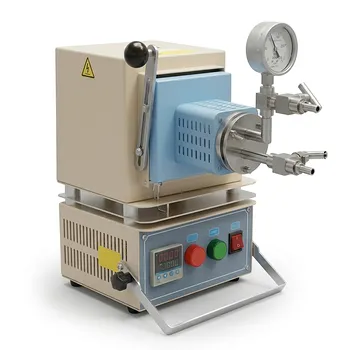
Compact Hybrid Muffle and Tube Furnace for 1000C Controlled Atmosphere Laboratory Material Sintering
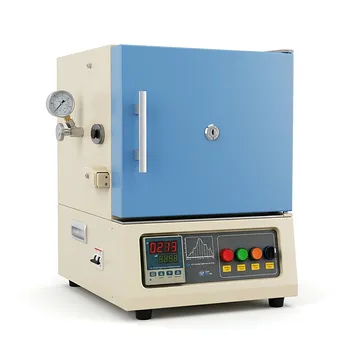
1200C Hybrid Muffle and Tube Furnace for Material Research with Dual Atmosphere Control Quartz Tubes

Compact Vertical Split Quartz Tube Furnace with Stainless Steel Vacuum Flanges for Rapid Thermal Quenching and Controlled Atmosphere Material Processing
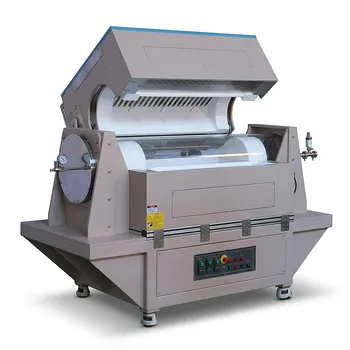
Three Zone Tube Furnace with 11 Inch or 15 Inch Quartz Tube and Hinged Flanges for Vacuum Atmosphere Heat Treatment
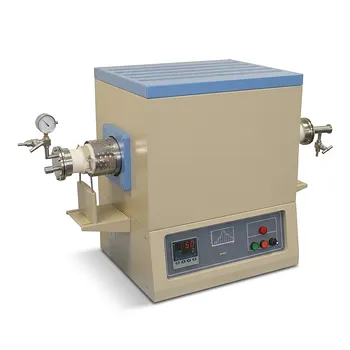
1700C High Temperature Alumina Tube Furnace with 18 Inch Heated Zone and Vacuum Sealing Flanges
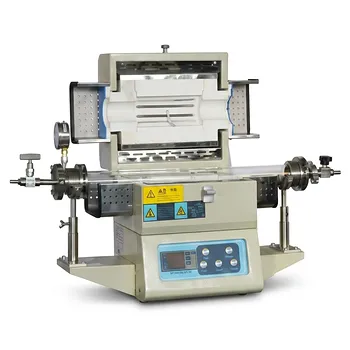
High Temperature 1200C Split Tube Furnace for CVD Research and Vacuum Atmosphere Heat Treatment
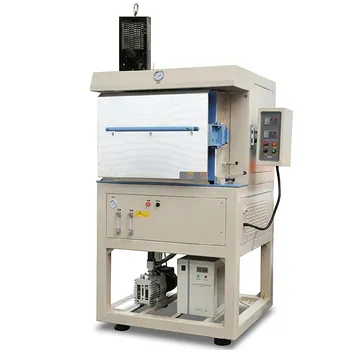
1200C Hydrogen Atmosphere Box Furnace with 5 Heated Sides and 64L Chamber
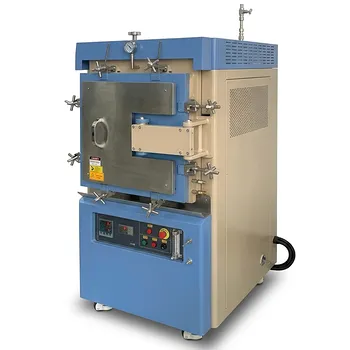
Atmosphere Controlled Muffle Furnace 1700C Maximum Temperature 80L High Capacity Vacuum Inert Gas Box Furnace
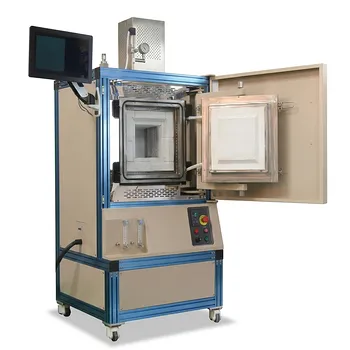
High Temperature Hydrogen Atmosphere Box Furnace 1650C Max Reducing Environment Material Synthesis System 8x8x8 Chamber

High Temperature 1700C Vertical Tube Furnace for Powder Spherification and Material Sintering

Compact High Temperature 1600C Tube Furnace with 50mm Alumina Tube and Vacuum Flanges for Material Sintering

High Temperature 1700C Six Zone Split Tube Furnace with Alumina Tube and Water Cooled Flanges

High Temperature 1700C Tube Furnace with High Vacuum Turbomolecular Pump System and Multi Channel Mass Flow Controller Gas Mixer

1100C Tube Furnace with Vacuum Flange and Programmable Temperature Controller for Material Science and Industrial Heat Treatment

1800C High Temperature Compact Vacuum Tube Furnace with 60mm OD Alumina Tube and Kanthal MoSi2 Heating Elements
1100C Dual Zone Hydrogen Gas Tube Furnace with Quartz Tube and Integrated H2 Leak Detection System

1200°C 5 Inch Vertical Quartz Tube Furnace with Stainless Steel Vacuum Flanges
