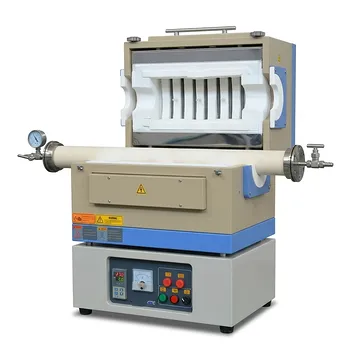
Why is a high-stability tube furnace necessary for NiSA-O/Mo2C? Ensure Precision in Single-Atom Catalyst Synthesis
Updated 3 months ago
The synthesis of NiSA-O/Mo2C single-atom catalysts requires a high-stability tube furnace because it enables the precise, multi-stage thermal programming and atmospheric control necessary to prevent atomic aggregation. Without this level of control, the delicate transition from a precursor to a single-atom catalyst anchored on a molybdenum carbide (Mo2C) support would fail, resulting in bulk metallic clusters rather than the desired atomic dispersion.
Core Takeaway: High-stability tube furnaces are the technical linchpin of single-atom catalyst synthesis, providing the exact thermal ramp rates and sequential gas environments required to transform precursors into stable, double-shelled hollow structures while keeping nickel atoms individually isolated.
The Necessity of Multi-Stage Thermal Programming
Achieving Precise Heating Rates
The furnace must maintain a slow, consistent heating rate, such as 2 °C/min, to ensure the precursor undergoes a controlled transformation. Sudden temperature spikes can cause rapid decomposition of organic components, leading to structural collapse or the premature sintering of nickel atoms.
Initial Oxidative Shrinkage at 300 °C
During the first stage, the furnace operates in an air atmosphere at 300 °C to facilitate oxidative shrinkage of the precursor. This step is critical for defining the initial geometry of the catalyst framework before the high-temperature transition occurs.
High-Temperature Carbonization at 750 °C
The second stage requires a ramp-up to 750 °C in a hydrogen-argon (H2/Ar) reducing atmosphere. This extreme heat facilitates organic carbonization and the formal anchoring of metallic nickel atoms into the molybdenum carbide lattice.
Precise Control of Atmospheric Dynamics
Preventing Atomic Aggregation
The primary challenge in single-atom catalysis is the natural tendency of atoms to clump into clusters or nanoparticles. A stable furnace environment ensures that nickel atoms remain single atoms (SAs) by providing a uniform thermal field that favors bonding with the support over bonding with other nickel atoms.
Managing the Transition from Oxidative to Reductive
The ability to switch from air to a H2/Ar reducing atmosphere is vital for the formation of the Mo2C phase. This controlled reduction prevents the over-oxidation of the molybdenum while ensuring the nickel precursors are properly reduced and "trapped" within the support structure.
Formation of Double-Shell Hollow Structures
The unique double-shell hollow morphology of NiSA-O/Mo2C is a direct result of the specific temperature-time-atmosphere profile. Precision control allows for the internal and external shells to evolve at different rates, creating the porous architecture necessary for high catalytic activity.
Understanding Technical Constraints and Trade-offs
Thermal Gradients and Uniformity
Even in high-end tube furnaces, small temperature gradients can exist along the length of the tube. If the catalyst precursor is not placed in the "sweet spot" of the furnace, the resulting material may have inconsistent active site densities or mixed crystal phases.
Atmosphere Integrity and Sealing
The transition between gas types (e.g., from air to H2/Ar) requires perfect sealing to avoid unintended oxygen exposure during the high-temperature stage. Any leak can lead to the formation of bulk nickel oxides rather than the desired single-atom nickel anchored on carbide.
Energy and Time Intensity
Precise, slow ramp rates (2 °C/min) significantly increase the duration of the synthesis process. While this is necessary for quality, it represents a trade-off in throughput and energy consumption compared to faster, less controlled calcination methods.
Optimizing Heat Treatment for Your Catalyst Goals
How to Apply This to Your Project
To achieve the highest quality NiSA-O/Mo2C catalysts, your thermal processing strategy should be tailored to the specific properties you wish to prioritize.
- If your primary focus is maximizing single-atom density: Use the slowest possible ramp rates (1-2 °C/min) to ensure nickel atoms have ample time to anchor to the support without aggregating.
- If your primary focus is crystal phase purity (Mo2C): Ensure the H2/Ar flow rate is calibrated to maintain a strictly reductive environment during the 750 °C soak.
- If your primary focus is structural porosity: Prioritize the 300 °C oxidative shrinkage stage to "set" the framework before the final carbonization.
Successful single-atom catalyst synthesis depends entirely on the furnace's ability to mirror complex laboratory protocols with absolute thermal and atmospheric fidelity.
Summary Table:
| Synthesis Stage | Temperature (°C) | Atmosphere | Key Objective |
|---|---|---|---|
| Oxidative Shrinkage | 300 °C | Air | Defines initial framework geometry |
| Carbonization | 750 °C | H2/Ar (Reducing) | Anchors Ni atoms into Mo2C lattice |
| Thermal Ramp | 2 °C/min | Controlled | Prevents structural collapse/sintering |
| Final Structure | Variable | Precise Control | Double-shell hollow morphology |
Elevate Your Catalyst Research with THERMUNITS
Precise thermal control is the difference between a successful single-atom catalyst and bulk metallic clustering. THERMUNITS is a leading manufacturer of high-performance laboratory equipment designed for the rigors of material science and industrial R&D.
We offer a comprehensive range of thermal processing solutions tailored for advanced synthesis, including:
- Tube & Atmosphere Furnaces: Essential for the multi-stage gas control required in NiSA-O/Mo2C synthesis.
- CVD/PECVD Systems: For precise chemical vapor deposition and atomic-level material engineering.
- Specialized Solutions: Including Muffle, Vacuum, Rotary, Hot Press furnaces, and Vacuum Induction Melting (VIM) systems.
Ensure your research achieves maximum active site density and structural integrity. Contact our technical team today to discuss how our high-stability heat treatment equipment can optimize your laboratory’s efficiency and results.
References
- Mengyun Hou, Chen Chen. Microenvironment reconstitution of highly active Ni single atoms on oxygen-incorporated Mo2C for water splitting. DOI: 10.1038/s41467-024-45533-3
Mentioned Products
- High Temperature Hybrid Muffle and Tube Furnace with Vacuum Capability and PID Control
- 1200C High Throughput Multi Channel Tube Furnace with 50mm Quartz Tubes for Annealing and Material Phase Diagram Research
- High Temperature Tube Furnace 1500C with Sliding Flanges and 50mm OD for Rapid Thermal Processing Fast Heating and Cooling
- Compact High Temperature 1600C Tube Furnace with 50mm Alumina Tube and Vacuum Flanges for Material Sintering
- High Temperature Automated 5 Inch Tube Furnace for Autonomous Material Research and Advanced Laboratory R&D
People Also Ask
- What is the primary function of a high-temperature tube furnace in Cu1-N-C synthesis? Precision Thermal Control.
- What impact does the heating rate of a tube furnace have on biochar microstructure? Optimize Your Material R&D.
- What is the function of a high-temperature tube furnace in the synthesis of g-C3N4? Optimize Thermal Polycondensation
- Pt2CoM synthesis: High-temp tube furnace conditions (1000°C & 5% H2/Ar) for L10 intermetallic catalysts.
- What is the critical function of a high-temperature tube furnace in Si/Al2O3/RGO synthesis? Key to Battery Innovation

Tech Team · ThermUnits
Last updated on Jun 02, 2026
Related Products
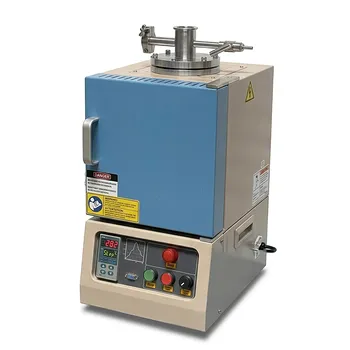
High Temperature Hybrid Muffle and Tube Furnace with Vacuum Capability and PID Control
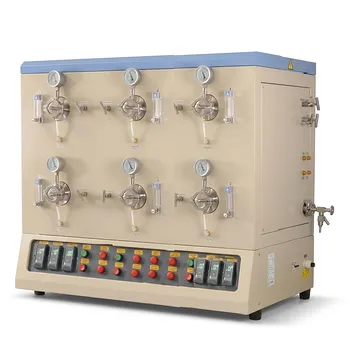
1200C High Throughput Multi Channel Tube Furnace with 50mm Quartz Tubes for Annealing and Material Phase Diagram Research

High Temperature Tube Furnace 1500C with Sliding Flanges and 50mm OD for Rapid Thermal Processing Fast Heating and Cooling

Compact High Temperature 1600C Tube Furnace with 50mm Alumina Tube and Vacuum Flanges for Material Sintering

High Temperature Automated 5 Inch Tube Furnace for Autonomous Material Research and Advanced Laboratory R&D
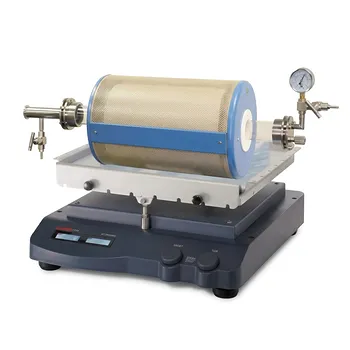
High Temperature Rocking Tube Furnace with Quartz Tube and Vacuum Flange for Materials Synthesis

High Temperature 1700C Tube Furnace with High Vacuum Turbomolecular Pump System and Multi Channel Mass Flow Controller Gas Mixer
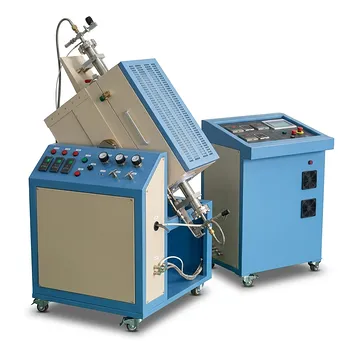
1100C High Pressure Rocking Tube Furnace with 2 Inch Super Alloy Processing Tube for Material Synthesis
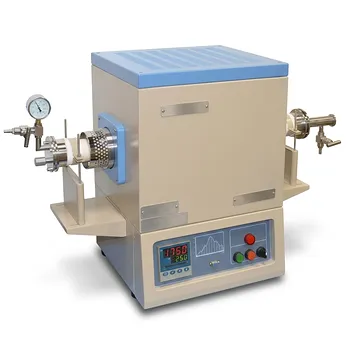
High Temperature Compact Vacuum Tube Furnace 1750C Max 60mm OD Alumina Tube

High Temperature 1700C Vertical Tube Furnace for Powder Spherification and Material Sintering
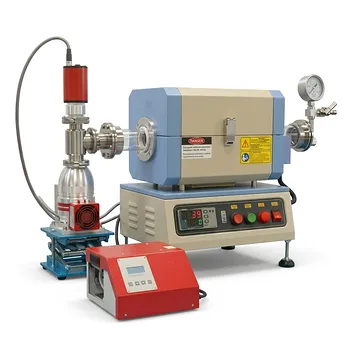
High Vacuum Compact Tube Furnace 1200C with Integrated Turbo Pump System and 8 Inch Heating Zone

High Temperature 1700C Six Zone Split Tube Furnace with Alumina Tube and Water Cooled Flanges
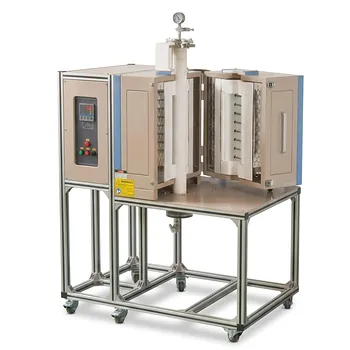
High Temperature 1700C Vertical Split Tube Furnace for Material Quenching and Single Crystal Growth
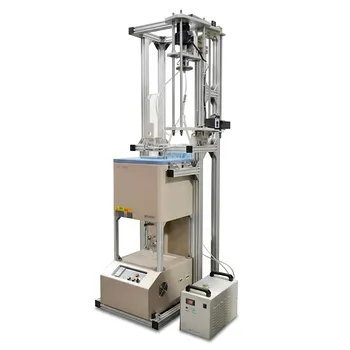
500C Vacuum Vertical Tube Furnace 84mm OD Sample Rotation Lifting System

1200°C 5 Inch Vertical Quartz Tube Furnace with Stainless Steel Vacuum Flanges

1700C Hydrogen Gas Tube Furnace with 60mm Alumina Process Tube and Integrated Hydrogen Safety Detector
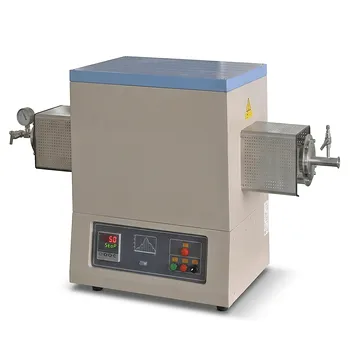
High Temperature 1700C Tube Furnace with 4 Inch OD Alumina Tube and Vacuum Sealing Flanges

Vertical 1700C Vacuum and Atmosphere Tube Furnace with 80mm Alumina Tube

High Temperature 1700C Benchtop Tube Furnace with 5 Inch Heating Zone High Purity Alumina Tube and Vacuum Sealing Flanges