Why is a high-temperature vacuum tube furnace required for Si/SiC/G synthesis? Key to High-Performance Composites
Updated 3 months ago
The synthesis of silicon/silicon carbide/graphite (Si/SiC/G) composites requires a high-temperature vacuum tube furnace to simultaneously prevent the destructive oxidation of precursors and drive the in-situ chemical reactions necessary for structural bonding. This specific equipment provides the extreme thermal energy—often reaching 1773 K—required to facilitate the physical adsorption of silicon into the graphite matrix while maintaining a pristine environment.
The vacuum tube furnace acts as a controlled reactor that eliminates atmospheric contaminants to preserve the integrity of silicon and graphite while providing the high-energy environment needed to grow nano-sized SiC crystals. This dual-action process is the only way to ensure the formation of a stable ternary composite structure with precise microstructures.
Preventing Material Degradation and Oxidation
The Vulnerability of Silicon and Graphite
At high temperatures, both silicon and graphite are highly reactive with oxygen, which can lead to the formation of unwanted silica (SiO2) or the "burning off" of carbon. Excluding oxygen from the furnace chamber is critical to maintaining the stoichiometry and purity of the final composite.
Removal of Impurity Gases
The vacuum system does more than just remove oxygen; it extracts residual moisture and other impurity gases that could interfere with the reaction. This ensures that the chemical potential within the tube is dedicated solely to the intended transformation of the silicon and graphite precursors.
Protecting Carbon Nanostructures
Like carbon nanotubes, the graphite layers in these composites are susceptible to oxidation and structural disappearance in high-temperature air. The vacuum environment provides a non-oxidizing protective atmosphere that allows the carbon skeleton to remain intact even at sintering temperatures exceeding 1500°C.
Driving Phase Transformations and In-Situ Reactions
Facilitating Silicon Adsorption
A vacuum environment reduces surface tension and atmospheric resistance, facilitating the physical adsorption of silicon into the graphite matrix. This allows silicon atoms to penetrate deep into the graphite layers or pores, creating a more uniform distribution.
Promoting Nano-SiC Crystal Growth
The high-temperature environment (typically around 1773 K) provides the activation energy for the in-situ chemical reaction between silicon and graphite. This reaction leads to the growth of nano-sized silicon carbide (SiC) crystals directly on the graphite surface, which anchors the components together.
Enhancing Atomic Diffusion
Extreme heat facilitates atomic diffusion and grain boundary migration, which are essential for forming strong interfacial bonds. Without these high temperatures, the silicon and graphite would remain a loose mixture rather than a cohesive ternary composite.
Understanding the Trade-offs and Challenges
Technical Complexity and Cost
Vacuum tube furnaces are significantly more complex and expensive to operate than standard muffle furnaces. Maintaining a high-vacuum seal at temperatures near 1500°C requires specialized materials and rigorous maintenance of the vacuum pumps and quartz or ceramic tubes.
Cooling Rate Limitations
Materials processed in a vacuum can only cool via radiation and conduction through the furnace supports, as there is no air to provide convection. This can lead to extended processing cycles unless the furnace is equipped with a controlled gas-quench system to speed up the cooling phase.
Risk of Silicon Volatilization
At extremely high temperatures and low pressures, silicon can reach its vapor pressure limit and begin to sublime. Precise control of the vacuum level and temperature is necessary to prevent the loss of silicon during the sintering process, which would alter the final material composition.
How to Apply This to Your Project
When choosing a furnace configuration for composite synthesis, your specific material goals should dictate the vacuum and temperature parameters.
- If your primary focus is maximum purity: Use a high-vacuum system (10⁻³ Pa or better) to ensure all traces of oxygen and moisture are removed before heating begins.
- If your primary focus is SiC crystal size control: Focus on the precise temperature ramp and soak times, as the in-situ growth of SiC is highly sensitive to thermal duration at 1773 K.
- If your primary focus is preventing silicon loss: Consider a partial-pressure argon atmosphere after initial vacuum evacuation to suppress the volatilization of silicon at peak temperatures.
The high-temperature vacuum tube furnace is the indispensable tool for transforming a simple mixture of elements into a high-performance, ternary composite material.
Summary Table:
| Key Feature | Functional Purpose | Material Benefit |
|---|---|---|
| Vacuum System | Oxygen & impurity removal | Prevents oxidation of silicon and burning of graphite |
| High Thermal Energy | Reaching 1773 K (1500°C) | Drives in-situ reaction for nano-SiC crystal growth |
| Controlled Environment | Precise pressure control | Facilitates silicon adsorption and atomic diffusion |
| Thermal Stability | Uniform heating | Ensures stable ternary structure and precise microstructure |
Elevate Your Advanced Material Research with THERMUNITS
As a leading manufacturer of high-temperature laboratory equipment for material science and industrial R&D, THERMUNITS provides the precision and reliability needed for complex synthesis projects. Our specialized vacuum and atmosphere solutions are designed to prevent oxidation and ensure the structural integrity of your Si/SiC/G composites.
We offer a comprehensive range of thermal processing solutions, including:
- Tube, Vacuum, and Atmosphere Furnaces
- CVD/PECVD Systems for thin-film and nano-material growth
- Muffle, Rotary, and Hot Press Furnaces
- Vacuum Induction Melting (VIM) Furnaces and Electric Rotary Kilns
- Thermal Elements and various lab heat treatment equipment
Achieve superior heat treatment results and optimize your sintering processes with our industry-leading technology.
Contact THERMUNITS Today for a Custom Solution
References
- Liyong Wang Liyong Wang, Lei Liu Shengliang Hu and Quangui Guo Lei Liu Shengliang Hu and Quangui Guo. Silicon/Silicon Carbide/Graphite Composite Anode Material for Rechargeable Lithium-Ion Batteries by High-Temperature Vacuum Adsorption Method. DOI: 10.52568/001466/jcsp/46.03.2024
Mentioned Products
- High Vacuum Compact Tube Furnace 1200C with Integrated Turbo Pump System and 8 Inch Heating Zone
- 1800C High Temperature Compact Vacuum Tube Furnace with 60mm OD Alumina Tube and Kanthal MoSi2 Heating Elements
- 500C Vacuum Vertical Tube Furnace 84mm OD Sample Rotation Lifting System
- 1750°C High Temperature Benchtop Vacuum Atmosphere Tube Furnace with Kanthal Super 1800 Heating Elements and 60mm Alumina Processing Tube
- 1200C High Temperature 5 Inch Split Vacuum Tube Furnace with 12 Inch Heating Zone and Separated PID Controller
People Also Ask
- What core functions does a high-temperature vacuum tube furnace provide? Optimize np-CuSn Sintering & Joint Integrity
- What is the primary function of a high vacuum tube furnace in the in-situ grain growth experiments of silicon steel?
- Why is a high-vacuum tube furnace required for the pyrolysis phase of BCMoMn electrocatalysts? Key for Catalyst Precision
- What are the functions of a tube furnace in PCC annealing? Optimize Carbonization & Porosity
- What is the Role of Vacuum Tube Furnaces in Ti1-xAlxN Research? Master Age Hardening & Stability

Tech Team · ThermUnits
Last updated on Jun 02, 2026
Related Products
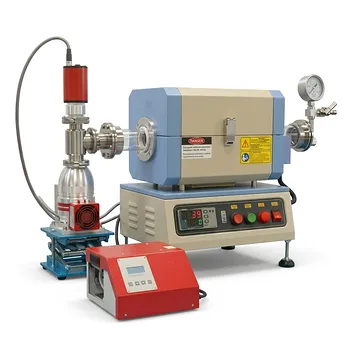
High Vacuum Compact Tube Furnace 1200C with Integrated Turbo Pump System and 8 Inch Heating Zone

1800C High Temperature Compact Vacuum Tube Furnace with 60mm OD Alumina Tube and Kanthal MoSi2 Heating Elements
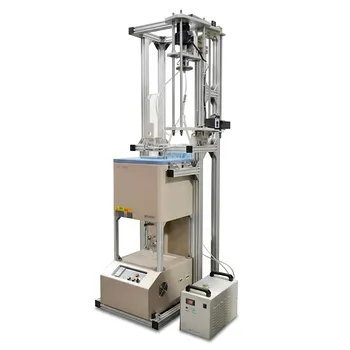
500C Vacuum Vertical Tube Furnace 84mm OD Sample Rotation Lifting System

1750°C High Temperature Benchtop Vacuum Atmosphere Tube Furnace with Kanthal Super 1800 Heating Elements and 60mm Alumina Processing Tube
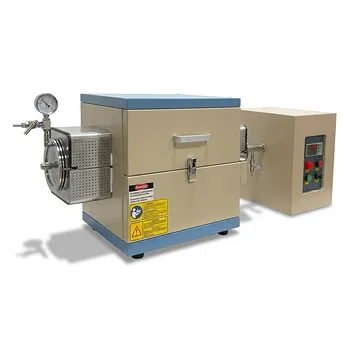
1200C High Temperature 5 Inch Split Vacuum Tube Furnace with 12 Inch Heating Zone and Separated PID Controller
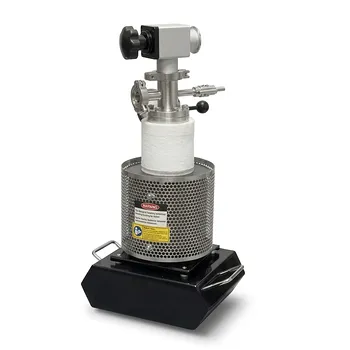
High Temperature 1100C Compact Top Loading Vertical Vacuum Tube Furnace for High Vacuum Noble Metal Melting and Material Research
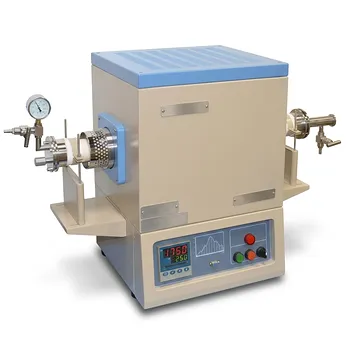
High Temperature Compact Vacuum Tube Furnace 1750C Max 60mm OD Alumina Tube
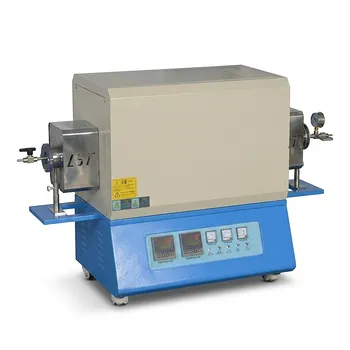
High Temperature Dual Zone Vacuum Tube Furnace for Material Research and CVD Processing

Vertical 1700C Vacuum and Atmosphere Tube Furnace with 80mm Alumina Tube

High Temperature 1700C Tube Furnace with High Vacuum Turbomolecular Pump System and Multi Channel Mass Flow Controller Gas Mixer
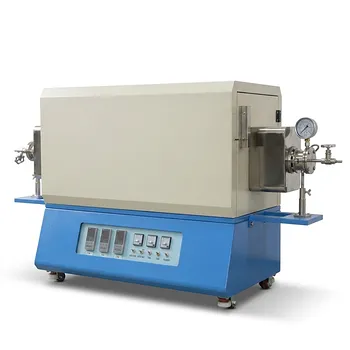
Three Temperature Zone High Temperature Vacuum Tube Furnace for CVD and Material Sintering

1100C Tube Furnace with Vacuum Flange and Programmable Temperature Controller for Material Science and Industrial Heat Treatment

Compact Vertical Split Quartz Tube Furnace with Stainless Steel Vacuum Flanges for Rapid Thermal Quenching and Controlled Atmosphere Material Processing
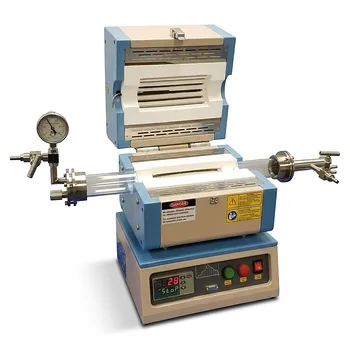
Compact Split Tube Furnace with Integrated Vacuum System and Precision Temperature Calibrator
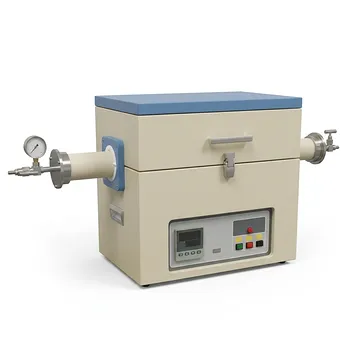
1250C Split Tube Furnace with 3 Inch Mullite Tube and Vacuum Sealing Flanges for Precision Thermal Processing
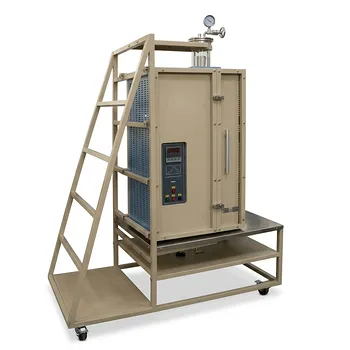
Split Vertical Tube Furnace with 1200C Quartz Tube and Stainless Steel Vacuum Flanges for Rapid Thermal Processing
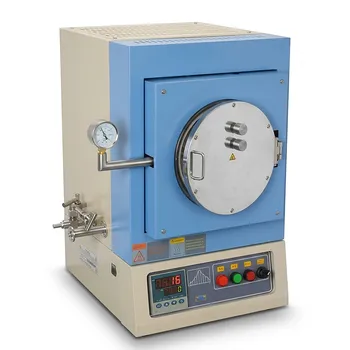
1100°C High Temperature Quartz Chamber Furnace 8 Inch OD with 7.6 Liter Capacity and Vacuum Atmosphere Capability

Compact High Temperature 1600C Tube Furnace with 50mm Alumina Tube and Vacuum Flanges for Material Sintering
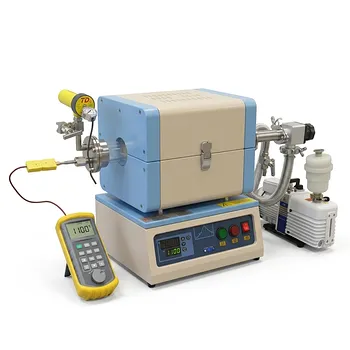
Compact Split Tube Furnace with Insertable Temperature Calibrator and Integrated Vacuum System
