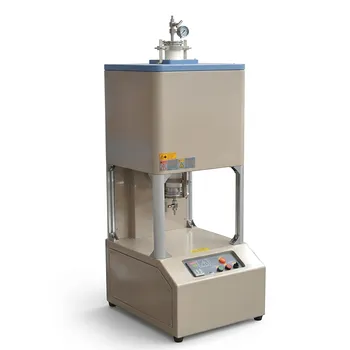
Why is a High Vacuum Tube Furnace essential for the annealing treatment of MnBi-Cu alloys? Boost Magnetic Potential
Updated 3 months ago
A High Vacuum Tube Furnace is essential for the annealing of MnBi-Cu alloys because it provides the ultra-pure, oxygen-free environment required to transform the material into its high-magnetic phase. By maintaining a background pressure as low as 10⁻⁵ Pa, the furnace prevents oxidation and water vapor interference during long-duration treatments at 573 K, ensuring the alloy achieves its full magnetic potential and structural uniformity.
Core Takeaway: The High Vacuum Tube Furnace is the only tool capable of balancing extreme atmospheric purity with the precise thermal stability needed to drive the critical phase transformation from a non-magnetic state to the high-magnetic Low Temperature Phase (LTP).
Eliminating Oxidation and Atmospheric Interference
The Vulnerability of MnBi-Cu Alloys
At the specific annealing temperature of 573 K, MnBi-Cu alloys are highly susceptible to oxidation. Any presence of residual oxygen or water vapor can trigger chemical reactions that degrade the alloy's surface and internal structure.
Achieving Ultra-High Vacuum Purity
The furnace achieves a background pressure of 10⁻⁵ Pa, a level of vacuum that effectively "strips" the environment of reactive gases. This level of purity is consistent with industry standards for treating other sensitive materials, such as Ti-6Al-4V and NiTiCu alloys.
Protecting Long-Duration Processes
Because the annealing of these alloys is often a long-duration process, even trace amounts of oxygen can lead to significant contamination over time. The vacuum environment ensures that the thermal energy is used exclusively for elemental diffusion rather than unwanted chemical reactions.
Driving the Critical Phase Transformation
Transitioning to the Low Temperature Phase (LTP)
The primary goal of annealing MnBi-Cu is to facilitate the transformation from a non-magnetic phase to the high-magnetic Low Temperature Phase (LTP). This transformation is the "engine" behind the material's magnetic performance.
The Role of Programmable Heating Rates
A High Vacuum Tube Furnace allows for precise control over the heating cycle, typically utilizing a rate such as 5 K/min. This controlled ramp-up prevents thermal shock and ensures that the internal rearrangement of atoms occurs systematically.
Ensuring Phase Transformation Completeness
By providing a highly stable thermal field, the furnace ensures that the LTP transformation occurs uniformly throughout the entire sample. This prevents "patchy" magnetic properties and results in a material with consistent performance across its entire volume.
Optimizing Microstructure and Uniformity
Facilitating Atomic Rearrangement
The stable heat environment allows Manganese (Mn), Bismuth (Bi), and Copper (Cu) atoms to migrate into their optimal lattice positions. This is similar to the recrystallization annealing used in molybdenum plates to achieve consistent grain sizes.
Eliminating Internal Stresses
The annealing process helps remove the internal stresses and non-uniformities that accumulate during the initial melting or rolling of the alloy. This leads to a more stable ternary alloy structure with predictable thermodynamic behaviors.
Isolation for Pure Thermodynamic Study
By isolating the alloy from external gases, researchers can ensure that the observed grain growth and phase changes are driven solely by internal kinetic factors. This allows for the precise tailoring of the alloy's final properties.
Understanding the Trade-offs
Equipment Complexity and Cost
High vacuum systems capable of reaching 10⁻⁵ Pa are significantly more expensive and complex to maintain than standard atmosphere furnaces. The need for specialized pumps and leak-proof seals increases the initial capital investment.
Processing Time vs. Throughput
The requirement for slow heating rates (5 K/min) and long vacuum pull-down times limits the throughput of the furnace. While this is necessary for quality, it may not be suitable for high-volume industrial production without significant scaling.
Differences Between Melting and Annealing
It is critical to distinguish between the Vacuum Induction Melting (VIM) used to create the initial ingot and the Tube Furnace used for annealing. While VIM focuses on rapid melting and mixing, the tube furnace focuses on the slow, precise solid-state transformations required for magnetism.
Applying This Technology to Your Project
Recommendations for Implementation
- If your primary focus is maximizing magnetic coercivity: Prioritize the vacuum level (10⁻⁵ Pa or better) to ensure the most complete transformation to the Low Temperature Phase (LTP).
- If your primary focus is material research and kinetics: Use the programmable heating rate features to observe how different ramp speeds affect the grain growth and phase stability.
- If your primary focus is preventing surface contamination: Ensure the furnace is purged and brought to high vacuum before the heating element is activated to capture early-stage interactions.
The High Vacuum Tube Furnace remains the definitive tool for MnBi-Cu processing by providing the unique combination of atmospheric isolation and thermal precision required for high-performance magnetic materials.
Summary Table:
| Key Feature | Technical Capability | Impact on MnBi-Cu Alloy |
|---|---|---|
| 10⁻⁵ Pa Vacuum | Ultra-pure oxygen-free environment | Prevents surface oxidation and contamination |
| Precise 573 K Control | Stable thermal field | Drives transition to High-Magnetic Phase (LTP) |
| Programmable Heating | Controlled 5 K/min ramp rate | Ensures uniform atomic rearrangement & grain growth |
| Atmospheric Isolation | Pure thermodynamic study | Eliminates external interference for reliable R&D |
Elevate Your Material Research with THERMUNITS
As a leading manufacturer of high-temperature laboratory equipment, THERMUNITS empowers material science and industrial R&D professionals with the precision required for complex heat treatments. Our advanced thermal solutions are designed to handle the most sensitive phase transformations, ensuring your alloys achieve their full potential.
Our comprehensive product range includes:
- High Vacuum & Atmosphere Tube Furnaces
- Muffle, Rotary, and Hot Press Furnaces
- CVD/PECVD Systems & Vacuum Induction Melting (VIM) Furnaces
- Dental Furnaces, Electric Rotary Kilns, and Thermal Elements
Whether you are maximizing magnetic coercivity in MnBi-Cu alloys or exploring new ceramic structures, THERMUNITS provides the reliability and technical excellence your lab needs.
Ready to optimize your thermal processing? Contact us today to find your solution!
References
- Yang Yang, Wei Lü. Cu-doping induced tuning of magnetic properties and phase transformation in MnBi alloys. DOI: 10.1063/5.0194858
Mentioned Products
- 1800C High Temperature Compact Vacuum Tube Furnace with 60mm OD Alumina Tube and Kanthal MoSi2 Heating Elements
- 1750°C High Temperature Benchtop Vacuum Atmosphere Tube Furnace with Kanthal Super 1800 Heating Elements and 60mm Alumina Processing Tube
- High Vacuum Compact Tube Furnace 1200C with Integrated Turbo Pump System and 8 Inch Heating Zone
- High Temperature 1700C Tube Furnace with High Vacuum Turbomolecular Pump System and Multi Channel Mass Flow Controller Gas Mixer
- 1200C High Temperature 5 Inch Split Vacuum Tube Furnace with 12 Inch Heating Zone and Separated PID Controller
People Also Ask
- What core functions does a high-temperature vacuum tube furnace provide? Optimize np-CuSn Sintering & Joint Integrity
- What is the primary function of a high-temperature tube furnace in Cu1-N-C synthesis? Precision Thermal Control.
- What impact does the heating rate of a tube furnace have on biochar microstructure? Optimize Your Material R&D.
- Role of Tube Furnace in KNNLST Ceramic Synthesis: Achieve High Phase Purity and Thermal Uniformity
- What is the role of a high-temperature tube furnace in the preparation of S-C3N4? Master Precision Material Synthesis

Tech Team · ThermUnits
Last updated on Jun 02, 2026
Related Products

1800C High Temperature Compact Vacuum Tube Furnace with 60mm OD Alumina Tube and Kanthal MoSi2 Heating Elements
1750°C High Temperature Benchtop Vacuum Atmosphere Tube Furnace with Kanthal Super 1800 Heating Elements and 60mm Alumina Processing Tube
High Vacuum Compact Tube Furnace 1200C with Integrated Turbo Pump System and 8 Inch Heating Zone

High Temperature 1700C Tube Furnace with High Vacuum Turbomolecular Pump System and Multi Channel Mass Flow Controller Gas Mixer
1200C High Temperature 5 Inch Split Vacuum Tube Furnace with 12 Inch Heating Zone and Separated PID Controller
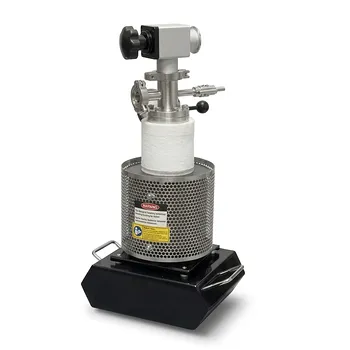
High Temperature 1100C Compact Top Loading Vertical Vacuum Tube Furnace for High Vacuum Noble Metal Melting and Material Research
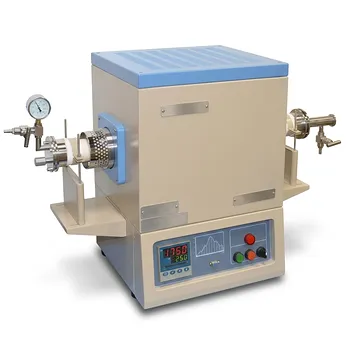
High Temperature Compact Vacuum Tube Furnace 1750C Max 60mm OD Alumina Tube
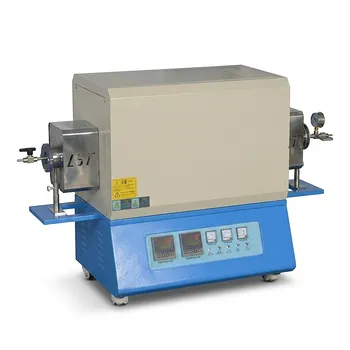
High Temperature Dual Zone Vacuum Tube Furnace for Material Research and CVD Processing

Compact High Temperature 1600C Tube Furnace with 50mm Alumina Tube and Vacuum Flanges for Material Sintering
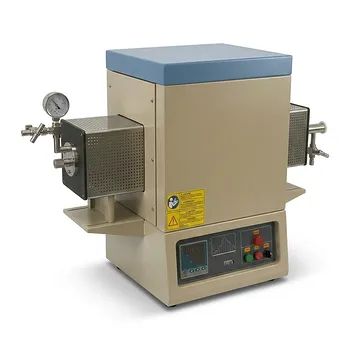
High Temperature 1700C Benchtop Tube Furnace with 5 Inch Heating Zone High Purity Alumina Tube and Vacuum Sealing Flanges

High Temperature Automated 5 Inch Tube Furnace for Autonomous Material Research and Advanced Laboratory R&D
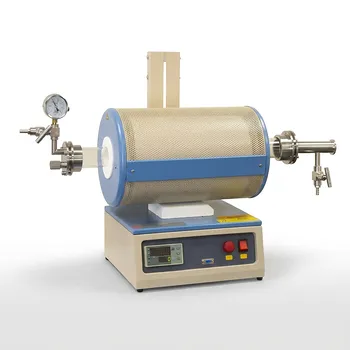
1100C Tube Furnace with Vacuum Flange and Programmable Temperature Controller for Material Science and Industrial Heat Treatment
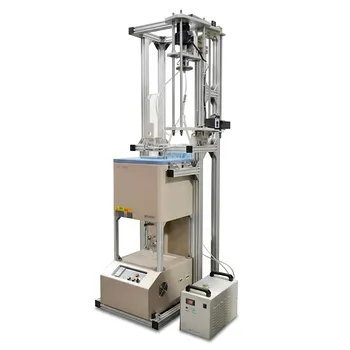
500C Vacuum Vertical Tube Furnace 84mm OD Sample Rotation Lifting System

High Temperature 1700C Vertical Tube Furnace for Powder Spherification and Material Sintering
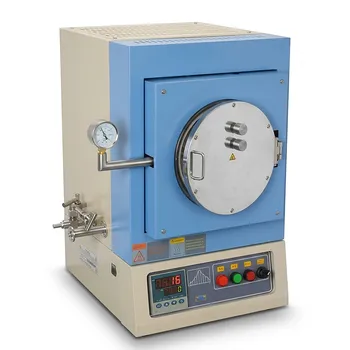
1100°C High Temperature Quartz Chamber Furnace 8 Inch OD with 7.6 Liter Capacity and Vacuum Atmosphere Capability
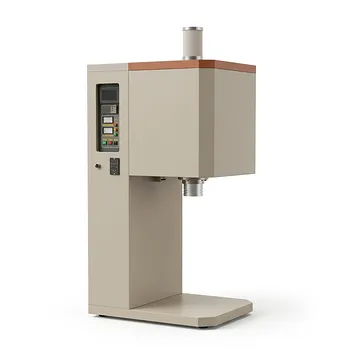
Vertical Openable Tube Furnace 0-1700c High Temperature Laboratory System for CVD and Vacuum Heat Treatment
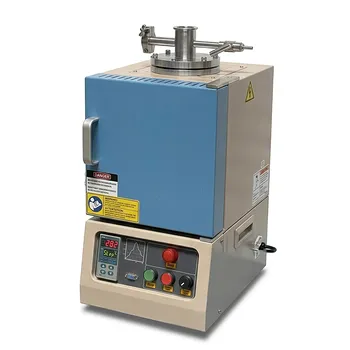
High Temperature Hybrid Muffle and Tube Furnace with Vacuum Capability and PID Control
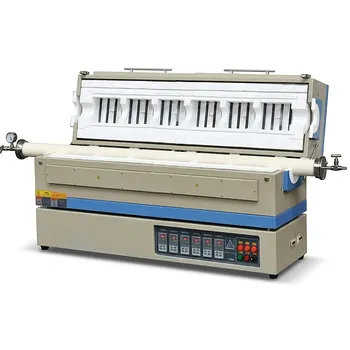
High Temperature 1700C Six Zone Split Tube Furnace with Alumina Tube and Water Cooled Flanges
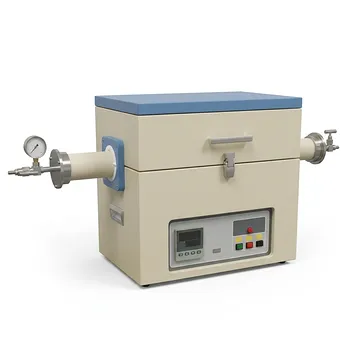
1250C Split Tube Furnace with 3 Inch Mullite Tube and Vacuum Sealing Flanges for Precision Thermal Processing