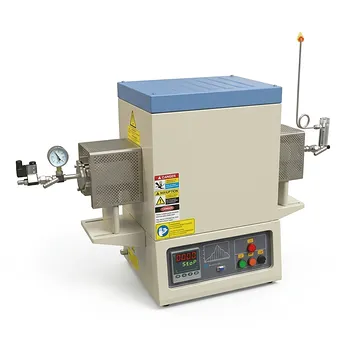
Why is a high-temperature tube furnace required for conducting wetting tests on high-alumina glass? Essential for Precision
Updated 3 months ago
Wetting tests on high-alumina glass require a high-temperature tube furnace because it provides the extreme, stable thermal environment necessary to transition solid glass into a molten state while preventing chemical contamination. Specifically, these furnaces reach temperatures exceeding 1000°C—often up to 1450°C—to ensure complete melting and chemical homogenization of the glass matrix. This precision allows for the accurate measurement of physical parameters like wetting angles and interface diameters, which are critical for evaluating sealing performance.
The high-temperature tube furnace serves as a controlled laboratory for high-alumina glass, providing the specific thermal energy required to overcome the material's high melting point while maintaining an ultra-clean, stable atmosphere. This combination is essential for capturing the precise physical data needed to predict how the glass will bond with other materials.
Overcoming the Thermal Resistance of High-Alumina Glass
Achieving Precise Melting Points
High-alumina glass possesses a significantly higher melting point than standard silicate glasses. A tube furnace is required to programmatically increase temperatures to over 1000°C, and in some cases up to 1450°C, to ensure the glass powder column fully melts and begins to flow.
Ensuring Chemical Homogenization
To get accurate wetting data, the glass must be a uniform, crystal-free matrix. Maintaining these extreme temperatures for extended durations (up to 24 hours) ensures that the oxides and raw materials are completely homogenized before the wetting measurement begins.
Facilitating Material Spreading
The furnace provides the thermal energy necessary for the molten glass to spread across a substrate, such as stainless steel. This process is essential for evaluating the interfacial chemical reactions that dictate the strength of a seal.
Precision Measurement and Environmental Control
The Importance of a Stable Temperature Field
Wetting tests rely on the measurement of the wetting angle, height, and diameter of the glass droplet. The stable temperature field within a tube furnace prevents thermal gradients that would otherwise distort the droplet and lead to inaccurate data.
Controlling Oxidation and Atmospheric Purity
Wetting is highly sensitive to surface oxidation on the substrate. High-temperature tube furnaces allow for high-vacuum systems (below 5 × 10⁻⁴ Pa) or specific gas atmospheres that prevent the oxidative deactivation of reactive elements like Ti or Zr.
Preventing Impurity Interference
Before the test, the furnace can be used to "pre-clean" materials by heating them to 800°C in an air atmosphere. This process removes organic lubricants or sizing agents that would otherwise interfere with the nucleation process and compromise the wetting results.
Understanding the Trade-offs
Equipment Complexity and Cost
While a tube furnace offers superior control, it requires significant infrastructure, including vacuum pumps and cooling systems. The high power consumption and specialized alumina crucibles needed to resist corrosion increase the operational cost compared to standard muffle furnaces.
Material Compatibility
Using the wrong tube material can lead to failure. For example, high-purity alumina tubes are required for their chemical stability and mechanical strength at 1200°C+, but they are susceptible to thermal shock if heating or cooling rates are too aggressive.
Scaling Limitations
Tube furnaces are optimized for small-scale, high-precision experiments. If a project requires testing large industrial components, the physical dimensions of the furnace tube may become a limiting factor, requiring a trade-off between environmental control and sample size.
How to Apply This to Your Project
When selecting a furnace setup for high-alumina glass testing, your choice should be dictated by the specific requirements of your substrate and glass composition.
- If your primary focus is sealing performance with reactive metals: Prioritize a furnace integrated with a high-vacuum system to prevent the oxidation of active elements like Ti and Zr.
- If your primary focus is glass homogenization: Ensure your furnace is rated for continuous operation at 1450°C for at least 24 hours to guarantee a crystal-free matrix.
- If your primary focus is surface purity: Utilize an air-atmosphere pre-treatment phase at 800°C to burn off any organic contaminants before starting the actual wetting cycle.
By carefully controlling the thermal and atmospheric environment of the tube furnace, you ensure that your wetting data is both repeatable and representative of real-world performance.
Summary Table:
| Feature | Benefit for Wetting Tests | Technical Capability |
|---|---|---|
| High Temp Range | Ensures complete melting of glass matrices | Sustained heat up to 1450°C |
| Atmosphere Control | Prevents substrate oxidation/deactivation | High vacuum (< 5×10⁻⁴ Pa) or inert gas |
| Thermal Stability | Ensures accurate droplet geometry data | Uniform field for precise measurement |
| Contamination Control | Removes organic sizing and lubricants | Air-atmosphere pre-treatment at 800°C |
Elevate Your Material Research with THERMUNITS Precision Furnaces
As a global leader in high-temperature laboratory equipment for material science and industrial R&D, THERMUNITS provides the precision thermal solutions required to achieve repeatable, high-quality results. Our equipment is engineered to handle the most demanding environments, ensuring your data is never compromised by thermal gradients or contamination.
We offer a comprehensive range of advanced heat treatment solutions, including:
- Precision Furnaces: Tube, Vacuum, Atmosphere, Muffle, Rotary, and Hot Press models.
- Advanced Systems: CVD/PECVD systems, Vacuum Induction Melting (VIM) furnaces, and Dental Furnaces.
- Essential Components: High-quality Thermal Elements and specialized laboratory heat treatment equipment.
Whether you are conducting critical wetting tests on high-alumina glass or developing next-generation materials, THERMUNITS delivers the reliability and control you need.
Contact our technical experts today to discuss your specific requirements and optimize your laboratory's capabilities!
References
- Changjun Chen, Min Zhang. Effects of Different Oxidation Methods on the Wetting and Diffusion Characteristics of a High-Alumina Glass Sealant on 304 Stainless Steel. DOI: 10.3390/ma17102251
Mentioned Products
- High Temperature Tube Furnace 1500C with Sliding Flanges and 50mm OD for Rapid Thermal Processing Fast Heating and Cooling
- High Temperature 1700C Tube Furnace with High Vacuum Turbomolecular Pump System and Multi Channel Mass Flow Controller Gas Mixer
- 1750°C High Temperature Benchtop Vacuum Atmosphere Tube Furnace with Kanthal Super 1800 Heating Elements and 60mm Alumina Processing Tube
- High Temperature 1700C Benchtop Tube Furnace with 5 Inch Heating Zone High Purity Alumina Tube and Vacuum Sealing Flanges
- 1700C High Temperature Alumina Tube Furnace with 18 Inch Heated Zone and Vacuum Sealing Flanges
People Also Ask
- How are high-temperature tube furnaces utilized to repair etching damage? Precision Lattice Restoration Solutions
- What core conditions does a high-temperature tube furnace provide for rGO aerogels? Mastering Precision Synthesis.
- What role does a high-temperature tube furnace play in CVD synthesis of silicon nanowires? Master VLS Growth Precision.
- How does precision tube furnace control influence CoFe nanoparticle formation? Master Your Bimetallic Synthesis.
- What role does a high-temperature tube furnace play in the sulfidation heat treatment of CoS@C/MXene nanocomposites? Guide

Tech Team · ThermUnits
Last updated on Jun 02, 2026
Related Products

High Temperature Tube Furnace 1500C with Sliding Flanges and 50mm OD for Rapid Thermal Processing Fast Heating and Cooling

High Temperature 1700C Tube Furnace with High Vacuum Turbomolecular Pump System and Multi Channel Mass Flow Controller Gas Mixer

1750°C High Temperature Benchtop Vacuum Atmosphere Tube Furnace with Kanthal Super 1800 Heating Elements and 60mm Alumina Processing Tube

High Temperature 1700C Benchtop Tube Furnace with 5 Inch Heating Zone High Purity Alumina Tube and Vacuum Sealing Flanges
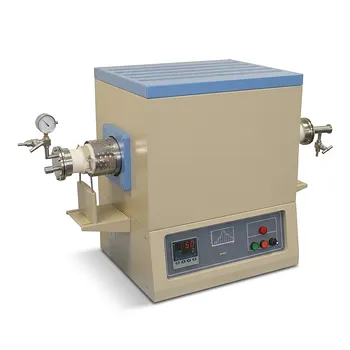
1700C High Temperature Alumina Tube Furnace with 18 Inch Heated Zone and Vacuum Sealing Flanges
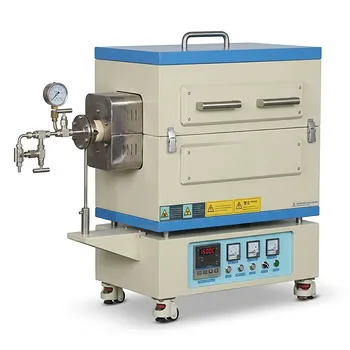
High Temperature Split Tube Furnace 1500C for Material Research Vacuum and Atmosphere Thermal Processing

Compact High Temperature 1600C Tube Furnace with 50mm Alumina Tube and Vacuum Flanges for Material Sintering

1800C High Temperature Compact Vacuum Tube Furnace with 60mm OD Alumina Tube and Kanthal MoSi2 Heating Elements
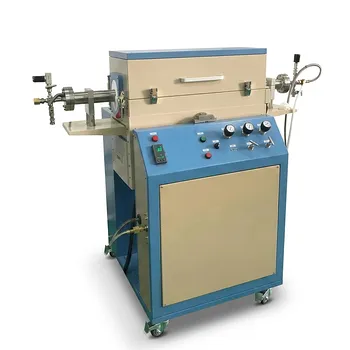
High Temperature Rocking Tube Furnace 1700°C Alumina Processing Tube with Precision Oscillation for Material Synthesis
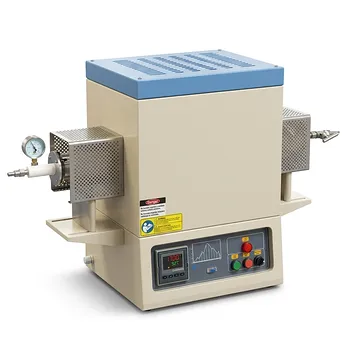
High Temperature Three Zone Tube Furnace 1700C with Alumina Tube and Water Cooled Flanges

High Temperature 1700C Vertical Tube Furnace for Powder Spherification and Material Sintering
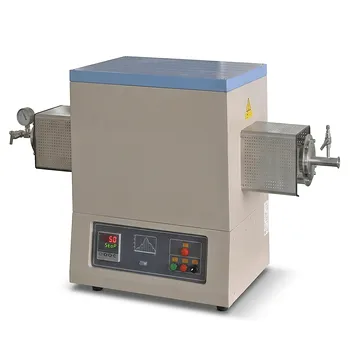
High Temperature 1700C Tube Furnace with 4 Inch OD Alumina Tube and Vacuum Sealing Flanges
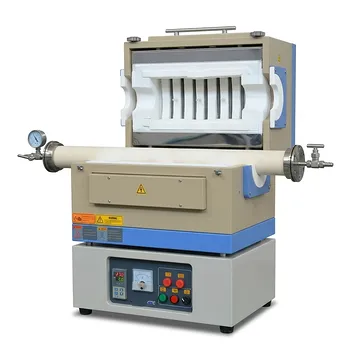
High Temperature 1600C Split Tube Furnace Vacuum Flanges Valves Optional 60mm 80mm Alumina Tube

High Temperature Automated 5 Inch Tube Furnace for Autonomous Material Research and Advanced Laboratory R&D
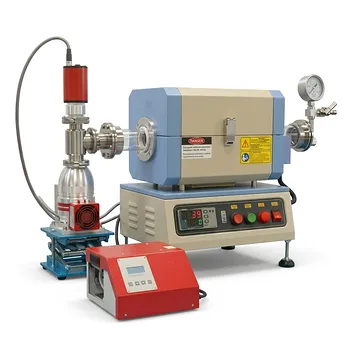
High Vacuum Compact Tube Furnace 1200C with Integrated Turbo Pump System and 8 Inch Heating Zone
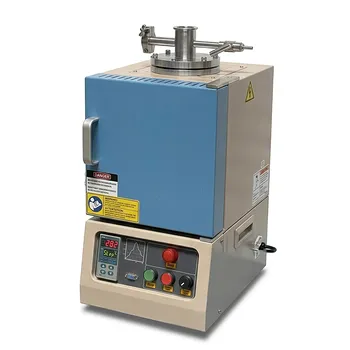
High Temperature Hybrid Muffle and Tube Furnace with Vacuum Capability and PID Control
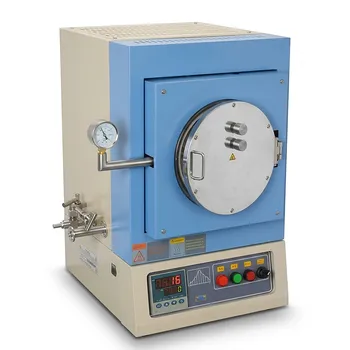
1100°C High Temperature Quartz Chamber Furnace 8 Inch OD with 7.6 Liter Capacity and Vacuum Atmosphere Capability

1100C Tube Furnace with Vacuum Flange and Programmable Temperature Controller for Material Science and Industrial Heat Treatment
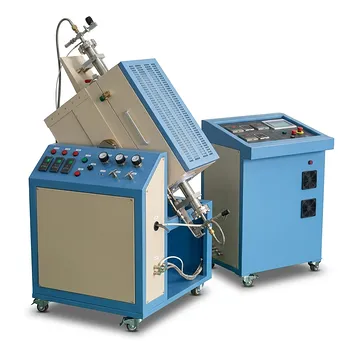
1100C High Pressure Rocking Tube Furnace with 2 Inch Super Alloy Processing Tube for Material Synthesis