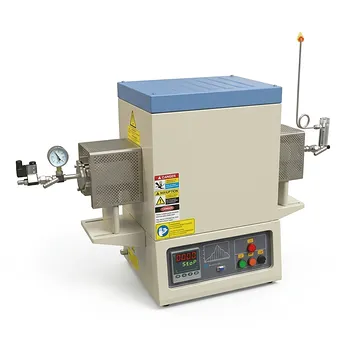
Why is a high-temperature tube furnace required for synthesizing solid Tungsten Carbide products? Key Synthesis Insights
Updated 3 months ago
Synthesizing solid Tungsten Carbide (WC) products requires a high-temperature tube furnace to facilitate the precise chemical and physical transformations necessary for creating industrial-grade materials. At temperatures often exceeding 1000°C, these furnaces provide the thermal energy required for solid-state diffusion and chemical bonding between tungsten and carbon atoms. Crucially, the tube furnace allows for a controlled reducing atmosphere (typically Argon and Hydrogen) that prevents oxidation, ensuring the final product achieves its signature hardness and hexagonal crystalline structure.
Core Takeaway: A high-temperature tube furnace is essential because it simultaneously provides the extreme heat needed for atomic diffusion and a strictly controlled atmosphere to prevent oxidation, resulting in high-purity, hexagonal-phase Tungsten Carbide.
The Role of Extreme Thermal Fields
Driving Atomic Diffusion and Bonding
To form Tungsten Carbide, tungsten and carbon atoms must undergo solid-state diffusion. This process requires a stable and intense thermal field, often reaching between 1050°C and 1500°C, to overcome the energy barriers for chemical bonding.
Facilitating Phase Transformation
The high-temperature environment is the catalyst for the carbothermal reduction process. This allows tungsten precursors to react chemically with carbon skeletons, transforming them into dense, nanoscale particles or solid crystalline structures.
Ensuring Material Densification
During the sintering process, high heat promotes the elimination of internal pores. This leads to full densification, which is critical for the material to function as the core reinforcing phase in cemented carbides.
Atmospheric Control and Oxidation Prevention
The Necessity of a Reducing Environment
Tungsten is highly susceptible to oxidation at elevated temperatures, which can ruin the material's structural integrity. A tube furnace allows for the introduction of Hydrogen (H2), which acts as a powerful reducing agent to strip away oxygen and prevent oxide formation.
Utilizing Inert Gas Shields
In addition to reducing agents, tube furnaces often use Argon (Ar) or Nitrogen (N2) to create an oxygen-free zone. This protective "shroud" ensures that the carbonization process occurs in a pure environment, maintaining the chemical purity of the carbide phase.
Precision in Gas Dynamics
Unlike open furnaces, the sealed nature of a tube furnace allows for the exact calibration of gas flow rates. This precision is vital for creating specific material properties, such as the porous structures required in nitrogen-doped carbon frameworks or tungsten-modified catalysts.
Achieving High Crystallinity and Purity
Developing the Hexagonal Phase
The specific thermal and atmospheric conditions of a tube furnace enable the formation of hexagonal phase Tungsten Carbide crystals. This specific crystalline arrangement is responsible for the material's exceptional hardness and chemical stability.
Uniformity Across the Precursor
A tube furnace provides a highly uniform thermal gradient along the length of the processing tube. This ensures that the entire batch of precursor material undergoes the same degree of carbonization, resulting in a consistent, high-quality end product.
Scalability from Lab to Industry
These furnaces serve as the bridge between laboratory-scale research and industrial production. By accurately controlling heating curves and soaking times, engineers can replicate complex chemical reactions at a scale necessary for manufacturing heavy alloys.
Understanding the Trade-offs
Equipment Costs and Maintenance
High-temperature tube furnaces represent a significant capital investment. The specialized heating elements and high-purity ceramic or quartz tubes required for these temperatures are expensive and require regular replacement due to thermal stress.
Throughput Limitations
The nature of a tube furnace often limits production to batch processing. Compared to continuous kilns, the volume of material processed per cycle is lower, which can be a bottleneck in high-volume industrial applications.
Operational Complexity
Managing a reducing atmosphere involving Hydrogen gas carries inherent safety risks, including flammability and explosion hazards. This necessitates advanced monitoring systems and strict safety protocols, increasing the complexity of the operation.
How to Apply This to Your Project
Making the Right Choice for Your Goal
- If your primary focus is Maximum Material Hardness: Prioritize a furnace capable of reaching 1500°C to ensure full solid-state diffusion and the development of a pure hexagonal phase.
- If your primary focus is Catalyst Stability: Utilize a furnace with precise Hydrogen flow control to transform tungsten precursors into stable, nanoscale carbide particles on biochar carriers.
- If your primary focus is Preventing Impurities: Select a vacuum-capable tube furnace to effectively exclude oxygen and prevent undesired oxidation during the sintering process.
By mastering the balance of extreme heat and atmospheric purity, you ensure the production of Tungsten Carbide that meets the most rigorous industrial standards.
Summary Table:
| Feature | Role in WC Synthesis | Key Benefit |
|---|---|---|
| Extreme Heat (1000°C+) | Drives solid-state diffusion | High hardness and hexagonal crystallinity |
| Reducing Atmosphere | Uses H2/Ar to strip oxygen | Prevents oxidation and ensures chemical purity |
| Sealed Tube Design | Precision gas flow dynamics | Uniform carbonization across the entire batch |
| Thermal Uniformity | Consistent heating gradient | Reliable scalability from lab to production |
Elevate Your Material Research with THERMUNITS
Achieving the perfect hexagonal phase in Tungsten Carbide requires absolute precision in temperature and atmosphere. THERMUNITS is a leading manufacturer of high-temperature laboratory equipment, providing the advanced thermal solutions necessary for cutting-edge material science and industrial R&D.
Whether you are scaling up production or conducting foundational research, our comprehensive range of equipment is designed to meet your most rigorous standards:
- Precision Furnaces: Tube, Muffle, Vacuum, Atmosphere, and Rotary furnaces.
- Advanced Systems: CVD/PECVD systems, Hot Press furnaces, and Vacuum Induction Melting (VIM).
- Specialized Tools: Dental furnaces, electric rotary kilns, and premium Thermal Elements.
Ready to optimize your heat treatment process?
Contact our expert team today to find the ideal furnace for your specific application and ensure superior results for your high-performance materials.
References
- Umair Sohail, Maryum Ali. Electrocatalytic activity of tungsten carbide hybrids with two different MOFs for water splitting: a comparative analysis. DOI: 10.1039/d4na00289j
Mentioned Products
- High Temperature Tube Furnace 1500C with Sliding Flanges and 50mm OD for Rapid Thermal Processing Fast Heating and Cooling
- High Temperature 1700C Tube Furnace with High Vacuum Turbomolecular Pump System and Multi Channel Mass Flow Controller Gas Mixer
- 1750°C High Temperature Benchtop Vacuum Atmosphere Tube Furnace with Kanthal Super 1800 Heating Elements and 60mm Alumina Processing Tube
- High Temperature 1700C Benchtop Tube Furnace with 5 Inch Heating Zone High Purity Alumina Tube and Vacuum Sealing Flanges
- 1700C High Temperature Alumina Tube Furnace with 18 Inch Heated Zone and Vacuum Sealing Flanges
People Also Ask
- How are high-temperature tube furnaces utilized to repair etching damage? Precision Lattice Restoration Solutions
- What role does a high-temperature tube furnace play in CVD synthesis of silicon nanowires? Master VLS Growth Precision.
- What core conditions does a high-temperature tube furnace provide for rGO aerogels? Mastering Precision Synthesis.
- What role does a high-temperature tube furnace play in the sulfidation heat treatment of CoS@C/MXene nanocomposites? Guide
- How does precision tube furnace control influence CoFe nanoparticle formation? Master Your Bimetallic Synthesis.

Tech Team · ThermUnits
Last updated on Jun 03, 2026
Related Products

High Temperature Tube Furnace 1500C with Sliding Flanges and 50mm OD for Rapid Thermal Processing Fast Heating and Cooling

High Temperature 1700C Tube Furnace with High Vacuum Turbomolecular Pump System and Multi Channel Mass Flow Controller Gas Mixer

1750°C High Temperature Benchtop Vacuum Atmosphere Tube Furnace with Kanthal Super 1800 Heating Elements and 60mm Alumina Processing Tube

High Temperature 1700C Benchtop Tube Furnace with 5 Inch Heating Zone High Purity Alumina Tube and Vacuum Sealing Flanges
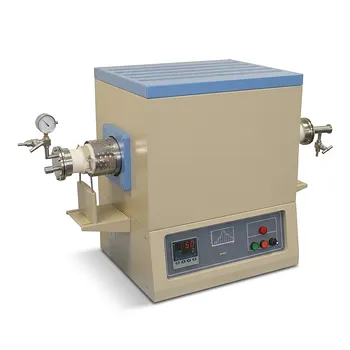
1700C High Temperature Alumina Tube Furnace with 18 Inch Heated Zone and Vacuum Sealing Flanges
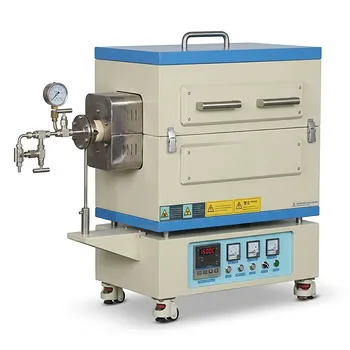
High Temperature Split Tube Furnace 1500C for Material Research Vacuum and Atmosphere Thermal Processing

Compact High Temperature 1600C Tube Furnace with 50mm Alumina Tube and Vacuum Flanges for Material Sintering

1800C High Temperature Compact Vacuum Tube Furnace with 60mm OD Alumina Tube and Kanthal MoSi2 Heating Elements
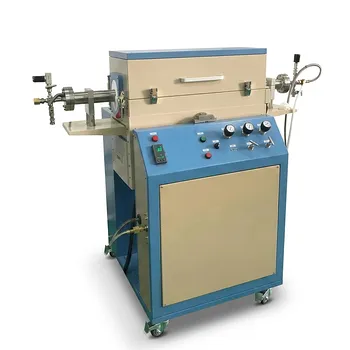
High Temperature Rocking Tube Furnace 1700°C Alumina Processing Tube with Precision Oscillation for Material Synthesis
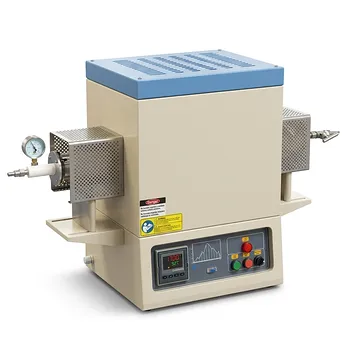
High Temperature Three Zone Tube Furnace 1700C with Alumina Tube and Water Cooled Flanges

High Temperature 1700C Vertical Tube Furnace for Powder Spherification and Material Sintering
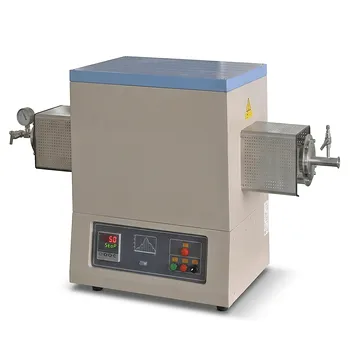
High Temperature 1700C Tube Furnace with 4 Inch OD Alumina Tube and Vacuum Sealing Flanges
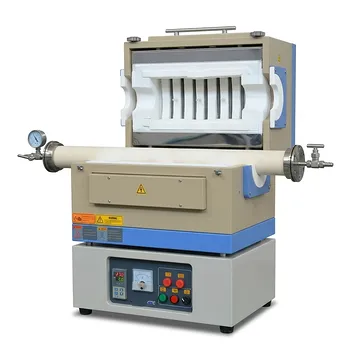
High Temperature 1600C Split Tube Furnace Vacuum Flanges Valves Optional 60mm 80mm Alumina Tube

High Temperature Automated 5 Inch Tube Furnace for Autonomous Material Research and Advanced Laboratory R&D

High Vacuum Compact Tube Furnace 1200C with Integrated Turbo Pump System and 8 Inch Heating Zone
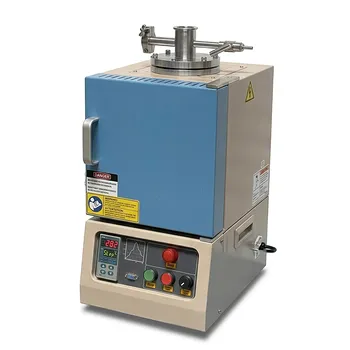
High Temperature Hybrid Muffle and Tube Furnace with Vacuum Capability and PID Control

1100°C High Temperature Quartz Chamber Furnace 8 Inch OD with 7.6 Liter Capacity and Vacuum Atmosphere Capability

1100C Tube Furnace with Vacuum Flange and Programmable Temperature Controller for Material Science and Industrial Heat Treatment
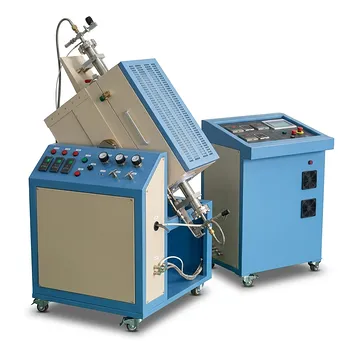
1100C High Pressure Rocking Tube Furnace with 2 Inch Super Alloy Processing Tube for Material Synthesis