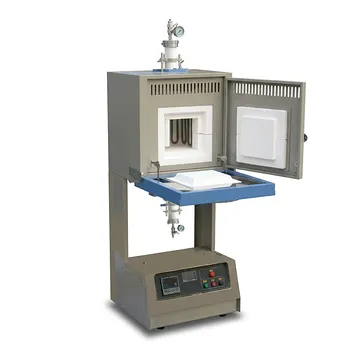
Why is a high-temperature tube furnace required for KOH activation? Create High-Surface Area Carbon Materials
Updated 3 months ago
The high-temperature tube furnace is the indispensable engine for carbon activation. It provides the extreme thermal energy—typically between 700°C and 900°C—required to trigger a chemical redox reaction between potassium hydroxide (KOH) and the carbon precursor. This process "etches" the material at a molecular level, transforming low-surface-area precursors into highly porous structures capable of the rapid ion transport and massive charge storage required for high-performance supercapacitors.
Core Takeaway: A high-temperature tube furnace is required to provide the precise thermal energy for chemical etching while maintaining a strictly inert atmosphere. This dual capability allows KOH to vaporize and intercalate into carbon layers, creating a dense network of pores without allowing the carbon to combust.
The Mechanics of Pore Creation
Chemical Etching of the Carbon Skeleton
At temperatures near 850°C, KOH acts as a powerful etching agent that physically carves a network of micropores and mesopores into the carbon matrix. This thermochemical reaction is what drives the exponential increase in specific surface area, often jumping from a negligible 10 m²/g to over 2400 m²/g.
Vapor Intercalation and Layer Expansion
The furnace provides enough heat to facilitate the release of metallic potassium vapor. This vapor intercalates between the layers of the carbon skeleton, causing an irreversible expansion of the structure. This expansion creates additional pathways for electrolytes, which is critical for the energy storage capacity of the final electrode.
Precise Programmed Temperature Control
The activation process is not instantaneous; it requires precise temperature ramping and dwelling. Tube furnaces allow researchers to program specific heat cycles that dictate the final pore size distribution, ensuring the material is optimized for specific electrolyte ions.
Maintaining a Controlled Environment
Preventing Oxidative Loss
Carbon will readily combust and turn into ash if heated to activation temperatures in the presence of oxygen. The tube furnace provides a sealed environment where a continuous flow of high-purity nitrogen or argon displaces oxygen. This inert atmosphere ensures the carbon skeleton remains intact while the KOH performs its chemical work.
Facilitating Complex Redox Reactions
The furnace environment enables complex chemical reactions such as dehydrogenation and decarboxylation. These reactions are necessary to remove volatiles and amorphous substances trapped between carbon layers. By clearing these "clogs," the furnace effectively opens the pores and maximizes the accessible surface area for ion adsorption.
In-Situ Thermal Ablation
High-temperature treatment serves to ablate the carbon surface, effectively cleaning it of impurities. This thermal "polishing" ensures that the interface between the electrode and the electrolyte is as efficient as possible, reducing internal resistance in the supercapacitor.
Understanding the Trade-offs
Equipment Integrity and Safety
The use of KOH at high temperatures is highly corrosive and can damage the quartz or ceramic tubes of the furnace over time. Researchers must balance the need for high temperatures with the longevity of the equipment, often using specialized liners to protect the furnace internals.
Material Over-Etching
While higher temperatures and longer dwell times increase surface area, they can also lead to over-etching. If the reaction is too aggressive, the carbon walls between pores can collapse, leading to a decrease in structural integrity and a loss of overall conductivity.
Handling Potassium Vapor
The production of metallic potassium vapor presents a safety hazard, as potassium is highly reactive when exposed to air or moisture. Proper furnace ventilation and careful post-process cooling are mandatory to prevent accidental ignition during sample retrieval.
Optimizing Your Activation Protocol
How to Apply This to Your Project
- If your primary focus is Maximum Surface Area: Utilize temperatures between 800°C and 900°C with a high KOH-to-carbon ratio to maximize the etching intensity and pore density.
- If your primary focus is Material Conductivity: Lean toward lower activation temperatures (700°C–750°C) to preserve more of the interconnected carbon skeleton and maintain better electron pathways.
- If your primary focus is Pore Size Control: Use a furnace with highly precise temperature ramping (e.g., 5°C/min) and specific inert gas flow rates to carefully manage the rate of volatile removal and intercalation.
By mastering the thermal and atmospheric variables of the tube furnace, researchers can precisely engineer the nano-architecture of carbon materials to meet the rigorous demands of next-generation energy storage.
Summary Table:
| Feature | Mechanism | Impact on Carbon Material |
|---|---|---|
| High Temp (700-900°C) | Chemical Etching & Intercalation | Dramatically increases specific surface area (up to 2400 m²/g) |
| Inert Atmosphere | Oxygen Displacement (N2/Ar) | Prevents carbon combustion and ensures structural integrity |
| Precise Ramping | Controlled Pore Growth | Tailors pore size distribution for specific electrolyte ions |
| Gas Flow Control | Volatile Removal | Cleans the carbon surface and opens blocked pores |
Optimize Your Carbon Activation with THERMUNITS
As a leading manufacturer of high-temperature laboratory equipment for material science and industrial R&D, THERMUNITS provides the precision and reliability required for advanced chemical activation. Our comprehensive range of thermal processing solutions includes Tube, Muffle, Vacuum, Atmosphere, Rotary, and Hot Press furnaces, as well as CVD/PECVD systems, Dental Furnaces, and various thermal elements tailored for rigorous research environments.
Whether you are engineering nano-architectures for supercapacitors or conducting complex material synthesis, our equipment offers the atmospheric control and thermal stability your project demands.
Contact our experts today to find the perfect furnace for your lab!
References
- Asel Duisenbek, А. B. Tuganbaev. PRODUCTION OF HIGH-PERFORMANCE SUPERCAPACITOR ELECTRODES BASED ON GRAPHENE-LIKE CARBON OBTAINED FROM TEA WASTE. DOI: 10.55452/1998-6688-2024-21-4-186-195
Mentioned Products
- High Temperature Dual Zone Rotating Tube Furnace 1500C Silicon Carbide Heating for Advanced Material Synthesis
- High Temperature 1700C Vertical Tube Furnace for Powder Spherification and Material Sintering
- High Temperature Tube Furnace 1500C with Sliding Flanges and 50mm OD for Rapid Thermal Processing Fast Heating and Cooling
- Compact High Temperature 1600C Tube Furnace with 50mm Alumina Tube and Vacuum Flanges for Material Sintering
- High Temperature 1200C Split Tube Furnace with Optional Quartz Tube Sizes and Vacuum Sealing Flanges for Material Science Research
People Also Ask
- What is the function of CVD furnaces in graphene prep? Enhancing Photodetector Charge Transport
- Why use CVD and a tube furnace for Pd3P0.95/NC catalyst phosphidation? Ensure high phase purity and performance.
- CVD Tube Furnace Advantages for Pd-P Catalyst Durability: Precision Control for 40,000+ Cycles
- How does a rotary tube furnace improve the processing of granular materials? Enhance Uniformity and Reaction Kinetics
- How does a Chemical Vapor Deposition (CVD) tube furnace facilitate synchronized nitridation? Precision Nano-Engineering.

Tech Team · ThermUnits
Last updated on Jun 02, 2026
Related Products
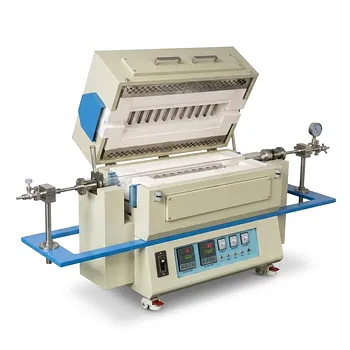
High Temperature Dual Zone Rotating Tube Furnace 1500C Silicon Carbide Heating for Advanced Material Synthesis

High Temperature 1700C Vertical Tube Furnace for Powder Spherification and Material Sintering
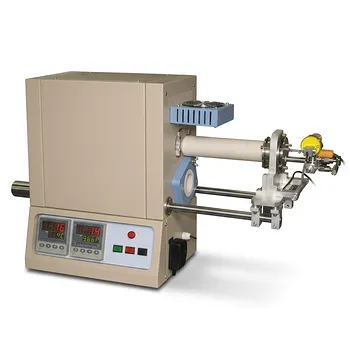
High Temperature Tube Furnace 1500C with Sliding Flanges and 50mm OD for Rapid Thermal Processing Fast Heating and Cooling

Compact High Temperature 1600C Tube Furnace with 50mm Alumina Tube and Vacuum Flanges for Material Sintering
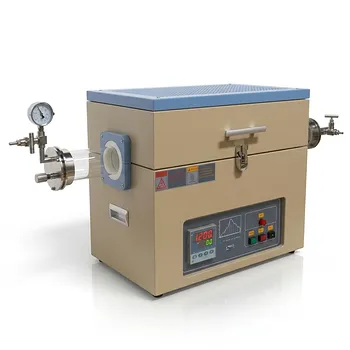
High Temperature 1200C Split Tube Furnace with Optional Quartz Tube Sizes and Vacuum Sealing Flanges for Material Science Research
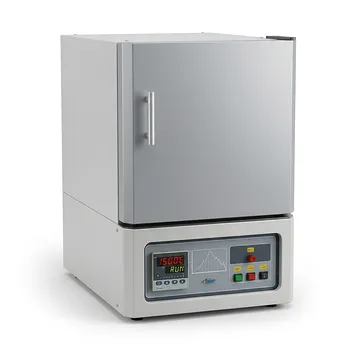
High Temperature 1500C Benchtop Muffle Furnace 3.6L Alumina Fiber Chamber Programmable Controller Sintering Annealing Carbonization Thermal Processing System
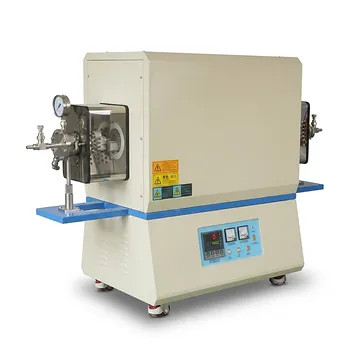
High Temperature 1800C Atmosphere Tube Furnace for CVD Research and Vacuum Sintering Precision Heat Treatment
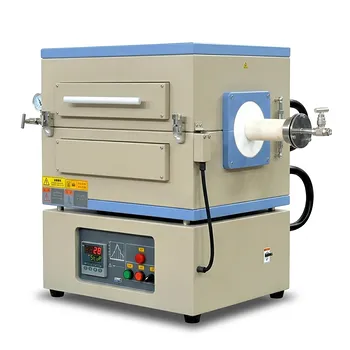
1500°C Split Tube Furnace with Alumina Tube and Vacuum Sealing Flanges for Material Research

High Temperature Automated 5 Inch Tube Furnace for Autonomous Material Research and Advanced Laboratory R&D

High Temperature 1700C Tube Furnace with High Vacuum Turbomolecular Pump System and Multi Channel Mass Flow Controller Gas Mixer
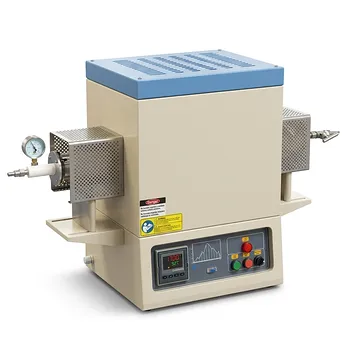
High Temperature Three Zone Tube Furnace 1700C with Alumina Tube and Water Cooled Flanges

1800C High Temperature Compact Vacuum Tube Furnace with 60mm OD Alumina Tube and Kanthal MoSi2 Heating Elements

High Temperature 1700C Benchtop Tube Furnace with 5 Inch Heating Zone High Purity Alumina Tube and Vacuum Sealing Flanges
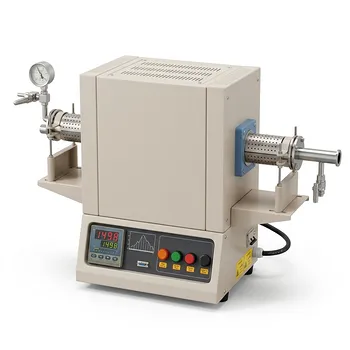
1500C High Temperature Compact Tube Furnace 2 Inch OD with Vacuum Flanges and Complete Accessories
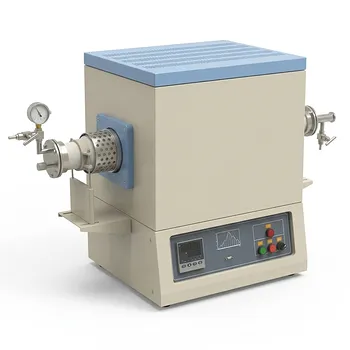
1750°C High Temperature Benchtop Vacuum Atmosphere Tube Furnace with Kanthal Super 1800 Heating Elements and 60mm Alumina Processing Tube
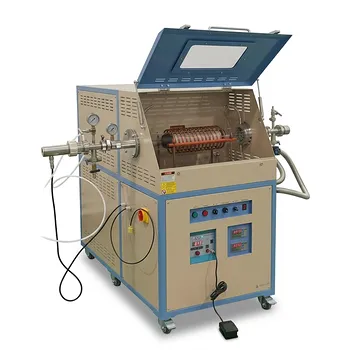
Ultra High Temperature 2300C Induction Heated Graphite Tube Furnace with Infrared Control
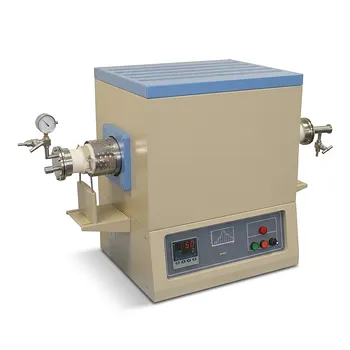
1700C High Temperature Alumina Tube Furnace with 18 Inch Heated Zone and Vacuum Sealing Flanges
1100C High Pressure Rocking Tube Furnace with 2 Inch Super Alloy Processing Tube for Material Synthesis
High Temperature Vertical Hybrid Furnace with Alumina Tube and SiC Heating for SOFC Coin Cell Testing and Atmosphere Processing