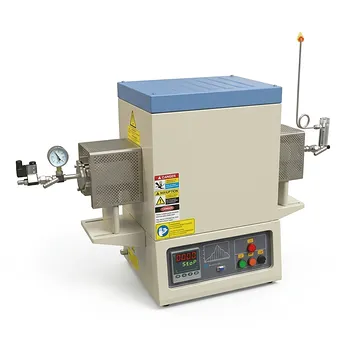
Why is a high-temperature tube furnace essential for OM-TMD/MO TAC? Achieve Precise Mesoporous Material Synthesis
Updated 3 months ago
The high-temperature tube furnace is the indispensable reactor for OM-TMD/MO synthesis because it provides the extreme thermal energy required for phase transformation while simultaneously maintaining a strictly controlled chemical atmosphere. This equipment ensures that metal oxides are precisely converted into dichalcogenides by facilitating the reaction with chalcogen vapors (S, Se, or Te) while preventing undesired oxidation or structural collapse.
A tube furnace enables the delicate balance between high-temperature kinetics and atmospheric chemistry, ensuring that metal oxides are converted into dichalcogenides without losing their ordered mesoporous framework or specific electronic valence states.
The Necessity of a Controlled Chemical Environment
Inhibiting Undesired Oxidation
At the extreme temperatures required for Thermal Assisted Conversion (TAC), transition metals are highly susceptible to uncontrolled oxidation from ambient oxygen or moisture. The sealed environment of a tube furnace allows for the introduction of high-purity argon (Ar) or hydrogen (H2), which effectively isolates the sample and maintains the chemical integrity of the material.
Managing Transition Metal Valence States
The electronic properties of OM-TMDs depend heavily on the valence states of the transition metals. Precise atmosphere control allows researchers to manipulate the reducing potential within the tube, ensuring the metal ions reach the exact oxidation state necessary for the desired semiconductor or metallic phase.
Facilitating Chalcogen-Oxide Reactions
The furnace provides a stable enclosed space where sulfur, selenium, or tellurium vapors can interact directly with oxide surfaces. By maintaining a reducing atmosphere, the furnace promotes the chemical displacement of oxygen by chalcogen atoms, a process fundamental to the TAC method.
Precision Thermal Dynamics and Multi-Zone Control
Synchronizing Chalcogen Sublimation
OM-TMD synthesis often requires multi-zone independent control to manage different thermal requirements within a single process. A lower-temperature zone is used to control the sublimation rate of chalcogen powders, ensuring a steady supply of vapor that matches the reaction rate in the high-temperature central zone.
Executing Multi-Stage Heating Cycles
Complex materials require multi-stage ramp rates and programmed heating cycles to achieve high crystallinity. Precise temperature control prevents thermal shock and allows for specific stages, such as boron doping or nitrogen-doped carbonization, to occur at the optimal kinetic windows.
Driving Phase Transformations
The high-temperature environment provides the necessary energy to drive the solid-state phase transformation from a metal oxide to a transition metal dichalcogenide. This transformation must be carefully managed to ensure the transition is complete without over-sintering the material and losing its high surface area.
Structural Preservation of Mesoporous Frameworks
Preventing Framework Burnout
Many OM-TMDs are supported by or derived from organic-inorganic hybrids that include carbon frameworks. A continuous flow of high-purity inert gas prevents the oxidative burnout of these carbon structures at temperatures as high as 850°C, preserving the mesoporous architecture.
Ensuring Crystallinity and Consistency
The furnace ensures a homogeneous temperature field, which is critical for the growth of large-area, high-crystallinity films. Stable physical and chemical parameters prevent contamination, safeguarding the structural integrity and performance indicators of the final mesoporous product.
Understanding the Trade-offs
The Challenge of Atmosphere Uniformity
While tube furnaces provide excellent isolation, achieving perfect gas flow uniformity across a large batch of samples can be difficult. Variations in flow velocity can lead to localized differences in chalcogen concentration, resulting in non-uniform phase conversion or "dead zones" in the material.
Thermal Gradients and Latency
High-temperature systems often suffer from thermal latency, where the actual temperature of the sample may lag behind the furnace sensor. In multi-zone setups, maintaining a sharp temperature gradient between the sublimation zone and the reaction zone requires sophisticated insulation and precise sensor placement to avoid cross-interference.
How to Apply This to Your Project
Choosing Your Configuration
- If your primary focus is core-shell heterostructures: Utilize a multi-zone tube furnace to independently control the chalcogen vapor pressure and the reaction temperature.
- If your primary focus is preventing transition metal oxidation: Ensure your furnace system is equipped with high-precision mass flow controllers for high-purity Ar/H2 gas delivery and a reliable vacuum seal.
- If your primary focus is high-crystallinity thin films: Prioritize a furnace with high-precision PID controllers capable of executing complex, multi-stage programmed heating cycles.
By mastering the atmospheric and thermal variables within a tube furnace, you can achieve the precise atomic assembly required for high-performance mesoporous materials.
Summary Table:
| Key Feature | Function in TAC Process | Impact on Material Quality |
|---|---|---|
| Atmosphere Control | Purges oxygen; introduces Ar/H2/Chalcogen vapors | Prevents oxidation & ensures correct valence states |
| Multi-Zone Heating | Synchronizes chalcogen sublimation & reaction | Enhances crystallinity & chemical uniformity |
| Precise PID Control | Executes complex multi-stage heating cycles | Preserves mesoporous framework & surface area |
| Sealed Environment | Creates stable solid-gas reaction space | Guarantees phase purity & structural integrity |
Elevate Your Material Research with THERMUNITS
Are you looking to master the complexities of Thermal Assisted Conversion (TAC)? THERMUNITS is a leading manufacturer of high-temperature laboratory equipment designed specifically for material science and industrial R&D. We provide the precision and reliability required to synthesize advanced materials like OM-TMDs and Metal Oxides.
Our comprehensive range of thermal solutions includes:
- Tube & Atmosphere Furnaces: Optimized for precise gas flow and chemical environment control.
- CVD/PECVD Systems: Essential for high-quality thin film and nanomaterial growth.
- Specialized Equipment: Including Muffle, Vacuum, Rotary, Hot Press, and Vacuum Induction Melting (VIM) furnaces.
Maximize your lab's potential with equipment engineered for excellence.
Contact THERMUNITS Today to Discuss Your Project
References
- Zhenliang Li, Li Tao. Universal Synthesis of Core–Shell‐Structured Ordered Mesoporous Transition Metal Dichalcogenides/Metal Oxides Heterostructures with Active Edge Sites. DOI: 10.1002/sstr.202400376
Mentioned Products
- High Temperature Tube Furnace 1500C with Sliding Flanges and 50mm OD for Rapid Thermal Processing Fast Heating and Cooling
- High Temperature 1700C Tube Furnace with High Vacuum Turbomolecular Pump System and Multi Channel Mass Flow Controller Gas Mixer
- 1750°C High Temperature Benchtop Vacuum Atmosphere Tube Furnace with Kanthal Super 1800 Heating Elements and 60mm Alumina Processing Tube
- High Temperature 1700C Benchtop Tube Furnace with 5 Inch Heating Zone High Purity Alumina Tube and Vacuum Sealing Flanges
- 1700C High Temperature Alumina Tube Furnace with 18 Inch Heated Zone and Vacuum Sealing Flanges
People Also Ask
- How are high-temperature tube furnaces utilized to repair etching damage? Precision Lattice Restoration Solutions
- What core conditions does a high-temperature tube furnace provide for rGO aerogels? Mastering Precision Synthesis.
- What role does a high-temperature tube furnace play in CVD synthesis of silicon nanowires? Master VLS Growth Precision.
- How does precision tube furnace control influence CoFe nanoparticle formation? Master Your Bimetallic Synthesis.
- What role does a high-temperature tube furnace play in the sulfidation heat treatment of CoS@C/MXene nanocomposites? Guide

Tech Team · ThermUnits
Last updated on Jun 02, 2026
Related Products
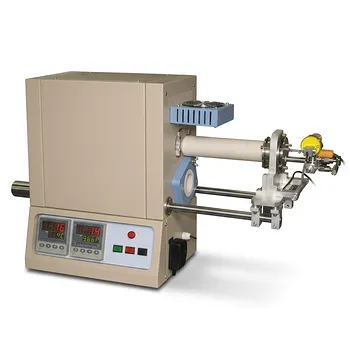
High Temperature Tube Furnace 1500C with Sliding Flanges and 50mm OD for Rapid Thermal Processing Fast Heating and Cooling

High Temperature 1700C Tube Furnace with High Vacuum Turbomolecular Pump System and Multi Channel Mass Flow Controller Gas Mixer
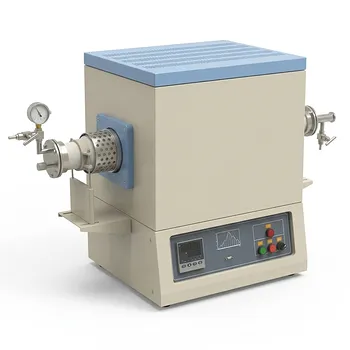
1750°C High Temperature Benchtop Vacuum Atmosphere Tube Furnace with Kanthal Super 1800 Heating Elements and 60mm Alumina Processing Tube

High Temperature 1700C Benchtop Tube Furnace with 5 Inch Heating Zone High Purity Alumina Tube and Vacuum Sealing Flanges
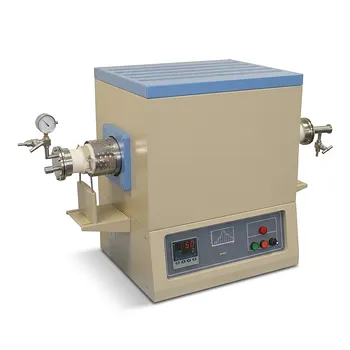
1700C High Temperature Alumina Tube Furnace with 18 Inch Heated Zone and Vacuum Sealing Flanges
High Temperature Split Tube Furnace 1500C for Material Research Vacuum and Atmosphere Thermal Processing

Compact High Temperature 1600C Tube Furnace with 50mm Alumina Tube and Vacuum Flanges for Material Sintering

1800C High Temperature Compact Vacuum Tube Furnace with 60mm OD Alumina Tube and Kanthal MoSi2 Heating Elements
High Temperature Rocking Tube Furnace 1700°C Alumina Processing Tube with Precision Oscillation for Material Synthesis
High Temperature Three Zone Tube Furnace 1700C with Alumina Tube and Water Cooled Flanges

High Temperature 1700C Vertical Tube Furnace for Powder Spherification and Material Sintering
High Temperature 1700C Tube Furnace with 4 Inch OD Alumina Tube and Vacuum Sealing Flanges
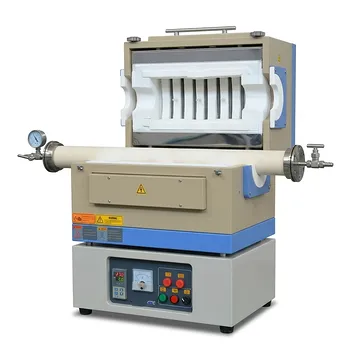
High Temperature 1600C Split Tube Furnace Vacuum Flanges Valves Optional 60mm 80mm Alumina Tube

High Temperature Automated 5 Inch Tube Furnace for Autonomous Material Research and Advanced Laboratory R&D
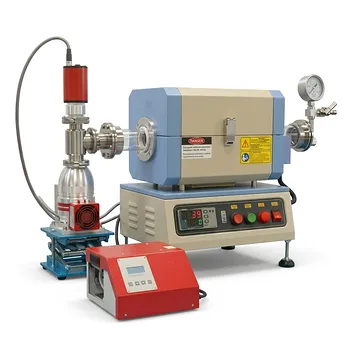
High Vacuum Compact Tube Furnace 1200C with Integrated Turbo Pump System and 8 Inch Heating Zone
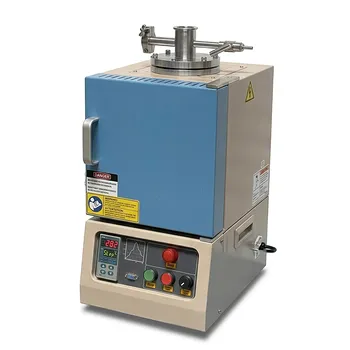
High Temperature Hybrid Muffle and Tube Furnace with Vacuum Capability and PID Control
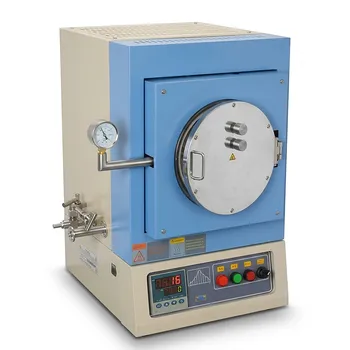
1100°C High Temperature Quartz Chamber Furnace 8 Inch OD with 7.6 Liter Capacity and Vacuum Atmosphere Capability
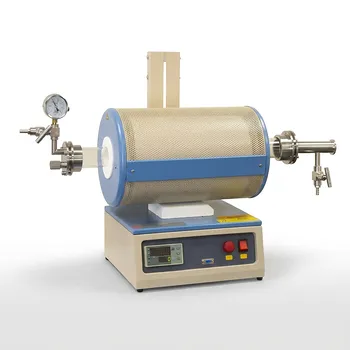
1100C Tube Furnace with Vacuum Flange and Programmable Temperature Controller for Material Science and Industrial Heat Treatment
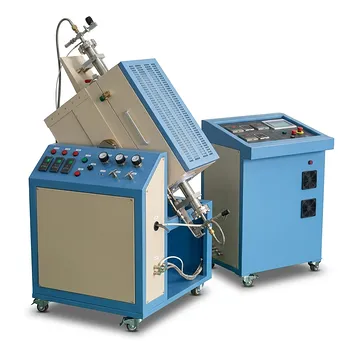
1100C High Pressure Rocking Tube Furnace with 2 Inch Super Alloy Processing Tube for Material Synthesis