Why is a high vacuum tube furnace essential for helium blistering experiments? Protect Surface Integrity and Accuracy
Updated 3 months ago
The necessity of a high vacuum tube furnace equipped with a turbomolecular pump lies in its ability to create a chemically inert environment that preserves the sample surface during intense thermal treatment. At temperatures such as 450°C, copper and other metallic samples are highly susceptible to oxidation, which can physically mask or alter the formation of surface blisters. By maintaining vacuum levels better than 10⁻⁶ torr, this system ensures that the observed changes are the result of helium kinetics—release, aggregation, and blistering—rather than atmospheric contamination.
Core Takeaway: A high vacuum environment is critical because it prevents surface oxidation and impurity interference, allowing researchers to isolate and observe the true dynamic evolution of helium atoms as they migrate from internal traps to form surface blisters.
Maintaining Surface Integrity for Precise Observation
Preventing High-Temperature Oxidation
At elevated temperatures, materials like copper react rapidly with even trace amounts of oxygen. A high vacuum environment (better than 10⁻⁶ torr) is essential to prevent the formation of an oxide layer. If an oxide layer forms, it can act as a physical barrier or change the surface energy, making it impossible to accurately study how helium atoms aggregate and erupt into blisters.
Ensuring Clear Blistering Morphology
The primary goal of these experiments is to observe the dynamic evolution of the material surface. High vacuum ensures that the "clean" heat treatment environment preserves the original surface morphology. This allows for high-resolution post-test analysis, ensuring that every observed feature is a result of helium behavior rather than a chemical artifact.
The Technical Advantage of Turbomolecular Pumps
Rapid Extraction of Residual Gases
During the heating process, materials often release trapped gases or decompose surface oxides, as seen in the baking of niobium cavities. A turbomolecular pump is uniquely suited for this because it provides a high pumping speed for a wide range of gases. It promptly extracts these impurities, preventing them from re-diffusing into the substrate and compromising the experiment's purity.
Achieving Superior Vacuum Thresholds
Unlike standard mechanical pumps that may only reach 0.1 Torr, turbomolecular units are designed for the high-vacuum regime. For helium studies, reaching 10⁻⁶ torr or better is the industry standard for "clean" processing. This level of vacuum is necessary to ensure that the mean free path of any remaining molecules is large enough to minimize collisions with the sample.
Consistency and Soaking Time Control
Precise control of the soaking time—the duration the sample spends at a specific temperature—is vital for kinetic studies. The stability provided by a turbomolecular pump allows for consistent conditions throughout the entire heating cycle. This stability ensures that the timing of helium release from traps and its subsequent aggregation into blisters is reproducible.
Understanding the Trade-offs
System Complexity and Cost
High-vacuum systems with turbomolecular pumps are significantly more expensive and complex than standard vacuum furnaces. They require specialized maintenance, careful handling to avoid "venting" accidents, and often necessitate a "backing" pump to operate.
Sensitivity to Contamination
While these pumps are excellent at maintaining vacuum, they are sensitive to high gas loads or particulate matter. If a sample outgasses too heavily or if the furnace is not pre-cleaned, the turbomolecular pump can be stressed. Researchers must often use cyclic gas displacement or pre-evacuation steps to protect the equipment and ensure the highest purity.
How to Apply This to Your Research
Making the Right Choice for Your Goal
- If your primary focus is observing surface morphology: Prioritize a system that reaches at least 10⁻⁶ torr to ensure that oxidation does not mask the formation of helium blisters.
- If your primary focus is kinetic data and timing: Ensure your furnace allows for rapid cooling and precise "soaking time" control to freeze the helium evolution at specific stages.
- If your primary focus is material purity (e.g., Titanium or Niobium): Use a high-vacuum pump specifically to extract hydrogen and decomposed oxides that would otherwise re-diffuse into your sample at high temperatures.
The integration of a turbomolecular pump into a tube furnace transforms it from a simple heating tool into a precision instrument capable of isolating the complex sub-atomic behaviors of helium in metallic lattices.
Summary Table:
| Feature | Requirement for Helium Studies | Benefit to Research |
|---|---|---|
| Vacuum Level | $\le$ 10⁻⁶ torr | Prevents surface oxidation and masking of blisters |
| Pump Type | Turbomolecular Pump | Rapidly extracts residual gases and outgassed impurities |
| Surface Integrity | High Purity Environment | Preserves morphology for high-resolution post-test analysis |
| Process Control | Stable Soaking Time | Ensures reproducible kinetics for helium migration and release |
Advance Your Material Science Research with THERMUNITS
Precise thermal processing is the backbone of groundbreaking material research. THERMUNITS is a leading manufacturer of high-temperature laboratory equipment, providing the advanced vacuum and atmosphere control required for helium blistering and kinetic studies.
Our comprehensive range of thermal solutions includes:
- High Vacuum & Atmosphere Tube Furnaces
- Muffle, Rotary, and Hot Press Furnaces
- CVD/PECVD Systems and Dental Furnaces
- Vacuum Induction Melting (VIM) & Electric Rotary Kilns
Whether you are in an industrial R&D lab or a university material science department, our equipment is engineered to deliver the stability and vacuum thresholds (up to $10^{-6}$ torr) your experiments demand.
Ready to elevate your heat treatment precision? Contact our engineering team today to discuss your custom furnace requirements!
References
- Daniel Shtuckmeyster, Roni Z. Shneck. The Influence of Crystal Orientation and Thermal State of a Pure Cu on the Formation of Helium Blisters. DOI: 10.3390/met14030260
Mentioned Products
- 1800C High Temperature Compact Vacuum Tube Furnace with 60mm OD Alumina Tube and Kanthal MoSi2 Heating Elements
- 1750°C High Temperature Benchtop Vacuum Atmosphere Tube Furnace with Kanthal Super 1800 Heating Elements and 60mm Alumina Processing Tube
- High Vacuum Compact Tube Furnace 1200C with Integrated Turbo Pump System and 8 Inch Heating Zone
- High Temperature 1700C Tube Furnace with High Vacuum Turbomolecular Pump System and Multi Channel Mass Flow Controller Gas Mixer
- 1200C High Temperature 5 Inch Split Vacuum Tube Furnace with 12 Inch Heating Zone and Separated PID Controller
People Also Ask
- What core functions does a high-temperature vacuum tube furnace provide? Optimize np-CuSn Sintering & Joint Integrity
- What is the primary function of a high-temperature tube furnace in Cu1-N-C synthesis? Precision Thermal Control.
- What impact does the heating rate of a tube furnace have on biochar microstructure? Optimize Your Material R&D.
- Role of Tube Furnace in KNNLST Ceramic Synthesis: Achieve High Phase Purity and Thermal Uniformity
- What is the role of a high-temperature tube furnace in the preparation of S-C3N4? Master Precision Material Synthesis

Tech Team · ThermUnits
Last updated on Jun 02, 2026
Related Products

1800C High Temperature Compact Vacuum Tube Furnace with 60mm OD Alumina Tube and Kanthal MoSi2 Heating Elements
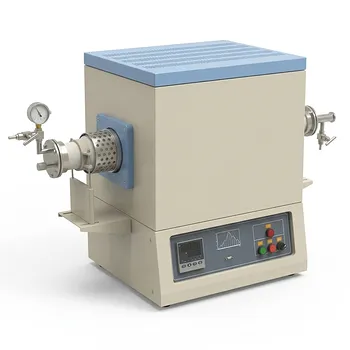
1750°C High Temperature Benchtop Vacuum Atmosphere Tube Furnace with Kanthal Super 1800 Heating Elements and 60mm Alumina Processing Tube

High Vacuum Compact Tube Furnace 1200C with Integrated Turbo Pump System and 8 Inch Heating Zone

High Temperature 1700C Tube Furnace with High Vacuum Turbomolecular Pump System and Multi Channel Mass Flow Controller Gas Mixer
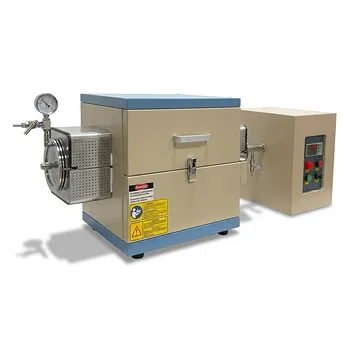
1200C High Temperature 5 Inch Split Vacuum Tube Furnace with 12 Inch Heating Zone and Separated PID Controller
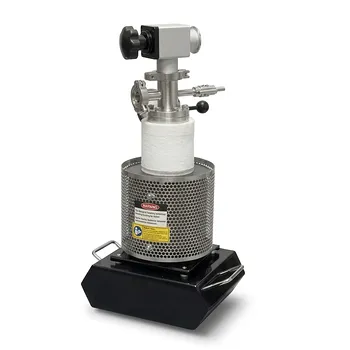
High Temperature 1100C Compact Top Loading Vertical Vacuum Tube Furnace for High Vacuum Noble Metal Melting and Material Research
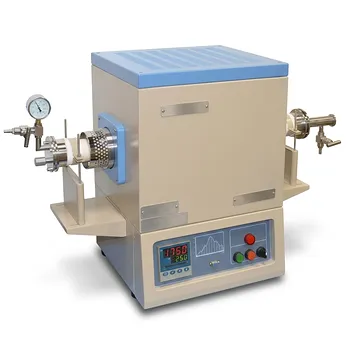
High Temperature Compact Vacuum Tube Furnace 1750C Max 60mm OD Alumina Tube
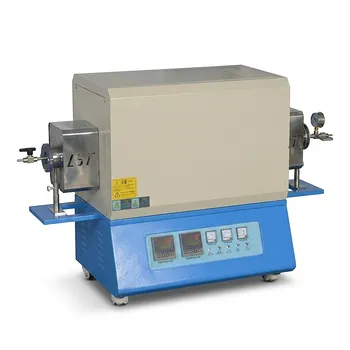
High Temperature Dual Zone Vacuum Tube Furnace for Material Research and CVD Processing

Compact High Temperature 1600C Tube Furnace with 50mm Alumina Tube and Vacuum Flanges for Material Sintering

High Temperature 1700C Benchtop Tube Furnace with 5 Inch Heating Zone High Purity Alumina Tube and Vacuum Sealing Flanges

High Temperature Automated 5 Inch Tube Furnace for Autonomous Material Research and Advanced Laboratory R&D

1100C Tube Furnace with Vacuum Flange and Programmable Temperature Controller for Material Science and Industrial Heat Treatment
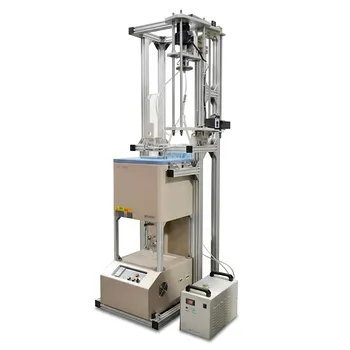
500C Vacuum Vertical Tube Furnace 84mm OD Sample Rotation Lifting System

High Temperature 1700C Vertical Tube Furnace for Powder Spherification and Material Sintering
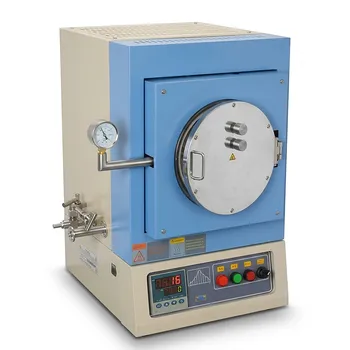
1100°C High Temperature Quartz Chamber Furnace 8 Inch OD with 7.6 Liter Capacity and Vacuum Atmosphere Capability
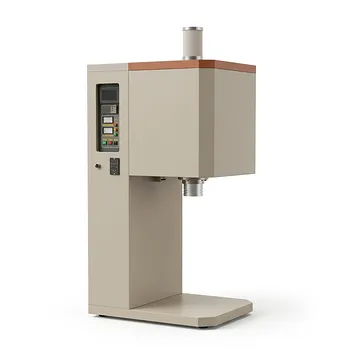
Vertical Openable Tube Furnace 0-1700c High Temperature Laboratory System for CVD and Vacuum Heat Treatment
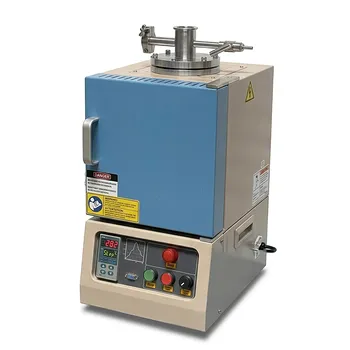
High Temperature Hybrid Muffle and Tube Furnace with Vacuum Capability and PID Control

High Temperature 1700C Six Zone Split Tube Furnace with Alumina Tube and Water Cooled Flanges
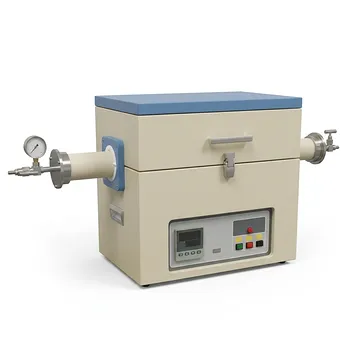
1250C Split Tube Furnace with 3 Inch Mullite Tube and Vacuum Sealing Flanges for Precision Thermal Processing
