Why use vacuum tube furnaces for SiCN(Ni)/BN ceramics? Key to EM Absorption & Material Purity
Updated 3 months ago
The necessity of a controlled atmosphere tube furnace for SiCN(Ni)/BN ceramics stems from the extreme oxygen sensitivity of the polymer precursors. At high temperatures, the polysilazane used to form the SiCN matrix reacts aggressively with even trace amounts of oxygen, which would lead to the total degradation of the ceramic’s structural and functional properties.
Core Takeaway: A high vacuum or high-purity nitrogen environment is critical to prevent the oxidation of the SiCN matrix and ensure that nickel components correctly precipitate into the metallic phases required for electromagnetic wave absorption.
Preventing Oxidative Degradation
The High Reactivity of Polysilazane
The precursor for SiCN ceramics, polysilazane, is highly unstable when exposed to oxygen at elevated temperatures. Without an inert environment, the material will oxidize into silica (SiO2), fundamentally altering the intended chemical composition of the ceramic.
Preserving the SiCN Matrix Structure
Maintaining an oxygen-free zone ensures the integrity of the silicon carbonitride (SiCN) framework. This is essential for the material to retain its mechanical strength and thermal stability during the pyrolysis and sintering stages.
Protecting Hexagonal Boron Nitride (BN)
The BN component is also sensitive to oxygen-induced side reactions at high temperatures. Using high-purity nitrogen displaces ambient air, minimizing defects in the BN structure and ensuring chemical purity.
Phase Evolution and Functional Properties
Reduction of Nickel Components
The tube furnace environment is designed to ensure that nickel is reduced and precipitated as metallic nickel or nickel silicide. These specific phases are the primary drivers of the material's ability to interact with electromagnetic fields.
Securing Electromagnetic Wave Absorption
If oxygen is present, nickel may form oxides rather than the desired metallic precipitates. This failure in phase control would result in a significant loss of the electromagnetic wave absorption properties that make SiCN(Ni)/BN ceramics valuable.
Facilitating Elemental Diffusion
A high vacuum (reaching 10⁻³ Pa) or stable nitrogen flow provides the low-pressure or inert conditions necessary for atoms to rearrange. This allows for the proper graphitization of carbon and the formation of active sites within the matrix.
Atmosphere Dynamics and Uniformity
Removal of Volatile Byproducts
During pyrolysis, various volatile impurities and gases are released from the precursors. A continuous flow of high-purity nitrogen acts as a carrier gas, effectively stripping these impurities away from the sample to prevent contamination.
Achieving Chemical Homogeneity
The stable flow within a tube furnace ensures that the chemical environment is uniform across the entire surface of the ceramic. This consistency is vital for preventing localized defects and ensuring the homogeneity of the resulting morphology.
Understanding the Trade-offs
Vacuum vs. Nitrogen Flow
While both provide protection, a high vacuum is superior for deep degassing and preventing any gas-phase reactions, but it is more technically demanding and expensive. A nitrogen atmosphere is often more cost-effective for bulk processing but requires high-purity tanks to avoid introducing trace oxygen.
Economic Considerations
Using air-atmosphere furnaces with embedding powder protection is an alternative for some ceramics like Silicon Nitride. However, for SiCN(Ni)/BN, this method rarely provides the precise atmospheric control needed to manage the delicate nickel phase precipitation.
The Risk of Trace Oxygen
Even "high-purity" nitrogen can contain enough oxygen to cause surface oxidation if not properly monitored. Technical advisors often recommend additional gas purification systems to ensure the nitrogen stream remains truly inert.
Making the Right Choice for Your Goal
How to Apply This to Your Project
- If your primary focus is maximum electromagnetic performance: Utilize a high vacuum (10⁻³ Pa) to ensure the cleanest precipitation of metallic nickel phases.
- If your primary focus is scalable production: Implement a continuous high-purity nitrogen flow (99.999%+) to maintain an inert environment while reducing operational costs compared to vacuum systems.
- If your primary focus is material purity: Prioritize a tube furnace with a stable gas delivery system to efficiently remove volatile byproducts during the pyrolysis stage.
Precise atmospheric control is the only way to transform reactive polymer precursors into high-performance, functional SiCN(Ni)/BN ceramics.
Summary Table:
| Requirement | Technical Function | Benefit to SiCN(Ni)/BN |
|---|---|---|
| Oxygen Removal | Prevents polysilazane oxidation | Maintains structural integrity of the SiCN matrix |
| Nickel Reduction | Facilitates metallic phase precipitation | Ensures high-performance electromagnetic absorption |
| Inert Atmosphere | Displaces ambient air & protects BN | Minimizes structural defects and chemical impurities |
| Gas/Vacuum Flow | Strips volatile pyrolysis byproducts | Achieves chemical homogeneity and pure morphology |
Elevate Your Material Research with THERMUNITS Precision
As a leading manufacturer of high-temperature laboratory equipment for material science and industrial R&D, THERMUNITS provides the advanced thermal processing solutions required for complex synthesis like SiCN(Ni)/BN ceramics.
Our comprehensive range includes:
- Tube & Atmosphere Furnaces for precise vacuum/gas control
- Muffle, Rotary, & Hot Press Furnaces
- CVD/PECVD Systems and Vacuum Induction Melting (VIM) units
- Dental Furnaces and Electric Rotary Kilns
We ensure your heat treatment process meets the most stringent requirements for purity and phase evolution. Ready to optimize your lab’s efficiency?
Contact THERMUNITS Today to find the perfect thermal solution for your R&D goals!
References
- Yanchun Tong, Shigang Wu. Enhanced electromagnetic wave absorption properties of SiCN(Ni)/BN ceramics by <i>in situ</i> generated Ni and Ni<sub>3</sub>Si. DOI: 10.1039/d3ra07877a
Mentioned Products
- 1800C High Temperature Compact Vacuum Tube Furnace with 60mm OD Alumina Tube and Kanthal MoSi2 Heating Elements
- 1750°C High Temperature Benchtop Vacuum Atmosphere Tube Furnace with Kanthal Super 1800 Heating Elements and 60mm Alumina Processing Tube
- High Vacuum Compact Tube Furnace 1200C with Integrated Turbo Pump System and 8 Inch Heating Zone
- High Temperature 1700C Tube Furnace with High Vacuum Turbomolecular Pump System and Multi Channel Mass Flow Controller Gas Mixer
- 1200C High Temperature 5 Inch Split Vacuum Tube Furnace with 12 Inch Heating Zone and Separated PID Controller
People Also Ask
- What core functions does a high-temperature vacuum tube furnace provide? Optimize np-CuSn Sintering & Joint Integrity
- What is the primary function of a high-temperature tube furnace in Cu1-N-C synthesis? Precision Thermal Control.
- What impact does the heating rate of a tube furnace have on biochar microstructure? Optimize Your Material R&D.
- Role of Tube Furnace in KNNLST Ceramic Synthesis: Achieve High Phase Purity and Thermal Uniformity
- What is the role of a high-temperature tube furnace in the preparation of S-C3N4? Master Precision Material Synthesis

Tech Team · ThermUnits
Last updated on Jun 02, 2026
Related Products

1800C High Temperature Compact Vacuum Tube Furnace with 60mm OD Alumina Tube and Kanthal MoSi2 Heating Elements

1750°C High Temperature Benchtop Vacuum Atmosphere Tube Furnace with Kanthal Super 1800 Heating Elements and 60mm Alumina Processing Tube

High Vacuum Compact Tube Furnace 1200C with Integrated Turbo Pump System and 8 Inch Heating Zone

High Temperature 1700C Tube Furnace with High Vacuum Turbomolecular Pump System and Multi Channel Mass Flow Controller Gas Mixer
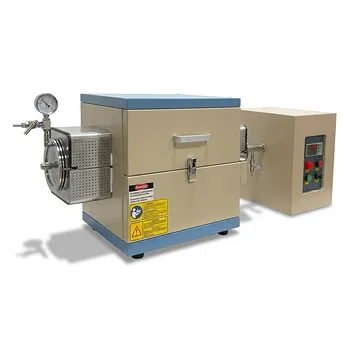
1200C High Temperature 5 Inch Split Vacuum Tube Furnace with 12 Inch Heating Zone and Separated PID Controller
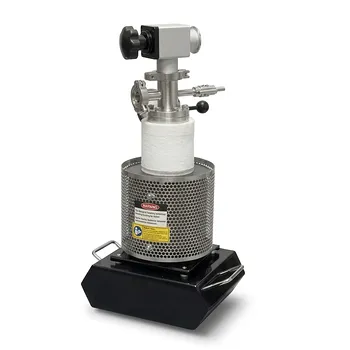
High Temperature 1100C Compact Top Loading Vertical Vacuum Tube Furnace for High Vacuum Noble Metal Melting and Material Research
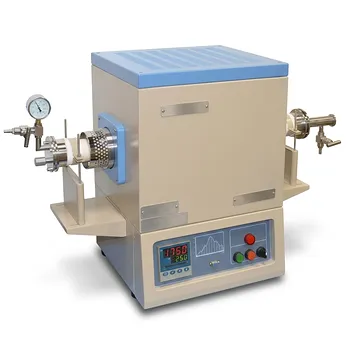
High Temperature Compact Vacuum Tube Furnace 1750C Max 60mm OD Alumina Tube
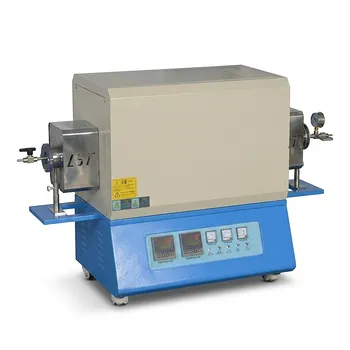
High Temperature Dual Zone Vacuum Tube Furnace for Material Research and CVD Processing

Compact High Temperature 1600C Tube Furnace with 50mm Alumina Tube and Vacuum Flanges for Material Sintering

High Temperature 1700C Benchtop Tube Furnace with 5 Inch Heating Zone High Purity Alumina Tube and Vacuum Sealing Flanges

High Temperature Automated 5 Inch Tube Furnace for Autonomous Material Research and Advanced Laboratory R&D

1100C Tube Furnace with Vacuum Flange and Programmable Temperature Controller for Material Science and Industrial Heat Treatment
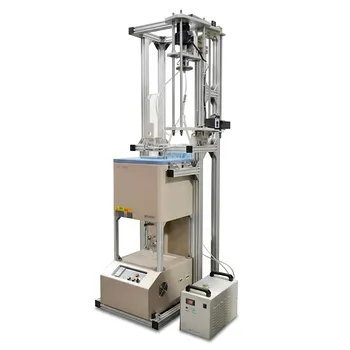
500C Vacuum Vertical Tube Furnace 84mm OD Sample Rotation Lifting System

High Temperature 1700C Vertical Tube Furnace for Powder Spherification and Material Sintering

1100°C High Temperature Quartz Chamber Furnace 8 Inch OD with 7.6 Liter Capacity and Vacuum Atmosphere Capability
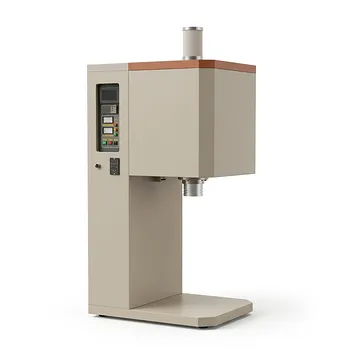
Vertical Openable Tube Furnace 0-1700c High Temperature Laboratory System for CVD and Vacuum Heat Treatment
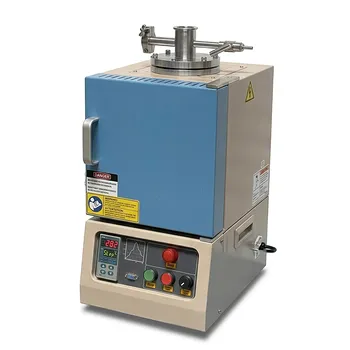
High Temperature Hybrid Muffle and Tube Furnace with Vacuum Capability and PID Control

High Temperature 1700C Six Zone Split Tube Furnace with Alumina Tube and Water Cooled Flanges
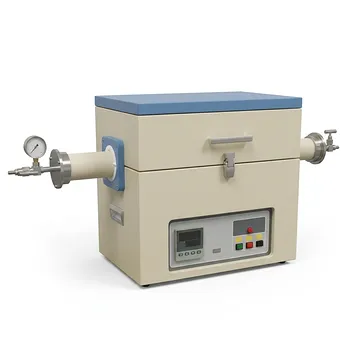
1250C Split Tube Furnace with 3 Inch Mullite Tube and Vacuum Sealing Flanges for Precision Thermal Processing
