Why is a tube furnace with atmosphere control functions required for the preparation of Bulk Mo2C? Ensure High Purity
Updated 3 months ago
Atmosphere-controlled tube furnaces are the industry standard for Bulk $\text{Mo}_2\text{C}$ synthesis because they provide the oxygen-free environment necessary to prevent the immediate oxidation of molybdenum and carbon at high temperatures. This equipment ensures that the chemical reaction follows the carbonization pathway rather than forming unwanted metal oxides, resulting in the high-purity crystalline phases required for catalytic and industrial applications.
The preparation of Bulk $\text{Mo}_2\text{C}$ requires a tube furnace to strictly isolate the reaction from ambient air and provide a stable flow of inert or reducing gases. This control is the only way to ensure the phase purity of the carbide while preventing the degradation of the carbon source.
Preventing High-Temperature Oxidation
The Vulnerability of Molybdenum and Carbon
At temperatures exceeding 750 °C, both molybdenum and carbon sources are highly reactive with atmospheric oxygen. Without a sealed tube furnace, the precursors would undergo rapid oxidation, producing molybdenum oxides ($\text{MoO}_2$ or $\text{MoO}_3$) and CO₂ gas instead of the intended carbide.
Maintaining Chemical Stability
The atmosphere control function allows for vacuum evacuation followed by the introduction of high-purity nitrogen ($\text{N}_2$) or argon ($\text{Ar}$). This process creates a "blanket" that protects the material's chemical integrity throughout the heating and cooling cycles.
Facilitating the Carbonization Reaction
Creating a Reducing Environment
The synthesis of $\text{Mo}_2\text{C}$ often involves converting molybdenum precursors in the presence of carbon-rich gases like methane ($\text{CH}_4$) or hydrogen mixtures. A tube furnace allows for the precise introduction of these gases, maintaining the reductive environment necessary to strip oxygen from precursors and replace it with carbon atoms.
Precise Gas Flow Dynamics
Atmosphere control isn't just about the type of gas, but the constant flow rate. Consistent gas movement removes volatile by-products of the reaction, which shifts the chemical equilibrium toward the formation of high-purity molybdenum carbide nanosheets or bulk structures.
Ensuring Phase Purity and Lattice Integrity
Achieving Specific Crystalline Phases
Bulk $\text{Mo}_2\text{C}$ exists in various phases, such as beta-$\text{Mo}_2\text{C}$, which possess unique catalytic properties. The ability to tightly regulate the gas composition and temperature (often up to 1000 °C) ensures that the specific crystalline lattice forms correctly without structural defects or contamination from heteroatoms.
Protection of Active Sites
For $\text{Mo}_2\text{C}$ used in catalysis, the surface active sites are critical. An atmosphere-controlled furnace prevents these sites from being "poisoned" by oxygen or moisture during the final stages of sintering, ensuring the material remains highly active for electrochemical or chemical reactions.
Understanding the Trade-offs and Risks
Gas Concentration Sensitivity
Using too little reducing gas (like $\text{H}_2$) can result in incomplete carbonization, leaving residual oxides in the bulk material. Conversely, an oversupply of carbon-rich gas can lead to coking, where excess amorphous carbon deposits on the $\text{Mo}_2\text{C}$ surface, blocking active sites.
Sealing and Vacuum Integrity
The primary pitfall in using tube furnaces is mechanical leakage. Even a minor breach in the tube seals at high temperatures can introduce enough oxygen to ruin a batch, making high-quality O-rings and vacuum-tight flanges non-negotiable for successful synthesis.
How to Apply This to Your Project
Making the Right Choice for Your Goal
- If your primary focus is high-purity catalytic nanosheets: Use a horizontal tube furnace capable of maintaining a constant methane/hydrogen flow at 1000 °C to ensure the beta-phase crystalline structure.
- If your primary focus is cost-effective bulk production: Utilize high-purity nitrogen as a primary inert shield to prevent oxidation, as it is generally more economical than argon for large-scale calcination.
- If your primary focus is material stability for sensors: Prioritize a furnace with vacuum evacuation capabilities to ensure all residual oxygen is removed before the heating cycle begins.
By mastering the atmosphere within the tube furnace, you transition from simply heating materials to precisely engineering the chemical identity of the molybdenum carbide.
Summary Table:
| Key Function | Benefit for Mo2C Preparation | Impact on Material Quality |
|---|---|---|
| Oxygen-Free Environment | Prevents high-temperature oxidation | Avoids formation of unwanted MoO2/MoO3 oxides |
| Reducing Atmosphere | Facilitates the carbonization pathway | Ensures conversion of precursors into pure carbide |
| Precise Gas Flow | Removes volatile reaction by-products | Shifts chemical equilibrium toward stable phases |
| Vacuum-Tight Sealing | Maintains atmosphere integrity | Protects surface active sites from moisture/oxygen |
Elevate Your Material Research with THERMUNITS
Optimize your molybdenum carbide synthesis and heat treatment processes with THERMUNITS, a leading manufacturer of high-temperature laboratory equipment for material science and industrial R&D. We provide the precision atmosphere control necessary to ensure phase purity and prevent oxidation in sensitive chemical reactions.
Our comprehensive range of thermal processing solutions includes:
- Tube & Atmosphere Furnaces (Ideal for Bulk Mo2C and CVD/PECVD)
- Vacuum, Muffle, & Hot Press Furnaces
- Rotary Kilns & Vacuum Induction Melting (VIM) Furnaces
- Dental Furnaces & specialized Thermal Elements
Whether you are scaling up bulk production or engineering catalytic nanosheets, our experts are ready to provide the right equipment for your specific needs. Contact us today to find your thermal solution!
References
- Qiuyu Chen, Rongzhi Chen. Facilitated Unidirectional Electron Transmission by Ru Nano Particulars Distribution on MXene Mo2C@g-C3N4 Heterostructures for Enhanced Photocatalytic H2 Evolution. DOI: 10.3390/molecules29071684
Mentioned Products
- 1200°C Atmosphere Controlled Automatic Bottom Loading Furnace with 6 Inch Quartz Tube
- Compact Hybrid Muffle and Tube Furnace for 1000C Controlled Atmosphere Laboratory Material Sintering
- Compact Vertical Split Quartz Tube Furnace with Stainless Steel Vacuum Flanges for Rapid Thermal Quenching and Controlled Atmosphere Material Processing
- 1700C Compact Hybrid Furnace with Dual Layer Box Sintering and Controlled Atmosphere Alumina Tubes
- 1500°C Split Tube Furnace with Alumina Tube and Vacuum Sealing Flanges for Material Research
People Also Ask
- Why is a tube furnace required for FGM-PhG structural color ceramics? Key to Carbon Preservation & Vibrant Color
- Why is an atmosphere-controlled tube furnace required for the pre-sulfidation of NiMo/gamma-Al2O3 catalysts?
- Why is an atmosphere-controlled tube furnace required for 800 °C CNF annealing? Essential for Oxidative Protection.
- Why is an atmosphere-controlled tube furnace required for [email protected]/C preparation? Key for Purity & Structure
- Why is an atmosphere-controlled tube furnace required for single-atom sensor calcination? Ensure Atomic Dispersion.

Tech Team · ThermUnits
Last updated on Jun 03, 2026
Related Products
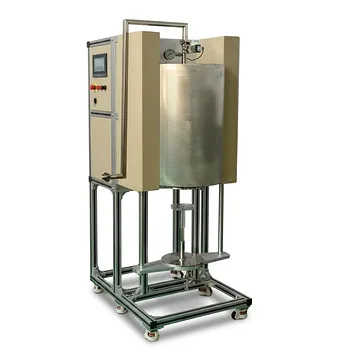
1200°C Atmosphere Controlled Automatic Bottom Loading Furnace with 6 Inch Quartz Tube
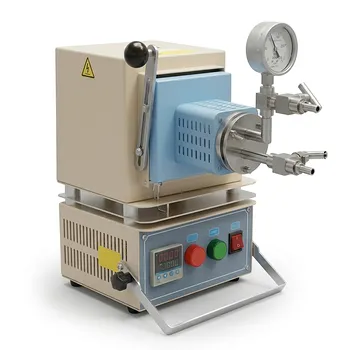
Compact Hybrid Muffle and Tube Furnace for 1000C Controlled Atmosphere Laboratory Material Sintering

Compact Vertical Split Quartz Tube Furnace with Stainless Steel Vacuum Flanges for Rapid Thermal Quenching and Controlled Atmosphere Material Processing
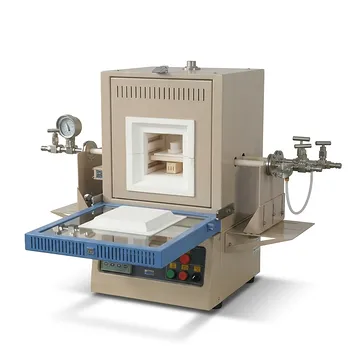
1700C Compact Hybrid Furnace with Dual Layer Box Sintering and Controlled Atmosphere Alumina Tubes
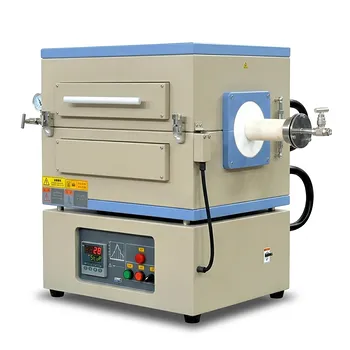
1500°C Split Tube Furnace with Alumina Tube and Vacuum Sealing Flanges for Material Research
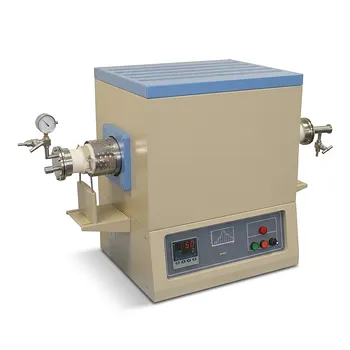
1700C High Temperature Alumina Tube Furnace with 18 Inch Heated Zone and Vacuum Sealing Flanges
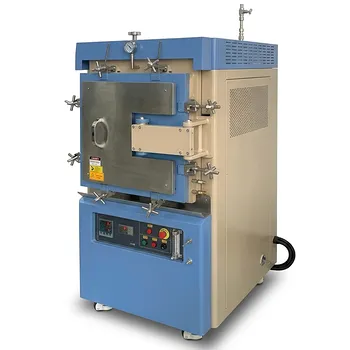
Atmosphere Controlled Muffle Furnace 1700C Maximum Temperature 80L High Capacity Vacuum Inert Gas Box Furnace

Vertical 1700C Vacuum and Atmosphere Tube Furnace with 80mm Alumina Tube
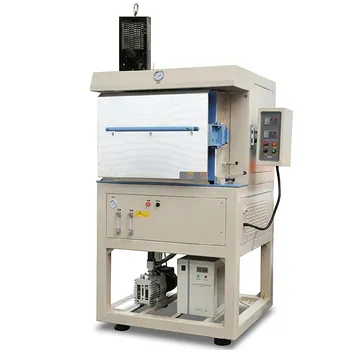
1200C Hydrogen Atmosphere Box Furnace with 5 Heated Sides and 64L Chamber

Three Zone Tube Furnace with 11 Inch or 15 Inch Quartz Tube and Hinged Flanges for Vacuum Atmosphere Heat Treatment
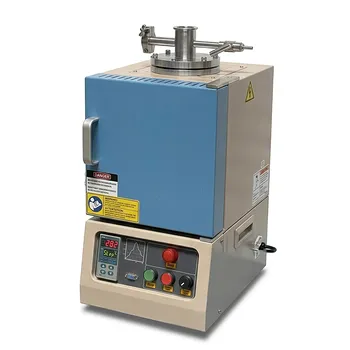
High Temperature Hybrid Muffle and Tube Furnace with Vacuum Capability and PID Control
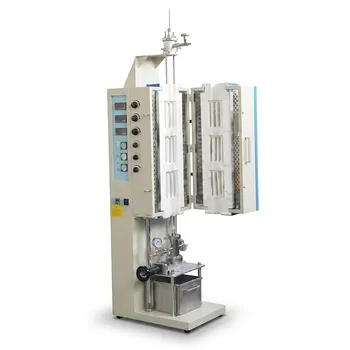
High Temperature Dual Zone Tube Furnace for Material Science Research and Professional Thermal Processing
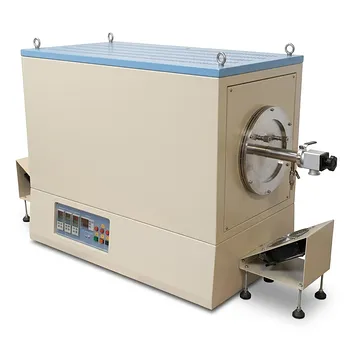
Four Zone Tube Furnace 1100C with 600mm Large Diameter Quartz Tube and Vacuum Flanges

High Temperature 1700C Tube Furnace with High Vacuum Turbomolecular Pump System and Multi Channel Mass Flow Controller Gas Mixer

1200°C 5 Inch Vertical Quartz Tube Furnace with Stainless Steel Vacuum Flanges
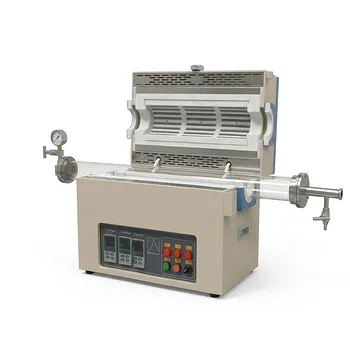
1200°C Three Zone Split Tube Furnace with 18 Inch Heating Length and Vacuum Flanges
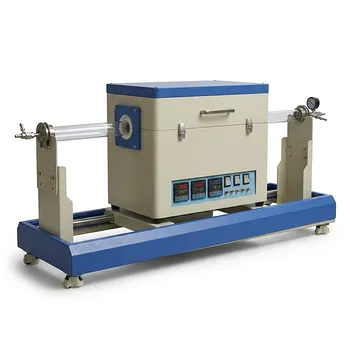
Double Temperature Zone Double Cover Tube Furnace for High Temperature CVD and Vacuum Annealing

High Temperature Automated 5 Inch Tube Furnace for Autonomous Material Research and Advanced Laboratory R&D
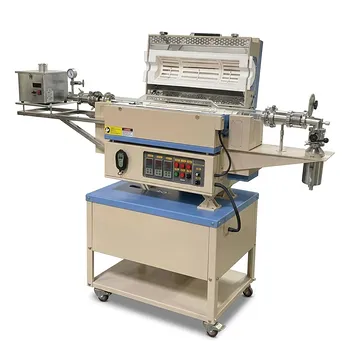
5 Inch Rotary Tube Furnace with Automatic Feeding and Receiving System 1200C Three Zone CVD Powder Processing
