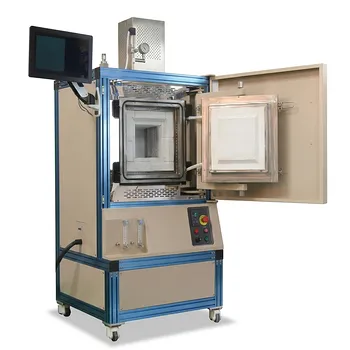
Why is a tube furnace with atmosphere control required for MoO2/MWCNT? Ensure Phase Purity & Protect Scaffolds
Updated 3 months ago
The preparation of MoO2/MWCNT composite materials requires an atmosphere-controlled tube furnace to facilitate the precise chemical reduction of precursors while preventing the oxidative destruction of the carbon nanotube scaffold. This equipment allows for the introduction of specific gas mixtures, such as hydrogen and argon, which are necessary to transform molybdenum precursors into the desired MoO2 phase at high temperatures without burning the underlying carbon material.
Core Takeaway: Atmosphere control is the only way to balance the conflicting requirements of high-temperature thermal processing and the preservation of oxygen-sensitive carbon structures, ensuring that molybdenum precursors reduce to the correct phase purity.
Facilitating Precise Chemical Reduction
Conversion of Precursors to MoO2
A tube furnace allows for the introduction of a reducing gas mixture, such as 10% hydrogen in argon, which is essential for the synthesis. This environment facilitates the reduction of phosphomolybdic acid precursors into molybdenum dioxide (MoO2) nanoparticles.
Precise Phase Control
The synthesis of MoO2 requires a specific oxidation state that is difficult to achieve in an ambient environment. By controlling the atmosphere, researchers can ensure the phase purity of the resulting metal oxide, preventing the formation of undesired molybdenum phases.
High-Temperature Efficiency
The tube furnace can reach and maintain high temperatures, such as 900 °C, which are necessary for the reduction reaction to occur. The enclosed nature of the tube ensures that the thermal energy is applied uniformly while the gas flow remains consistent.
Protecting the Carbon Nanotube Scaffold
Preventing Oxidative Loss
Multi-walled carbon nanotubes (MWCNTs) are highly susceptible to over-oxidation and combustion when heated in the presence of oxygen. The atmosphere-controlled furnace excludes oxygen, ensuring the MWCNTs remain structurally intact throughout the process.
Maintaining Structural Stability
By providing a strict inert or reductive environment, the furnace prevents the carbon matrix from degrading into CO2. This allows the MWCNTs to serve as a stable, highly conductive skeleton for the molybdenum dioxide nanoparticles.
Managing Organic Decomposition
During high-temperature treatment, organic components or ligands must decompose under anaerobic conditions. The atmosphere control ensures these frameworks transform into useful carbon networks rather than burning away.
Understanding the Trade-offs and Pitfalls
Gas Mixture Sensitivity
The ratio of reducing gases to inert gases is critical; an incorrect balance can lead to over-reduction (forming metallic molybdenum) or under-reduction (leaving MoO3). Precise flow meters and high-purity gas sources are required to maintain this balance.
Temperature Uniformity Risks
In a horizontal tube furnace, temperature gradients can occur if the sample is not placed in the center of the heating zone. This can result in inhomogeneous composites where some areas are fully reduced while others remain as precursors.
Seal Integrity Challenges
Any leak in the furnace seals can introduce trace oxygen, which at 900 °C can lead to the rapid loss of the MWCNT material. Regular pressure testing and vacuum evacuation are necessary steps to ensure the integrity of the protective environment.
How to Apply This to Your Project
Recommendations for Success
- If your primary focus is Phase Purity: Use a calibrated gas mixing system to ensure the hydrogen-to-argon ratio is exact, and perform a vacuum purge before heating to remove residual oxygen.
- If your primary focus is MWCNT Integrity: Maintain a continuous flow of high-purity inert gas (like Nitrogen or Argon) throughout the cooling phase to prevent oxidation while the material is still hot.
- If your primary focus is Scalability: Opt for a tube furnace with a larger diameter and multiple heating zones to ensure uniform temperature distribution across larger batches of composite material.
The atmosphere-controlled tube furnace is the indispensable tool that bridges the gap between high-temperature chemistry and material stability in the production of advanced carbon-metal oxide hybrids.
Summary Table:
| Requirement | Benefit of Atmosphere Control | Risk of Ambient Heating |
|---|---|---|
| Phase Control | Precise reduction of precursors to pure MoO2 | Undesired phases (MoO3 or metallic Mo) |
| CNT Protection | Prevents oxidative loss of carbon nanotubes | Carbon scaffold burns away into CO2 |
| Gas Management | Controlled delivery of H2/Ar mixtures | Uncontrolled oxidation or over-reduction |
| Thermal Uniformity | Consistent environment at 900°C | Inhomogeneous composite properties |
Elevate Your Nanomaterial Synthesis with THERMUNITS
Precise atmosphere control is the difference between a high-performance composite and a failed experiment. THERMUNITS is a leading manufacturer of high-temperature laboratory equipment specifically designed for material science and industrial R&D.
Whether you are preparing MoO2/MWCNT hybrids, developing CVD/PECVD systems, or performing complex heat treatments, our comprehensive range of Atmosphere and Vacuum Tube Furnaces provides the stability and gas-flow precision your research demands. Our solutions—including Muffle, Rotary, and Hot Press furnaces—are engineered to maintain structural integrity and phase purity for the most sensitive materials.
Ready to optimize your thermal processing? Contact our technical experts today to discuss your specific requirements and discover how THERMUNITS can provide the professional equipment needed for your next breakthrough.
References
- Jian‐Chun Ma, Jianfeng Jia. Fabrication of a Molybdenum Dioxide/Multi-Walled Carbon Nanotubes Nanocomposite as an Anodic Modification Material for High-Performance Microbial Fuel Cells. DOI: 10.3390/molecules29112541
Mentioned Products
- 1200°C Atmosphere Controlled Automatic Bottom Loading Furnace with 6 Inch Quartz Tube
- Compact Vertical Split Quartz Tube Furnace with Stainless Steel Vacuum Flanges for Rapid Thermal Quenching and Controlled Atmosphere Material Processing
- Compact Hybrid Muffle and Tube Furnace for 1000C Controlled Atmosphere Laboratory Material Sintering
- Three Temperature Zone Rotating Tube Furnace for Material Sintering and Controlled Atmospheric Heat Treatment
- High Temperature Tilting Rotary Tubular Furnace for Continuous Powder Thermal Processing and Controlled Atmosphere Sintering
People Also Ask
- Why is a tube furnace required for FGM-PhG structural color ceramics? Key to Carbon Preservation & Vibrant Color
- Why is an atmosphere-controlled tube furnace required for the pre-sulfidation of NiMo/gamma-Al2O3 catalysts?
- Why is an atmosphere-controlled tube furnace required for 800 °C CNF annealing? Essential for Oxidative Protection.
- Why is an atmosphere-controlled tube furnace required for [email protected]/C preparation? Key for Purity & Structure
- Why is an atmosphere-controlled tube furnace required for single-atom sensor calcination? Ensure Atomic Dispersion.

Tech Team · ThermUnits
Last updated on Jun 03, 2026
Related Products
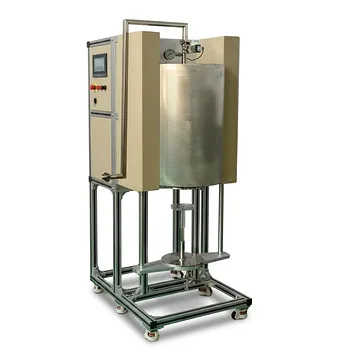
1200°C Atmosphere Controlled Automatic Bottom Loading Furnace with 6 Inch Quartz Tube

Compact Vertical Split Quartz Tube Furnace with Stainless Steel Vacuum Flanges for Rapid Thermal Quenching and Controlled Atmosphere Material Processing
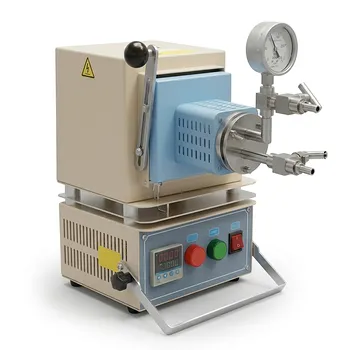
Compact Hybrid Muffle and Tube Furnace for 1000C Controlled Atmosphere Laboratory Material Sintering
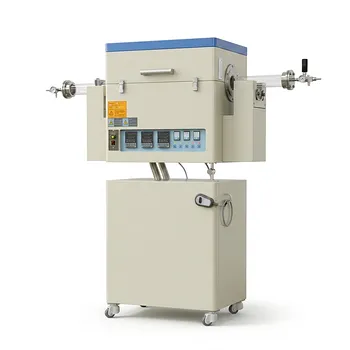
Three Temperature Zone Rotating Tube Furnace for Material Sintering and Controlled Atmospheric Heat Treatment
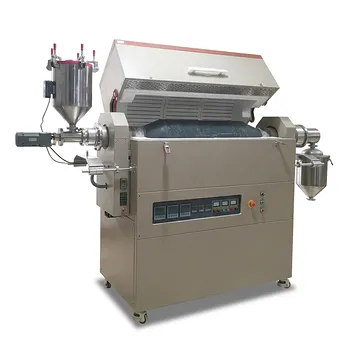
High Temperature Tilting Rotary Tubular Furnace for Continuous Powder Thermal Processing and Controlled Atmosphere Sintering
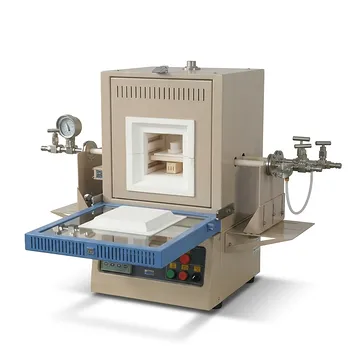
1700C Compact Hybrid Furnace with Dual Layer Box Sintering and Controlled Atmosphere Alumina Tubes
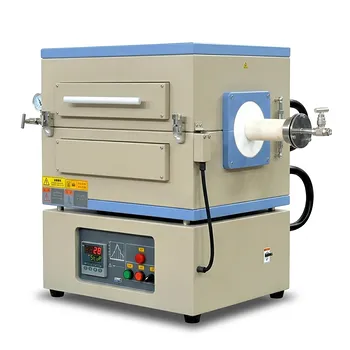
1500°C Split Tube Furnace with Alumina Tube and Vacuum Sealing Flanges for Material Research
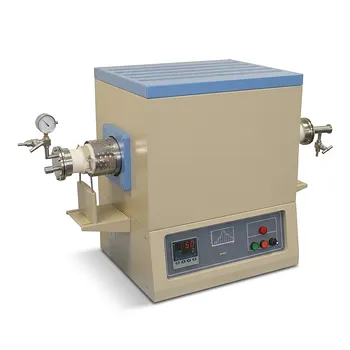
1700C High Temperature Alumina Tube Furnace with 18 Inch Heated Zone and Vacuum Sealing Flanges
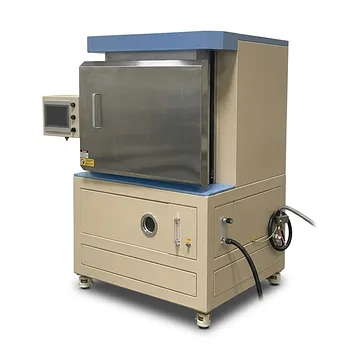
1650C High Temperature Atmosphere Controlled Box Furnace with 65L Chamber for Advanced Material Sintering and Industrial Heat Treatment

Vertical 1700C Vacuum and Atmosphere Tube Furnace with 80mm Alumina Tube
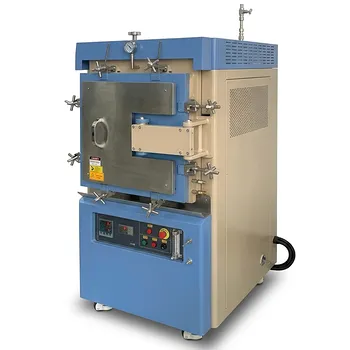
Atmosphere Controlled Muffle Furnace 1700C Maximum Temperature 80L High Capacity Vacuum Inert Gas Box Furnace

Three Zone Tube Furnace with 11 Inch or 15 Inch Quartz Tube and Hinged Flanges for Vacuum Atmosphere Heat Treatment
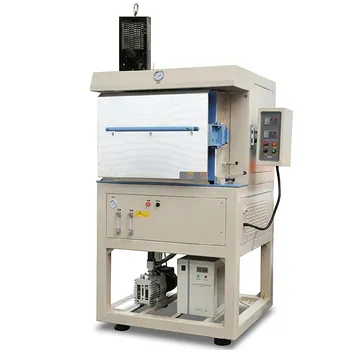
1200C Hydrogen Atmosphere Box Furnace with 5 Heated Sides and 64L Chamber
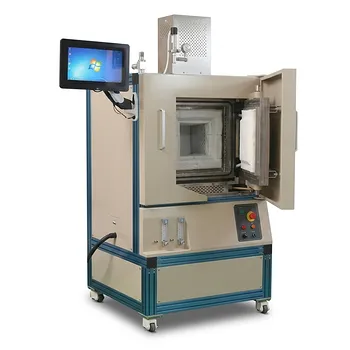
High Temperature Oxygen and Inert Atmosphere Controlled Furnace 8 Liter 1700C Sintering System for Advanced Materials RD
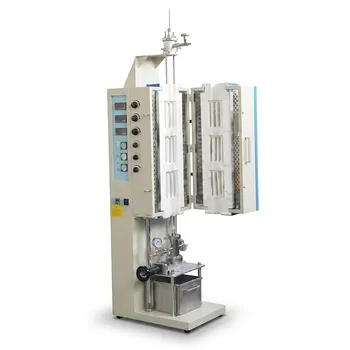
High Temperature Dual Zone Tube Furnace for Material Science Research and Professional Thermal Processing

High Temperature 1700C Tube Furnace with High Vacuum Turbomolecular Pump System and Multi Channel Mass Flow Controller Gas Mixer

1200°C 5 Inch Vertical Quartz Tube Furnace with Stainless Steel Vacuum Flanges
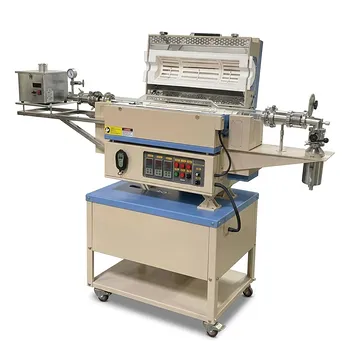
5 Inch Rotary Tube Furnace with Automatic Feeding and Receiving System 1200C Three Zone CVD Powder Processing
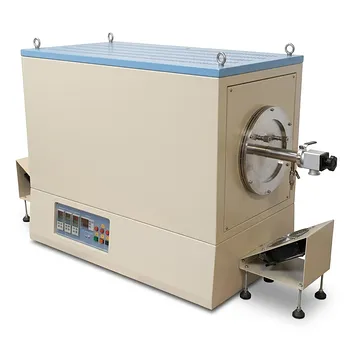
Four Zone Tube Furnace 1100C with 600mm Large Diameter Quartz Tube and Vacuum Flanges