Why is a vacuum-sealed quartz glass tube necessary for Sr4Os3O12 synthesis? Essential Safety & Crystal Growth Insights
Updated 3 months ago
The necessity of a vacuum-sealed quartz tube for $Sr_{4}Os_{3}O_{12}$ synthesis is driven by critical safety requirements and the physics of crystal growth. At the synthesis temperature of 800°C, osmium reacts to form highly toxic and volatile intermediates, specifically osmium tetroxide ($OsO_{4}$). The sealed tube acts as a primary containment vessel to prevent the leakage of these hazardous vapors while providing the controlled environment required for vapor transport reactions.
Core Takeaway: A vacuum-sealed quartz tube serves as a closed chemical reactor that prevents the escape of toxic osmium vapors, isolates the reaction from atmospheric oxygen, and creates the specific vapor pressure conditions necessary for growing high-quality single crystals.
Containment of Toxic Volatile Intermediates
Preventing Osmium Tetroxide Leakage
Osmium is notorious for forming $OsO_{4}$ at high temperatures, a compound that is both highly volatile and extremely toxic. Without a hermetically sealed environment, these vapors would escape into the laboratory, posing a severe health risk to researchers.
Managing Internal Gas Pressure
At 800°C, the internal pressure of volatile intermediates increases significantly. The physical properties of quartz allow the tube to withstand these internal pressures without rupturing, ensuring the reaction remains self-contained throughout the heating cycle.
Creating the Physical Environment for Crystal Growth
Facilitating Vapor Transport Reactions
The growth of high-quality $Sr_{4}Os_{3}O_{12}$ single crystals relies on vapor transport reactions. A vacuum-sealed environment allows the reactants to transition into the gas phase and migrate to a nucleation site, a process that is inhibited by the presence of atmospheric air.
Precise Stoichiometric Control
By sealing the reactants in a fixed volume, the system prevents the loss of volatile components to the outside environment. This ensures that the chemical stoichiometry (the ratio of elements) remains exactly as intended, leading to the production of pure-phase crystals without unwanted byproducts.
Isolation from Atmospheric Contamination
Eliminating Oxygen and Moisture Interference
Similar to the synthesis of other sensitive compounds like chalcogenides or intermetallics, $Sr_{4}Os_{3}O_{12}$ synthesis requires protection from atmospheric oxygen and moisture. The high-vacuum seal removes these reactive gases, which would otherwise oxidize the raw materials and create impurities.
Ensuring Chemical Stability
An ultra-low oxygen environment guarantees that the transition metals remain in the desired oxidation state. This isolation is critical for the chemical stability of the compound during prolonged heat treatments at 800°C.
Understanding the Trade-offs
Pressure and Explosion Risks
While quartz is strong, the high internal vapor pressure generated by volatile oxides creates a risk of mechanical failure. If the heating rate is too fast or the material load is too high, the quartz tube can explode, highlighting the need for precise temperature control.
Material Limitations of Quartz
Quartz is selected for its chemical inertness and high-temperature resistance, but it can become brittle or undergo devitrification over long reaction periods. Furthermore, while quartz is generally non-reactive, certain aggressive flux agents or high-alkali reactants can etch the inner walls, potentially introducing silicon impurities into the sample.
How to Apply Detailed Containment Protocols
Recommendations for High-Temperature Synthesis
To ensure a successful and safe synthesis of volatile metal oxides, consider the following technical guidelines:
- If your primary focus is Safety and Containment: Always perform a leak test on your vacuum seals and ensure the quartz wall thickness is sufficient to withstand the calculated vapor pressure at your target temperature.
- If your primary focus is High Crystal Quality: Use a high-vacuum pump (better than $10^{-3}$ Pa) to evacuate the tube before sealing, as this minimizes residual gas interference during the vapor transport process.
- If your primary focus is Stoichiometric Purity: Carefully calculate your starting material mass to account for the internal volume of the quartz tube, ensuring the vapor phase does not deplete the solid-state reaction.
The vacuum-sealed tube is not merely a container, but a precise thermodynamic tool required to master the volatile chemistry of rare earth transition metal oxides.
Summary Table:
| Function | Key Benefit | Technical Reason |
|---|---|---|
| Safety | Toxic Containment | Prevents volatile $OsO_4$ leakage into the lab environment. |
| Growth | Vapor Transport | Facilitates gas-phase migration required for single crystals. |
| Purity | Stoichiometric Control | Keeps chemical ratios exact by preventing loss of volatile parts. |
| Isolation | Atmospheric Shield | Eliminates oxygen and moisture that cause unwanted oxidation. |
Maximize Your Material Synthesis Success with THERMUNITS
Precise control over high-temperature environments is critical for synthesizing sensitive compounds like $Sr_4Os_3O_{12}$. THERMUNITS is a leading manufacturer of high-performance laboratory equipment designed specifically for material science and industrial R&D.
We provide a comprehensive range of thermal processing solutions tailored to your needs, including:
- Tube & Vacuum Furnaces: Perfect for sealed quartz tube reactions and vapor transport.
- Atmosphere & Muffle Furnaces: For controlled oxidation and sintering.
- Specialized Systems: Including CVD/PECVD, Rotary Kilns, Vacuum Induction Melting (VIM), and Hot Press furnaces.
Our equipment ensures the thermal stability and atmospheric purity required for high-quality crystal growth. Let our expertise in laboratory heat treatment elevate your research outcomes.
Ready to upgrade your lab? Contact our experts today!
References
- Gohil S. Thakur, Michael Ruck. Sr<sub>4</sub>Os<sub>3</sub>O<sub>12</sub> – A Layered Osmate(V,VI) that is Magnetic Close to Room Temperature. DOI: 10.1002/zaac.202400109
Mentioned Products
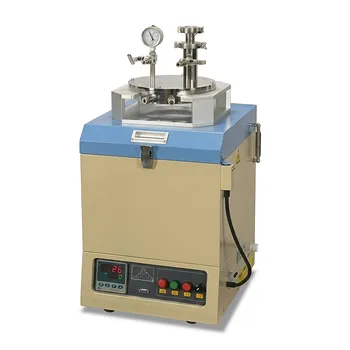
- Compact Vertical Split Quartz Tube Furnace with Stainless Steel Vacuum Flanges for Rapid Thermal Quenching and Controlled Atmosphere Material Processing
- 1200°C 5 Inch Vertical Quartz Tube Furnace with Stainless Steel Vacuum Flanges
- High Temperature 1200C Split Tube Furnace with Hinged Vacuum Flanges and 4 Inch Quartz Tube for Laboratory Research
- High Temperature Rocking Tube Furnace with Quartz Tube and Vacuum Flange for Materials Synthesis
- Split Vertical Tube Furnace with 1200C Quartz Tube and Stainless Steel Vacuum Flanges for Rapid Thermal Processing
People Also Ask
- Why integrate a vertical split tube furnace with hydraulic loading for HSECC? Essential for In-Situ Fire Simulation.
- What is the role of a split vertical tube furnace during flash sintering of 8YSZ and 20SDC? Master Ultra-Fast R&D
- What is the primary engineering purpose for using a customized ventilation hood when operating a split tube furnace? RCF Safety
- Why is a quartz tube furnace necessary for phosphorus-doped MoS2/GO preparation? Ensure Purity & Precise Synthesis
- What is the primary function of a Quartz Tube Furnace in ZnO VLS growth? Master High-Precision Nanowire Synthesis

Tech Team · ThermUnits
Last updated on Jun 02, 2026
Related Products

Compact Vertical Split Quartz Tube Furnace with Stainless Steel Vacuum Flanges for Rapid Thermal Quenching and Controlled Atmosphere Material Processing

1200°C 5 Inch Vertical Quartz Tube Furnace with Stainless Steel Vacuum Flanges
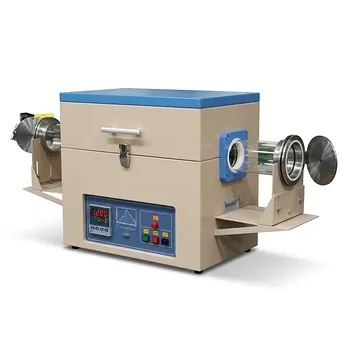
High Temperature 1200C Split Tube Furnace with Hinged Vacuum Flanges and 4 Inch Quartz Tube for Laboratory Research
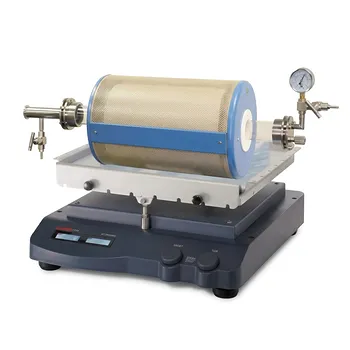
High Temperature Rocking Tube Furnace with Quartz Tube and Vacuum Flange for Materials Synthesis
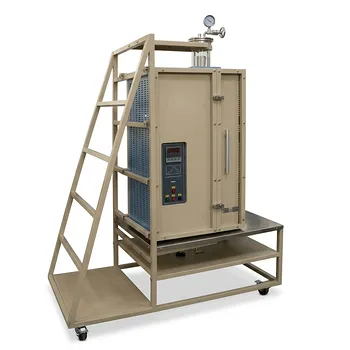
Split Vertical Tube Furnace with 1200C Quartz Tube and Stainless Steel Vacuum Flanges for Rapid Thermal Processing
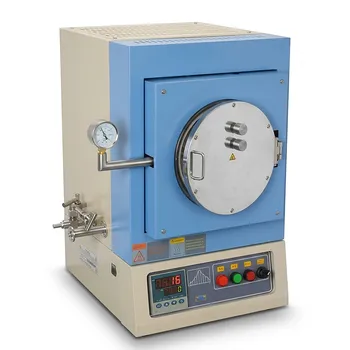
1100°C High Temperature Quartz Chamber Furnace 8 Inch OD with 7.6 Liter Capacity and Vacuum Atmosphere Capability

Three Zone Tube Furnace with 11 Inch or 15 Inch Quartz Tube and Hinged Flanges for Vacuum Atmosphere Heat Treatment
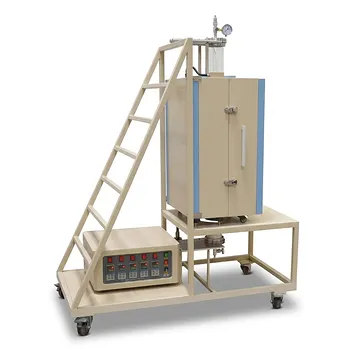
Five Zone Split Vertical Tube Furnace 1200C Max with 4 Inch Quartz Tube and Stainless Steel Vacuum Flanges
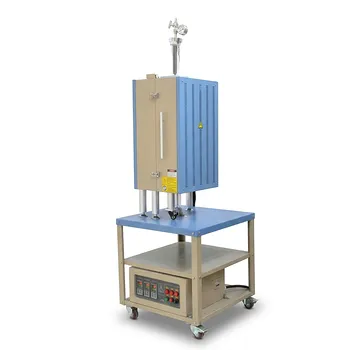
1200C Three Zone Vertical Tube Furnace with 2 Inch Quartz Tube and Vacuum Flanges
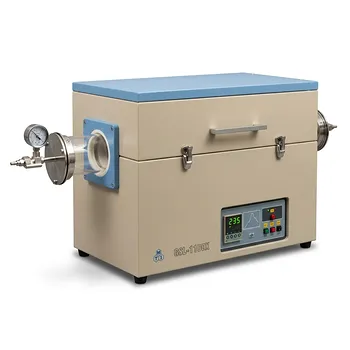
Single Zone Tube Furnace 5 Inch Quartz Tube 36 Inch Heating Zone Vacuum Flanges
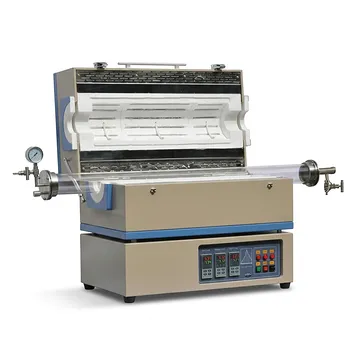
24 Inch Three Zone Split Tube Furnace with Optional Quartz Tube and Vacuum Flange System for High Temperature Material Synthesis
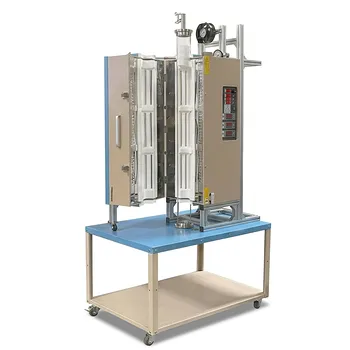
1200C Three Zone Split Vertical Tube Furnace 4 Inch Quartz Tube Stainless Steel Vacuum Flanges

High Temperature Automated 5 Inch Tube Furnace for Autonomous Material Research and Advanced Laboratory R&D
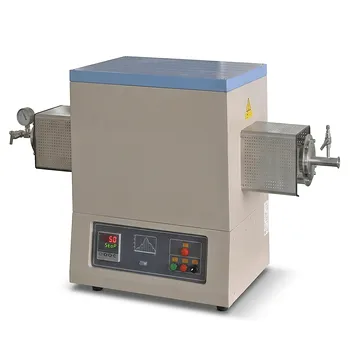
High Temperature 1700C Tube Furnace with 4 Inch OD Alumina Tube and Vacuum Sealing Flanges

High Temperature 1700C Benchtop Tube Furnace with 5 Inch Heating Zone High Purity Alumina Tube and Vacuum Sealing Flanges
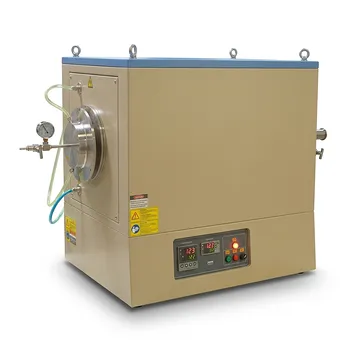
1100°C Large Diameter Quartz Tube Furnace with 24 Inch Heating Zone and Water Cooled Flanges
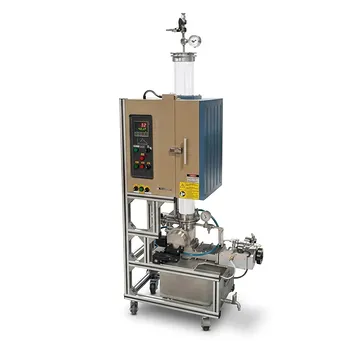
1200C High Temperature Atmosphere Controlled Vertical Quenching Tube Furnace with 4 Inch Quartz Tube
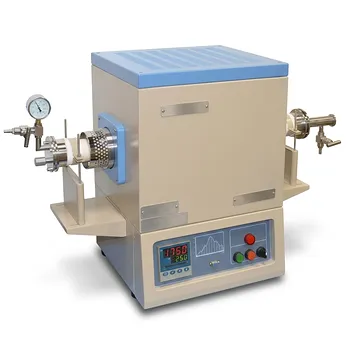
High Temperature Compact Vacuum Tube Furnace 1750C Max 60mm OD Alumina Tube
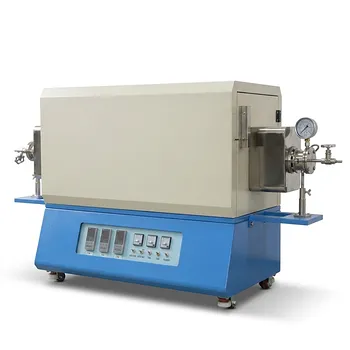
Three Temperature Zone High Temperature Vacuum Tube Furnace for CVD and Material Sintering