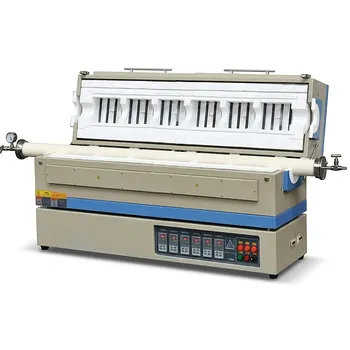
Why is an atmosphere-controlled tube furnace essential for the defect engineering of aluminosilicates? Expert Insights
Updated 3 months ago
The necessity of an atmosphere-controlled tube furnace lies in its ability to maintain a strictly anaerobic environment, which is the only condition under which magnesium can effectively reduce aluminosilicates. By providing a precise argon flow at temperatures around 650 °C, the furnace prevents the immediate oxidation of magnesium powder, ensuring it remains reactive enough to strip oxygen atoms from the aluminosilicate framework and create the desired oxygen vacancies.
Core Takeaway: An atmosphere-controlled tube furnace acts as a chemical gatekeeper, isolating the reaction from atmospheric oxygen and moisture to allow magnesium to engineer specific defects (oxygen vacancies) within the aluminosilicate structure without secondary oxidation.
The Chemical Necessity of an Anaerobic Environment
Preventing Premature Magnesium Oxidation
Magnesium is a highly reactive reducing agent that oxidizes almost instantly when exposed to oxygen at elevated temperatures. The tube furnace uses a sealed environment to eliminate ambient air, ensuring that the magnesium powder reacts with the aluminosilicate framework rather than atmospheric oxygen.
Enabling Oxygen Atom Extraction
For "defect engineering" to occur, magnesium must successfully remove oxygen atoms from the aluminosilicate lattice. Without the inert argon atmosphere provided by the furnace, the magnesium would be consumed by external oxygen, leaving the internal framework of the aluminosilicate unchanged and free of the intended vacancies.
Preserving Chemical Stoichiometry
Precise atmosphere control ensures that the final material retains its intended chemical stoichiometry. By isolating the sample from moisture and oxygen, the furnace prevents unintended side reactions that could alter the physical properties or purity of the resulting porous silicon or modified aluminosilicate.
Precision Control of Defect Engineering
Regulating Reaction Kinetics
The furnace allows for the precise regulation of reaction kinetics by controlling the thermal environment and gas flow. This stability is essential for obtaining high-purity products, such as monodisperse porous silicon nanospheres, where the rate of reduction determines the consistency of the pore structure.
Facilitating Atomic Diffusion
Magnesiothermic reduction requires constant thermal energy to activate atomic diffusion. The tube furnace's high-precision control system manages heating, soaking, and cooling curves, ensuring that magnesium vapor can penetrate the framework and promote metallurgical bonding or defect formation at a granular level.
Inducing Specific Structural Transitions
Controlled environments allow for advanced techniques like reductive exsolution. By manipulating gas mixtures (such as H2/N2) and humidity levels within the tube, researchers can induce the movement of cations to create metallic nanoparticles or specific cubic spinel structures.
Understanding the Trade-offs
The Risk of Atmosphere Leaks
The primary pitfall in this process is a breach in the furnace seal. Even trace amounts of oxygen can lead to the secondary oxidation of active silicon products, rendering the defect engineering process unsuccessful and resulting in a contaminated final product.
Balancing Flow Rate and Temperature
Maintaining a precise argon flow rate is critical; if the flow is too low, impurities may accumulate, but if it is too high, it may cause temperature fluctuations. These fluctuations can disrupt the isothermal treatments required for stable thermodynamic phase transformations, leading to inconsistent microstructural changes.
How to Apply This to Your Project
When utilizing an atmosphere-controlled tube furnace for magnesiothermic reduction, your operational focus should shift based on your specific material goals.
- If your primary focus is Maximum Defect Density: Ensure the furnace maintains a deep vacuum or a high-purity inert flow to prevent any competitive reactions between magnesium and atmospheric gases.
- If your primary focus is Structural Purity: Strictly adhere to the heating and soaking curves to allow for uniform atomic diffusion, ensuring the magnesium reacts evenly across the entire aluminosilicate framework.
- If your primary focus is Reproducibility: Calibrate the gas flow meters and furnace seals regularly to ensure the anaerobic environment remains consistent across different experimental runs.
By mastering the atmospheric variables within the tube furnace, you transform a simple heating element into a precision tool for atomic-level material modification.
Summary Table:
| Key Requirement | Function in the Process | Impact on Material Quality |
|---|---|---|
| Anaerobic Environment | Prevents premature oxidation of Magnesium | Ensures high reactivity for oxygen atom extraction |
| Inert Argon Flow | Eliminates ambient air and moisture | Enables creation of specific oxygen vacancies |
| Thermal Precision | Regulates reaction kinetics and diffusion | Ensures uniform pore structure and stoichiometry |
| Sealed System | Isolates sample from external contaminants | Prevents secondary oxidation of final products |
Elevate Your Research with THERMUNITS Precision Solutions
As a leading manufacturer of high-temperature laboratory equipment for material science and industrial R&D, THERMUNITS understands the critical nature of atmospheric control. Our advanced Tube Furnaces, Atmosphere Furnaces, and CVD/PECVD systems are specifically engineered to provide the stable, anaerobic environments required for complex processes like magnesiothermic reduction and defect engineering.
Whether you are working on porous silicon nanospheres or advanced cubic spinel structures, our comprehensive range of thermal processing solutions—including Muffle, Vacuum, Rotary, and Hot Press furnaces—ensures unmatched reproducibility and chemical purity.
Ready to optimize your heat treatment process? Contact our expert team today to find the ideal furnace configuration for your laboratory's needs!
References
- Rishi Verma, Vivek Polshettiwar. Defects tune the acidic strength of amorphous aluminosilicates. DOI: 10.1038/s41467-024-51233-9
Mentioned Products
- 1200°C Atmosphere Controlled Automatic Bottom Loading Furnace with 6 Inch Quartz Tube
- Compact Hybrid Muffle and Tube Furnace for 1000C Controlled Atmosphere Laboratory Material Sintering
- Compact Vertical Split Quartz Tube Furnace with Stainless Steel Vacuum Flanges for Rapid Thermal Quenching and Controlled Atmosphere Material Processing
- 1700C Compact Hybrid Furnace with Dual Layer Box Sintering and Controlled Atmosphere Alumina Tubes
- 1500°C Split Tube Furnace with Alumina Tube and Vacuum Sealing Flanges for Material Research
People Also Ask
- Why is a tube furnace required for FGM-PhG structural color ceramics? Key to Carbon Preservation & Vibrant Color
- Why is an atmosphere-controlled tube furnace required for the pre-sulfidation of NiMo/gamma-Al2O3 catalysts?
- Why is an atmosphere-controlled tube furnace required for 800 °C CNF annealing? Essential for Oxidative Protection.
- Why is an atmosphere-controlled tube furnace required for [email protected]/C preparation? Key for Purity & Structure
- Why is an atmosphere-controlled tube furnace required for single-atom sensor calcination? Ensure Atomic Dispersion.

Tech Team · ThermUnits
Last updated on Jun 02, 2026
Related Products
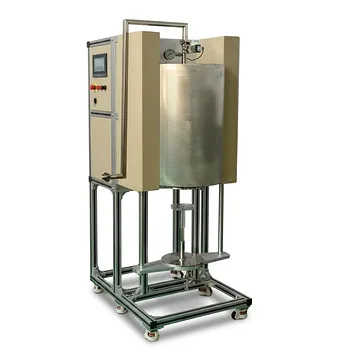
1200°C Atmosphere Controlled Automatic Bottom Loading Furnace with 6 Inch Quartz Tube
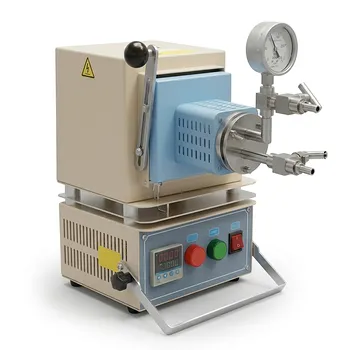
Compact Hybrid Muffle and Tube Furnace for 1000C Controlled Atmosphere Laboratory Material Sintering
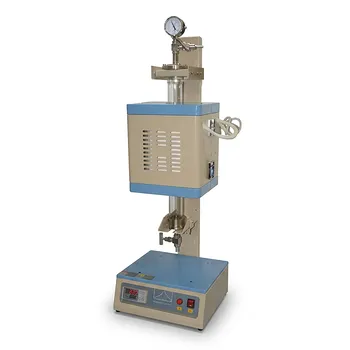
Compact Vertical Split Quartz Tube Furnace with Stainless Steel Vacuum Flanges for Rapid Thermal Quenching and Controlled Atmosphere Material Processing
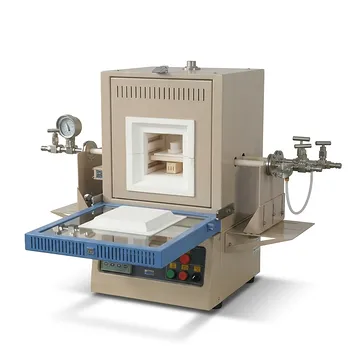
1700C Compact Hybrid Furnace with Dual Layer Box Sintering and Controlled Atmosphere Alumina Tubes
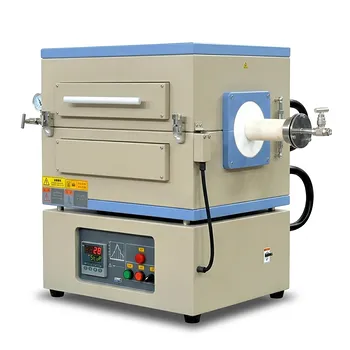
1500°C Split Tube Furnace with Alumina Tube and Vacuum Sealing Flanges for Material Research
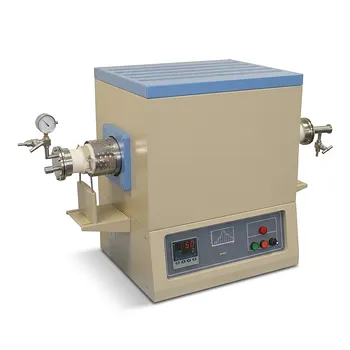
1700C High Temperature Alumina Tube Furnace with 18 Inch Heated Zone and Vacuum Sealing Flanges
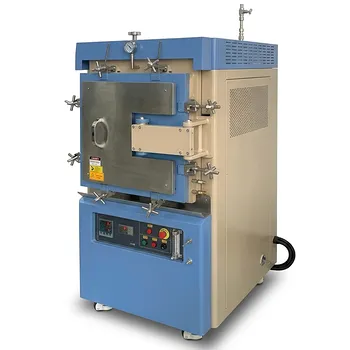
Atmosphere Controlled Muffle Furnace 1700C Maximum Temperature 80L High Capacity Vacuum Inert Gas Box Furnace

Vertical 1700C Vacuum and Atmosphere Tube Furnace with 80mm Alumina Tube
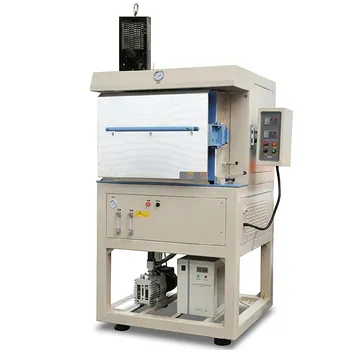
1200C Hydrogen Atmosphere Box Furnace with 5 Heated Sides and 64L Chamber
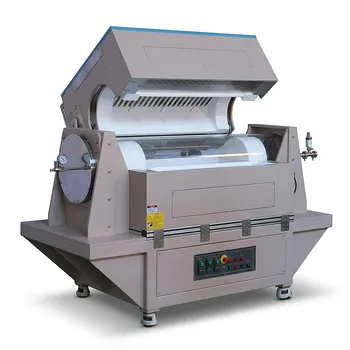
Three Zone Tube Furnace with 11 Inch or 15 Inch Quartz Tube and Hinged Flanges for Vacuum Atmosphere Heat Treatment
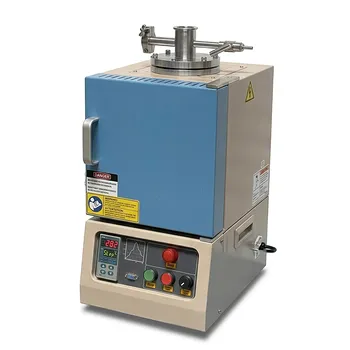
High Temperature Hybrid Muffle and Tube Furnace with Vacuum Capability and PID Control
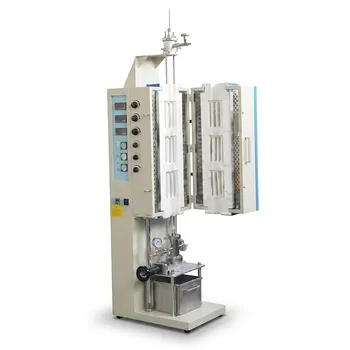
High Temperature Dual Zone Tube Furnace for Material Science Research and Professional Thermal Processing
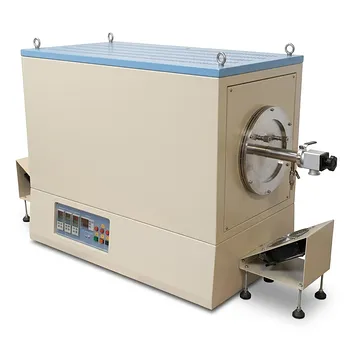
Four Zone Tube Furnace 1100C with 600mm Large Diameter Quartz Tube and Vacuum Flanges

High Temperature 1700C Tube Furnace with High Vacuum Turbomolecular Pump System and Multi Channel Mass Flow Controller Gas Mixer

1200°C 5 Inch Vertical Quartz Tube Furnace with Stainless Steel Vacuum Flanges
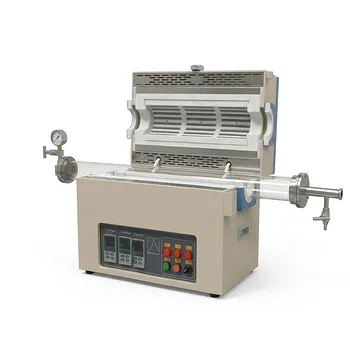
1200°C Three Zone Split Tube Furnace with 18 Inch Heating Length and Vacuum Flanges
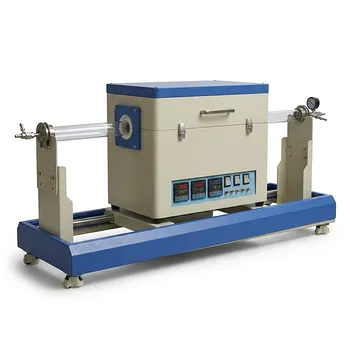
Double Temperature Zone Double Cover Tube Furnace for High Temperature CVD and Vacuum Annealing

High Temperature Automated 5 Inch Tube Furnace for Autonomous Material Research and Advanced Laboratory R&D
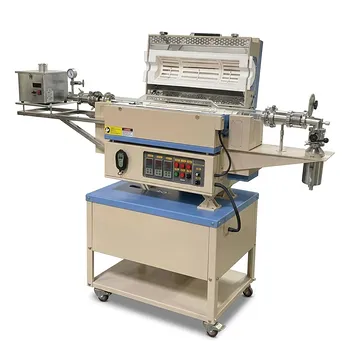
5 Inch Rotary Tube Furnace with Automatic Feeding and Receiving System 1200C Three Zone CVD Powder Processing