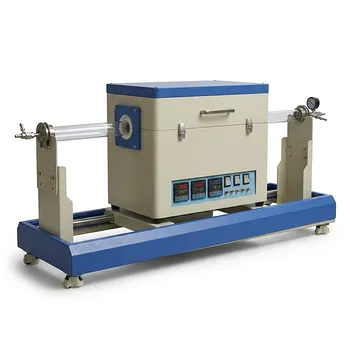
Why is an atmosphere tube furnace with oxygen flow control essential for the solid-state synthesis of NaNMC811? Boost Purity
Updated 3 months ago
Atmosphere tube furnaces with precision oxygen control are indispensable for synthesizing high-nickel cathode materials. These specialized furnaces provide a stable thermal environment and a high oxygen partial pressure that prevents the spontaneous reduction of nickel during high-temperature sintering. By maintaining a continuous flow of high-purity oxygen, the furnace ensures the formation of a high-crystallinity O3-type layered structure while suppressing the development of electrochemically inactive impurities.
Core Takeaway: An atmosphere tube furnace is essential because it maintains the specific oxidative environment required to stabilize trivalent nickel (Ni³⁺) and prevent cation mixing, which are the two most critical factors in determining the energy density and cycle life of NaNMC811.
Stabilizing the Oxidation State of Nickel
Maintaining Trivalent Nickel (Ni³⁺)
High-nickel materials like NaNMC811 require nickel to remain in a trivalent state (Ni³⁺) to ensure high electrochemical activity. At high synthesis temperatures, nickel has a natural tendency to reduce to a divalent state (Ni²⁺), which degrades the material’s performance.
The Role of Oxygen Partial Pressure
A continuous flow of high-purity oxygen increases the oxygen partial pressure within the furnace tube. This oxidative pressure provides the chemical force necessary to counteract the reduction of nickel, ensuring the intended stoichiometric ratio is achieved.
Prevention of Oxygen Vacancies
Without a precisely controlled oxygen atmosphere, the crystal lattice often develops oxygen vacancies. These vacancies disrupt the structural integrity of the material and hinder the smooth insertion and extraction of ions during battery operation.
Optimizing Crystal Structure and Phase Purity
Inhibiting Cation Mixing
One of the greatest challenges in high-nickel synthesis is cation mixing, where Ni²⁺ ions migrate into the lithium or sodium sites. The atmosphere tube furnace suppresses this by minimizing the presence of Ni²⁺, ensuring the nickel stays within its designated transition metal layers.
Promoting the O3-Type Layered Structure
The presence of a stable, oxygen-rich environment promotes the formation of the R-3m crystal structure. This specific layered arrangement is critical for achieving high crystallinity and maximizing the pathways available for ion transport.
Minimizing Rock-Salt Impurities
Inadequate atmosphere control often leads to the formation of rock-salt phase impurities on the surface of the particles. An atmosphere furnace ensures that these non-conductive phases are minimized, resulting in higher purity and better capacity retention.
Precision Control and Repeatability
Uniform Temperature Fields
The design of a tube furnace ensures a highly stable temperature field, typically within the critical range of 800°C to 900°C. This uniformity is vital for ensuring that the entire batch of precursor reacts consistently with the sodium source.
Programmable Atmosphere Management
Modern tube furnaces allow for multi-stage programmable control, enabling researchers to switch atmospheres or adjust flow rates (such as 0.2 L/min) at specific reaction stages. This level of control is necessary for the highly repeatable preparation of complex inorganic materials.
Interface Reaction Kinetics
In instantaneous high-temperature synthesis, the high-purity oxygen environment accelerates interface reaction kinetics. This allows the material to complete full lithiation or sodiation in a shorter timeframe, leading to superior structural order.
Understanding the Trade-offs and Pitfalls
The Risk of Insufficient Flow Rates
Simply having an oxygen atmosphere is not enough; the flow must be continuous and consistent. If the flow rate is too low, local "dead zones" can form where oxygen is depleted, leading to localized phase transitions and inconsistent batch quality.
Sensitivity to Contaminants
Atmosphere furnaces must be properly sealed to prevent the ingress of ambient air. Even trace amounts of moisture or CO₂ from the air can react with the sodium or lithium precursors to form carbonates on the surface, which significantly increases internal resistance in the final battery cell.
How to Apply This to Your Synthesis Goals
Strategic Recommendations for NaNMC811
- If your primary focus is maximizing discharge capacity: Use a high-purity oxygen flow (99.9%+) to ensure the highest possible concentration of Ni³⁺ in the final lattice.
- If your primary focus is long-term cycle stability: Prioritize a slow, multi-stage cooling process within the oxygen atmosphere to minimize internal stresses and micro-cracking.
- If your primary focus is reducing production costs: Experiment with oxygen-enriched air rather than pure oxygen, provided you can maintain the high partial pressure required to suppress rock-salt phase formation.
Precision control over the thermal and chemical environment is the only way to transform unstable precursors into high-performance, layered cathode materials.
Summary Table:
| Key Feature | Role in NaNMC811 Synthesis | Impact on Material Performance |
|---|---|---|
| Oxygen Partial Pressure | Stabilizes Trivalent Nickel (Ni³⁺) | Higher electrochemical activity and capacity. |
| Atmosphere Control | Inhibits Ni²⁺/Na⁺ cation mixing | Optimized ion transport and layered structure. |
| Flow Rate Precision | Prevents localized oxygen depletion | Consistent batch quality and phase purity. |
| Temperature Uniformity | Ensures stable 800°C–900°C sintering | Repeatable crystallinity and structural order. |
| Sealed Environment | Blocks moisture and CO₂ ingress | Reduced internal resistance (lower carbonates). |
Elevate Your Material Research with THERMUNITS Precision Solutions
Achieving the perfect stoichiometric ratio in high-nickel cathodes requires more than just heat—it requires total environmental control. THERMUNITS is a leading manufacturer of high-temperature laboratory equipment, providing the advanced thermal processing solutions essential for material science and industrial R&D.
Our specialized Atmosphere and Tube Furnaces are engineered to deliver the precise oxygen partial pressure and uniform temperature fields necessary to stabilize Ni³⁺ and prevent structural defects in NaNMC811 synthesis. Beyond atmosphere control, we offer a comprehensive range of equipment, including:
- Muffle, Vacuum, and Rotary Furnaces for diverse heat treatments.
- CVD/PECVD Systems for thin-film and nanomaterial research.
- Hot Press & Vacuum Induction Melting (VIM) Furnaces for advanced metallurgy.
- Dental Furnaces and Electric Rotary Kilns for specialized industrial applications.
Ready to optimize your synthesis process? Contact our technical team today to discover how THERMUNITS can provide the reliability and precision your laboratory demands.
References
- B.J. Wang, Tanja Kallio. Understanding of a Ni‐Rich O3‐Layered Cathode for Sodium‐Ion Batteries: Synthesis Mechanism and Al‐Gradient Doping. DOI: 10.1002/smll.202408072
Mentioned Products
- High Temperature Oxygen and Inert Atmosphere Controlled Furnace 8 Liter 1700C Sintering System for Advanced Materials RD
- High Temperature Vertical Tube Furnace for Small Solid Oxide Fuel Cell Testing with Four Channel Gas Control
- 1200°C Atmosphere Controlled Automatic Bottom Loading Furnace with 6 Inch Quartz Tube
- Compact Hybrid Muffle and Tube Furnace for 1000C Controlled Atmosphere Laboratory Material Sintering
- Compact Vertical Split Quartz Tube Furnace with Stainless Steel Vacuum Flanges for Rapid Thermal Quenching and Controlled Atmosphere Material Processing
People Also Ask
- What role does atmosphere control play in technical ceramics and glass? Master Material Purity and Precision
- What are the advantages of using an atmosphere-controlled high-temperature sintering furnace? Precise Oxygen Control
- Why is a tube furnace required for FGM-PhG structural color ceramics? Key to Carbon Preservation & Vibrant Color
- What role does an atmosphere furnace play in CN & Aux-CN preparation? Master Thermal Polycondensation & Stability.
- How high-temp furnaces ensure membrane integrity in molten salt impregnation? Precision Thermal & Atmosphere Control

Tech Team · ThermUnits
Last updated on Jun 03, 2026
Related Products
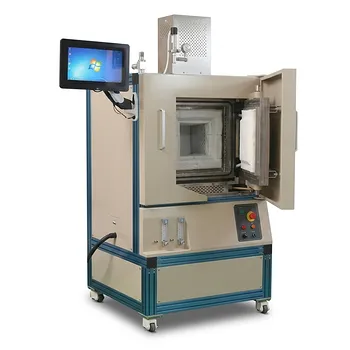
High Temperature Oxygen and Inert Atmosphere Controlled Furnace 8 Liter 1700C Sintering System for Advanced Materials RD
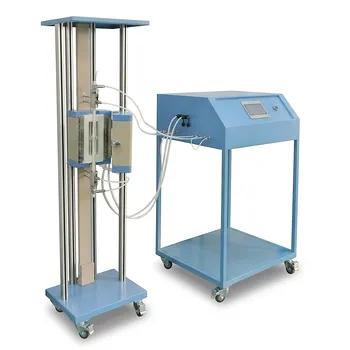
High Temperature Vertical Tube Furnace for Small Solid Oxide Fuel Cell Testing with Four Channel Gas Control
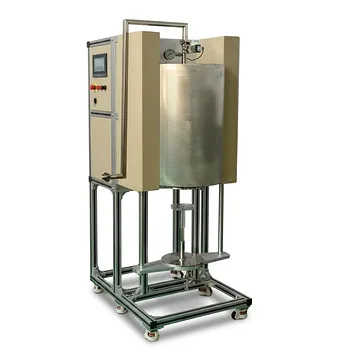
1200°C Atmosphere Controlled Automatic Bottom Loading Furnace with 6 Inch Quartz Tube
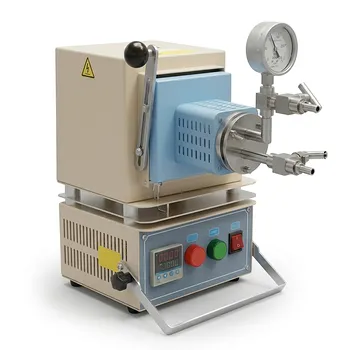
Compact Hybrid Muffle and Tube Furnace for 1000C Controlled Atmosphere Laboratory Material Sintering

Compact Vertical Split Quartz Tube Furnace with Stainless Steel Vacuum Flanges for Rapid Thermal Quenching and Controlled Atmosphere Material Processing
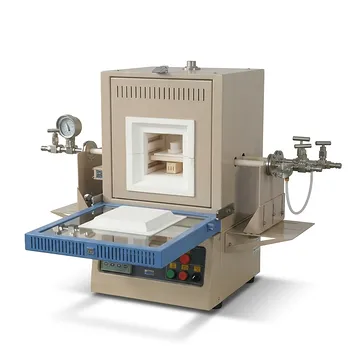
1700C Compact Hybrid Furnace with Dual Layer Box Sintering and Controlled Atmosphere Alumina Tubes
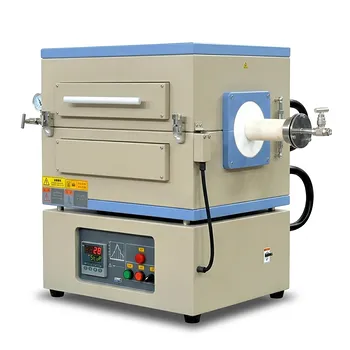
1500°C Split Tube Furnace with Alumina Tube and Vacuum Sealing Flanges for Material Research
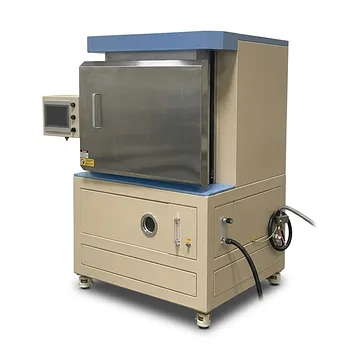
1650C High Temperature Atmosphere Controlled Box Furnace with 65L Chamber for Advanced Material Sintering and Industrial Heat Treatment
Three Temperature Zone Rotating Tube Furnace for Material Sintering and Controlled Atmospheric Heat Treatment
1200C Hydrogen Atmosphere Box Furnace with 5 Heated Sides and 64L Chamber

Vertical 1700C Vacuum and Atmosphere Tube Furnace with 80mm Alumina Tube
High Temperature Tilting Rotary Tube Furnace with Integrated Mass Flow Control and Multi Zone Heating

Three Zone Tube Furnace with 11 Inch or 15 Inch Quartz Tube and Hinged Flanges for Vacuum Atmosphere Heat Treatment
High Temperature Dual Zone Tube Furnace for Material Science Research and Professional Thermal Processing
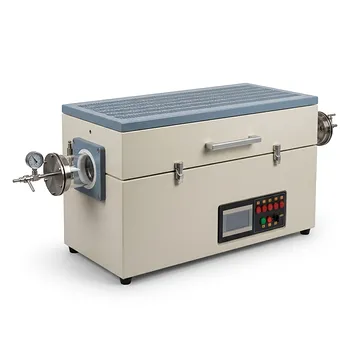
Five Zone 1200C High Temperature Split Tube Furnace with Touch Screen Controller and Multiple Quartz Tube Options
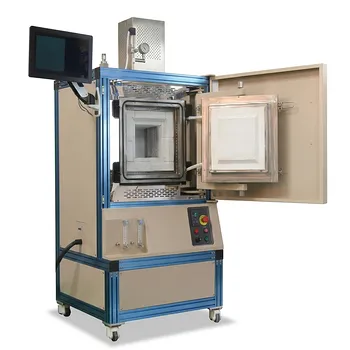
High Temperature Hydrogen Atmosphere Box Furnace 1650C Max Reducing Environment Material Synthesis System 8x8x8 Chamber

1700C Hydrogen Gas Tube Furnace with 60mm Alumina Process Tube and Integrated Hydrogen Safety Detector
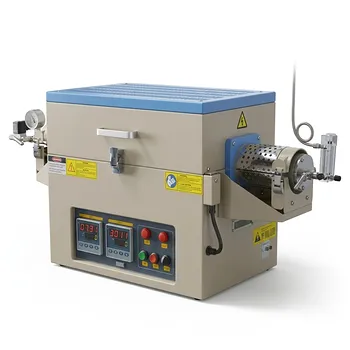
1100C Dual Zone Hydrogen Gas Tube Furnace with Quartz Tube and Integrated H2 Leak Detection System

1200°C 5 Inch Vertical Quartz Tube Furnace with Stainless Steel Vacuum Flanges