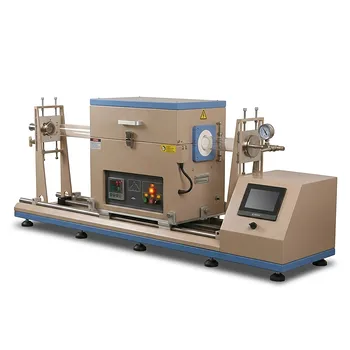
Why is an Open-Type Tube Furnace preferred for coal chemical looping? Optimize Reaction Kinetics & Sample Handling
Updated 3 months ago
The Open-Type Tube Furnace is primarily preferred for its ability to facilitate rapid sample handling and precise thermal control during time-sensitive chemical reactions. This design allows researchers to quickly insert or remove quartz tube reactors into a pre-heated zone, enabling near-instantaneous exposure of coal and oxygen carriers to temperatures between 500°C and 900°C. Such capabilities are essential for accurately measuring the fast-acting kinetics of mercury release and pyrolysis characteristics in Chemical Looping Combustion (CLC) and Gasification (CLG).
The open-type design transforms the furnace into a high-efficiency horizontal fixed-bed reactor, allowing for the isolation of specific reaction stages. By combining rapid temperature ramping with easy reactor access, it provides the controlled environment necessary to study complex interactions between volatiles, char, and oxygen carriers.
Streamlining Experimental Workflows
Rapid Reactor Positioning
The "open-type" configuration is specifically engineered for accessibility, allowing researchers to slide quartz tube reactors in and out of the heating zone without waiting for the furnace to cool down.
This feature is critical for experiments requiring sequential sampling or the immediate quenching of reactions to preserve the chemical state of the solid residue.
It significantly reduces the "dead time" between experimental runs, increasing the throughput of data collection in complex studies like mercury release kinetics.
Horizontal Fixed-Bed Integration
In this setup, the furnace functions as a horizontal fixed-bed reactor, providing a stable platform for coal and oxygen carrier interactions.
This geometry ensures that the gas phase flows consistently over the solid bed, which is vital for maintaining a controlled inert pyrolysis environment when using high-purity nitrogen.
The horizontal orientation also simplifies the collection of liquid and gaseous products downstream, which is necessary for a full mass balance of the combustion or gasification process.
Precision Control of Reaction Kinetics
Thermal Stability and Ramping
The furnace provides a preset constant temperature range (typically 500°C to 900°C), which is the "sweet spot" for most chemical looping processes.
Rapid heating ensures that the coal sample reaches the target temperature almost immediately, minimizing the impact of low-temperature secondary reactions that could skew kinetic data.
This precision allows researchers to distinguish between the pyrolysis phase (volatile release) and the subsequent gasification or combustion phases.
Isolation of Chemical Variables
High-purity environments within the furnace allow for the independent study of how alkali and alkaline earth metals (AAEMs) influence the process.
Researchers can remove volatile matter efficiently to produce stable char, then observe how that char reacts with carbon dioxide or oxygen carriers in isolation.
This level of control is necessary to understand the synergistic effects between organic matter and inorganic catalysts on the char surface.
Understanding the Trade-offs
Heat Dissipation and Uniformity
Because the furnace can be opened or has open ends, managing thermal gradients is a constant challenge.
The temperature at the ends of the tube may be significantly lower than the center, potentially leading to non-uniform reaction zones if the reactor is not positioned precisely.
Gas Sealing and Safety
Maintaining an oxygen-free environment for pyrolysis requires robust mechanical seals at the furnace interfaces.
Any leakage of ambient air can prematurely oxidize the coal sample or the oxygen carrier, leading to erroneous data regarding char structure and gasification rates.
How to Apply This to Your Research
Choosing the Right Experimental Path
- If your primary focus is Mercury Release Kinetics: Utilize the rapid insertion feature to capture the initial seconds of volatile release at temperatures between 500°C and 700°C.
- If your primary focus is Char Gasification Reactivity: Prioritize a stable, high-purity nitrogen flow at 1000°C to ensure complete devolatilization before introducing $CO_2$.
- If your primary focus is Oxygen Carrier Durability: Use the open-type design to perform multiple "load and pull" cycles, simulating the thermal stress found in industrial looping systems.
By leveraging the speed and thermal precision of an Open-Type Tube Furnace, researchers can effectively decouple the complex thermal and chemical stages of coal conversion.
Summary Table:
| Feature | Advantage in CLC/CLG Experiments | Research Benefit |
|---|---|---|
| Open-Type Design | Rapid insertion/removal of quartz tube reactors | Enables near-instantaneous exposure to high temperatures (500°C-900°C). |
| Thermal Stability | Preset constant temperature zones | Minimizes low-temperature secondary reactions for accurate kinetic data. |
| Fixed-Bed Integration | Consistent gas flow over solid beds | Ideal for studying mercury release and char gasification reactivity. |
| Workflow Efficiency | Minimal cooling time between runs | High-throughput data collection and sequential sampling capability. |
Elevate Your Research with Precision Thermal Solutions from THERMUNITS
As a leading manufacturer of high-temperature laboratory equipment for material science and industrial R&D, THERMUNITS understands the critical need for speed and accuracy in chemical looping research. Our high-performance Tube Furnaces are designed to provide the thermal stability and atmospheric control necessary to decouple complex chemical stages in coal conversion.
Our Comprehensive Thermal Solutions Include:
- Versatile Furnaces: Muffle, Vacuum, Atmosphere, Tube, Rotary, and Hot Press models.
- Advanced Systems: CVD/PECVD systems, Vacuum Induction Melting (VIM), and Electric Rotary Kilns.
- Specialized Equipment: Dental Furnaces, Thermal Elements, and custom laboratory heat treatment solutions.
Ready to optimize your experimental workflows?
Contact us today to discuss your laboratory requirements and learn how THERMUNITS can bring superior efficiency to your material science research.
References
- Guochao Hu, Yongzhuo Liu. Mercury Adsorption and Oxidation Performance of an Iron-Based Oxygen Carrier during Coal Chemical Looping Process. DOI: 10.3390/molecules29102195
Mentioned Products
- Vertical Openable Tube Furnace 0-1700c High Temperature Laboratory System for CVD and Vacuum Heat Treatment
- Vertical 1700C Vacuum and Atmosphere Tube Furnace with 80mm Alumina Tube
- Three Zone Tube Furnace with 11 Inch or 15 Inch Quartz Tube and Hinged Flanges for Vacuum Atmosphere Heat Treatment
- 1200C High Throughput Multi Channel Tube Furnace with 50mm Quartz Tubes for Annealing and Material Phase Diagram Research
- 1100C Tube Furnace with Vacuum Flange and Programmable Temperature Controller for Material Science and Industrial Heat Treatment
People Also Ask
- Why is a Tube Furnace typically utilized for CVD? Achieve Precision in Graphene and 2D Material Synthesis
- What role does a high-temperature vertical tube furnace play in simulating high-carbon ferromanganese slag formation?
- What functions does a vertical high-temperature tube furnace perform? Master Industrial Sintering & R&D Simulation
- How does a vertical tube furnace facilitate thermoelectric alloy melting? Precision synthesis for material homogeneity.
- How is an industrial-grade vertical tube furnace utilized in smelting leaching residues? Enhance Metal Recovery Efficiency

Tech Team · ThermUnits
Last updated on Jun 02, 2026
Related Products
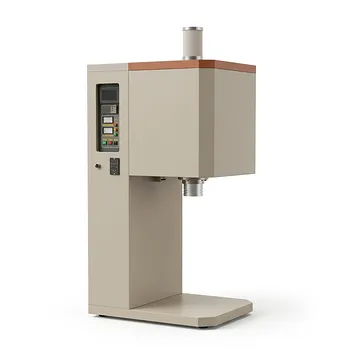
Vertical Openable Tube Furnace 0-1700c High Temperature Laboratory System for CVD and Vacuum Heat Treatment

Vertical 1700C Vacuum and Atmosphere Tube Furnace with 80mm Alumina Tube
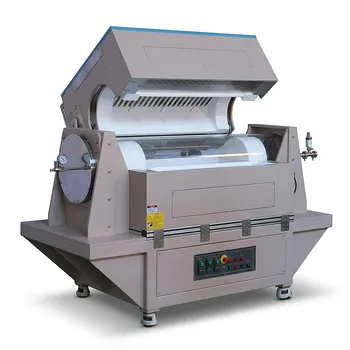
Three Zone Tube Furnace with 11 Inch or 15 Inch Quartz Tube and Hinged Flanges for Vacuum Atmosphere Heat Treatment
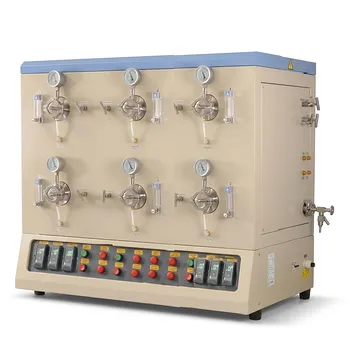
1200C High Throughput Multi Channel Tube Furnace with 50mm Quartz Tubes for Annealing and Material Phase Diagram Research

1100C Tube Furnace with Vacuum Flange and Programmable Temperature Controller for Material Science and Industrial Heat Treatment
900°C Max Rotary Tube Furnace with 8 Inch 310S Alloy Tube and Optional Multi Zone Heating for Industrial Material Calcination
Automated 1200 C Tube Furnace for AI Material Research with 6 Inch OD and Sliding Flange
Three Temperature Zone Rotating Tube Furnace for Material Sintering and Controlled Atmospheric Heat Treatment

1200°C 5 Inch Vertical Quartz Tube Furnace with Stainless Steel Vacuum Flanges

High Temperature Automated 5 Inch Tube Furnace for Autonomous Material Research and Advanced Laboratory R&D

High Temperature 1700C Six Zone Split Tube Furnace with Alumina Tube and Water Cooled Flanges
1200C Three Zone Split Vertical Tube Furnace 4 Inch Quartz Tube Stainless Steel Vacuum Flanges
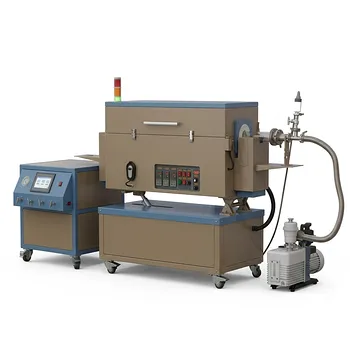
5 Inch Three Zone Rotary Tube Furnace with Integrated Gas Delivery System and 1200C Capability for Advanced Material CVD Processing

1800C High Temperature Compact Vacuum Tube Furnace with 60mm OD Alumina Tube and Kanthal MoSi2 Heating Elements
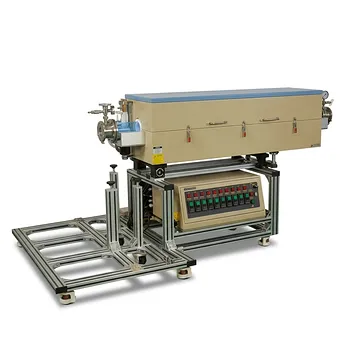
Ten Zone Multi Orientation Laboratory Tube Furnace for 1200C High Temperature Gradient Thermal Processing

Compact High Temperature 1600C Tube Furnace with 50mm Alumina Tube and Vacuum Flanges for Material Sintering
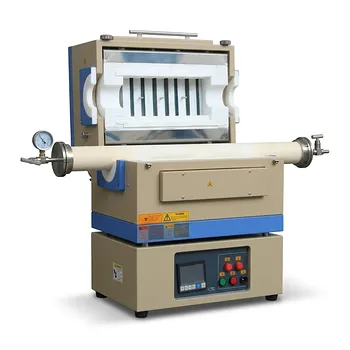
1500C Eight Zone Split Tube Furnace for Thermal Gradient Processing and Advanced Material Research
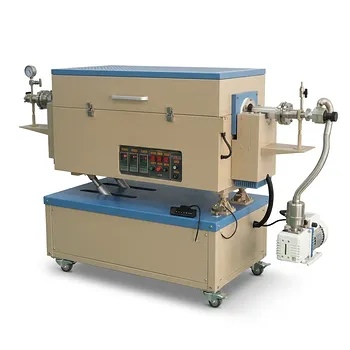
Three Zone Rotary Tube Furnace for High Temperature Powder Processing and Material Research
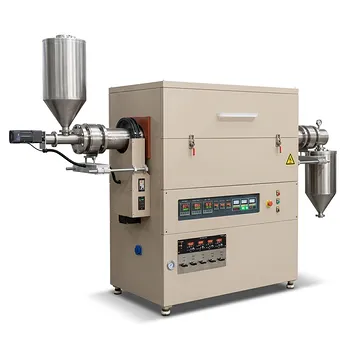
High Temperature Tilting Rotary Tube Furnace with Integrated Mass Flow Control and Multi Zone Heating