Why is argon atmosphere control in a high-precision tube furnace critical? Key to g-C3N4/Fe2O3 Photoanode Success
Updated 3 months ago
Argon atmosphere control is the decisive factor in preventing the oxidative destruction of precursors and ensuring the formation of a functional g-C3N4/Fe2O3 heterojunction. By isolating the reaction from oxygen at 550°C, a high-precision tube furnace allows melamine to undergo thermal polycondensation into ultra-thin g-C3N4 layers rather than degrading. This controlled environment is essential for creating the robust chemical bonds and built-in electric fields required for high-performance photoanodes.
Core Takeaway: Atmosphere control shifts the reaction path from destructive oxidation to constructive polycondensation. This ensures the structural integrity of the g-C3N4/Fe2O3 interface, which is the foundation for inhibiting electron-hole recombination in photocatalytic applications.
Preventing the Oxidative Degradation of Precursors
The Vulnerability of Melamine at High Temperatures
During the synthesis of g-C3N4, melamine serves as the primary precursor that must undergo thermal polycondensation. At the required processing temperature of 550°C, melamine is highly susceptible to oxidative degradation if even trace amounts of oxygen are present.
Enabling the Polycondensation Pathway
An inert argon environment ensures that the thermal energy is used exclusively for the breaking and recombination of chemical bonds within the melamine structure. This allows for the successful transformation of the precursor into a stable, graphitic carbon nitride framework.
Preservation of Ultra-Thin Morphology
Precision control allows for the formation of ultra-thin g-C3N4 layers rather than bulk materials. In an oxygen-rich environment, the edges of these nanostructures would be "burned off" or ablated, destroying the high surface area required for effective photoanodes.
Engineering the Heterojunction Interface
Facilitating Strong Chemical Bonding
The performance of a composite photoanode depends on the quality of the interface between the g-C3N4 layer and the Fe2O3 (iron oxide). An argon atmosphere prevents unintended secondary oxidation of the iron oxide surface, ensuring it remains receptive to bonding with the carbon nitride.
Establishing the Built-in Electric Field
When a clean, strong chemical bond is formed at the heterojunction, a robust built-in electric field is established. This field is the primary mechanism for driving the separation of photogenerated electrons and holes, preventing them from recombining.
Controlling Atomic Oxidation States
Maintaining an inert environment helps stabilize the specific oxidation states of the metal ions within the oxide. This stability is critical for ensuring that the electronic properties of the Fe2O3 align correctly with the g-C3N4 for efficient charge transfer.
Ensuring Material Purity and Performance
Eliminating Impurity Phases
High-precision control keeps oxygen impurity levels to a minimum, often below 1 wt. %. This purity is vital because unintended oxides or carbon combustion products can act as recombination centers, trapping charges and lowering the efficiency of the photoanode.
Maintaining Microscopic Integrity
Just as in the processing of carbon nanotubes or nanofibers, the micro-morphology of the g-C3N4/Fe2O3 composite must be preserved to maintain its intended biological or electrochemical performance. Argon prevents the "burning off" of carbon-based components that would otherwise occur at high temperatures.
Understanding the Trade-offs and Pitfalls
The Risk of Atmosphere Leaks
Even minor leaks in a tube furnace can introduce enough oxygen to cause uncontrolled secondary oxidation. This often results in a loss of the ultra-thin morphology and the introduction of "active sites" that promote charge recombination rather than separation.
Balancing Gas Flow and Pressure
While high-purity argon is necessary, the flow rate must be precisely calibrated. Excessive flow can lead to temperature gradients within the furnace, while insufficient flow may fail to completely displace moisture and oxygen trapped within the precursors.
Temperature Precision vs. Chemical Stability
The 550°C threshold is a delicate balance; it is high enough to trigger polycondensation but close to the point where g-C3N4 can begin to decompose. Without the stabilizing effect of an inert gas, the window for successful synthesis narrows significantly.
How to Apply This to Your Project
Recommendations for Synthesis Success
- If your primary focus is maximizing charge separation: Ensure the argon flow is stabilized well before the temperature reaches 300°C to prime the interface for bonding.
- If your primary focus is morphology control: Use a high-precision furnace with an oxygen sensor to verify that the environment is truly inert before proceeding to the 550°C dwell stage.
- If your primary focus is material purity: Utilize high-purity (99.999%) argon to prevent trace oxidation that could introduce unwanted electronic states in the Fe2O3 lattice.
True mastery of g-C3N4/Fe2O3 synthesis lies in treating the atmosphere not just as a safety measure, but as a critical reagent that dictates the electronic architecture of the final composite.
Summary Table:
| Key Factor | Role of Argon Atmosphere | Impact on Final Composite |
|---|---|---|
| Melamine Stability | Isolates precursors from oxygen at 550°C | Enables polycondensation over oxidative degradation |
| Morphology | Prevents "burning off" of nanostructure edges | Preserves ultra-thin g-C3N4 layers and surface area |
| Interface Quality | Prevents secondary oxidation of Fe2O3 | Establishes a robust built-in electric field |
| Purity | Keeps oxygen impurity levels below 1 wt. % | Minimizes charge recombination and traps |
Elevate Your Materials Research with THERMUNITS
Precision atmosphere control is the difference between a failed synthesis and a high-performance composite. As a leading manufacturer of high-temperature laboratory equipment for material science and industrial R&D, THERMUNITS provides the advanced thermal solutions necessary for complex chemical engineering.
Our comprehensive range includes Muffle, Vacuum, Atmosphere, Tube, Rotary, and Hot Press furnaces, CVD/PECVD systems, and Vacuum Induction Melting (VIM) furnaces. Whether you are developing g-C3N4/Fe2O3 photoanodes or advanced ceramics, our equipment ensures the purity and structural integrity your project demands.
Contact us today to find the perfect thermal processing solution for your lab!
References
- Juan Wu, Weisheng Liu. Enhanced photoelectrochemical water splitting performance of α-Fe<sub>2</sub>O<sub>3</sub> photoanodes through Co-modification with Co single atoms and g-C<sub>3</sub>N<sub>4</sub>. DOI: 10.1039/d4sc03442b
Mentioned Products
- 1500°C Split Tube Furnace with Alumina Tube and Vacuum Sealing Flanges for Material Research
- Vertical 1700C Vacuum and Atmosphere Tube Furnace with 80mm Alumina Tube
- 1750°C High Temperature Benchtop Vacuum Atmosphere Tube Furnace with Kanthal Super 1800 Heating Elements and 60mm Alumina Processing Tube
- 1200°C Atmosphere Controlled Automatic Bottom Loading Furnace with 6 Inch Quartz Tube
- 1700C High Temperature Alumina Tube Furnace with 18 Inch Heated Zone and Vacuum Sealing Flanges
People Also Ask
- What is the primary function of a high-temperature split tube furnace in nitrogen metastable particle research? Expert Guide
- What is the core function of a laboratory split-tube furnace in carbon dioxide capture testing? - Key Thermal Precision
- Why is a high-temperature vacuum tube furnace required for C@TiC nanoparticle synthesis? Key Design Factors Explained
- Why use a tube furnace for carbon nanofibers? Achieve high purity and electrical conductivity through inert processing.
- Role of Tube Furnaces in Co-pyrolysis Char Production? Master Straw & Coal Gangue Thermal Carbonization

Tech Team · ThermUnits
Last updated on Jun 03, 2026
Related Products
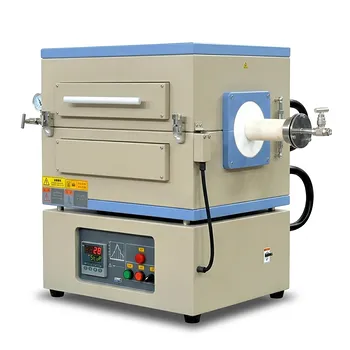
1500°C Split Tube Furnace with Alumina Tube and Vacuum Sealing Flanges for Material Research

Vertical 1700C Vacuum and Atmosphere Tube Furnace with 80mm Alumina Tube

1750°C High Temperature Benchtop Vacuum Atmosphere Tube Furnace with Kanthal Super 1800 Heating Elements and 60mm Alumina Processing Tube
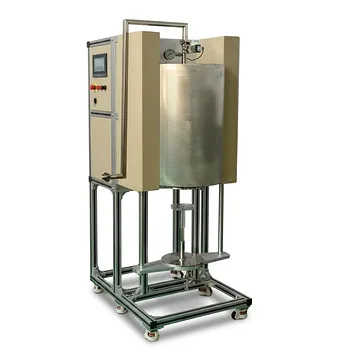
1200°C Atmosphere Controlled Automatic Bottom Loading Furnace with 6 Inch Quartz Tube

1700C High Temperature Alumina Tube Furnace with 18 Inch Heated Zone and Vacuum Sealing Flanges
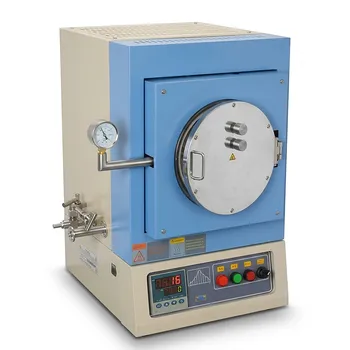
1100°C High Temperature Quartz Chamber Furnace 8 Inch OD with 7.6 Liter Capacity and Vacuum Atmosphere Capability

Compact Vertical Split Quartz Tube Furnace with Stainless Steel Vacuum Flanges for Rapid Thermal Quenching and Controlled Atmosphere Material Processing
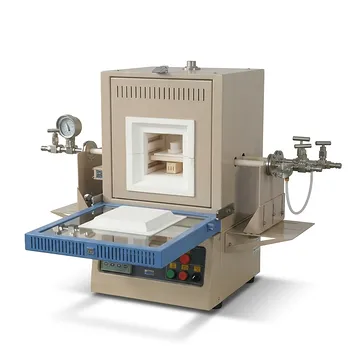
1700C Compact Hybrid Furnace with Dual Layer Box Sintering and Controlled Atmosphere Alumina Tubes

Three Zone Tube Furnace with 11 Inch or 15 Inch Quartz Tube and Hinged Flanges for Vacuum Atmosphere Heat Treatment

High Temperature 1700C Vertical Tube Furnace for Powder Spherification and Material Sintering

Compact High Temperature 1600C Tube Furnace with 50mm Alumina Tube and Vacuum Flanges for Material Sintering
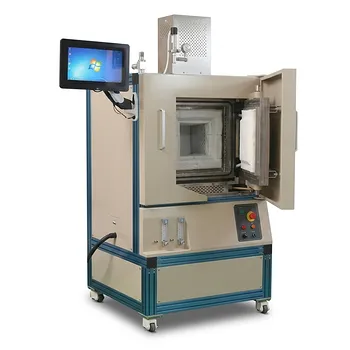
High Temperature Oxygen and Inert Atmosphere Controlled Furnace 8 Liter 1700C Sintering System for Advanced Materials RD

High Temperature Automated 5 Inch Tube Furnace for Autonomous Material Research and Advanced Laboratory R&D

1200C High Throughput Multi Channel Tube Furnace with 50mm Quartz Tubes for Annealing and Material Phase Diagram Research
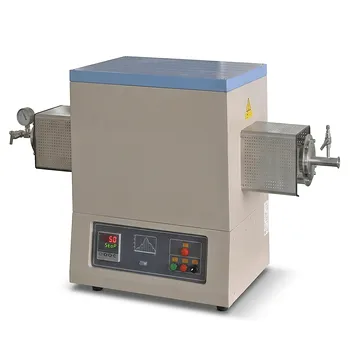
High Temperature 1700C Tube Furnace with 4 Inch OD Alumina Tube and Vacuum Sealing Flanges
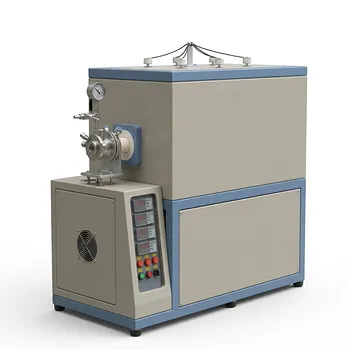
High Temperature 1700C Three Zone Tube Furnace with Alumina Tube 50mm 60mm 80mm OD for Material Research and Industrial Heat Treatment

1200°C 5 Inch Vertical Quartz Tube Furnace with Stainless Steel Vacuum Flanges
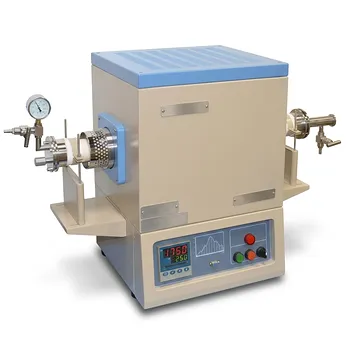
High Temperature Compact Vacuum Tube Furnace 1750C Max 60mm OD Alumina Tube

High Temperature 1700C Benchtop Tube Furnace with 5 Inch Heating Zone High Purity Alumina Tube and Vacuum Sealing Flanges
