Role of Tube Furnaces in Co-pyrolysis Char Production? Master Straw & Coal Gangue Thermal Carbonization
Updated 3 months ago
The high-temperature atmosphere tube furnace is the fundamental reaction vessel that transforms straw and coal gangue into stable co-pyrolysis char. It functions by providing a strictly oxygen-free, nitrogen-purged environment and precise thermal control, typically maintaining a heating rate of 20 °C/min up to target temperatures like 500 °C. This setup ensures that the feedstocks undergo carbonization and thermal decomposition rather than combustion, allowing for the precise study of biomass-mineral interactions.
The tube furnace serves as a controlled thermochemical platform that isolates organic and mineral reactions by excluding oxygen. Its ability to provide precise heating rates and stable atmospheres is what transforms raw waste into reproducible, high-quality co-pyrolysis char.
The Essential Role of Atmospheric Control
Oxygen Exclusion and Oxidation Prevention
The primary function of the furnace is to maintain a sealed tube structure that effectively isolates the sample from the outside air. By purging the system with an inert gas like high-purity nitrogen (N2), the furnace prevents the raw materials from catching fire.
This anaerobic environment ensures that the organic matter in the straw and the minerals in the coal gangue undergo thermo-decomposition rather than oxidation. This distinction is critical for producing char instead of ash.
Simulating Reducing Environments
The furnace creates a controlled reducing environment necessary for complex chemical transformations. This environment allows the organic ligands in the biomass to convert into a stable carbon skeleton.
Without this precise atmospheric control, the active mineral sites in the coal gangue would react prematurely. The nitrogen atmosphere ensures that the final char accurately represents the original structural characteristics of the feedstock.
Precision Thermal Regulation
Managing Heating Rates and Gradients
The furnace provides a precise heating rate, such as 20 °C/min, which dictates how quickly volatiles are released from the straw. This rate is essential for developing a rich pore structure and preventing the "over-cracking" of produced tars.
Consistent heating ensures that the interaction between the biomass volatiles and the coal gangue minerals occurs at the intended temperature. This predictability is what allows the results to serve as a scientific baseline for comparative experiments.
Reaching and Maintaining Peak Temperatures
Commonly operating at temperatures between 500 °C and 1000 °C, the furnace provides the thermal energy required to break molecular bonds. A stable constant temperature reaction zone (with accuracy as high as ±1°C) is maintained for a set duration.
This stability ensures that the carbonization process is complete and that the fixed carbon content is maximized. It prevents localized "hot spots" that could lead to non-uniform char quality.
Structural and Chemical Development
Facilitating Biomass-Mineral Interactions
The tube furnace acts as a micro-reactor where the inorganic minerals in coal gangue and the organic polymers in straw can interact. The heat conduction induces devolatilization, allowing the mineral surfaces to influence the cracking of biomass vapors.
These interactions are what define the final properties of the co-pyrolysis char. The furnace provides the only environment stable enough to observe these synergistic effects without interference from external contaminants.
Forming Stable Pore Structures
As the furnace induces carbonization, it facilitates the formation of a stable carbon framework. This framework often integrates with the minerals to form a composite material with specific surface areas and pore volumes.
The resulting char serves as a precursor for catalysts or soil amendments. The uniform temperature field within the tube is the key to ensuring that these pore structures are consistent throughout the entire sample.
Understanding the Trade-offs
Heat Transfer and Mass Limitations
While tube furnaces offer unmatched precision, they are often limited by batch size. Heating large quantities of straw and coal gangue simultaneously can lead to thermal gradients inside the sample bed, where the center remains cooler than the edges.
Gas Flow Sensitivity
The rate at which the inert gas (Nitrogen) flows through the tube can significantly impact the char quality. If the flow rate is too high, it may sweep away useful volatiles before they can interact with the coal gangue; if it is too low, secondary reactions may occur that alter the char's final structure.
How to Apply This to Your Project
Making the Right Choice for Your Goal
- If your primary focus is maximizing fixed carbon content: Ensure you choose a furnace capable of maintaining high peak temperatures (above 800 °C) with a slow heating rate to allow for complete carbonization.
- If your primary focus is studying biomass-mineral interactions: Prioritize models with high-precision atmosphere seals and calibrated gas flow meters to ensure the reducing environment is truly oxygen-free.
- If your primary focus is producing a high-porosity char: Focus on the furnace's ability to maintain a uniform temperature field (±1°C) to prevent the collapse of pore structures during the cooling phase.
The high-temperature tube furnace is the indispensable tool that bridges the gap between raw organic waste and high-value engineered carbon materials.
Summary Table:
| Feature | Role in Co-pyrolysis | Resulting Benefit |
|---|---|---|
| Inert Atmosphere (N2) | Prevents combustion/oxidation | High-quality carbon skeleton |
| Precision Heating Rate | Controls volatile release | Optimized pore structure |
| Stable Peak Temps | Ensures complete carbonization | Maximized fixed carbon content |
| Uniform Heat Field | Prevents localized hotspots | Consistent char quality |
Elevate Your Co-Pyrolysis Research with THERMUNITS
As a leading manufacturer of high-temperature laboratory equipment, THERMUNITS empowers material science and industrial R&D with advanced thermal solutions. Whether you are producing co-pyrolysis char or developing new catalysts, our Tube, Atmosphere, Vacuum, and Rotary Furnaces provide the ±1°C precision and oxygen-free environments your research demands.
Why choose our thermal solutions?
- Strict Atmosphere Control: High-purity nitrogen purging for true anaerobic conditions.
- Precision Engineering: Customizable heating rates to optimize biomass-mineral interactions.
- Versatile Range: Comprehensive support for CVD/PECVD, Muffle Furnaces, and Vacuum Induction Melting (VIM).
Contact our technical experts today to find the perfect furnace for your laboratory and ensure reproducible, high-quality results!
References
- Chunyan Xu, Junjiang Guo. Structure characteristics and combustion kinetics of the co-pyrolytic char of rice straw and coal gangue. DOI: 10.1038/s41598-024-67378-y
Mentioned Products
- 1750°C High Temperature Benchtop Vacuum Atmosphere Tube Furnace with Kanthal Super 1800 Heating Elements and 60mm Alumina Processing Tube
- High Temperature 1200C Split Tube Furnace for CVD Research and Vacuum Atmosphere Heat Treatment
- High Temperature Split Tube Furnace 1500C for Material Research Vacuum and Atmosphere Thermal Processing
- 1700C High Temperature Alumina Tube Furnace with 18 Inch Heated Zone and Vacuum Sealing Flanges
- High Temperature Vertical Atmosphere Controlled Furnace with Automatic Bottom Loading and 1700°C Capacity for Advanced Material Research
People Also Ask
- What core functions does a high-temperature vacuum tube furnace provide? Optimize np-CuSn Sintering & Joint Integrity
- What is the role of a high-temperature tube furnace in the calcination process of ZnO/In2O3 nanocomposites?
- Function of tube furnaces in cellulose aerogel carbonization? Achieve High-Performance Materials
- What role does a high-temperature tube furnace play in executing nitrogen absorption kinetic experiments? Expert Insights
- How does a high-temperature tube furnace contribute to MoS2/CNT photocathode formation? Optimizing Phase & Interface

Tech Team · ThermUnits
Last updated on Jun 03, 2026
Related Products

1750°C High Temperature Benchtop Vacuum Atmosphere Tube Furnace with Kanthal Super 1800 Heating Elements and 60mm Alumina Processing Tube
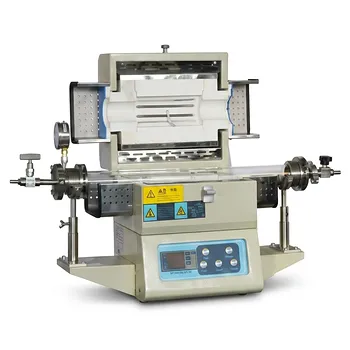
High Temperature 1200C Split Tube Furnace for CVD Research and Vacuum Atmosphere Heat Treatment
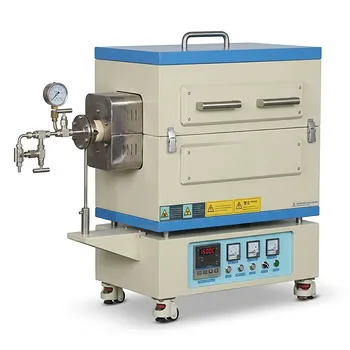
High Temperature Split Tube Furnace 1500C for Material Research Vacuum and Atmosphere Thermal Processing

1700C High Temperature Alumina Tube Furnace with 18 Inch Heated Zone and Vacuum Sealing Flanges
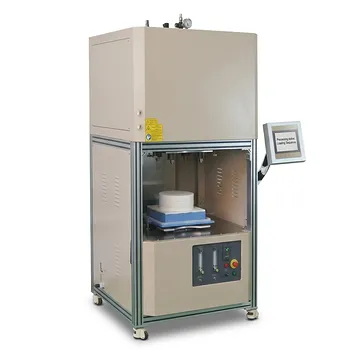
High Temperature Vertical Atmosphere Controlled Furnace with Automatic Bottom Loading and 1700°C Capacity for Advanced Material Research
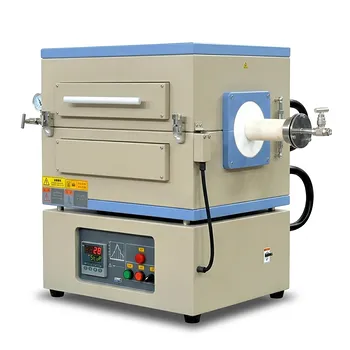
1500°C Split Tube Furnace with Alumina Tube and Vacuum Sealing Flanges for Material Research

High Temperature Tube Furnace 1500C with Sliding Flanges and 50mm OD for Rapid Thermal Processing Fast Heating and Cooling

High Temperature 1700C Tube Furnace with High Vacuum Turbomolecular Pump System and Multi Channel Mass Flow Controller Gas Mixer
1200C Hybrid Muffle and Tube Furnace for Material Research with Dual Atmosphere Control Quartz Tubes
High Temperature Three Zone Tube Furnace 1700C with Alumina Tube and Water Cooled Flanges

Vertical 1700C Vacuum and Atmosphere Tube Furnace with 80mm Alumina Tube

Compact High Temperature 1600C Tube Furnace with 50mm Alumina Tube and Vacuum Flanges for Material Sintering

1100°C High Temperature Quartz Chamber Furnace 8 Inch OD with 7.6 Liter Capacity and Vacuum Atmosphere Capability

High Temperature 1700C Benchtop Tube Furnace with 5 Inch Heating Zone High Purity Alumina Tube and Vacuum Sealing Flanges

1800C High Temperature Compact Vacuum Tube Furnace with 60mm OD Alumina Tube and Kanthal MoSi2 Heating Elements

High Temperature 1700C Vertical Tube Furnace for Powder Spherification and Material Sintering
High Temperature 1200C Split Tube Furnace with Optional Quartz Tube Sizes and Vacuum Sealing Flanges for Material Science Research

High Temperature 1700C Tube Furnace with 4 Inch OD Alumina Tube and Vacuum Sealing Flanges

High Temperature 1700C Six Zone Split Tube Furnace with Alumina Tube and Water Cooled Flanges
