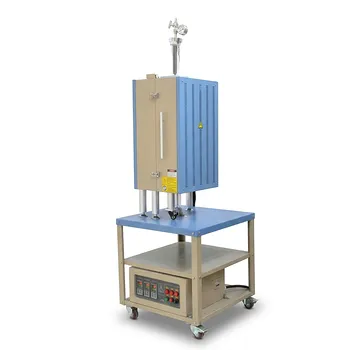
Why is high-purity Argon (Ar) used as a carrier gas during the MoS2 CVD process? Key to Superior 2D Crystal Synthesis
Updated 3 months ago
High-purity Argon (Ar) is the essential medium used to transport chemical precursors and maintain a contamination-free environment during MoS2 synthesis. It acts as an inert vehicle that carries vaporized sulfur and molybdenum trioxide ($MoO_3$) to the substrate while simultaneously shielding the reaction from atmospheric oxygen and moisture. By providing this stable, non-reactive atmosphere, Argon ensures the growth of high-quality 2D crystals with precise control over thickness and crystalline structure.
Argon serves as both a stable transport mechanism for volatile precursors and a protective barrier against oxidation. Its high purity and adjustable flow rate are the primary tools used to dictate growth kinetics, stoichiometry, and the final electronic properties of the Molybdenum Disulfide film.
The Role of Argon in Precursor Transport
Vapor Delivery and Reaction Continuity
Argon acts as the primary driving force that carries evaporated sulfur and molybdenum trioxide ($MoO_3$) vapors from the heating zones to the reaction zone. This transport must be uniform and continuous to ensure that the chemical reaction at the substrate surface remains steady throughout the growth process.
Controlling Growth Kinetics via Flow Rate
The flow rate of Argon is a critical process parameter that directly influences the diffusion rate of precursors onto the substrate. By precisely adjusting this flow, technicians can control the nucleation density, which dictates how many MoS2 "islands" form and how quickly they merge into a continuous film.
Influencing Domain Size and Coverage
A stable Argon stream ensures that precursors are delivered at a consistent concentration across the substrate surface. This consistency is vital for achieving large single-crystal domain sizes and ensuring full, uniform coverage of the material across the target area.
Creating and Maintaining a Protective Environment
Excluding Atmospheric Contaminants
At the high temperatures required for CVD, MoS2 is highly susceptible to oxidative degradation. High-purity Argon purges the reaction chamber of residual oxygen and water vapor, preventing these contaminants from interfering with the crystallization process.
Preventing Unintended Phase Formation
The use of high-purity gas is non-negotiable because even trace amounts of impurities can introduce point defects in the MoS2 lattice. Using ultra-pure Argon minimizes the risk of forming unintended oxide phases, ensuring the final product maintains its desired semiconducting properties.
Maintaining Stoichiometric Integrity
By providing a controlled, inert environment, Argon helps maintain the correct stoichiometry (the ratio of Molybdenum to Sulfur) within the crystal. This prevents the formation of "sulfur vacancies," which are common defects that can negatively alter the material's electrical performance.
Pressure Regulation and Byproduct Removal
Stabilizing Chamber Pressure
Argon is used to maintain the atmospheric pressure balance within the furnace chamber during the growth cycle. This stability prevents "backflow" or turbulent gas movements that could lead to non-uniform film growth or thickness variations.
Efficient Removal of Reaction Byproducts
As the chemical reaction progresses, various byproducts and partially reduced volatiles (such as $MoO_{3-x}$) are generated. The continuous flow of Argon facilitates the removal of these byproducts, preventing them from re-depositing on the substrate and contaminating the growing film.
Understanding the Trade-offs
While Argon is the industry standard, its usage requires a careful balance of flow dynamics. If the flow rate is too high, it can "sweep" the precursors past the substrate too quickly, leading to poor deposition rates or incomplete films.
Conversely, a flow rate that is too low can result in precursor stagnation, causing non-uniform "clumpy" growth and high nucleation density, which limits the size of individual crystal domains. Furthermore, any compromise in the purity levels of the Argon supply will immediately result in degraded mobility and increased carrier scattering in the final MoS2 device.
How to Apply This to Your Project
Recommendations for Process Optimization
- If your primary focus is High Crystalline Quality: Prioritize the use of 99.999% (5N) or higher purity Argon to eliminate point defects and oxygen incorporation.
- If your primary focus is Large Domain Sizes: Focus on fine-tuning the Argon flow rate to a lower velocity to allow precursors sufficient "dwell time" to settle and grow into larger single-crystal flakes.
- If your primary focus is Uniform Large-Scale Coverage: Increase the Argon flow rate slightly to ensure a more turbulent-free, laminar delivery of precursors across the entire surface of the wafer.
Mastering the delivery and purity of Argon is the most direct path to achieving repeatable, high-performance Molybdenum Disulfide films.
Summary Table:
| Role of Argon | Primary Function | Impact on MoS2 Quality |
|---|---|---|
| Precursor Transport | Carries vaporized S and $MoO_3$ to substrate | Ensures continuous and uniform film growth |
| Inert Shielding | Purges oxygen and moisture | Prevents oxidation and maintains semiconducting properties |
| Flow Rate Control | Regulates precursor diffusion | Dictates nucleation density and single-crystal domain size |
| Atmosphere Stability | Maintains chamber pressure | Prevents backflow and ensures thickness uniformity |
| Byproduct Removal | Flushes out reaction residues | Eliminates point defects and lattice contamination |
Elevate Your Material Research with THERMUNITS Precision
Achieving the perfect MoS2 crystal structure requires more than just high-purity gas—it demands precise thermal and atmosphere control. THERMUNITS is a leading manufacturer of high-temperature laboratory equipment specifically designed for material science and industrial R&D.
We provide high-performance thermal processing solutions, including:
- CVD/PECVD Systems optimized for 2D material synthesis.
- Tube & Vacuum Furnaces for precise atmosphere management.
- Muffle, Rotary, and Hot Press Furnaces for diverse heat treatment needs.
- Vacuum Induction Melting (VIM) and specialized Dental Furnaces.
Whether you are aiming for large-scale uniform coverage or maximum crystalline quality, our equipment ensures the stability your research demands. Let our experts help you configure the ideal system for your MoS2 or other advanced material projects.
Contact THERMUNITS Today to Get a Quote
References
- Salvatore Ethan Panasci, Filippo Giannazzo. Interface Properties of MoS2 van der Waals Heterojunctions with GaN. DOI: 10.3390/nano14020133
Mentioned Products
- Radio Frequency Plasma Enhanced Chemical Vapor Deposition RF PECVD System for Laboratory and Industrial Thin Film Growth
- Versatile Chemical Vapor Deposition Tube Furnace System for Advanced Material Research and Industrial Coating Processes
- Chemical Vapor Deposition CVD System Slide PECVD Tube Furnace with Liquid Gasifier PECVD Machine
- Cylindrical Resonator MPCVD Machine System for Microwave Plasma Chemical Vapor Deposition and Lab Diamond Growth
- 915MHz MPCVD Diamond Machine Microwave Plasma Chemical Vapor Deposition System Reactor
People Also Ask
- What are the advantages of PECVD systems for nano flame retardant films? Protect Heat-Sensitive Polymers with Precision
- How does PECVD differ from conventional thermal CVD? Key Advantages of Low-Temperature Deposition for R&D
- What is the role of CVD/PECVD systems in the research of optoelectronic materials and functional coatings? Expert Guide
- What are the benefits of using PECVD for optical and photonic coatings? Achieve High-Precision Thin-Film Deposition
- How do RF frequency and power settings influence the characteristics of a PECVD process? Master Quality & Efficiency

Tech Team · ThermUnits
Last updated on Jun 02, 2026
Related Products
Radio Frequency Plasma Enhanced Chemical Vapor Deposition RF PECVD System for Laboratory and Industrial Thin Film Growth
Versatile Chemical Vapor Deposition Tube Furnace System for Advanced Material Research and Industrial Coating Processes
Chemical Vapor Deposition CVD System Slide PECVD Tube Furnace with Liquid Gasifier PECVD Machine
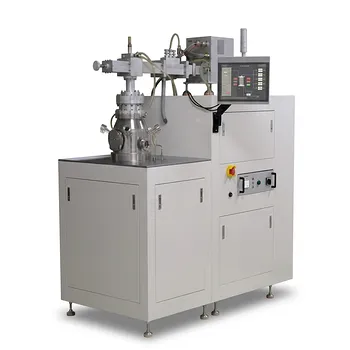
Cylindrical Resonator MPCVD Machine System for Microwave Plasma Chemical Vapor Deposition and Lab Diamond Growth
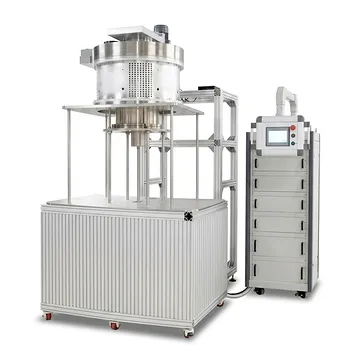
915MHz MPCVD Diamond Machine Microwave Plasma Chemical Vapor Deposition System Reactor
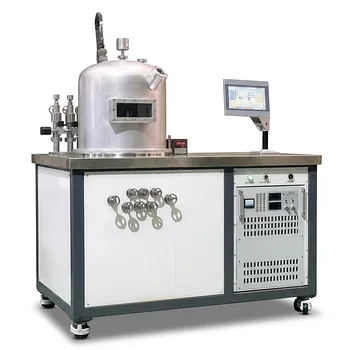
HFCVD Machine System for Nano Diamond Coating on Drawing Dies and Industrial Tools
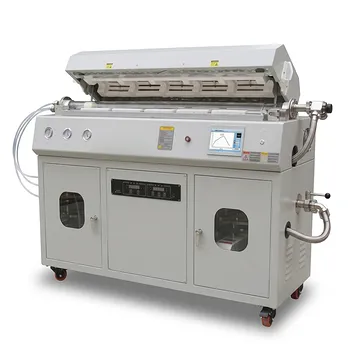
Multi Heating Zones CVD Tube Furnace System for Precision Chemical Vapor Deposition and Advanced Material Synthesis
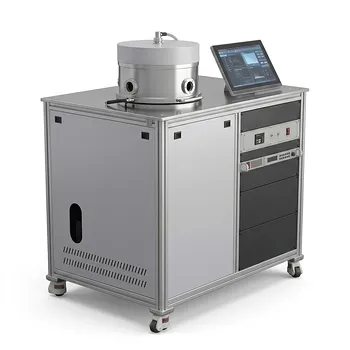
Inclined Rotary Plasma Enhanced Chemical Vapor Deposition PECVD System for Thin Film Deposition and Nanomaterial Synthesis
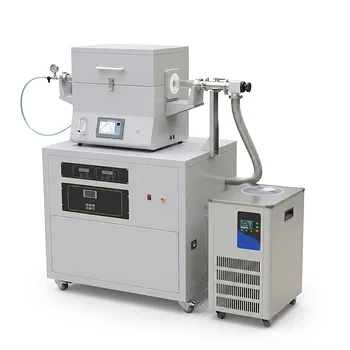
Split Chamber CVD Tube Furnace with Vacuum Station Chemical Vapor Deposition System Machine
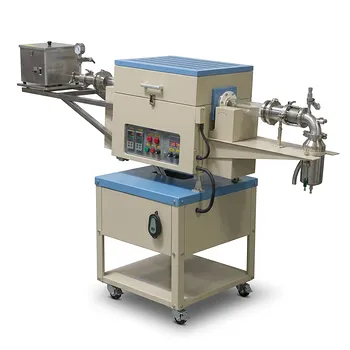
Two Zone Rotary CVD Furnace with Automatic Feeding and Receiving System for Powder Processing
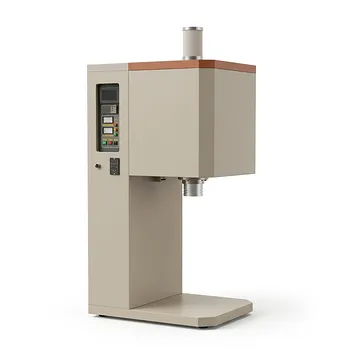
Vertical Openable Tube Furnace 0-1700c High Temperature Laboratory System for CVD and Vacuum Heat Treatment
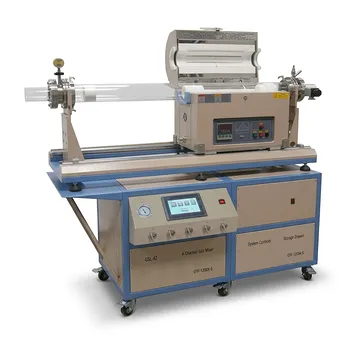
Dual Tube 100mm 80mm CVD Sliding Furnace with 4 Channel Gas Mixing and Vacuum System

High Temperature 1700C Tube Furnace with High Vacuum Turbomolecular Pump System and Multi Channel Mass Flow Controller Gas Mixer
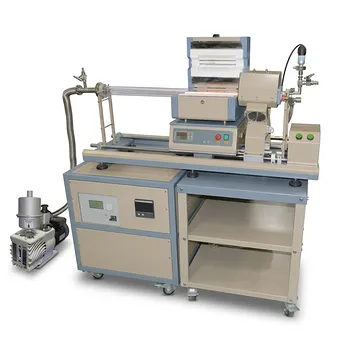
1200C Max Compact Auto-Sliding PECVD Furnace with 2 Inch Tube and Vacuum Pump
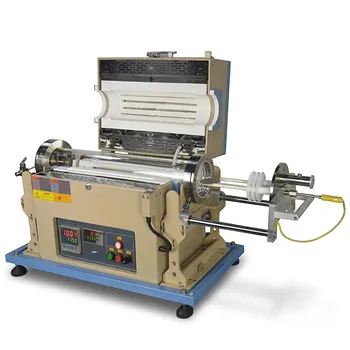
1200°C High Temperature 4 Inch Tube Furnace with Sliding Flange for CVD Systems
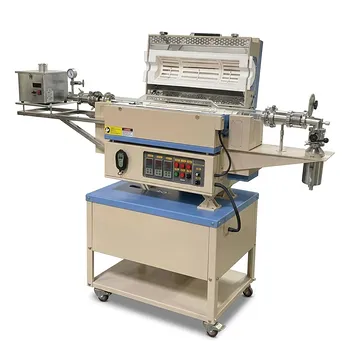
5 Inch Rotary Tube Furnace with Automatic Feeding and Receiving System 1200C Three Zone CVD Powder Processing
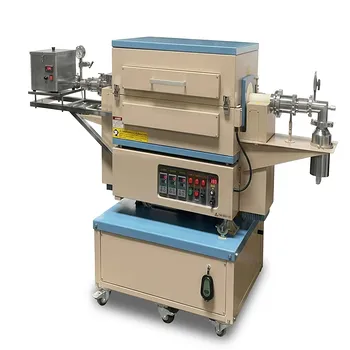
1500C 3-Zone Rotary Tube Furnace 60mm with Automatic Powder Feeding and Receiving System for Continuous Material Synthesis
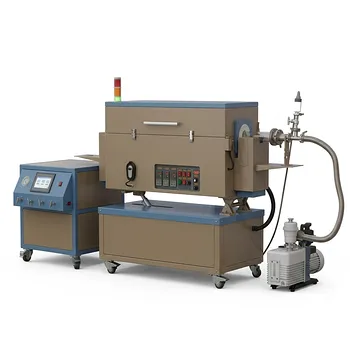
5 Inch Three Zone Rotary Tube Furnace with Integrated Gas Delivery System and 1200C Capability for Advanced Material CVD Processing
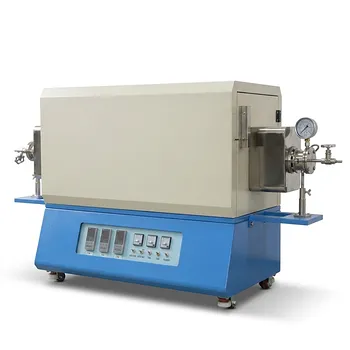
Three Temperature Zone High Temperature Vacuum Tube Furnace for CVD and Material Sintering